93+ Powerful Holy Thursday Symbols That Reveal the True Meaning of the Last Supper
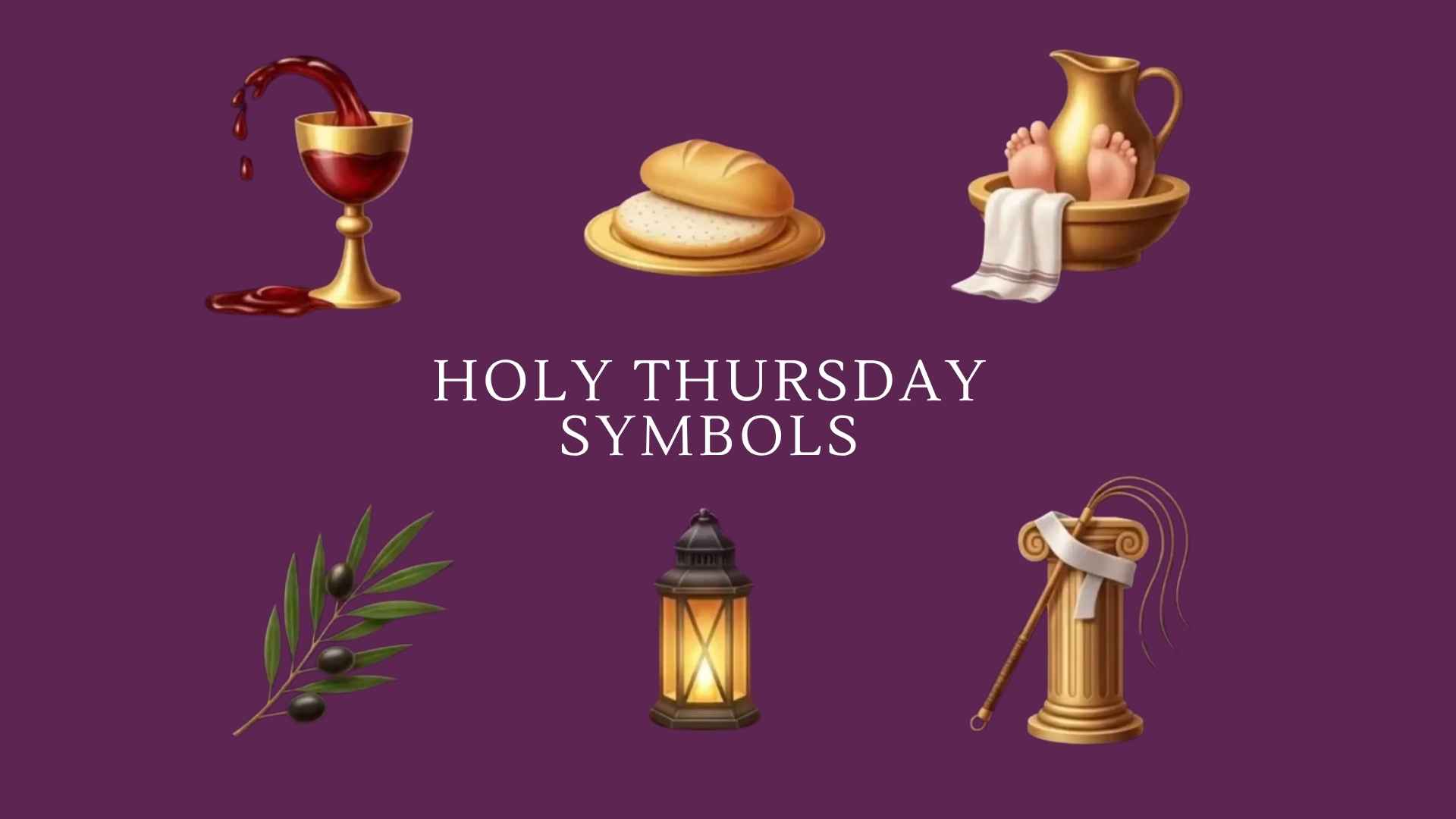
Holy Thursday symbols are sacred signs that Christians use to honor the Last Supper, foot-washing, and the night Jesus was betrayed. These aren’t just church decorations. They carry centuries of faith, sacrifice, and human longing inside each image, gesture, and ritual object.
You’ve probably seen the chalice, the bread, or the basin and towel in church, but do you actually know what they mean? Most people don’t. This guide breaks every major Maundy Thursday symbol down clearly, deeply, and honestly so you leave knowing far more than when you arrived.
What Are Holy Thursday Symbols?
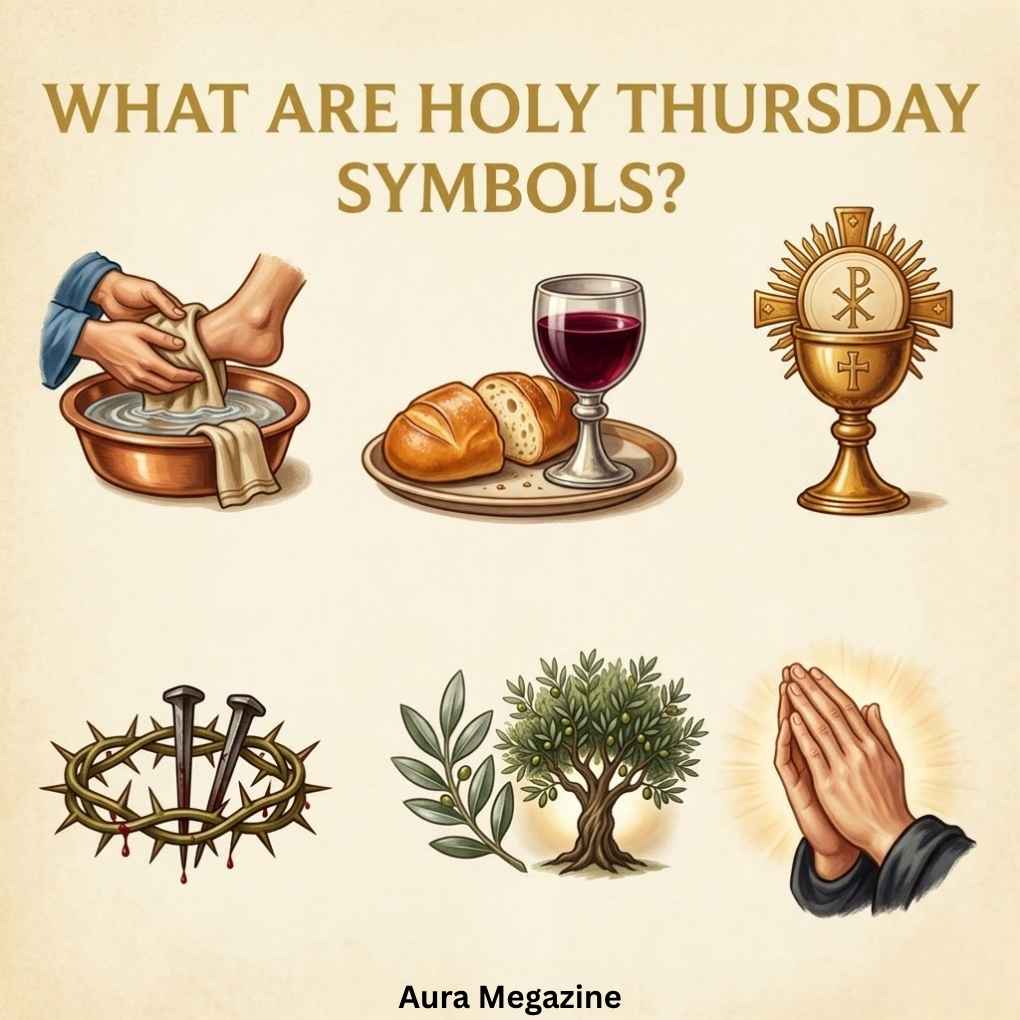
Holy Thursday symbols are visual and ritual signs tied to the Christian observance of Holy Thursday, also called Maundy Thursday. This sacred day remembers three major events: the Last Supper, the washing of the disciples’ feet, and Jesus’s arrest in the Garden of Gethsemane.
These religious symbols aren’t random. Every single one connects to a specific theological moment. The bread and wine point to the first Eucharist. The basin and towel point to the foot-washing. The stripped altar points to the coming grief of Good Friday.
What makes them powerful is their layered nature. Each Holy Thursday symbol speaks spiritually, psychologically, and culturally at the same time. That’s rare. And that’s exactly why they’ve survived two thousand years of history without losing their grip on the human heart.
Holy Thursday Meaning And Symbolism
Holy Thursday Meaning
Holy Thursday meaning centers on the night Jesus shared his final meal with his disciples and gave them a new commandment: love one another. The Latin root of “Maundy” is mandatum, which means commandment. So this day isn’t just a commemoration, it’s an instruction.
Holy Thursday symbolism flows directly from that commandment. Every gesture, every object, every ritual on this day asks the same question: are you willing to love like this? That question is what makes the spiritual meaning of Holy Thursday symbols so personally confronting.
For American Christians especially, this day hits differently in 2026. In a culture pulled toward individualism, Holy Thursday traditions insist on community, service, and humble love. The symbols don’t let you stay comfortable. They push back.
Thursday Symbolism
Thursday symbolism in the Christian calendar carries the weight of a threshold. It’s the last ordinary evening before history changed. Think of it like the final page of a chapter you don’t want to end, calm on the surface, trembling underneath.
In the Hebrew calendar, Holy Thursday falls on the 14th of Nisan, the night of the Passover Seder. That timing isn’t accidental. Biblical symbolism runs deep here: the Passover lamb, the unleavened bread, the cups of wine, Jesus used all of it deliberately to reframe a Jewish ritual into something entirely new.
Thursday, in this context, symbolizes anticipation, sacrifice, and the particular courage it takes to love when you already know betrayal is coming. That’s the emotional core of Holy Thursday meaning and symbolism.
Happy Holy Thursday
“Happy Holy Thursday” is a greeting American Christians exchange on this day, and it carries more depth than it sounds. How can a day shadowed by betrayal and arrest be happy?
The answer lies in reframing. Holy Thursday traditions recognize that happiness here means wholeness, not cheerfulness. It means being fully present with both the beauty of the Last Supper and the grief of what followed. That’s a very human kind of happiness.
You’ll see this greeting across social media, church bulletins, and family text threads every spring. It’s one of the ways modern American faith communities keep Holy Thursday symbolism alive in everyday language.
Holy Week Symbols And Meanings
Holy Week Symbols And Meanings
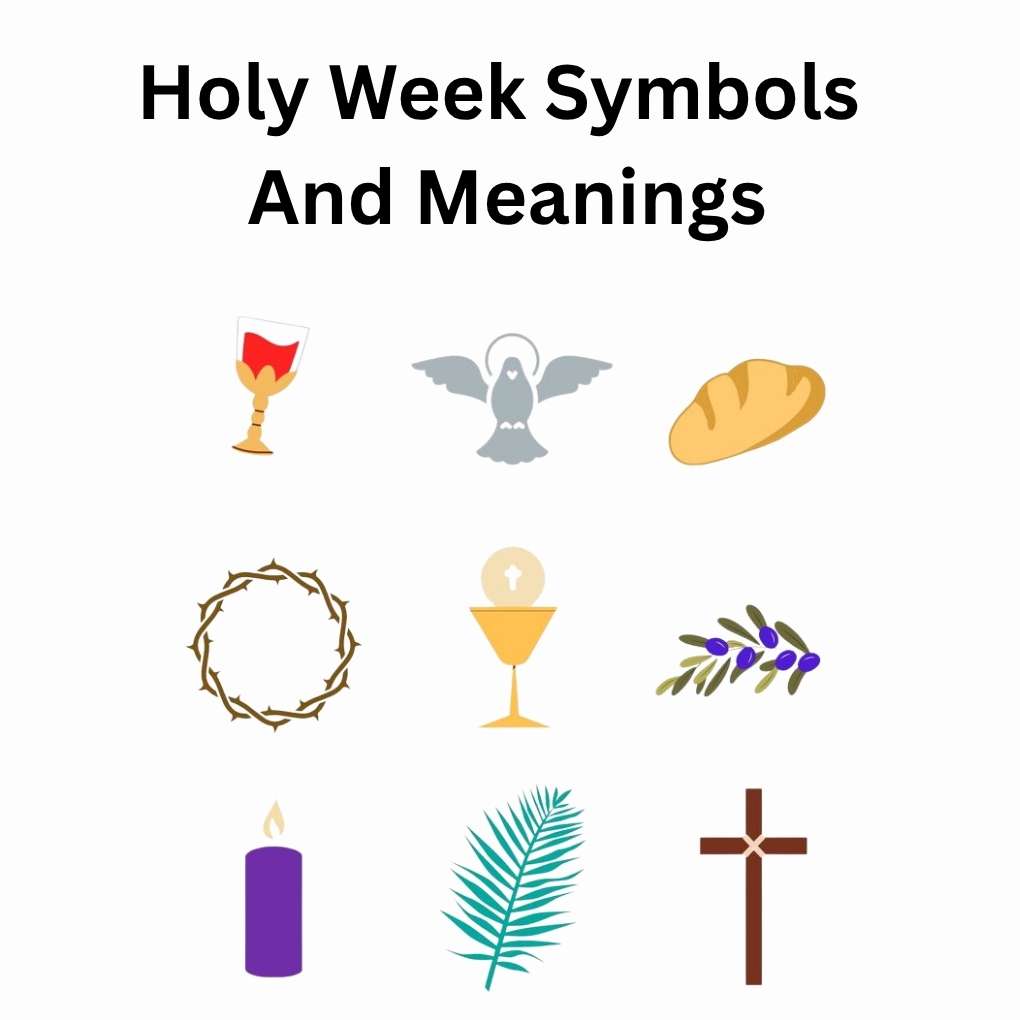
Holy Week symbols and meanings form a complete narrative arc from Palm Sunday through Easter. Holy Thursday sits at the emotional center of that arc, the pivot point between triumph and tragedy.
Here’s a quick-reference breakdown of the full week:
| Day | Primary Symbol | Core Meaning |
| Palm Sunday | Palm branches | Welcome and triumph |
| Holy Monday | Fig tree | Faith without fruit |
| Holy Tuesday | Temple | Cleansing and authority |
| Holy Wednesday | Alabaster jar | Extravagant devotion |
| Holy Thursday | Bread, basin, chalice | Sacrifice and service |
| Good Friday | Cross | Redemption through suffering |
| Holy Saturday | Sealed tomb | Waiting and silence |
| Easter Sunday | Empty tomb | Resurrection and hope |
Understanding Holy Week symbols as a connected story makes each individual symbol richer. Holy Thursday’s bread and wine mean more when you know Good Friday’s cross comes next.
Good Friday Symbol
The Good Friday symbol is the cross. Simple. Unmistakable. Devastating. What began as a Roman execution instrument became the most recognized Christian symbol in human history.
The cross contrasts sharply with Holy Thursday’s symbols. Thursday is intimate, a table, a basin, a shared cup. Friday is public, a hill, a crowd, an instrument of state violence. Together they show two faces of the same sacrifice: private love and public cost.
The Good Friday symbol also gives Holy Thursday its urgency. When you know the cross comes next, the bread broken at the Last Supper tastes different.
Holy Thursday Symbols Catholic
Holy Thursday Symbols Catholic
Holy Thursday symbols in Catholic tradition go deeper than most people expect. The Evening Mass of the Lord’s Supper is the only Mass celebrated that day. No morning Mass is permitted. That liturgical singularity signals how seriously the Church treats this night.
Key Catholic Holy Thursday symbols include:
- The Chrism Mass, the bishop blesses holy oils for the entire diocese’s sacraments all year
- The Gloria bells, rung joyfully once, then silenced until Easter
- The Altar of Repose, where consecrated hosts are moved in procession after Mass
- The emptied tabernacle, stripped bare, doors left open, representing abandonment
- The Oil of Chrism, used in baptism, confirmation, and ordination throughout the year
Catholic Holy Thursday Symbols
Catholic Holy Thursday symbols carry a particularly eucharistic weight. The Church teaches that the bread and wine at Mass become the body and blood of Christ, not symbolically, but actually. That belief, called transubstantiation, makes the Holy Eucharist meaning on this night especially profound.
After Mass, the procession to the Altar of Repose reenacts Jesus walking to Gethsemane. Worshippers keep vigil there, sometimes until midnight, answering the request Jesus made to his disciples: “Could you not watch with me one hour?”
Many American Catholic families also practice visita iglesia, visiting seven churches on Holy Thursday night. The physical journey itself becomes a Holy Thursday symbol of devotion.
Maundy Thursday Symbols Explained
Maundy Thursday Symbols
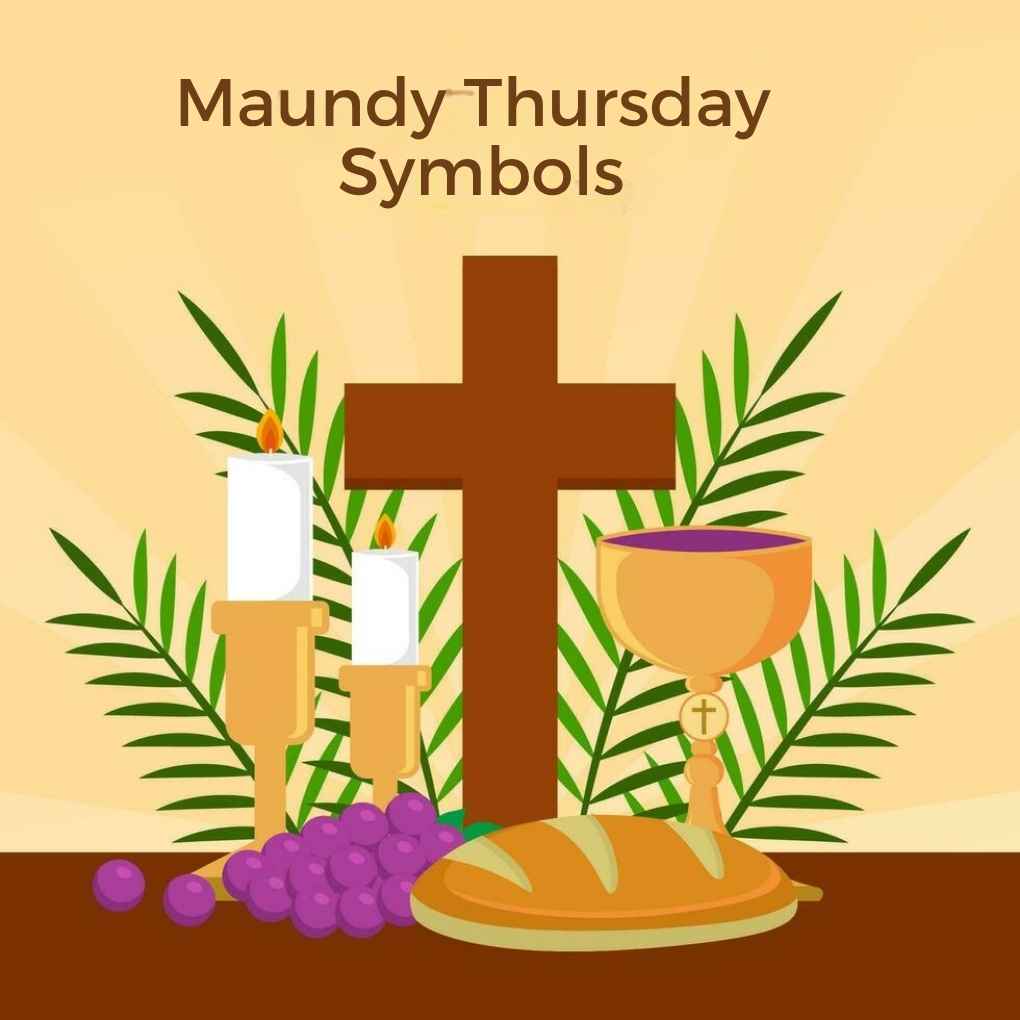
Maundy Thursday symbols include the basin and towel, bread and wine, chalice, stripped altar, and vigil candle. Each one connects directly to an event from the original night. These aren’t decorative choices, they’re theological statements made visible.
Protestant, Anglican, and Catholic traditions all handle these symbols of Maundy Thursday differently. Some traditions emphasize the foot-washing above everything. Others center on the Eucharist. But all of them return to the same core: love expressed through radical service.
Think of these symbols less like museum exhibits and more like mirrors. They don’t just show you what happened that night, they ask what you would do.
Symbols Of Maundy Thursday
The symbols of Maundy Thursday speak most powerfully when you understand what they’re asking. The basin asks: who do you refuse to serve? The bread asks: what are you willing to give away? The stripped altar asks: can you sit with emptiness without running from it?
Here’s a quick-reference list of core Maundy Thursday symbols:
- Bread, sacrifice, covenant, shared life
- Wine, blood, sealing of promises, the Passover cup of redemption
- Basin and towel, humility, service, equality
- Chalice, divine covenant, spiritual nourishment
- Stripped altar, desolation, honest grief, preparation for sacrifice
- Vigil candle, watchfulness, prayer, unbroken light through darkness
Maundy Thursday Symbol
The single most defining Maundy Thursday symbol is foot-washing. Nothing else on this day is more socially radical or more personally confronting. In first-century Jewish culture, washing feet was the task of the lowest Gentile slave. Not even Jewish servants were expected to do it.
When Jesus knelt and washed his disciples’ feet, he didn’t just demonstrate humility. He shattered the entire social hierarchy of his world. Peter’s shocked refusal makes perfect sense, it was culturally unthinkable.
Maundy Thursday Holy Thursday Symbols
Maundy Thursday and Holy Thursday are two names for the same day, one rooted in Latin liturgy, the other in common English usage. The symbols remain the same across both naming traditions, though different denominations may emphasize different elements.
Anglican and Episcopal churches often focus heavily on the foot-washing. Catholic tradition centers the Eucharist. Many American Protestant churches combine both. The dual naming reflects the richness of a day that holds more than one tradition can fully contain.
Symbols Of Holy Thursday
Symbols Of Holy Thursday
The symbols of Holy Thursday function as enacted theology, truths too large for sentences, compressed into bread, water, and gesture. They work because they engage the body, not just the mind. You don’t just think about foot-washing. You feel it.
Across American churches, these Christian symbols appear in stained glass, altar arrangements, bulletin covers, and children’s faith education materials. Their visual language is instantly recognizable even to people who’ve never attended a Holy Thursday service.
What makes them remarkable is their universality. You don’t need theological training to feel the weight of someone kneeling to wash another person’s feet.
Symbols For Holy Thursday
Churches and educators use symbols for Holy Thursday in practical, creative ways throughout the United States:
- Children’s faith formation, simple basin and towel crafts, bread-baking activities
- Home altars, many Catholic families set up domestic altars with bread, candle, and chalice imagery
- Bulletins and graphics, chalice and host imagery is standard across denominations
- Social media, digital sharing of Holy Thursday artwork surges every spring
Holy Thursday Symbol
The single most universally recognized Holy Thursday symbol is bread and wine placed together on a table. It crosses denominational lines. It appears in secular art, literature, and American cultural imagery. Even people outside Christian faith recognize the Last Supper tableau immediately.
Symbol For Holy Thursday
Different denominations choose different primary symbols for Holy Thursday:
- Catholic: The Eucharist and chalice
- Protestant: The foot-washing basin
- Eastern Orthodox: The candle carried through twelve Gospel readings
- Anglican/Episcopal: The mandatum, the commandment enacted through service
Symbol Of Holy Thursday
Ultimately, the deepest symbol of Holy Thursday is an open hand. Giving. Serving. Offering. Not a closed fist of power, an open palm of love. That image cuts through every denominational difference and speaks directly to what the night was really about.
Last Supper And Eucharist Symbols
Last Supper Holy Thursday Symbols
Last Supper Holy Thursday symbols transform an ordinary Passover Seder into something that changed the world. The table itself is a symbol, it signals equality, openness, and community. Everyone sits. Everyone receives.
The unleavened bread (matzah) matters specifically. Unleavened bread doesn’t ferment or change. Bread and wine symbolism in Christianity begins right here: a covenant that doesn’t expire, pressed into the form of the most basic human food.
Jesus and the Last Supper created a ritual that would be repeated in millions of churches across every continent. That reproducibility is part of the symbol’s genius, it scales from a small room to the entire world.
Supper Holy Thursday Symbols
The supper as a Holy Thursday symbol speaks to something pre-religious. Eating together is humanity’s oldest bonding ritual. Neuroscience confirms it: sharing food releases oxytocin, the bonding hormone. The Last Supper weaponizes human biology in service of spiritual memory.
Symbols of sacrifice and humility run through the entire meal. The broken bread mirrors a broken body. The poured wine mirrors poured-out life. Even the act of sitting together one last time carries the grief of a group that knows, on some level, that everything is about to change.
Holy Eucharist Holy Thursday Symbols
Holy Eucharist Holy Thursday symbols point to what Christians call the “real presence”, Christ available in every communion, in every century, in every place. The Eucharist collapses time. Past sacrifice, present grace, and future hope exist simultaneously in a single cup.
The four Passover cups of wine help explain this. Jewish tradition holds four cups representing God’s four promises to Israel. Jesus transformed one of those cups into something entirely new, the cup of a new covenant. Symbolic meaning of the Eucharist reaches back into Jewish history and forward into eternity at the same time.
Washing Of Feet Symbols
Feet Holy Thursday Symbols
Feet as Holy Thursday symbols carry the weight of vulnerability. Feet are the body’s most exposed, most traveled, most humble part. In ancient culture, they revealed your social status: a laborer’s feet were calloused and dirty; an aristocrat’s feet were soft and clean.
Washing of feet symbolism therefore hits hard. To wash someone’s feet is to accept them exactly as they are, dirt, calluses, and all. It’s one of the most intimate acts of care one person can offer another.
Washing Holy Thursday Symbols
Washing as a Holy Thursday symbol connects to water’s universal meaning across human cultures: purification, new beginnings, the washing away of what was. In Christian theology, spiritual cleansing symbols like water point to baptism, forgiveness, and the possibility of starting fresh.
American churches practice this ritual in varied ways, some wash feet of congregation members, some of strangers, some of community leaders washing the feet of volunteers. Each variation carries the same core message: no one is too important to serve.
Washing Feet Holy Thursday Symbols
The washing feet Holy Thursday symbol unfolds in four precise steps, each carrying its own meaning:
- Jesus removes his outer garment, sets aside divine dignity
- Wraps a towel around his waist, takes the servant’s role deliberately
- Pours water into the basin, gives what is needed, not what is deserved
- Dries the feet with the towel, completes the act fully, doesn’t leave it half-done
Every step matters. Foot washing ritual in Christian practice tries to honor all four movements, not just the dramatic gesture of kneeling.
Jesus Washing Feet Holy Thursday Symbols
Jesus washing feet as a Holy Thursday symbol teaches one of Christianity’s most countercultural lessons: greatness flows downward. The one with the most power serves the most completely.
Peter’s refusal reveals something true about all of us. Receiving humble service is harder than giving it. Letting someone wash your feet requires you to accept your own need, your own vulnerability, your own humanity. That’s the hidden teaching inside this foot washing ritual that most people miss.
Creative And Visual Symbols
Clipart Holy Thursday Symbols
Clipart Holy Thursday symbols help churches, schools, and families bring these sacred images into everyday communication. The most commonly used visual elements include:
- Chalice and communion host
- Basin with water and folded towel
- Round loaf of bread
- Single flame candle
- Twelve figures gathered at a long table
Free, high-quality resources are available through Wikimedia Commons, Unsplash, and Catholic diocesan resource libraries. Always check licensing before use in printed materials.
You May Also Like: 7+ Symbols of Virgo That Reveal Its True Personality And Hidden Power
Action Holy Thursday Symbols
Action Holy Thursday symbols are the ones performed, not just observed. These enacted symbols carry deeper psychological weight than static images because the body participates:
- The foot-washing ceremony
- Breaking of bread during communion
- Stripping of the altar after Mass
- Candlelight procession to the Altar of Repose
- The silent vigil through the night
Research on ritual behavior shows that physical participation encodes memory more deeply than passive observation. Sacred Christian rituals like these aren’t just meaningful, they’re neurologically designed to stick.
Holy Thursday Images And Downloads
Holy Thursday Images Free Download
High-quality Holy Thursday images make your church bulletins, blog posts, and social content more powerful. Look for authentic photography and classical art rather than generic stock images.
Best free sources include:
- Wikimedia Commons, classical Last Supper paintings, public domain art
- Unsplash, contemporary candle, bread, and chalice photography
- Pexels, church ceremony photography
- Catholic diocesan websites, liturgically accurate symbolic imagery
Maundy Thursday Images 2026
Maundy Thursday images in 2026 trend heavily on Instagram, Pinterest, and Facebook faith communities. American churches share everything from classical Renaissance art to contemporary photography of their own foot-washing ceremonies.
The most engaging images feel authentic, not stock-photo polished. A real basin, a real towel, real hands, those images connect. Consider photographing your own church’s observance and sharing it. Your community’s story is the best Holy Thursday image you can offer.
Deep Symbolic Meaning
Every Holy Thursday symbol operates on three levels simultaneously. That’s what makes them extraordinary. Most symbols speak on one level. These speak on three.
| Symbol | Spiritual Layer | Psychological Layer | Cultural Layer |
| Bread | Body of Christ | Shared vulnerability | Community and survival |
| Wine | Blood, covenant | Emotional bonding | Celebration and solemnity |
| Basin | Self-emptying love | Receiving care gracefully | Equality and humble service |
| Stripped altar | Desolation before dawn | Confronting honest absence | Aesthetic of real grief |
| Chalice | Divine covenant sealed | Receptivity and trust | The human quest for the sacred |
Spiritual symbols this rich don’t emerge from committees or creative directors. They emerge from lived experience, from a night that was real, in a room that existed, with people who were terrified and loved and confused all at once.
Types / Variations of Holy Thursday Symbols
The Bread and Wine
Bread and wine symbolism in Christianity begins with a choice: unleavened over leavened. Unleavened bread doesn’t ferment. It’s fixed, stable, unchanged by time. That’s the theological statement, this covenant doesn’t expire.
The act of breaking bread (not cutting) signals intimacy. You don’t break bread with strangers. You break it with people you trust. Last Supper symbolism lives in that distinction.
Across American denominations, the debate between individual cups and a shared chalice continues. Individual cups prioritize hygiene and inclusion. A shared cup prioritizes unity as a symbol. Both choices carry meaning.
The Basin and Towel
The basin and towel are deceptively simple objects. A bowl. A cloth. But together they represent the most radical leadership philosophy in Western history: the greatest serves the least.
Medieval kings literally performed foot-washing on Holy Thursday for twelve poor men. British monarchs distributed “Maundy Money” as a modern echo of that tradition. Christian humility found political expression through this symbol for centuries.
The Chalice
The chalice symbolism carries time inside it. It points backward to Passover, inward to spiritual nourishment, and forward to promised redemption. No other communion symbol does this much work simultaneously.
The Holy Grail legend, the quest to find the actual cup used at the Last Supper, shows how powerfully this object captured the medieval imagination. People didn’t just want to understand the chalice. They wanted to touch it.
The Twelve Disciples
The number twelve mirrors the twelve tribes of Israel, intentionally positioning the disciples as the foundation of a new covenant community. But here’s what’s easy to miss: the symbol includes Judas.
The broken community is the symbol. Perfect loyalty surrounded by betrayal, denial, and doubt, that’s the real image of the twelve. It’s the most honest picture of human community ever painted.
The Stripped Altar
The stripped altar meaning hits hardest in person. After Holy Thursday Mass, the altar linens, candles, and sacred objects are removed in near-silence while Psalm 22 plays, the psalm Jesus quoted from the cross.
The altar becomes a body being prepared. You’re meant to feel the discomfort. The beauty you counted on disappears in front of your eyes. Altar symbolism rarely gets more honest than this.
Holy Thursday Symbols Across Cultures
Holy Thursday rituals around the world share the same symbols but wear very different clothes. Here’s how five global traditions express the same sacred night:
- Ethiopian Orthodox: Entire congregations participate in foot-washing together, celebration replaces solemnity
- Filipino (Huwebes Santo): Barefoot visita iglesia pilgrimage to seven churches; the painful journey is the symbol
- Eastern Orthodox: Twelve Gospel readings through the night; the candle carried forward as a living relic
- Latin American: Home altars (ofrendas), street processions, neighborhoods transformed into sacred space
- American Catholic/Protestant: Vast denominational variety, from mega-church theatrical productions to quiet small-parish intimacy
The symbols travel. The expression changes. The meaning endures.
Holy Thursday Symbols in Art, Movies and Pop Culture
Holy Thursday symbolism didn’t stay inside church walls. It escaped into galleries, cinemas, and living rooms centuries ago.
Visual Art:
- Leonardo da Vinci’s Last Supper freezes the exact moment Jesus says, “One of you will betray me.” Every face registers a different human response.
- El Greco’s Christ Washing the Disciples’ Feet uses elongated figures and dramatic light to make the foot-washing feel cosmically strange.
Film:
- Babette’s Feast transforms an ordinary dinner into an act of grace, Eucharistic symbolism without a single explicit religious word.
- Of Gods and Men recreates the Last Supper inside a Trappist monastery facing violence. The scene is unbearable in the best possible way.
Pop Culture:
- Chalice and bread imagery appear regularly in tattoo culture as personal symbols of faith and service
- Foot-washing appears in leadership books, TED-style talks, and organizational culture writing as a model of servant leadership
Spiritual and Dream Meaning of Holy Thursday Symbols
When Holy Thursday symbols appear in dreams or meditation, they rarely arrive without purpose.
- Bread in a dream signals a call to generosity, you have more than you think, and someone needs it
- Water being poured marks a threshold, something is being cleansed, something old is releasing
- A bare, empty table suggests a necessary emptying before renewal, the stripping before the filling
- A chalice raises the question: can you receive what’s being offered, even if it’s difficult?
Christian spiritual meanings in contemplative tradition often use these symbols in what Ignatius of Loyola called “imaginative prayer”, entering the Last Supper scene personally and noticing what you feel. It’s surprisingly powerful.
Emotional healing and inner reflection often move through these images in ways that purely rational thought can’t access. That’s the point of symbols. They reach where words don’t.
Positive vs Negative Meaning
Every powerful symbol casts a shadow. Honest engagement means looking at both.
| Symbol | Positive Meaning | Shadow / Negative Meaning |
| Bread and Wine | Unity, nourishment, sacred covenant | Who gets excluded from the table? |
| Basin and Towel | Humble service, equality, compassion | Real service is invisible and thankless, not dramatic |
| The Chalice | Abundance, spiritual nourishment | Also the cup Jesus asked to have removed from him |
| Stripped Altar | Honest grief, sacred desolation | Performative mourning without real encounter |
| The Twelve | Community, belonging, calling | Betrayal and denial live inside every community |
Sitting with the shadow doesn’t weaken these Holy Thursday symbols. It deepens them. Mature Christian faith symbols don’t pretend grief away. They hold both light and shadow together, which is, honestly, what love always does.
Why Humans Are Attracted to This Symbol
You don’t need to be religious to feel the pull of a table set for a final meal. These Holy Thursday symbols work on every human being because they’re built from universal human experience.
Neurologically, shared ritual eating releases oxytocin, the bonding hormone. Your biology is literally wired to respond to the Last Supper image. Emotionally, everyone has experienced their own version of a Last Supper, a conversation that turned out to be a goodbye you didn’t recognize until later. Psychologically, these symbols offer what humans crave most: meaning inside suffering.
In 2026 America, fragmented, exhausted, and hungry for genuine connection, symbols of faith and unity hit differently. The Holy Thursday symbol of an open hand serving, giving, washing isn’t just religious sentiment. It’s a model for how humans survive difficulty together.
These symbols have outlasted empires, survived persecutions, crossed oceans, and adapted to every culture they’ve touched. That doesn’t happen by accident. It happens because they’re true. Not just theologically true, humanly true. They describe something real about what love costs and what it produces.
Conclusion
Holy Thursday symbols are not relics behind museum glass. They’re alive. They’re asking something of you right now.
The bread asks if you’ll share what you have. The basin asks who you’re willing to serve. The chalice asks if you can receive difficulty as sacred rather than simply painful. The stripped altar asks if you can sit with honest emptiness without immediately reaching for distraction.
Every Maundy Thursday symbol is simultaneously a memory and an instruction. The night they came from was real, a real table, real bread, real frightened people, real love persisting in the face of real betrayal.

Mubeen is a passionate writer at Auramegazine who explores symbolism, hidden meanings, and powerful signs behind everyday symbols. He enjoys creating simple, engaging content that helps readers understand deeper meanings and cultural connections.