35+ Satanic Symbols and Their Meanings: Complete Guide to Demonic Signs
Satanic symbols are a collection of signs, sigils, and emblems used across occult practices, religious movements, and cultural expressions to represent ideas connected to Satan, Lucifer, and dark spirituality. Whether you’ve spotted them in a horror movie, on someone’s tattoo, or scrolling through social media, these symbols carry layered meanings that most people never fully understand.
The truth is, many of these symbols are older than Christianity itself. They’ve been borrowed, reinterpreted, and often misrepresented over centuries. Some carry deep philosophical meaning. Others were designed as deliberate acts of rebellion. And a few are simply misidentified everyday symbols that have nothing to do with devil worship at all.
This guide breaks down 35+ satanic symbols and their meanings in a clear, honest, and research-backed way. You’ll walk away understanding what these symbols actually represent, where they came from, and why they still matter today.
What Are Satanic Symbols?
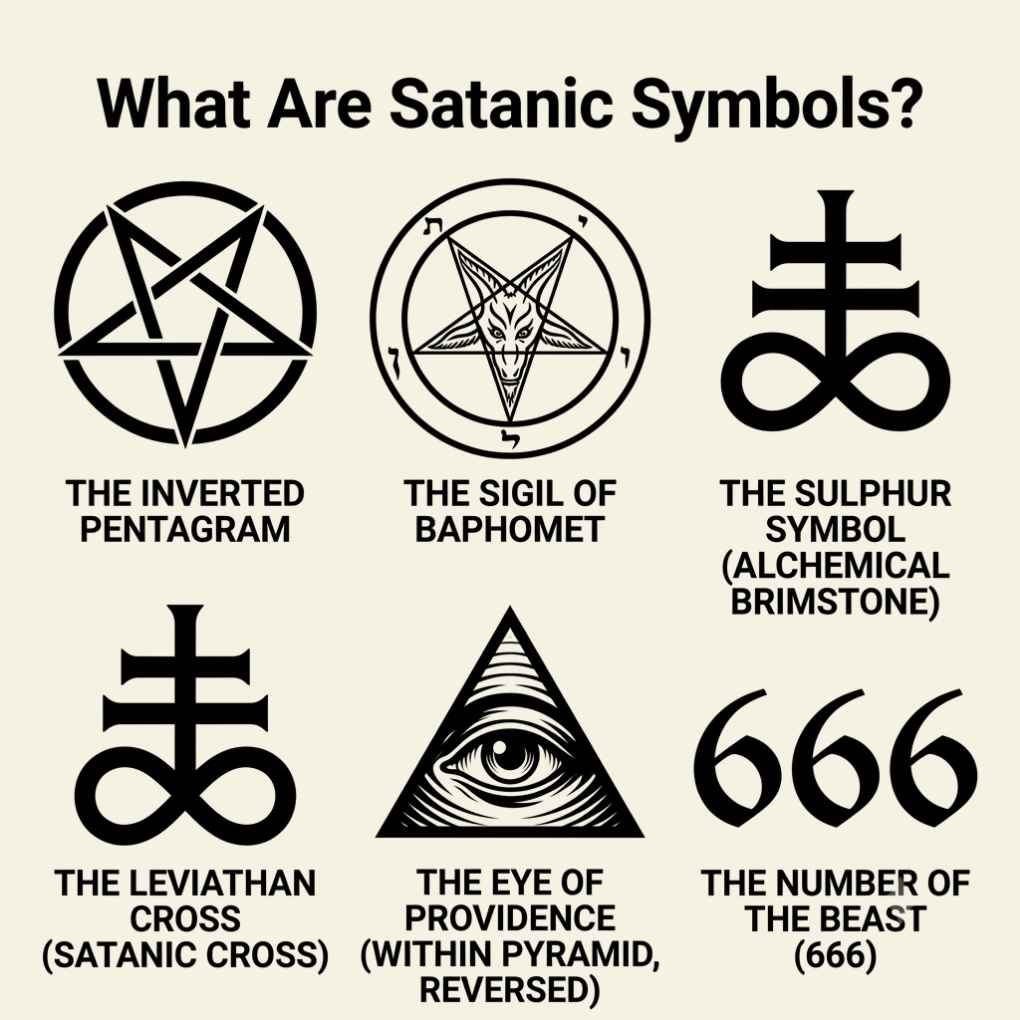
Satanic symbols are visual signs associated with Satan, Lucifer, demonic entities, or anti-Christian ideology. They appear in occult practices, religious rituals, art, music, and modern pop culture. But the word “Satanic” covers a wide range of belief systems, and not all of them involve worshipping a literal devil.
In LaVeyan Satanism, founded by Anton LaVey in 1966, satanic iconography is used as a philosophical tool. It represents individualism, rejection of blind faith, and human carnality. These symbols aren’t meant to summon demons but to challenge religious authority and celebrate personal freedom.
In Theistic Satanism, however, symbols like the Sigil of Lucifer or the Seal of Satan carry genuine spiritual weight. Practitioners use them in rituals and prayer the same way Christians use the cross. Understanding this distinction is the first step toward making sense of this entire topic.
History and Origins of Satanic Symbols
Long before the Church of Satan existed, many of today’s most recognizable demonic symbols were rooted in pagan, alchemical, and ancient religious traditions. The pentagram, for example, dates back to ancient Sumer around 3000 BCE. Greeks used it to represent the five elements. It had absolutely nothing to do with Satan for thousands of years.
The real shift happened during the medieval period. As Christianity spread across Europe, the Catholic Church systematically demonized pre-Christian symbols, rituals, and deities. Goat imagery, once associated with fertility gods like Pan, became linked to the devil. Horns, once a symbol of power and divinity, became signs of evil.
Anton LaVey formalized much of modern satanic symbolism when he founded the Church of Satan in San Francisco in 1966 and published The Satanic Bible in 1969. He codified symbols like the inverted pentagram and the Leviathan Cross as official emblems of his philosophy. From that point forward, these symbols entered mainstream cultural consciousness, fueled further by the heavy metal movement of the 1970s and 80s.
9 Most Popular Satanic Symbols and Their Meanings
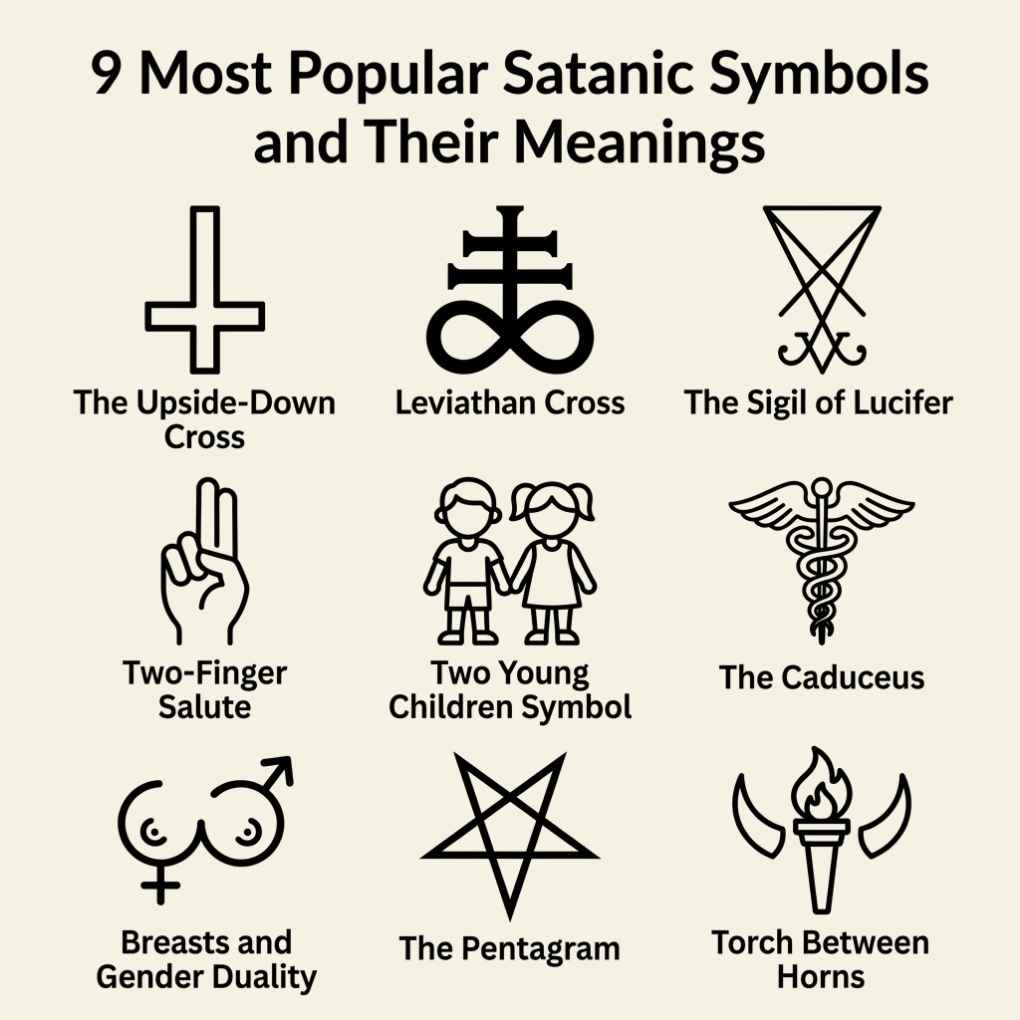
1. The Upside-Down Cross
The upside-down cross, also called the Cross of Saint Peter, actually has Christian origins. According to tradition, the apostle Peter requested to be crucified upside down because he felt unworthy to die in the same manner as Jesus. For centuries, it was a symbol of humility within Catholicism.
Modern Satanism and horror culture flipped its meaning entirely. Today it’s one of the most widely recognized anti-Christian symbols, used in movies like The Exorcist and by bands like Ghost to signal rejection of Christian values. The symbol itself didn’t change. The cultural framing did.
2. Leviathan Cross
The Leviathan Cross, also called the Cross of Satan or the sulfur symbol, looks like an infinity sign with a double-barred cross on top. Its origins are surprisingly mundane. It was originally an alchemical symbol representing the element sulfur in medieval chemistry.
Anton LaVey adopted it as an official Church of Satan symbol because sulfur was associated with hellfire in biblical texts. Today it represents earthly pleasures, the infinite nature of existence below, and the rejection of heavenly reward. You’ll find it on countless satanic tattoos and occult jewelry.
3. The Sigil of Lucifer
The Sigil of Lucifer is one of the most visually distinctive luciferian symbols in existence. It first appeared in a 16th-century Italian grimoire called Grimorium Verum. The design features a V-shape, a circle, and several intersecting lines forming a geometric figure.
Practitioners use it in ritual symbols to invoke or communicate with Lucifer. In modern occultism, it represents the pursuit of hidden knowledge, enlightenment, and the rejection of divine authority. It’s among the most popular choices for satanic tattoo meanings among people aligned with left-hand path spirituality.
4. Two-Finger Salute
The two-finger salute, better known as the “devil horns” or Mano Cornuta, is a hand gesture made by extending the index finger and pinky while folding the middle fingers. It’s one of the most recognized satanic hand gestures in the world, yet its origins are surprisingly complex.
In Italian and Mediterranean folklore, the gesture was actually a protective charm against the evil eye. Rock musician Ronnie James Dio popularized it in heavy metal culture during the 1970s, crediting his grandmother’s use of it for protection. Today it’s used casually at concerts with no religious meaning whatsoever for most people, yet it remains one of the most debated satanic signs in popular discourse.
5. Two Young Children Symbol
This lesser-known symbol appears in certain occult practices and esoteric art traditions. It typically represents the duality of innocence and corruption, or the idea that dark forces seek to influence the pure and untouched. It’s often misidentified and misattributed online, especially in conspiracy theory circles.
Context matters enormously here. In genuine occult symbolism, this image speaks to philosophical dualism rather than literal harm. It’s important to separate documented occult symbolism from internet misinformation, which frequently distorts meanings for shock value.
6. The Caduceus
The Caduceus is a staff entwined by two serpents, topped with wings. It originated as the symbol of Hermes, the Greek messenger god, and later Mercury in Roman mythology. Today it’s widely used in American medical contexts, often confused with the Rod of Asclepius.
In occult symbolism, the Caduceus represents cosmic balance, the union of opposites, and the power to navigate between worlds. Some luciferian symbols systems incorporate it as a representation of Lucifer’s role as a messenger between the divine and human realms. It’s a perfect example of how the same symbol carries radically different meanings across contexts.
7. Breasts and Gender Duality
This element of Baphomet meaning is often misunderstood. The classic Baphomet image drawn by French occultist Eliphas Lévi in 1856 depicts a goat-headed figure with both male and female physical attributes. The female chest represents the nurturing, receptive feminine principle.
This duality isn’t sexual in its intent. It’s deeply philosophical. Baphomet as a symbol embodies the reconciliation of opposites: male and female, light and dark, earthly and divine. For practitioners of modern Satanism, it symbolizes completeness and the rejection of rigid binaries.
8. The Pentagram
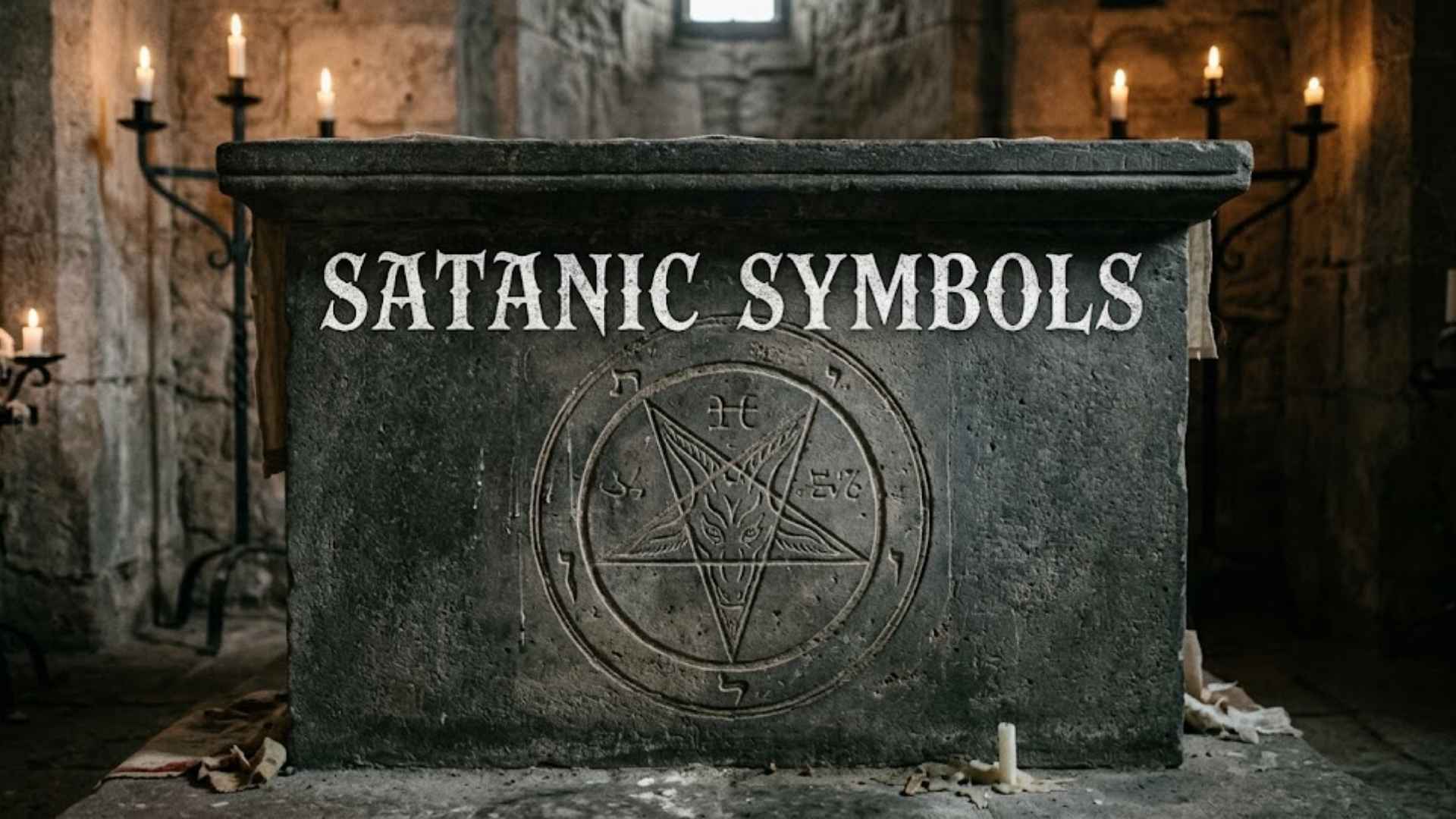
The inverted pentagram is arguably the most recognized of all occult symbols. A five-pointed star with one point facing downward, enclosed in a circle, it serves as the official emblem of the Church of Satan. The downward point is said to represent matter triumphing over spirit, the earthly over the divine.
Importantly, the upright pentagram is not a Satanic symbol. It’s used in Wicca, ceremonial magic, and various pagan traditions as a protective emblem. The inversion is what carries Satanic connotation. This distinction matters because upright pentagrams appear everywhere from the American flag’s star layout to Moroccan architecture, and they carry no dark meaning whatsoever.
9. Torch Between Horns
The torch seated between the horns of Baphomet represents the light of Lucifer, which literally means “light-bearer” in Latin. This image symbolizes forbidden knowledge, illumination through darkness, and the idea that wisdom comes through questioning authority rather than accepting it blindly.
It’s one of the most powerful pieces of satanic imagery in terms of philosophical depth. In black magic symbols traditions, the torch also represents the flame of individual will, the driving force behind all magical practice.
You May Also Like: Significance of Signs Symbols Artifacts: Why They Still Matter Today
Demystifying Satanic Symbols
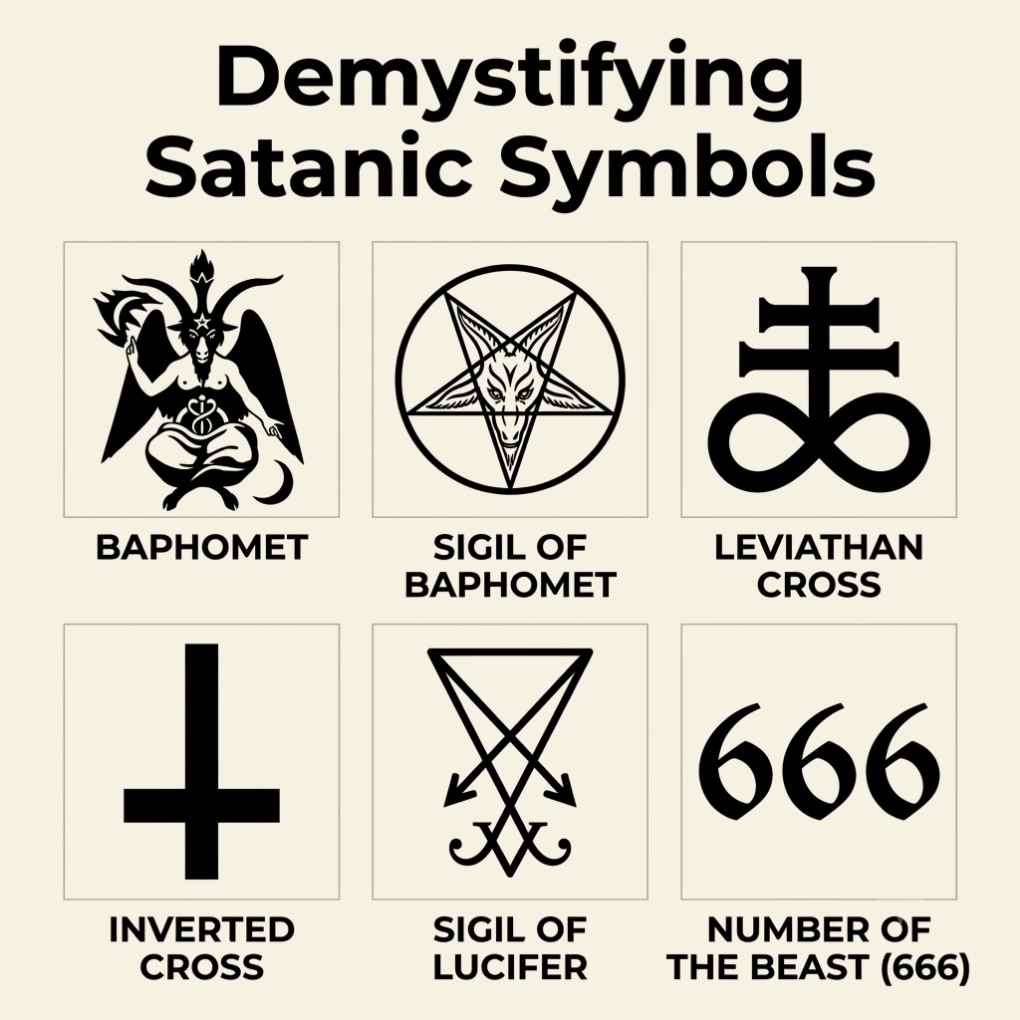
One of the biggest problems with public understanding of demonic sigils and satanic emblems is rampant misidentification. During the 1980s Satanic Panic, parents and law enforcement accused innocent people of occult involvement based on symbols that turned out to be completely mundane. Backward messages in rock music, pentagrams on Procter & Gamble products, and triangles in corporate logos were all misread as infernal symbols.
The reality is that geometric shapes, inverted imagery, and ancient esoteric symbols appear everywhere in architecture, art, and design with no occult intent. Understanding what a symbol actually is, and where it actually came from, is the difference between informed awareness and dangerous misinformation.
Symbols don’t have inherent power. They carry the meaning people assign to them. A pentagram means protection to a Wiccan, Satanic rebellion to a LaVeyan Satanist, and absolutely nothing to someone who bought a pentagram necklace because it looked cool.
Common Satanic Symbols and Meanings
Satanic Symbols Tattoos
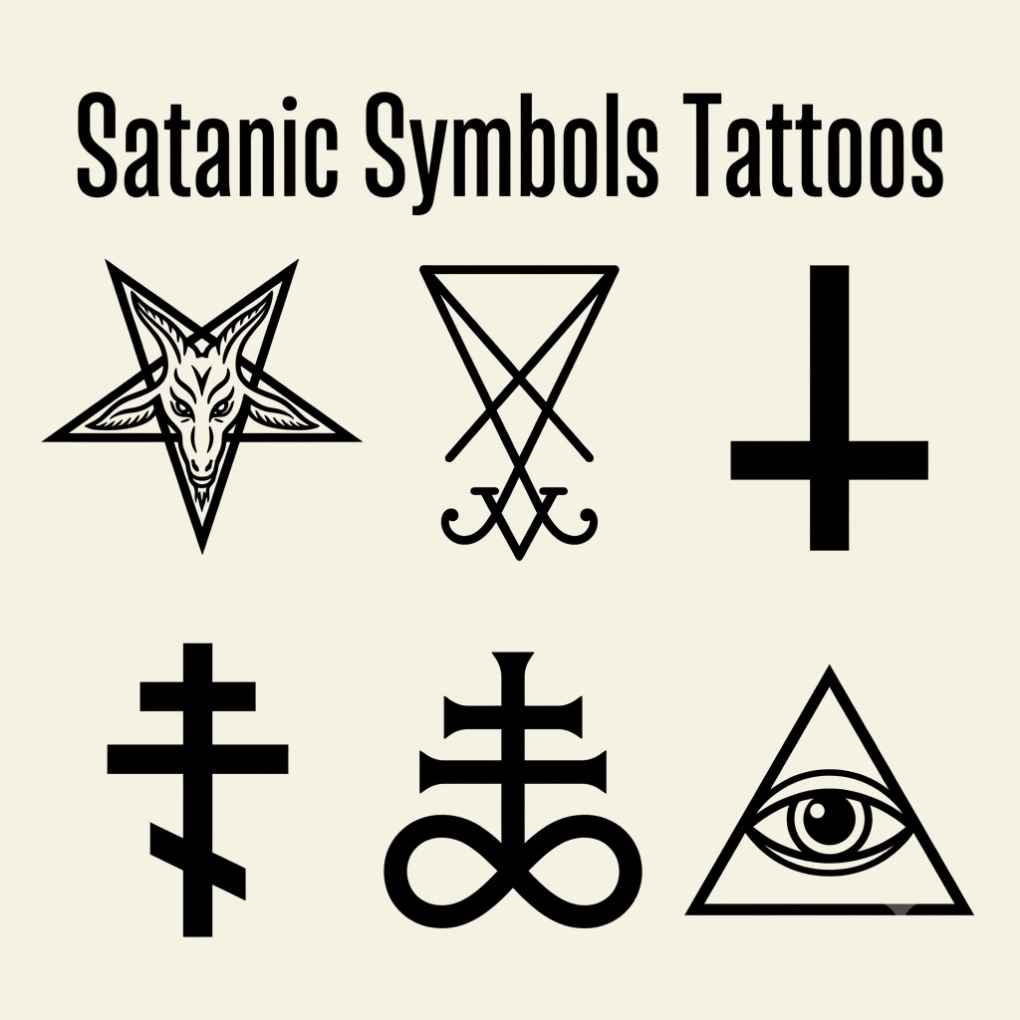
Satanic tattoo meanings vary widely depending on the person wearing them. The most popular choices include the Leviathan Cross, inverted pentagram, Sigil of Lucifer, and Baphomet. For many wearers, these tattoos represent personal philosophy rather than religious devotion.
In alternative subcultures, satanic imagery in tattoo form is often about identity, rebellion, and aesthetic appreciation for dark art traditions. Some people get these tattoos as a direct expression of their satanic beliefs, while others simply find the symbolism visually compelling.
Satanic Symbols With Hands
Beyond the devil horns, other satanic hand gestures include the “OK” sign (misidentified in conspiracy circles), the hidden hand (Masonic origin, not Satanic), and various mudras used in ritual contexts. Most of these gestures have been wildly exaggerated in online conspiracy content.
Satanic Symbols Copy and Paste
Many people search for these symbols simply to use them in design, text, or creative projects. Common Unicode options include ⛧ (inverted pentagram), 🜏 (sulfur/Leviathan Cross), and ✝ for cross variations. These are widely available and carry no inherent danger.
Satanic Goat Symbols
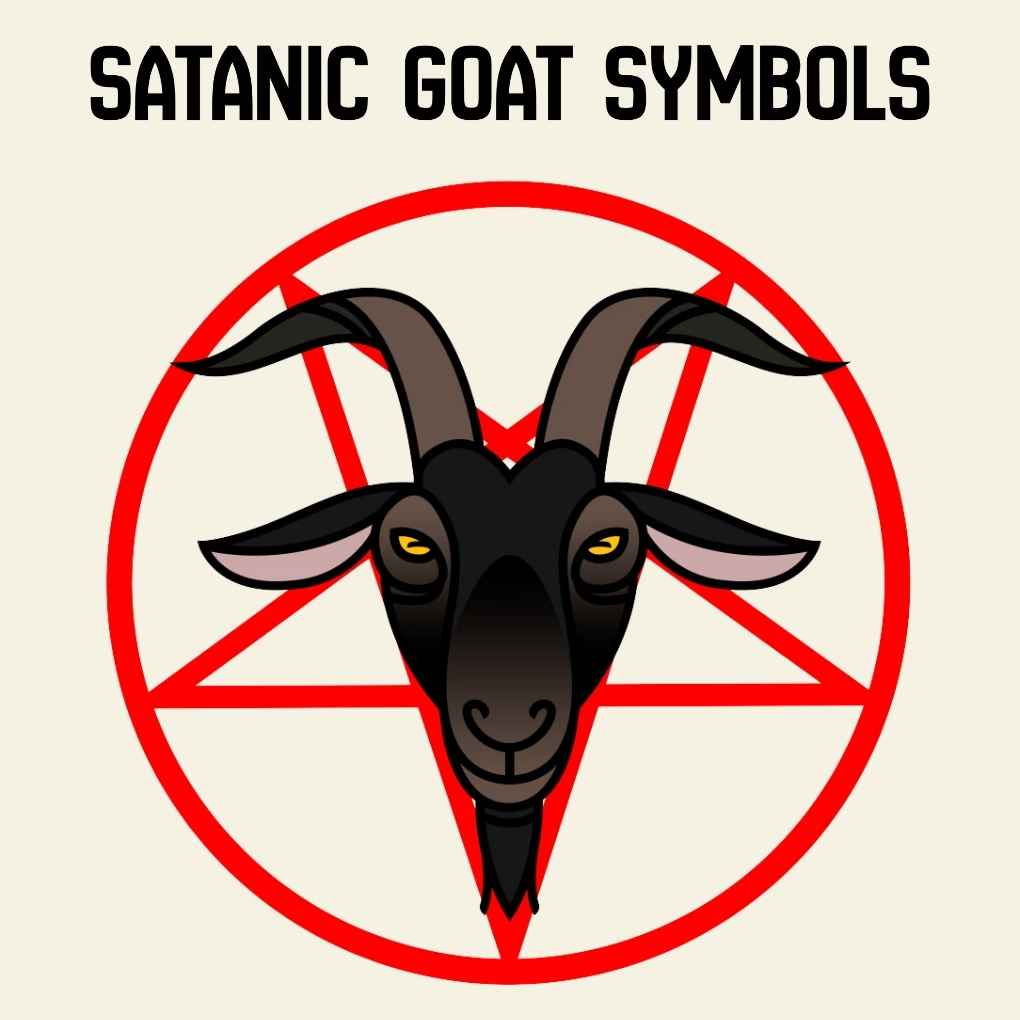
The goat head symbol traces back to the Goat of Mendes from ancient Egyptian tradition and the Biblical scapegoat narrative in Leviticus. In Matthew 25:33, God separates sheep from goats in the final judgment, placing goats on the left. This gave goats a negative association in Christian theology that eventually solidified into Satanic imagery.
Demonic Symbols vs Satanic Symbols
| Feature | Demonic Symbols | Satanic Symbols |
| Origin | Demonology grimoires | Church of Satan, occult tradition |
| Purpose | Invoke specific demons | Represent philosophy or Satan |
| Examples | Sigil of Bael, Seal of Paimon | Leviathan Cross, Sigil of Lucifer |
| Religious use | Theistic ritual magic | LaVeyan or Theistic Satanism |
Deep Symbolic Meaning of Satanic Symbols
Spiritual Meaning
In occult practices, these symbols represent the rejection of divine hierarchy and the celebration of individual spiritual authority. Left-hand path traditions use esoteric symbols as anchors for personal transformation rather than worship of an external evil being.
Psychological Meaning
Carl Jung identified the concept of the Shadow Self, the parts of our psyche we suppress and deny. Satanic symbolism can function as a psychological container for these suppressed aspects, allowing people to confront rather than hide from their darker impulses. It’s a form of symbolic therapy in some therapeutic traditions.
Religious Meaning
From a Christian standpoint, these symbols are spiritually dangerous and represent rebellion against God. From a modern Satanism perspective, they’re tools of self-empowerment. From an academic standpoint, they’re fascinating artifacts of human religious history.
Cultural Meaning
The Satanic Panic of the 1980s left a lasting cultural scar in America. Hundreds of people were falsely accused of ritual abuse based on misidentified symbols and moral hysteria. Today, satanic iconography has been largely normalized through fashion, music, and streaming horror content, shifting public perception dramatically.
Types and Variations of Satanic Symbols
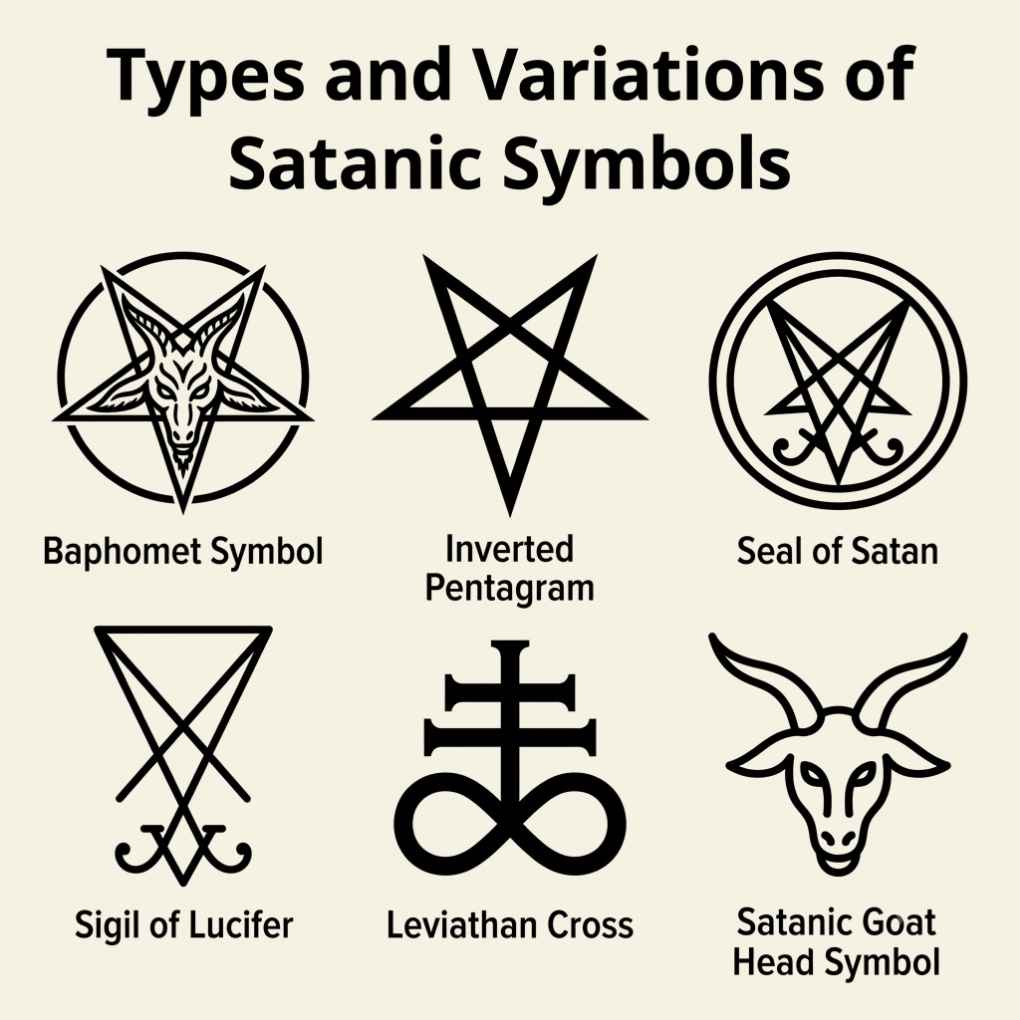
Not all satanic symbols carry the same meaning. Each one has its own origin, purpose, and place within occult traditions.
1. Baphomet Symbol
The Baphomet is a goat-headed, winged figure first illustrated by Eliphas Lévi in 1856. It represents duality, combining male and female, human and animal, good and evil into one unified image central to modern satanic iconography.
2. Inverted Pentagram
The inverted pentagram is the official emblem of the Church of Satan. With one point facing downward, it symbolizes matter over spirit and earthly desires over divine authority, making it the most recognized occult symbol in modern Satanism.
3. Seal of Satan
The Seal of Satan appears in specific ritual grimoires and is used in occult practices to represent Satan’s direct authority. It differs from the Sigil of Lucifer in that it’s tied to dominion and power rather than invocation or communication.
4. Sigil of Lucifer
Originating from the 16th-century Grimorium Verum, the Sigil of Lucifer is a geometric seal used to invoke Lucifer’s presence in ritual settings. It remains one of the most widely used luciferian symbols among left-hand path practitioners today.
5. Leviathan Cross
The Leviathan Cross combines an infinity symbol with a double-barred cross. Originally an alchemical sign for sulfur, Anton LaVey adopted it as a Church of Satan emblem representing eternal earthly existence and the rejection of heavenly promises.
6. Satanic Goat Head Symbol
The goat head symbol forms the centerpiece of the Church of Satan’s official Sigil of Baphomet. Rooted in Biblical scapegoat imagery and ancient pagan fertility gods, it’s a registered trademark of the Church of Satan and one of the most iconic demonic symbols worldwide.
You May Also Like: 55+ Powerful God Symbols and Their Spiritual Significance
Satanic Symbols Across Different Cultures
Ancient Pagan Traditions
The pentagram appears in ancient Greek, Sumerian, and Babylonian art. The goat represented fertility across Mediterranean cultures. Most symbols we call “Satanic” today were sacred or neutral in their pre-Christian contexts.
Medieval Occult Practices
Grimoires like the Lesser Key of Solomon catalogued demonic sigils for 72 demons. These became the foundation for Western ritual symbols that persist in occult practice to this day.
Modern Satanism
The Church of Satan (1966) and The Satanic Temple (2013) represent two very different uses of church of Satan symbols. The Temple, notably, uses Baphomet as a legal and political symbol in fights for separation of church and state, not as an object of worship.
Contemporary Pop Culture
Artists like Lil Nas X deliberately used satanic imagery in music videos to provoke conversation about race, religion, and artistic freedom. Fashion brands have incorporated occult symbolism into high-end collections. Horror gaming and anime regularly feature black magic symbols as aesthetic elements.
Satanic Symbols in Art, Movies, and Popular Culture
Horror cinema has done more to shape public understanding of demonic symbols than any religious text. Films like Hereditary (2018) used real occult sigils from established grimoires to build authentic dread. Rosemary’s Baby introduced mainstream audiences to ritual symbols and ceremonial magic in 1968.
Heavy metal music built an entire visual identity around satanic emblems. Bands like Black Sabbath, Slayer, and Behemoth use these symbols as artistic statements about mortality, power, and the rejection of mainstream morality. Most musicians involved don’t practice any form of Satanism at all.
In fashion, brands like Vetements and smaller occult-inspired designers have made esoteric symbols a mainstream aesthetic trend. What was once genuinely transgressive is now available at Urban Outfitters.
Positive vs Negative Interpretations of Satanic Symbols
Symbolic and Philosophical Interpretations
For atheistic Satanists and left-hand path practitioners, these symbols represent intellectual freedom, personal sovereignty, and the courage to question inherited belief systems. The Satanic Temple has used Baphomet in genuine legal battles to defend religious pluralism in American public spaces.
Religious and Negative Interpretations
Traditional Christian, Jewish, and Islamic perspectives hold that engaging with these symbols invites spiritual harm. Parents and child psychologists have raised legitimate concerns about youth exposure to graphic satanic imagery without context, particularly in online spaces where extreme content is easily accessible.
FAQs About Satanic Symbols
What is the most powerful Satanic symbol?
The Sigil of Lucifer and the Baphomet are generally considered the most significant in terms of ritual use and cultural recognition within Satanic traditions.
Is the pentagram always a Satanic symbol?
No. The upright pentagram is used in Wicca and pagan traditions as a protective symbol. Only the inverted pentagram carries Satanic connotations.
What’s the difference between the Sigil of Lucifer and Baphomet?
The Sigil of Lucifer is a ritual seal used to invoke Lucifer. Baphomet is a deity figure representing duality. They serve different symbolic functions.
Do Satanic symbols have real power?
From a secular perspective, no symbol has inherent power. Meaning is assigned by belief and cultural context. From a religious perspective, this question depends entirely on your faith tradition.
Conclusion
Satanic symbols are among the most misunderstood signs in human cultural history. They’re older than Christianity, more philosophically complex than horror movies suggest, and far less dangerous than moral panic has historically claimed. Context, intent, and cultural background determine what any symbol actually means.
Whether you’re researching these symbols out of curiosity, spiritual interest, or concern, the most important takeaway is this: knowledge beats fear every time. Understanding what these symbols actually represent gives you far more power than avoiding them out of ignorance.
Explore more symbol guides on the blog to continue building your understanding of the world’s most fascinating and misunderstood iconography.

Mubeen is a passionate writer at Auramegazine who explores symbolism, hidden meanings, and powerful signs behind everyday symbols. He enjoys creating simple, engaging content that helps readers understand deeper meanings and cultural connections.