87+ Best Hand Symbols and Their Hidden Meanings Explained in 2026
Hand symbols are one of the oldest forms of human communication, predating written language by tens of thousands of years. Long before alphabets existed, people pressed painted palms onto cave walls, raised fists in resistance, and extended open hands in blessing. Today, these same gestures still carry enormous power, showing up in religious art, protest movements, social media, and everyday conversation.
This guide breaks down the most important hand symbols, their hidden meanings, and why they still matter deeply in modern culture.
What Are Hand Symbols?
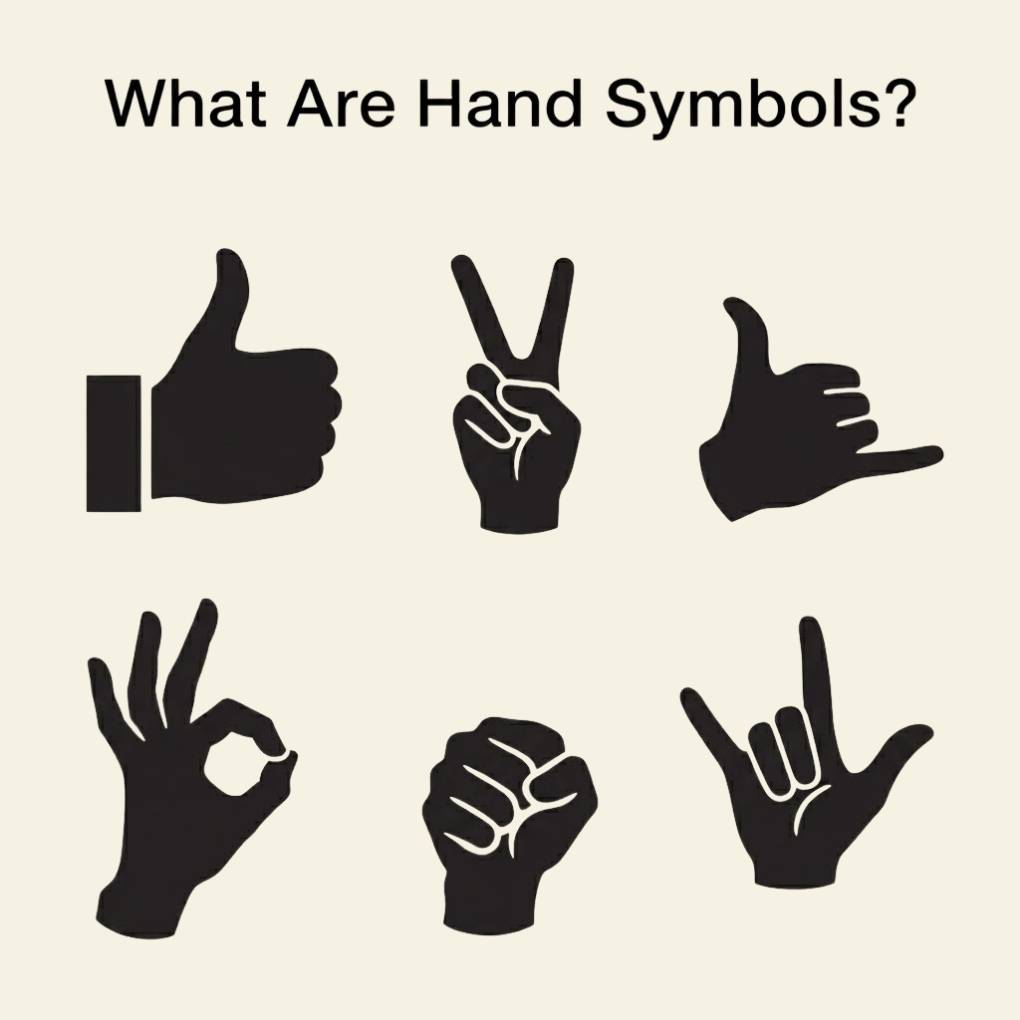
Hand symbols are gestures or visual representations of hands that communicate ideas, emotions, beliefs, or power without a single spoken word. They’re part of our nonverbal communication system, and they work instantly across language barriers.
The earliest known hand symbols date back roughly 40,000 years to cave paintings in Indonesia and France. Ancient humans pressed their hands against stone walls, leaving stenciled prints that researchers believe represented identity, presence, and spiritual connection. The hand said, “I was here. I exist.”
What Do Hands Symbolize?
Hands symbolize power, protection, creativity, connection, and action. They’re the tools we use to build, heal, fight, comfort, and create. Because of this, nearly every culture on earth has developed its own rich system of hand symbolism.
Think about it this way: when someone reaches out a hand to you, you feel welcomed. When someone raises a fist, you feel either threatened or inspired, depending on the context. That instant emotional response is exactly why hands became such powerful symbols throughout human history.
Symbolism Of Hands
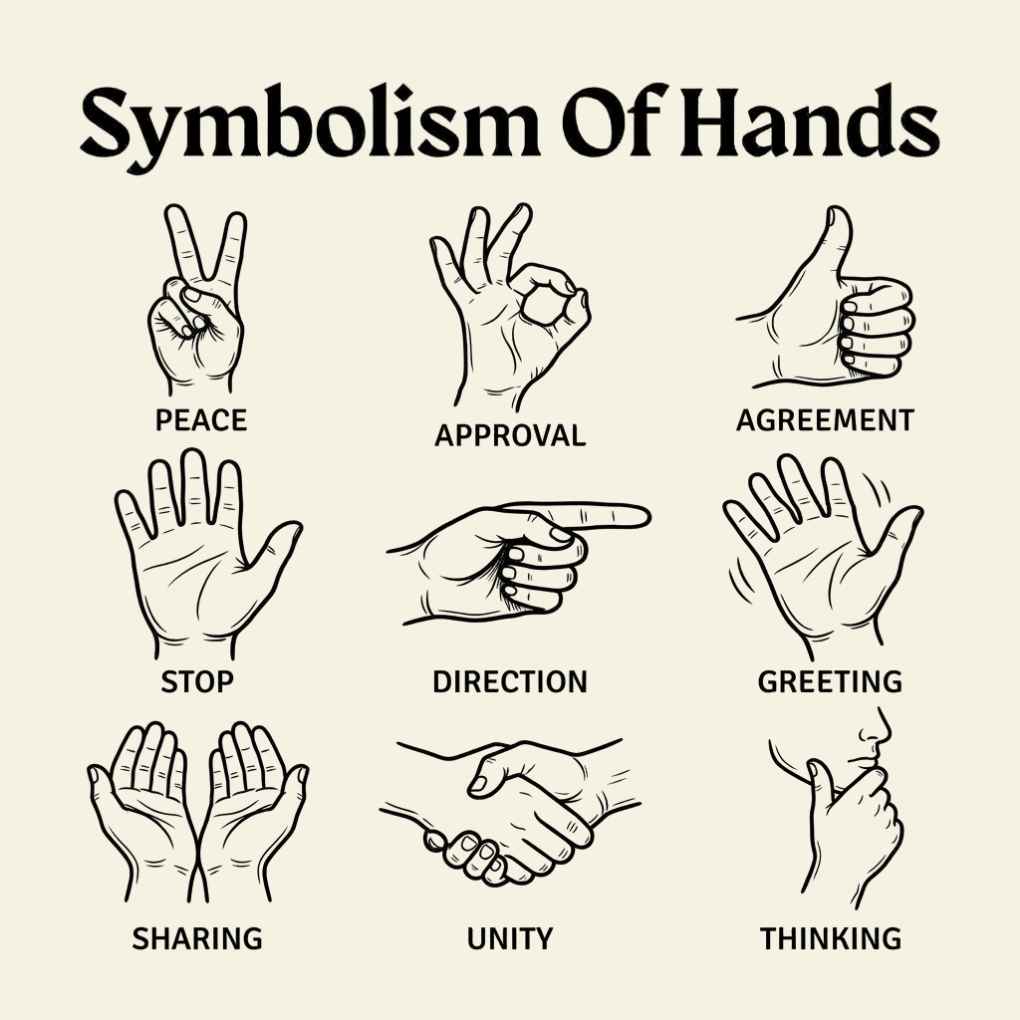
The deeper symbolism of hands often splits along two lines: giving and receiving. In many mystical and spiritual traditions, the right hand represents action, giving, and outward energy. The left hand represents intuition, receiving, and inner wisdom.
This duality makes hands uniquely expressive. A single open palm can mean peace, welcome, or surrender, depending entirely on context, culture, and intention.
Spiritual Meaning Behind Hand Symbols
Spiritually, hands are believed to channel divine energy. In Reiki healing, practitioners use their hands to transfer healing energy to patients. In Christian tradition, laying hands on someone represents blessing and healing power passed from one person to another.
Healing hand symbols appear across virtually every major spiritual tradition. Whether it’s a Hindu guru’s raised palm or a Christian priest’s extended blessing hand, the message is consistent: something sacred flows through the hands.
Why Hand Symbols Matter In Human Culture
Before writing systems existed, hand gestures were how humans communicated complex ideas across distances. An open palm signaled safety because it showed no hidden weapon. A pointed finger gave direction. A raised fist rallied a group.
Neurologically, the human brain dedicates a disproportionately large area of the motor cortex to hand movement. This means we’re literally wired to pay close attention to what hands are doing. We read hand gestures faster than we process spoken words.
Hand Symbols Meaning
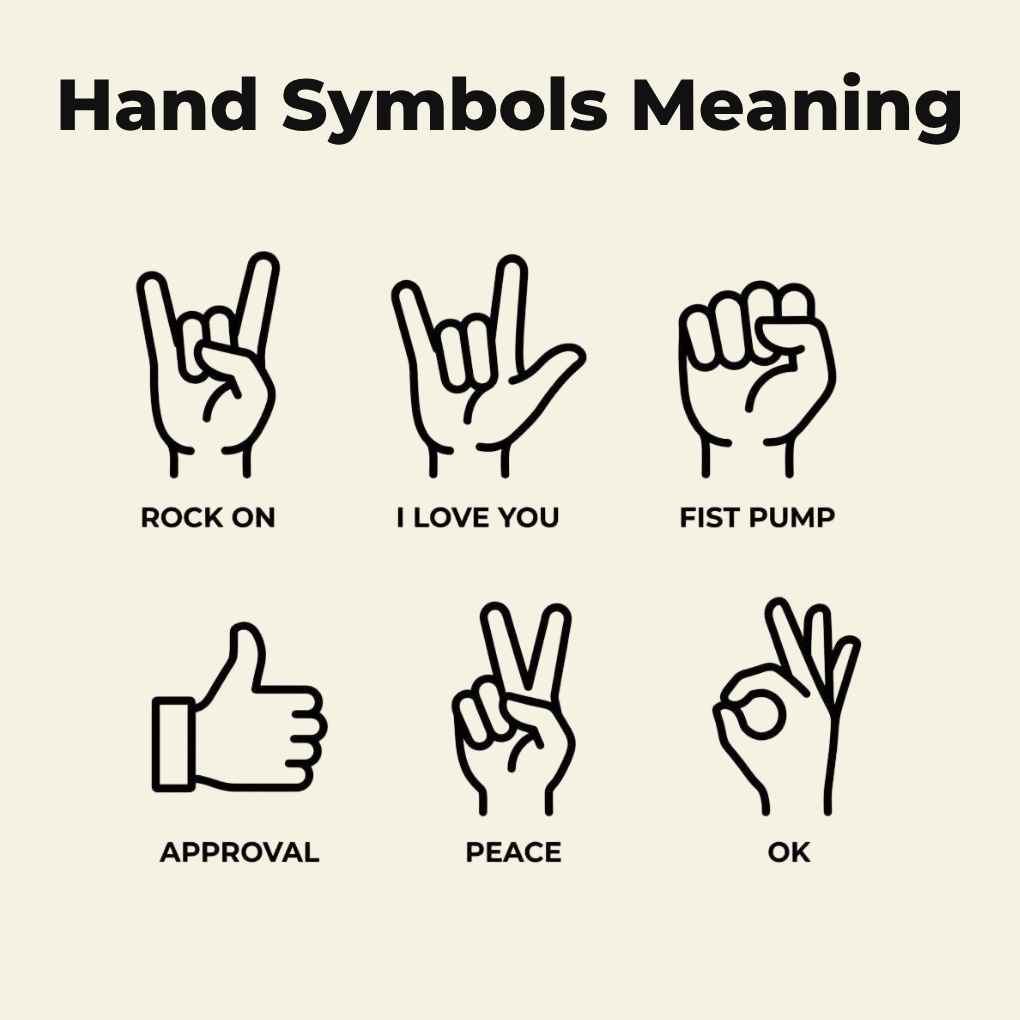
The meaning behind any hand symbol depends on three things: context, culture, and intention. The same gesture that means “okay” in the United States can be deeply offensive in Brazil or Turkey. Understanding this prevents real-world misunderstandings, especially when traveling or doing international business.
Hand Gestures And Modern Meanings
Modern hand gestures are everywhere. You use dozens of them every day without even thinking about it. From waving hello to crossing your fingers for luck, these gestures carry meaning that most people never consciously examine.
Popular Hand Gestures And Their Meanings
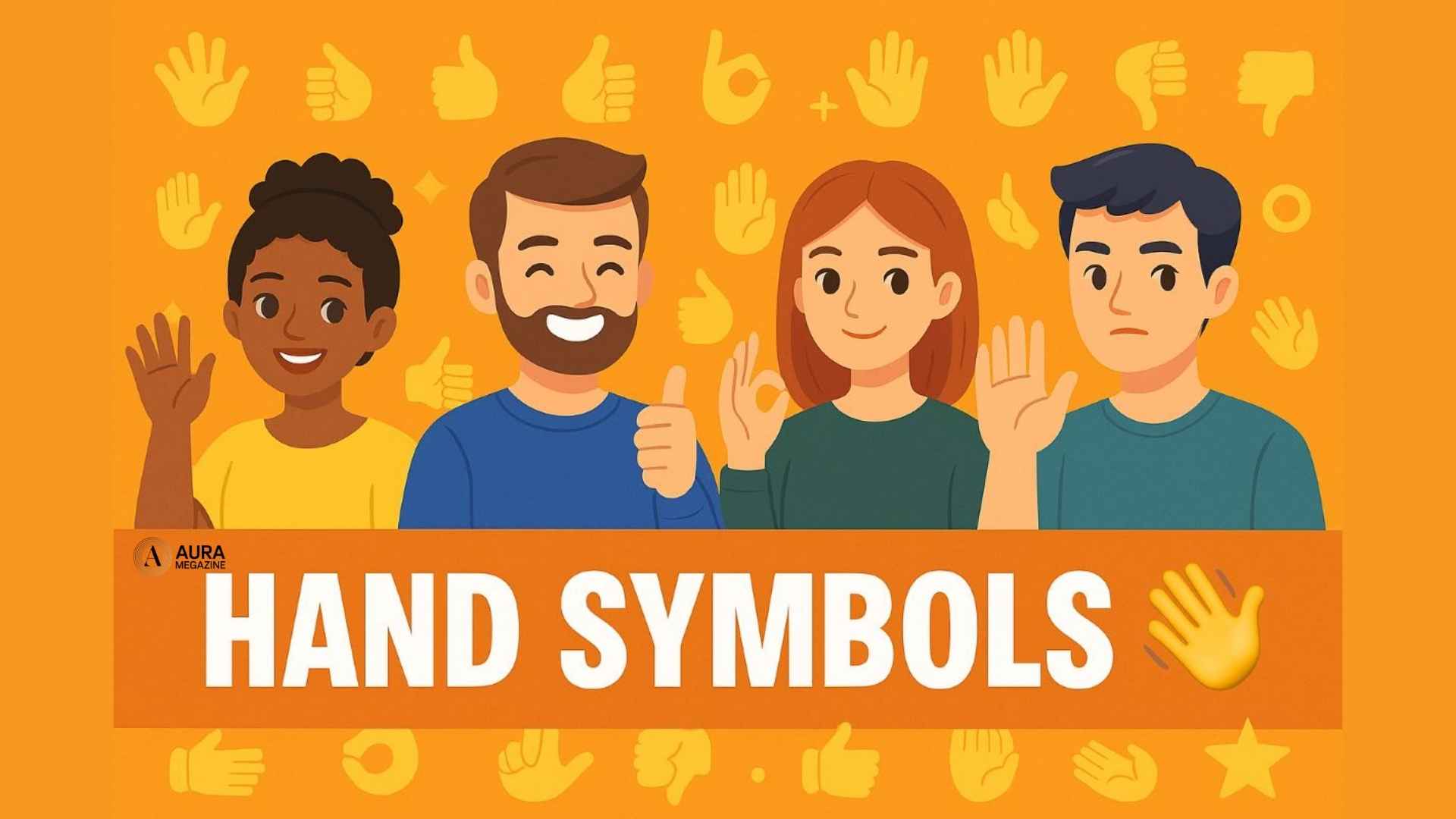
Here are some of the most widely recognized hand gestures in American culture today:
- Thumbs up – Approval, agreement, or encouragement
- Peace sign – Peace, victory, or a casual photo pose
- OK sign – Approval in the USA (but offensive in several other countries)
- Finger heart – Affection, popularized globally by Korean pop culture
- Fist bump – Casual greeting, solidarity, or respect
Common Hand Signs Used Today
Everyday hand signs like the wave, the high five, the pinky promise, and crossed fingers are so common that most Americans use them on autopilot. But each one carries its own history.
Crossed fingers, for example, trace back to early Christian practices where crossing the index fingers formed a small cross for protection. The pinky promise originated in Japan as a binding oath with real social weight behind it.
Powerful Hand Gestures Around The World
The same gesture can mean completely opposite things depending on where you are. Consider this comparison:
| Gesture | USA Meaning | Meaning Elsewhere |
| OK sign (circle) | Everything’s fine | Offensive in Brazil, Turkey |
| Thumbs up | Great, approved | Rude in parts of Middle East |
| Peace/V sign | Peace or victory | Offensive if palm faces inward (UK) |
| Pointing finger | Direction or emphasis | Rude in many Asian cultures |
If you’re traveling internationally, knowing these differences isn’t just interesting. It’s genuinely important for avoiding offense.
Positive And Negative Hand Signs
Almost every hand symbol carries both a positive and a negative interpretation. An open palm can mean welcome or it can mean “stop.” A raised fist can symbolize justice or aggression. Context is everything, and that’s what makes symbolic hand gestures so fascinating.
Modern Social Media Hand Symbols
Social media completely transformed how hand symbols spread. The finger heart, where you cross your thumb and index finger to form a tiny heart, became a global phenomenon almost entirely through K-pop celebrities sharing it online. Hand emojis like 🙏, ✌️, 👊, and 🤞 are now part of daily digital communication, carrying the same emotional weight as their physical counterparts.
You May Also Like: 99+ Taylor Swift Symbols: The Hidden Meanings, Secret Codes and Emotional Stories Behind Every Era
Spiritual, Ancient And Cultural Hand Symbols
Some of the most powerful hand symbols in existence come from ancient spiritual traditions. These aren’t just decorative images. They were created to protect, heal, and connect people with something greater than themselves.
Spiritual Hand Symbols And Their Meanings
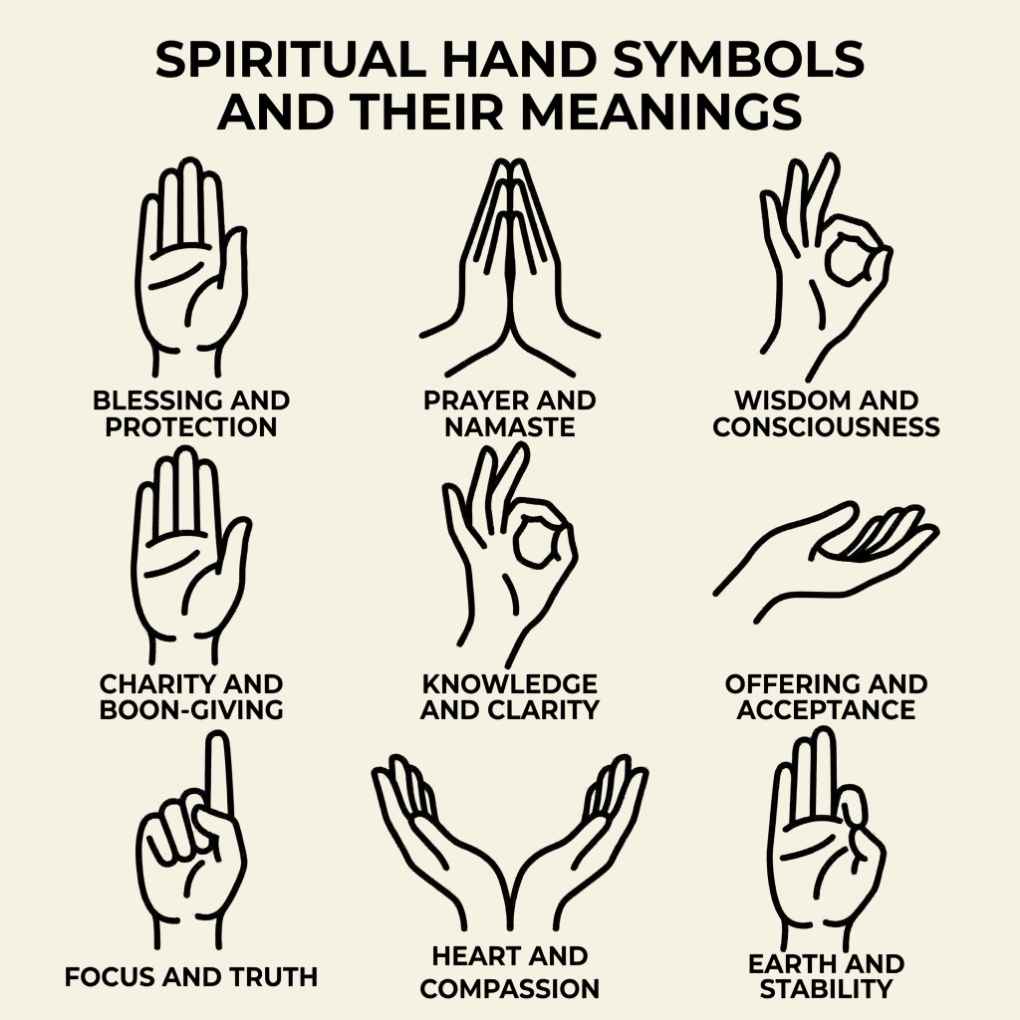
Spiritual hand symbols include open palms raised in praise, clasped hands in prayer, and specific finger positions used in meditation. Each carries its own energy and intention. In many traditions, folded hands represent devotion and humility, while raised hands represent openness to divine presence.
Ancient Hand Symbols Explained
In Ancient Egypt, hieroglyphs frequently used hands to represent action, authority, and divine power. The hand of a pharaoh depicted in wall art wasn’t just decoration. It was a statement of cosmic authority.
In Ancient Greece, orators and philosophers used hand gestures as a formal part of public speaking. Greek sculptures captured specific hand positions to convey philosophical ideas and emotional states that viewers would immediately understand.
Powerful Protective Hand Symbols
The Hamsa hand is arguably the most universally recognized protective hand symbol in the world. It features an open palm with an eye centered in it, and it’s believed to ward off the evil eye and bring blessings and strength. It appears in both Islamic tradition (as the Hand of Fatima) and Jewish tradition (as the Hand of Miriam), representing two distinct but related spiritual lineages.
Today, Hamsa jewelry and wall art are enormously popular across the USA, worn not just for religious reasons but as a symbol of protection and positive energy.
Sacred Hand Signs In Different Cultures
Nearly every culture developed its own sacred hand gestures:
- Native American traditions use specific hand movements in ceremonial dances to honor nature and spirit
- Celtic culture used interlaced hand imagery in knotwork to represent eternal connection
- African traditions incorporate hand symbols in ancestral ceremonies and healing rituals
Mystical Meanings Behind Hand Symbols
In mystical traditions, the left and right hands carry different energies. The right hand projects energy outward, making it the hand used for blessings and action. The left hand receives energy, making it associated with intuition and psychic sensitivity. Many energy healers and spiritual practitioners work with this distinction consciously in their practice.
Religious, Occult And Pop Culture Hand Symbols
Christian Hand Symbols
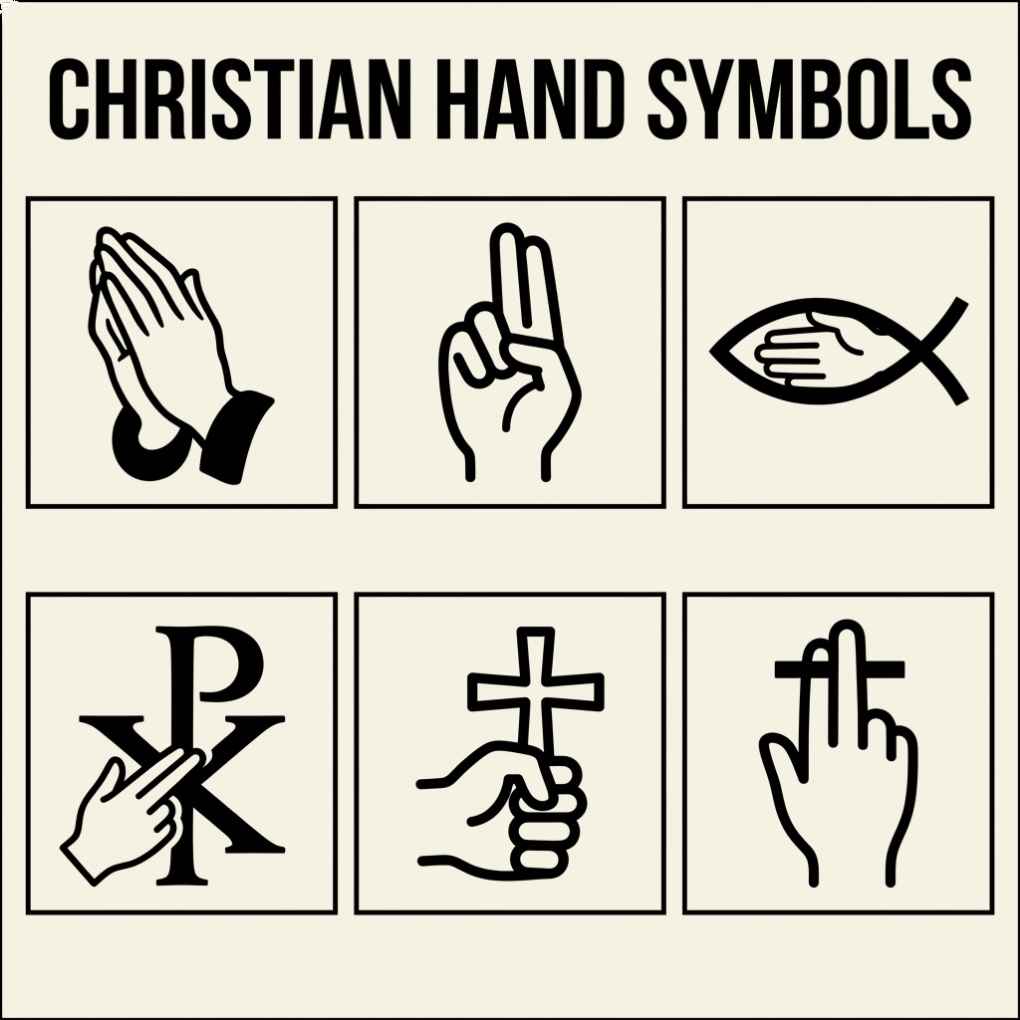
In Christian art and tradition, the blessing hand features two fingers raised and three folded, representing the Trinity. Praying hands, popularized by Albrecht Dürer’s famous 1508 drawing, became one of the most recognized religious symbols in Western culture. These gestures appear constantly in church architecture, paintings, and personal tattoos.
Buddhist Hand Symbols
Buddhist mudras are a highly developed system of symbolic hand positions. Each one communicates a specific teaching or spiritual state:
- Abhaya mudra – Raised right hand, palm outward: fearlessness and protection
- Dhyana mudra – Both hands resting in the lap: meditation and inner peace
- Bhumisparsha mudra – Right hand touching the earth: the moment of Buddha’s enlightenment
- Vitarka mudra – Raised hand with thumb and index finger touching: teaching and discussion
When you see a Buddha statue, the hand position tells you exactly what spiritual quality that particular statue represents.
Occult And Masonic Hand Signs
Masonic hand signs have been part of Freemasonry since at least the 17th century. These specific handshakes and gestures served as recognition signals between members of the brotherhood. They weren’t meant to be sinister. They were practical tools for identifying fellow members before modern identification methods existed.
Occult hand symbols in broader mystical traditions often represent the channeling of hidden or esoteric knowledge. These symbols appear in historical grimoires, alchemical texts, and ceremonial magic traditions.
Satanic And Demonic Hand Symbols
The Mano Cornuta, or devil horns gesture, is one of the most misunderstood hand signs in existence. In Mediterranean cultures, it’s an ancient protective gesture against the evil eye, completely unrelated to Satanism. It was adopted by rock and metal culture in the 1960s and 70s as a symbol of rebellion and intensity.
Context completely determines meaning here. The same gesture means protection in Italy, rock and roll in America, and something sinister in horror films.
Sorority And Secret Society Hand Signs
Greek letter sororities and fraternities use specific hand signs as identity markers. These gestures build community belonging and represent shared values within the organization. They’re not secret in a threatening sense. They’re more like team symbols that create in-group connection and pride.
Entertainment And Specialized Hand Signs
Naruto Hand Symbols
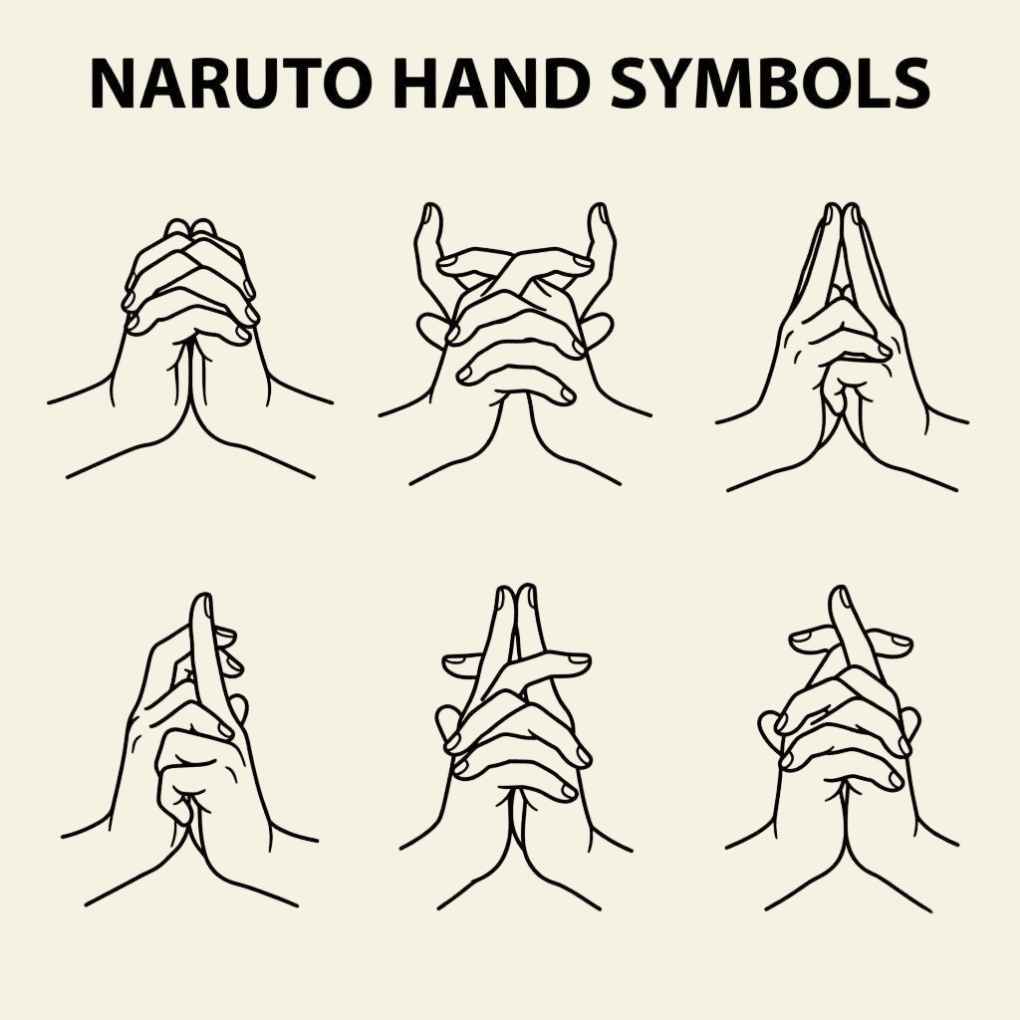
The Naruto hand symbols are based on the 12 signs of the Chinese zodiac. In the anime, characters perform rapid sequences of these hand seals to channel chakra and activate specific jutsu techniques. Fans worldwide still practice and memorize these sequences, which speaks to how fictional hand symbols can take on real cultural weight.
Domain Expansion Hand Signs
From the anime Jujutsu Kaisen, the domain expansion hand sign involves a specific hand clasp that characters use to activate their most powerful technique. It became a massive internet meme and cosplay staple almost immediately after the series gained popularity in the USA.
Solfege Hand Symbols
Solfege hand symbols, also called Curwen hand signs, are used in music education across American elementary schools. Each note of the Do-Re-Mi scale has a corresponding hand position. Research shows that using physical gestures alongside pitch training significantly improves students’ ability to recognize and reproduce musical notes accurately.
Famous Fictional Hand Gestures
Some fictional hand gestures have crossed over into real cultural significance. The Vulcan salute from Star Trek, the split-fingered raised hand meaning “Live long and prosper,” was actually invented by actor Leonard Nimoy, who based it on a Jewish priestly blessing gesture he witnessed as a child.
Spider-Man’s web-shooting gesture has become instantly recognizable worldwide, and Doctor Strange’s swirling magic hand movements influenced how audiences think about mystical energy.
Deep Symbolic Meaning of Hand Symbols
Spiritual Interpretation
Hands are understood as energy transmitters in traditions ranging from Reiki to Pranic healing to Christian prayer. The concept of laying hands on someone to heal them appears in the Bible, in Ayurvedic medicine, and in indigenous healing traditions across multiple continents. This consistency across completely separate cultures suggests something deeply intuitive about the human relationship between hands and healing energy.
Psychological Meaning
Body language researchers have documented that hand gestures reveal emotional states with surprising accuracy. Clenched fists signal anger or determination. Open hands signal honesty and openness. Hidden hands, tucked into pockets or folded behind the back, often signal deception or discomfort.
Psychologist Dr. David McNeill’s research showed that hand gestures and speech are so deeply linked in the human brain that they’re actually produced by the same cognitive system. When someone gestures while talking, they’re not just illustrating their words. They’re thinking with their hands.
Cultural Influence Of Hand Symbols
A hand gesture gains its power when a community collectively agrees on its meaning. The raised fist at the 1968 Olympics, when Tommie Smith and John Carlos raised black-gloved fists on the medal podium, became one of the most photographed moments in sports history. That single gesture carried decades of civil rights history, political tension, and human dignity in one silent motion.
That’s the real power of cultural hand symbols. They compress enormous meaning into a single movement.
Types and Variations of Hand Symbols
Hamsa Hand
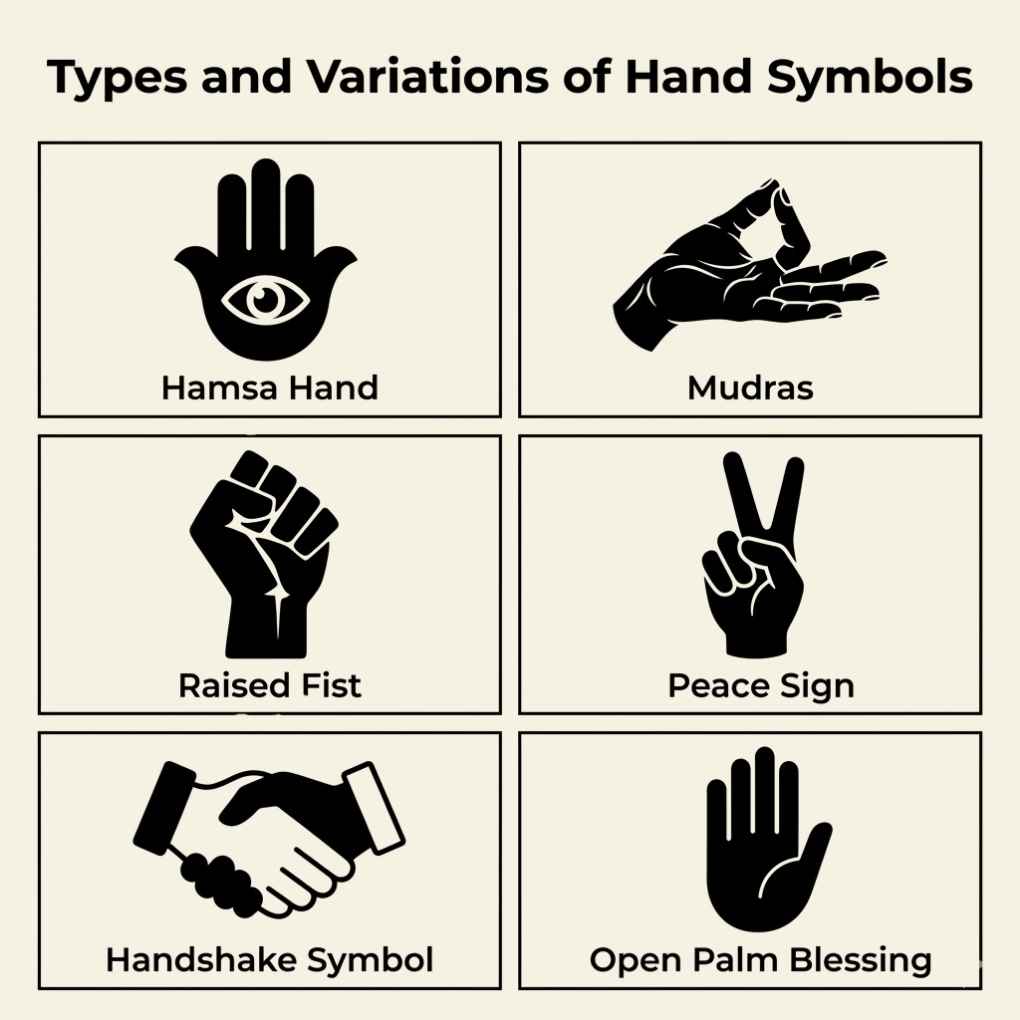
The Hamsa is an open palm amulet with an eye in the center. It appears in both Jewish and Islamic traditions under different names but with the same core meaning: protection from the evil eye and the attraction of blessings. In the USA, it’s one of the most popular protective symbols worn as jewelry or displayed in homes.
Mudras
Mudras are specific finger and hand positions used in Hindu and Buddhist practice. There are over 100 classical mudras in these traditions. Interestingly, each finger is believed to represent one of the five elements: the thumb represents fire, the index finger represents air, the middle finger represents space, the ring finger represents earth, and the little finger represents water.
Raised Fist
The raised fist has been a symbol of solidarity and resistance since at least the early 20th century labor movement. It appeared in abolitionist imagery, civil rights marches, women’s suffrage campaigns, and most recently in the global Black Lives Matter movement. It’s one of the most consistently powerful protest symbols in modern history.
Peace Sign
The V-shaped peace sign has two distinct origin stories. Winston Churchill used it as a victory sign during World War II. It was then repurposed by Vietnam War protesters in the 1960s as a symbol of peace and anti-war resistance. Today it’s used in both contexts and has also become a casual photo gesture worldwide.
Handshake Symbol
The handshake dates back to ancient Greece as a gesture proving that neither party carried a hidden weapon. That origin is why it became the universal symbol of trust and agreement. A firm handshake in American business culture still carries genuine social significance as a measure of confidence and sincerity.
Open Palm Blessing
The open palm blessing, with fingers extended and palm facing outward, appears in Christian art, Hindu iconography, and Islamic tradition alike. It represents divine grace being extended toward the viewer. In Renaissance paintings, figures of authority almost always have one hand raised in this position.
Hand Symbols Across Cultures
Ancient Civilizations
In Ancient Egypt, hands in hieroglyphs represented divine authority and purposeful action. The word “djet,” meaning “hand,” appeared in royal names and titles. In Ancient Greece, hand gestures were a formal part of rhetoric, with specific positions taught to public speakers as tools of persuasion.
South Asian Traditions
In India and Nepal, mudras are central to classical Bharatanatyam dance, where performers use 28 distinct single-hand gestures and 24 double-hand gestures to tell complete stories without speaking a single word. These same gestures appear in temple sculptures dating back over 2,000 years.
Middle Eastern Symbolism
The Hamsa remains one of the most common protective amulets across Middle Eastern cultures. Hand gestures in Arabic communication also carry significant social meaning, with specific movements indicating welcome, refusal, or emphasis in ways that words alone don’t fully capture.
Western Hand Culture
American culture exported hand symbols globally through film, music, and social media. The peace sign, the rock horns, the thumbs up, and the finger heart all spread internationally largely through American and Korean pop culture influence.
East Asian Hand Meanings
In Japan, martial arts traditions emphasize precise hand discipline as both physical technique and spiritual practice. In Korea, the finger heart became the defining hand symbol of the 2010s globally, spreading from K-pop fan culture to everyday international use almost entirely through social media.
Hand Signs And What They Mean
Here’s a quick-reference guide to common hand signs and their meanings:
| Hand Sign | Primary Meaning | Cultural Note |
| ILY sign (ASL) | “I Love You” | Originated in American Sign Language |
| OK sign | Approval | Offensive in Brazil and Turkey |
| Crossed fingers | Luck or hope | Based on early Christian cross gesture |
| Thumbs up | Approval | Offensive in parts of the Middle East |
| Fist bump | Greeting or respect | Popularized in US sports culture |
| Praying hands | Devotion or gratitude | Universal across many religions |
| Pinky promise | Binding commitment | Originated as a serious oath in Japan |
| Pointing finger | Direction or emphasis | Considered rude in many Asian cultures |
Hand Symbols in Art, Movies and Pop Culture
Michelangelo’s Creation of Adam on the Sistine Chapel ceiling features two hands almost touching, with God’s finger extending toward Adam’s. That gap between the fingertips became one of the most analyzed images in art history, representing the divine spark of life passing between creator and creation.
In music, Jay-Z’s Roc diamond hand sign became a cultural shorthand for his label and artistic identity. BLACKPINK’s finger heart swept through global pop culture with extraordinary speed. These celebrity hand symbols show how quickly a gesture can become a cultural landmark when amplified by fame and social media.
In superhero films, hand gestures define characters. Doctor Strange’s swirling hands signal magic. Spider-Man’s web-shooting gesture is recognizable to children worldwide. These fictional gestures have become part of the real cultural landscape, appearing in playgrounds, memes, and Halloween costumes everywhere.
Hand tattoos featuring the Hamsa or praying hands consistently rank among the most requested tattoo designs in American tattoo studios, chosen because they carry personal spiritual meaning in a visible, lasting form.
Spiritual and Dream Meaning of Hand Symbols
When hands appear in your dreams, pay attention to what they’re doing. Dream researchers and spiritual traditions alike suggest that hand imagery in dreams carries important messages about your current emotional state and life circumstances.
Dreaming of open hands generally represents readiness and openness to receive something new, whether that’s love, opportunity, or healing. Dreaming of injured or bound hands often reflects feelings of powerlessness or creative blockage in waking life. Dreaming of glowing hands connects to healing energy and is common among people drawn to energy work like Reiki.
Hands reaching toward you in a dream can represent a desire for connection or support, while hands pushing you away reflect feelings of rejection or self-protection.
Positive vs Negative Meaning of Hand Symbols
One of the most interesting things about hand symbol meanings is that almost every gesture carries both a positive and negative interpretation. The meaning shifts based on context, culture, and the relationship between the people involved.
| Symbol | Positive Meaning | Negative Meaning |
| Open palm | Welcome, blessing | Stop, rejection |
| Raised fist | Justice, solidarity | Aggression, threat |
| Joined hands | Unity, devotion | Dependence, control |
| Pointing finger | Direction, guidance | Accusation, blame |
| Thumbs up | Approval, encouragement | Offensive in some cultures |
This duality is actually what makes hand symbols so powerful. They reflect the complexity of human emotion, carrying opposite possibilities in the same gesture.
Why Humans Are Attracted to Hand Symbols
The human brain is uniquely wired to notice and interpret hands. The motor cortex, the part of your brain that controls movement, dedicates more neural real estate to hand movement than to almost any other body part. This means your brain is constantly, automatically processing what the hands around you are doing.
Hands were humanity’s first tools and our first means of complex communication. Before spoken language fully developed, our ancestors used gestures to coordinate hunts, warn of danger, and express care. That ancient wiring still lives in your brain today, which is why a simple hand gesture can make you feel safe, threatened, loved, or inspired within seconds.
Touch is also the first language every human being learns. From the moment of birth, before we can see clearly or understand words, we respond to the touch of a hand. That primal connection between hands and emotional safety never leaves us, and it’s why hand symbols continue to resonate so deeply across every culture on earth.
Conclusion
Hand symbols are far more than gestures. They’re a living language that connects ancient cave painters with modern activists, Buddhist monks with Hollywood directors, and grandmothers with their grandchildren across language barriers.
Every time you wave hello, fold your hands in gratitude, raise a fist in solidarity, or send a 🙏 emoji, you’re participating in a symbolic language older than any alphabet. The meanings have evolved and shifted over centuries, but the core truth remains: hands express what words sometimes can’t.
The next time you notice a hand symbol, whether it’s in a museum painting, a protest photo, a tattoo, or a text message, take a second to look closer. You might be reading thousands of years of human history in a single gesture.

Mubeen is a passionate writer at Auramegazine who explores symbolism, hidden meanings, and powerful signs behind everyday symbols. He enjoys creating simple, engaging content that helps readers understand deeper meanings and cultural connections.