71+ Viking Symbols and Meanings: Hidden Norse Signs of Power, Protection and Wisdom
Viking symbols and meanings are ancient graphic designs that represented spiritual concepts, protective forces, and cultural values in Norse society. The Vikings used these symbols to communicate ideas about strength, protection, wisdom, and destiny through visual imagery rather than words alone.
These symbols weren’t decorative luxuries—they served practical spiritual purposes. Warriors carved them into weapons before battle, farmers wore them for good harvests, and families displayed them in homes for protection. Each symbol carried specific meanings rooted in Norse mythology and the Viking worldview.
What Are Viking Symbols?
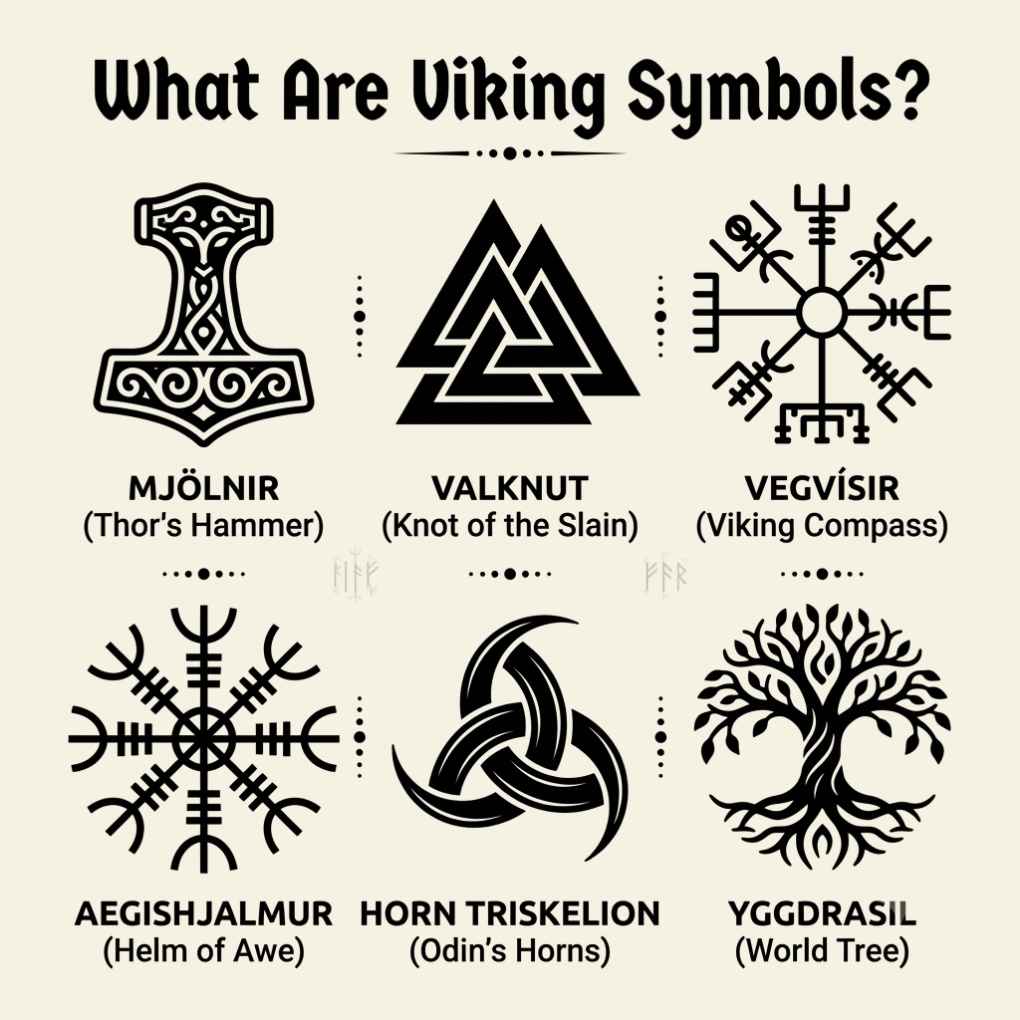
Viking symbols were functional designs that combined practical spiritual purpose with visual representation. They operated as protective talismans, magical inscriptions, and identity markers within Norse culture.
The Vikings created three main types: geometric runes (letters with individual meanings), mythological designs (based on gods and creatures), and abstract patterns (like knots and spirals with symbolic significance). All three functioned simultaneously as art, writing, magic, and spiritual tools.
Vikings believed these symbols directly influenced reality—wearing protection symbols shielded you from harm, victory symbols brought battlefield success, and wisdom symbols enhanced mental clarity. This wasn’t superstition but a comprehensive symbolic system matching their spiritual worldview.
Viking Protection Symbols
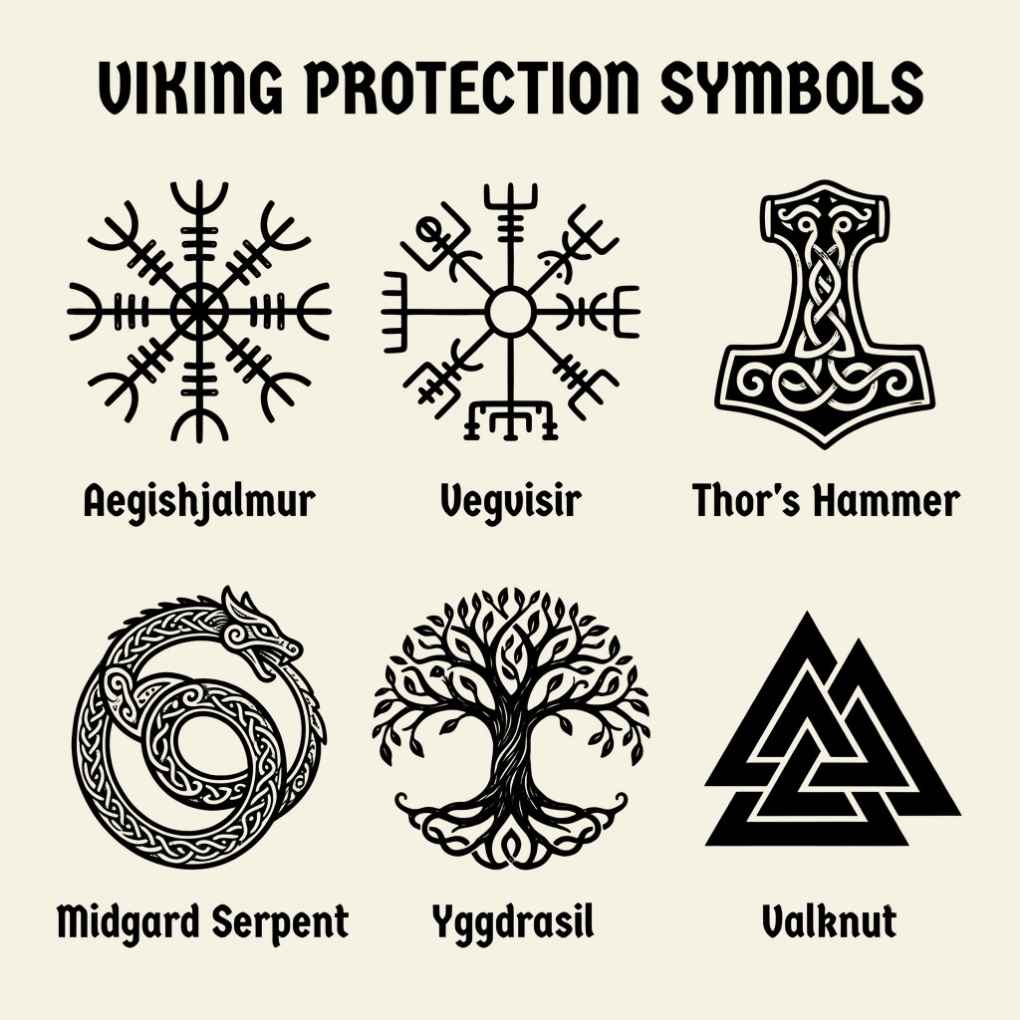
Protection symbols were the most commonly used designs in Viking culture because survival itself was uncertain. Warriors, farmers, and families relied on these symbols to ward off physical danger, illness, and spiritual threats.
These symbols appeared carved into weapons, worn as amulets, stitched into clothing, and painted on shields. Vikings understood that psychological confidence created real advantages—wearing protection symbols made people feel braver, which translated to actual improvements in performance and survival.
The most prevalent protection symbols included runes carved in binding patterns, animal imagery representing fierce guardians, and geometric designs believed to redirect negative energy away from the wearer.
Aegishjalmur
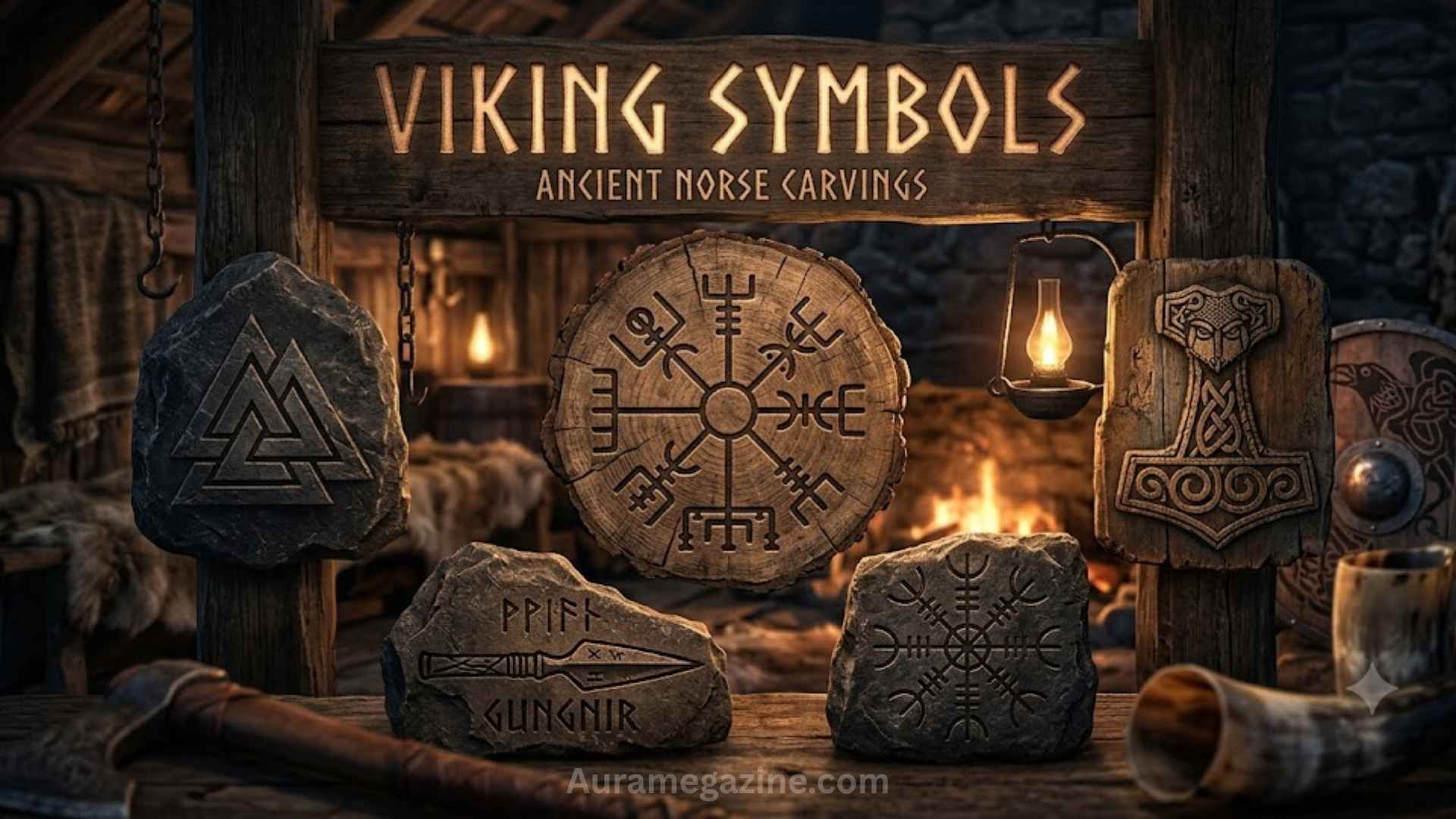
Aegishjalmur (pronounced “AY-gis-yalm-ur”) literally means “helm of awe” and was designed to instill fear in enemies while protecting the wearer from anxiety. The eight-pointed star design featured sharp, aggressive lines that embodied intimidating power.
Vikings believed this symbol granted psychological dominance in battle. When warriors carved Aegishjalmur on their weapons or wore it as an amulet, they projected invincibility. Archaeological evidence shows this symbol appeared frequently on weapons, jewelry, and carved into Viking homes.
The symbol worked through intimidation and confidence—enemies seeing the fearsome design might hesitate, giving the Viking warrior advantage before combat even began. Modern spiritual practitioners still use Aegishjalmur for confidence and protection.
Vegvisir
Vegvisir (pronounced “VEG-vee-seer”) means “wayfinder” and represents spiritual and physical guidance through uncertainty. The runic compass features eight arms pointing in different directions, symbolizing ability to navigate through life’s challenges.
Interestingly, the Vegvisir appeared in 17th-century Iceland rather than during the Viking age itself. However, Vikings absolutely valued wayfinding symbols given their seafaring nature. Modern people adopted Vegvisir because it resonates with contemporary needs for direction in confusing times.
The symbol represents the belief that even in darkness and chaos, a way forward exists. Travelers, spiritual seekers, and people facing major life transitions particularly favor this symbol today.
Thor’s Hammer
Mjölnir (Thor’s Hammer) is the most recognizable Viking symbol globally, representing protection, strength, blessing, and divine power. The iconic hammer head with short handle instantly communicates Norse identity.
According to mythology, dwarves forged Mjölnir for Thor, god of thunder. The hammer always returned to Thor’s hand after being thrown, making it the ultimate weapon. Beyond warfare, it symbolized fertility, blessing ceremonies, and family protection.
All social classes wore Mjölnir amulets—warriors, farmers, merchants, and common people. Archaeological evidence shows Mjölnir pendants in graves across Viking society, proving its universal significance and making it the most democratically adopted Viking symbol.
Rune Protection Symbols
Binding runes were protective rune combinations created by combining two or more individual runes into single designs. Vikings carved these into weapons, homes, and personal items to amplify protective power.
Common protective binding runes included Laguz combined with Sowilo (flow combined with sun, for successful journeys), Thurisaz with Algiz (protection against giants and danger), and Fehu with Tiwaz (wealth protection). The combinations created layered meanings stronger than individual runes.
Vikings understood that rune placement mattered—carving protection runes above doorways, on weapon hilts, or worn on the body created different effects. They weren’t random magical thinking but deliberate symbolic strategies.
You May Also Like: 99+ Italian Symbols That Reveal Italy’s Hidden Soul
Viking Symbols of Strength and Courage
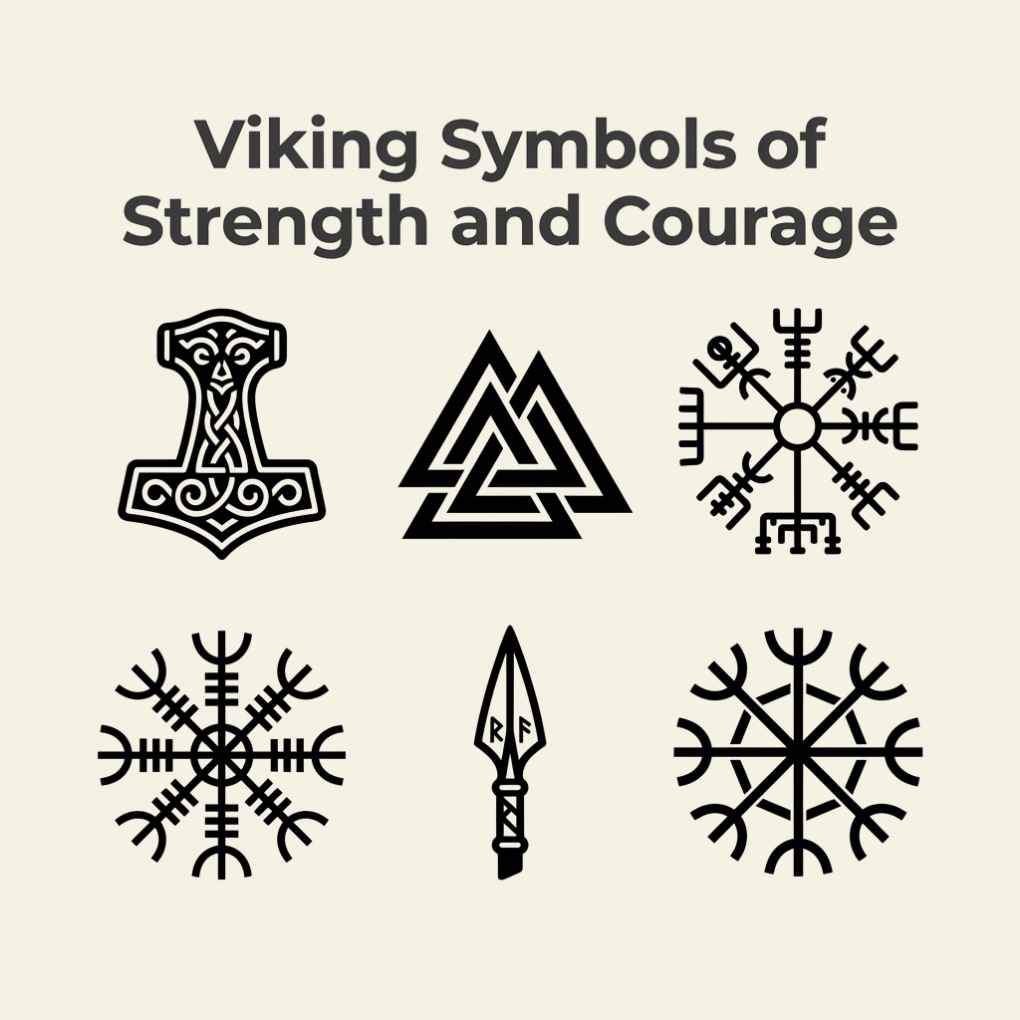
Strength symbols emphasized physical power and warrior capability, while courage symbols represented willingness to face danger and death. Vikings needed both qualities for survival.
These symbols frequently featured powerful animals: wolves for ferocity, bears for raw strength, and dragons for overwhelming dominance. Warriors chose symbols matching qualities they wanted to develop or reinforce.
The psychological principle at work was real—wearing symbols of strength and courage actually made Vikings feel more powerful and brave. Modern psychology confirms this “enclothing effect” where clothing and symbols influence behavior and self-perception.
Viking Symbols of Power and Victory
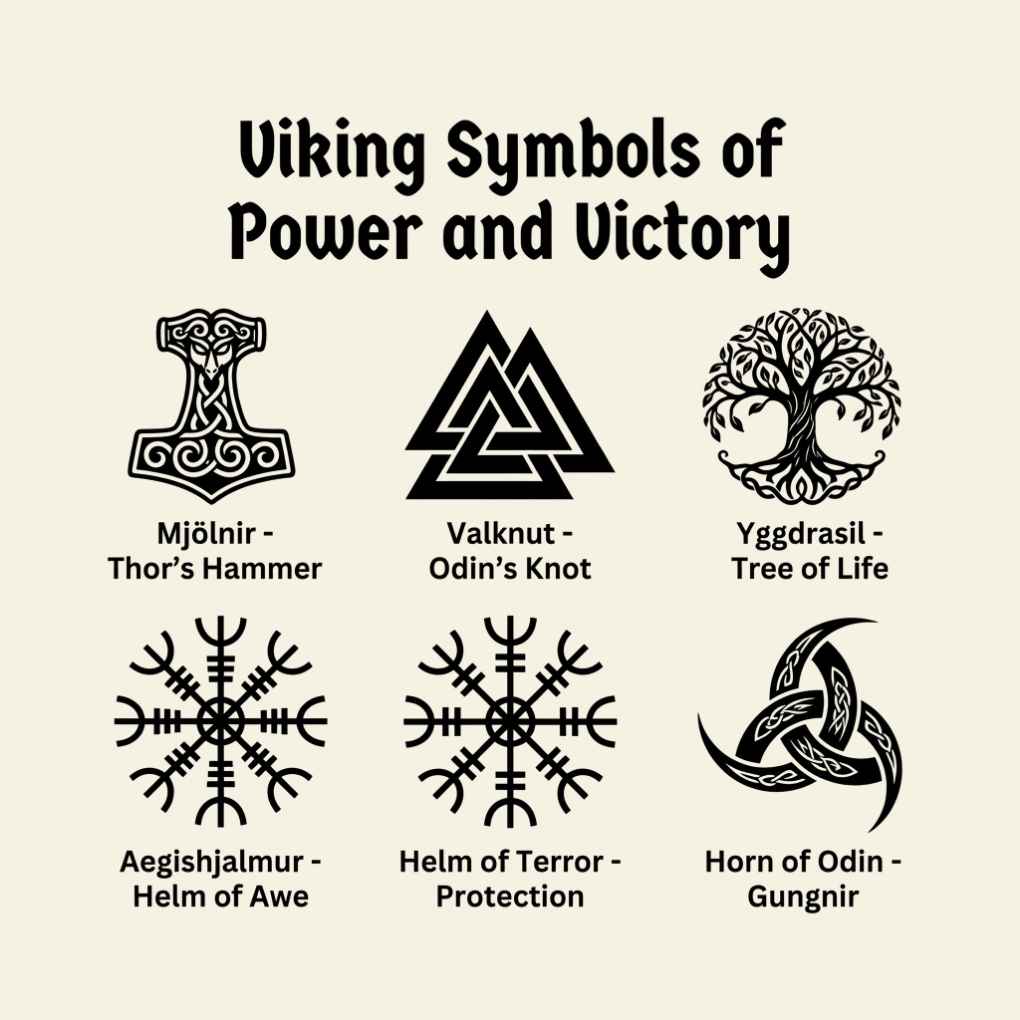
Power symbols represented dominance, authority, and triumph rather than everyday strength. These were chosen by warriors seeking victory in specific battles and leaders establishing authority.
Victory symbols connected to Odin and Thor, the gods most associated with war and triumph. Warriors carved these on weapons believing the gods’ power would flow through the designs into their attacks.
These symbols boosted psychological advantage by projecting dominance before combat began. An enemy seeing victory symbols on a warrior’s weapons or armor might assess the opponent as unbeatable, creating real psychological disadvantage.
Viking Symbols of Wisdom and Knowledge
Wisdom symbols represented intellectual understanding, mystical knowledge, and spiritual insight. These connected primarily to Odin’s endless quest for wisdom through sacrifice and magical study.
Vikings valued wisdom in leadership—a clever leader succeeded more often than a merely strong one. Wisdom symbols appeared worn by skalds (poets and storytellers), priests, and respected elders.
The most significant wisdom symbol was the rune Ansuz, representing the god’s mouth and divine communication. Warriors and leaders wore this for better decision-making and clarity in strategy.
Viking Symbols of Love and Family
Contrary to popular culture, Vikings valued love and family deeply, and symbols reflected these bonds. These symbols are often overlooked in favor of warrior imagery, yet they held genuine importance.
Fertility symbols represented family continuation and prosperity. Women frequently wore symbols protecting children during pregnancy and childbirth. Family protection symbols appeared carved into home entrances and hearths.
Common love and family symbols included spiraling patterns (representing cyclical life and generational continuation) and interlocking knots (symbolizing unbreakable family bonds). These appear less often in popular culture but held genuine significance in Viking households.
Viking Symbols Connected to Odin
Odin was the All-Father, god of wisdom, war, magic, and poetry. Symbols connected to Odin represented divine authority, magical knowledge, and the highest aspirations of Viking society.
Exclusive Odin symbols included the Valknut (knot of the slain, representing Odin’s authority over warriors and the afterlife), the Triple Horn of Odin (representing wisdom gained through sacrifice), and Odin’s ravens Huginn and Muninn (representing thought and memory).
Warriors and leaders specifically chose Odin symbols to claim connection to divine authority and wisdom. Priests and spiritual practitioners used them for magical work and divination.
Viking Symbols Connected to Thor
Thor was the Thunder God, universally beloved across Viking society because he protected farmers, families, travelers, and warriors alike. He was more approachable and relatable than distant Odin.
Thor symbols included Mjölnir (his hammer), lightning bolts, and thunder imagery. Unlike Odin symbols reserved for leadership and warriors, Thor symbols appeared worn by all social classes.
Farmers specifically wore Thor symbols for crop protection and good harvests. Travelers wore them for safe passage. Warriors wore them before battle. This democratic appeal explains Thor’s enduring popularity in modern times.
Viking Rune Symbols and Meanings
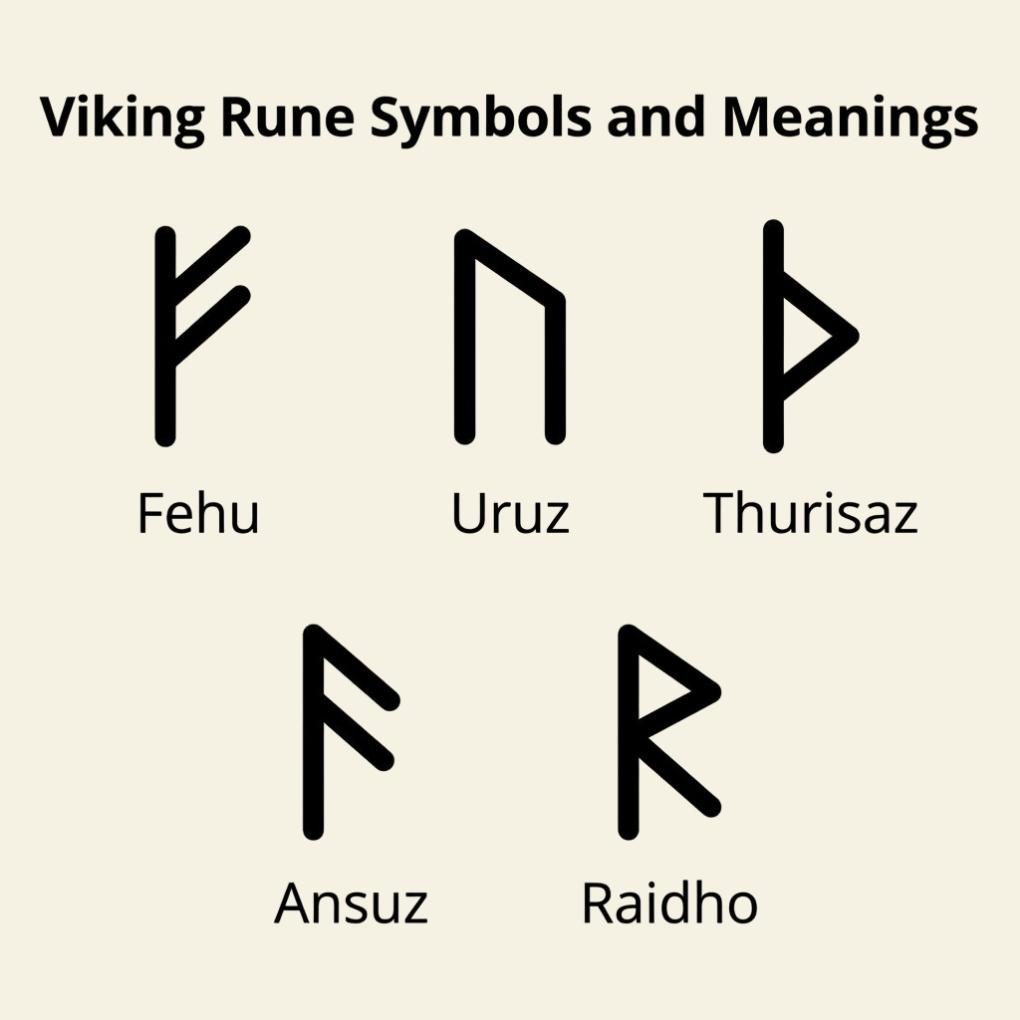
The Elder Futhark consisted of 24 runes, each representing both a letter and a spiritual concept. Vikings used runes simultaneously for writing, divination, and magical practice.
The runes divided into three groups of eight called Aettir, representing different life domains: creation and manifestation, challenge and transformation, and completion and spirituality. This sophisticated structure mapped human experience comprehensively.
Each rune carried individual meaning while also creating complex messages in combinations. Rune casters threw them for divination, warriors carved them for magical empowerment, and ordinary people used them for writing and spiritual protection.
Fehu
Fehu (FAY-hoo) means cattle and represents wealth, abundance, and creative energy. As the first rune, it symbolizes beginnings and manifestation.
In Viking culture, cattle were currency—this rune literally represented money and resources. Modern interpretations extend to all forms of abundance, including creative wealth and emotional richness.
Uruz
Uruz (OO-rooz) depicts the aurochs (wild ox) and symbolizes strength, vitality, and untamed power. It represents the raw energy required to accomplish difficult tasks.
This rune appears worn by athletes, warriors, and anyone facing significant physical or mental challenges. It embodies primal strength without refinement—pure force and capability.
Thurisaz
Thurisaz (THOO-ree-saz) means giant or thorn and represents both protective and destructive power, duality, and breakthrough. It’s the rune of challenge and transformation.
This rune protects against chaos while destroying obstacles blocking progress. Warriors carved Thurisaz before facing impossible odds, believing it provided both protection and the power to break through barriers.
Ansuz
Ansuz (AHN-sooz) means god and represents divine wisdom, communication, and ancestral connection. It connects to Odin and mystical knowledge.
This rune appears in divination for clarity and communication. Spiritual seekers use it to access higher wisdom and connect with ancestral guidance.
Raidho
Raidho (RIGH-tho) means journey and represents movement, progress, and life direction. It symbolizes both physical travel and spiritual development.
Vikings used this rune for safe passage during actual journeys. Modern practitioners use it for navigating life transitions and staying on their true path.
You May Also Like: 45+ Buddhist Symbols: Meanings, Protection and Peace 2026
Viking Symbols in Mythology
Norse mythology created most Viking symbols. Stories about gods and heroes generated the symbols Vikings then adopted for practical use.
The creation myth, Ragnarok (the apocalypse), Valhalla (warrior afterlife), and the Nine Worlds all produced symbols Vikings believed would protect them or grant them godly favor. Yggdrasil, the World Tree connecting all nine worlds, became a symbol of cosmic order and interconnection.
Mythological creatures—dragons, ravens, wolves, and serpents—became symbols themselves, representing qualities these creatures embodied in stories.
Viking Symbols in Tattoos
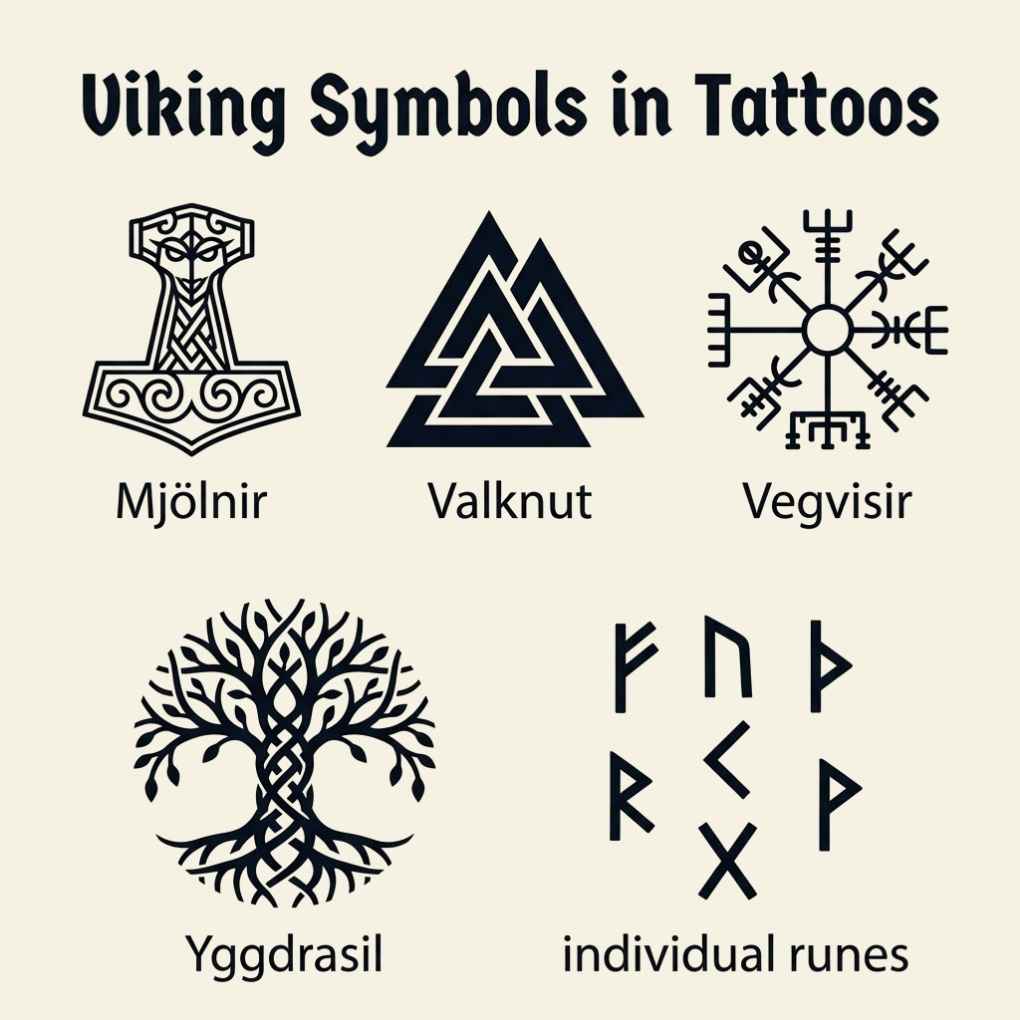
Modern Viking tattoos combine historical authenticity with personal meaning. Tattoo culture has made Viking symbols more visible today than they were in actual Viking times.
Popular Viking tattoos include Mjölnir, Valknut, Vegvisir, Yggdrasil, and individual runes. Placement varies based on personal preference and desired meaning.
Tattoo wearers must research authentic designs to avoid symbols appropriated by hate groups. Ethical tattoo artists experienced with Viking symbolism can guide proper choices.
Best Viking Tattoo Symbols
Mjölnir, Valknut, Yggdrasil, Vegvisir, and the Helm of Awe are the most sought-after Viking tattoos. They’re visually striking, historically significant, and carry powerful meanings.
These symbols work well as medium to large-sized tattoos on the forearm, chest, or back. Their geometric and angular designs photograph well and age gracefully in tattoos.
Viking Protection Tattoo Symbols
Aegishjalmur, Algiz rune, and Thurisaz are specifically chosen for protection purposes. Wearers believe these symbols provide ongoing spiritual safeguard.
Many people place protection tattoos on the back, arms, or chest—areas they want protected. Some combine multiple protective symbols into binding rune designs for amplified effect.
Viking Warrior Tattoo Ideas
Mjölnir combined with runes, animal imagery with protective symbols, and weapon-based designs create warrior-themed tattoos. These emphasize strength, courage, and battle readiness.
Warriors often choose bold, aggressive designs featuring sharp lines and powerful imagery. These tattoos function as identity statements proclaiming warrior spirit and values.
Historical vs Modern Viking Symbols
Many symbols popular today weren’t prominently used historically. The Vegvisir likely didn’t exist during the Viking age, yet modern people adopted it because it resonates with contemporary needs.
Pop culture (TV shows, movies, games) introduced these symbols to millions but often prioritized drama over accuracy. This sparked genuine interest but also created misconceptions about what Vikings actually used.
Authentic historical symbols come from archaeological evidence—artifacts, weapons, jewelry, and carved items. Modern symbols include both historical designs and contemporary creations inspired by Viking themes.
Both serve valid purposes. Historical authenticity matters for scholarship; modern adaptations matter for personal meaning-making.
Types and Variations of Viking Symbols and Meanings
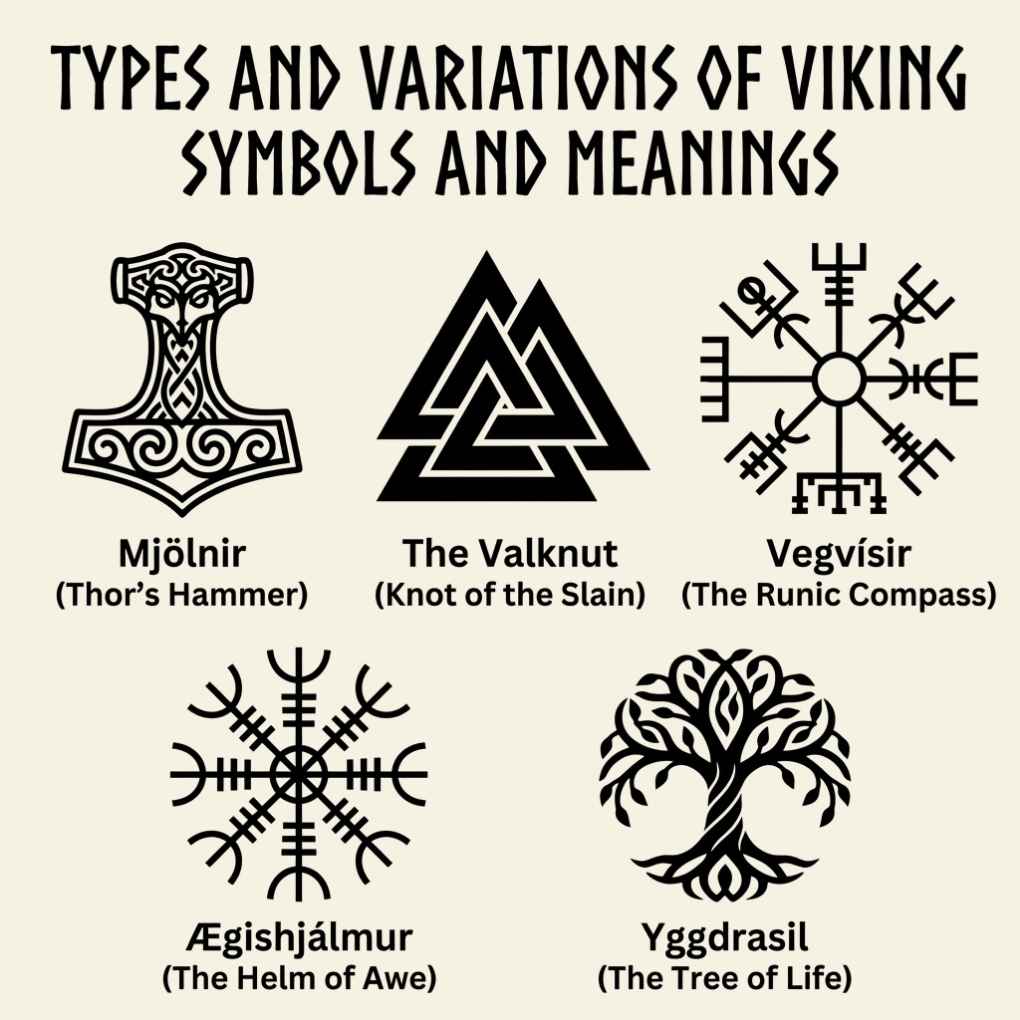
1. Mjölnir (Thor’s Hammer)
Mjölnir means “grinder” and was forged by dwarven brothers Sindri and Brokkr. The hammer’s distinctive shape—wide square head with short handle—became iconic across Viking culture.
The symbol represented protection, blessing, fertility, and divine favor. Warriors sought battlefield success; farmers sought good harvests; families sought household protection.
Archaeological evidence shows Mjölnir pendants from wealthy aristocrats to common farmers, proving universal adoption across all social classes.
2. The Valknut (Knot of the Slain)
The Valknut features three interlocking triangles, representing Odin’s authority over fallen warriors and the connection between life, death, and rebirth. It symbolizes the warrior’s journey from life to Valhalla.
The three triangles represent different concepts: the past, present, and future; or the three levels of existence (earthly, heavenly, and underworld).
This symbol appeared on Viking artifacts, jewelry, and weapons. Modern interpretations emphasize its spiritual significance for those seeking strength and connection to ancestral warriors.
3. Vegvísir (The Runic Compass)
Vegvisir consists of eight runes arranged in compass form, with each rune representing a direction. It symbolizes wayfinding through uncertainty and spiritual guidance during difficult journeys.
Despite appearing in 17th-century Iceland (not the Viking age), modern people adopted it because it authentically represents Viking values of navigation and finding one’s path.
The eight points represent the eight winds and directions, giving travelers the magical ability to always find their way home.
4. Ægishjálmur (The Helm of Awe)
Aegishjalmur’s eight arms radiate from a center point in sharp, aggressive lines designed to intimidate enemies and protect the wearer from fear and anxiety. It was specifically a warrior’s symbol.
Historical evidence shows this symbol on weapons and armor. Vikings believed it granted psychological advantage by projecting invincibility and causing enemy fear.
Modern practitioners use it for confidence, courage, and protection from negative energy.
5. Yggdrasil (The Tree of Life)
Yggdrasil is the cosmic tree connecting all nine worlds of Norse mythology—Midgard (earth), Asgard (gods), Muspelheim (fire), Niflheim (ice), Jotunheim (giants), Vanheim, Svartalfheim, Alfheim, and Niflheim.
The symbol represents interconnection, balance, cosmic order, and the cycle of creation and destruction. Roots reach downward; branches reach upward; creatures live within it.
Modern interpretations emphasize Yggdrasil’s relevance to environmental consciousness and the interconnectedness of all life.
6. The Horn Triskelion (Triple Horn of Odin)
The Triple Horn consists of three drinking horns arranged in a triangle, representing Odin’s quest for wisdom through sacrifice. Odin drank from these horns to gain knowledge of poetry and magic.
Each horn represents different aspects of wisdom: inspiration, knowledge, and enlightenment. Together they symbolize the complete acquisition of divine wisdom.
Modern practitioners use this symbol for spiritual learning and connection to Odin’s pursuit of knowledge.
Viking Symbols and Meanings Across Cultures
Scandinavian Warrior Culture
In original Scandinavian culture, symbols maintained living traditions through families and communities. These symbols represented genuine heritage and cultural pride.
Modern Scandinavians recognize symbols as their legitimate cultural heritage while distinguishing authentic usage from appropriation by outside groups. Museums, schools, and cultural institutions teach proper interpretation.
Contemporary Scandinavians use symbols for cultural identity, pride in heritage, and connection to ancestral traditions.
Modern Neo-Pagan Culture
Norse paganism (Heathenry) has grown as a modern spiritual movement, with practitioners using historical symbols for divination, ritual, and spiritual practice.
Modern pagans research authentic meanings, practice rune casting, and honor the spiritual frameworks symbols represent. Communities form around shared practice and belief.
Academic and folk approaches coexist—some focus on historical accuracy while others emphasize personal spiritual connection.
Digital and Gaming Age Culture
Video games (God of War, Assassin’s Creed, Vikings), TV shows (Vikings, Last Kingdom), and online communities dramatically increased symbol visibility among younger generations.
Games prioritize visual drama over historical accuracy, but this exposure sparked genuine interest in Viking culture and symbols. People who encounter symbols in entertainment often research authentic meanings afterward.
Social media communities, forums, and online groups now serve as places where symbol enthusiasts share knowledge and interpretations.
Ancient Symbolic Parallel
Symbols across cultures share surprising similarities—Celtic knots resemble Viking interlocking patterns, Germanic symbols overlap with Norse designs, and universal symbols (spirals, crosses, circles) appear worldwide.
This reflects common human symbolic language emerging from shared experiences: life cycles, cosmic forces, protection needs, and spiritual seeking.
Studying these parallels deepens appreciation for symbol universality while respecting cultural-specific contexts.
Viking Symbols and Meanings in Art, Movies and Pop Culture
Television shows like “Vikings” and “Last Kingdom” introduced millions to these symbols, though they prioritized drama over historical accuracy. This mainstream exposure made symbols recognizable globally.
Movies, video games, and music incorporated Viking aesthetics and symbols, often reinterpreting them for visual impact. Norse mythology became fashionable in popular culture.
This pop culture presence created misconceptions but also sparked genuine research and interest. Many people first encounter Viking symbols through entertainment, then seek authentic knowledge.
Spiritual and Dream Meaning of Viking Symbols
Modern spiritual practitioners believe symbols carry energy and spiritual significance. Wearing protective symbols attracts their represented qualities; meditating on runes reveals deeper understanding.
Dream interpretation with Viking symbols treats them as messages from the unconscious or spiritual guides. A dream featuring Mjölnir might indicate strength is needed; Vegvisir might suggest finding your path.
The psychological reality—symbols influence thoughts, feelings, and behavior—creates genuine spiritual effects even if not “magical” by scientific definitions.
You May Also Like: 95+ Best Healing Symbols From Around the World
Positive vs Negative Meaning
Positive Meaning
Protection symbols genuinely protect through increased confidence and focused intention. Strength symbols empower users to act with greater power. Wisdom symbols enhance clarity and decision-making.
Used authentically, these symbols connect people to heritage, inspire personal growth, and provide psychological benefits science confirms.
Positive uses include: personal spiritual practice, cultural heritage connection, artistic expression, and meaningful identity exploration.
Negative Meaning
Some groups appropriated these symbols for hate movements, corrupting their meanings and creating legitimate concerns about symbol use. This appropriation doesn’t erase authentic meanings but requires responsible awareness.
Ethical symbol use requires: researching authentic meanings, avoiding hate-group-associated designs, respecting cultural origins, and using symbols for positive purposes.
Reclaiming symbols from appropriation through respectful, educated use honors their true significance.
Why Humans Are Attracted to These Symbols
Humans crave authenticity in modern life, and Viking symbols represent genuine tradition and primal strength. They feel “real” in ways modern manufactured culture doesn’t.
Archetypes within symbols resonate with universal human experiences—protection needs, strength seeking, wisdom pursuit, and connection to something larger than ourselves.
Adventure and escape appeal: Vikings represent courage, exploration, and freedom. Their symbols carry these qualities, attracting people seeking those same experiences.
FAQs
What is the most famous Viking symbol?
The most famous Viking symbol is the Valknut, a design of three interlocking triangles. It is linked to Odin, warriors, death, and the afterlife.
What are the meanings behind popular Viking symbols?
Popular Viking symbols represent protection, strength, wisdom, fate, courage, and spiritual guidance. Symbols like Mjölnir and Vegvisir carried powerful cultural and mythological significance.
What are the most common Norse symbols and their meanings?
Common Norse symbols include Mjölnir for protection, Valknut for Odin and the afterlife, Yggdrasil for interconnected life, and Vegvisir for guidance.
What are real Viking symbols?
Real Viking symbols include the Valknut, Mjölnir, Yggdrasil, and various runes found on archaeological artifacts, stones, jewelry, weapons, and historical inscriptions.
What did Vikings do for hygiene?
Vikings valued cleanliness and bathed regularly. They used combs, tweezers, ear cleaners, and simple soaps, making them cleaner than many Europeans.
Conclusion
Viking symbols and meanings preserve a thousand-year-old conversation between humans and the spiritual forces they encountered. Each symbol crystallizes genuine insights about protection, strength, wisdom, and destiny.
Understanding these symbols requires respecting both their historical origins and contemporary significance. Research authenticity, use symbols thoughtfully, and honor the culture they represent.
The Vikings believed symbols mattered because they do—they influence how we see ourselves and the world. Whether worn as tattoos, kept as amulets, studied for spiritual practice, or appreciated as historical artifacts, these symbols connect us to one of history’s most compelling civilizations.

Mubeen is a passionate writer at Auramegazine who explores symbolism, hidden meanings, and powerful signs behind everyday symbols. He enjoys creating simple, engaging content that helps readers understand deeper meanings and cultural connections.