99+ Italian Symbols That Reveal Italy’s Hidden Soul
Italy has always been a land where meaning runs deeper than words. Every street corner holds a story, every symbol carries weight, and every gesture connects people to centuries of tradition. Italian symbols are far more than decorations or pretty designs. They represent faith, honor, protection, love, strength, and the spiritual roots of one of the world’s oldest civilizations.
Whether you walk through Venice, Rome, Florence, or a small Sicilian village, you’ll encounter these powerful emblems everywhere, from ancient architecture to modern jewelry, from family traditions to tattoo designs. Understanding what these symbols truly mean helps you connect with Italian heritage in a way that goes beyond tourism or surface-level appreciation.
This article explores more than 99 Italian symbols, their historical origins, cultural meanings, and why they remain so important in contemporary Italian life and global culture today.
What Are Italian Symbols?
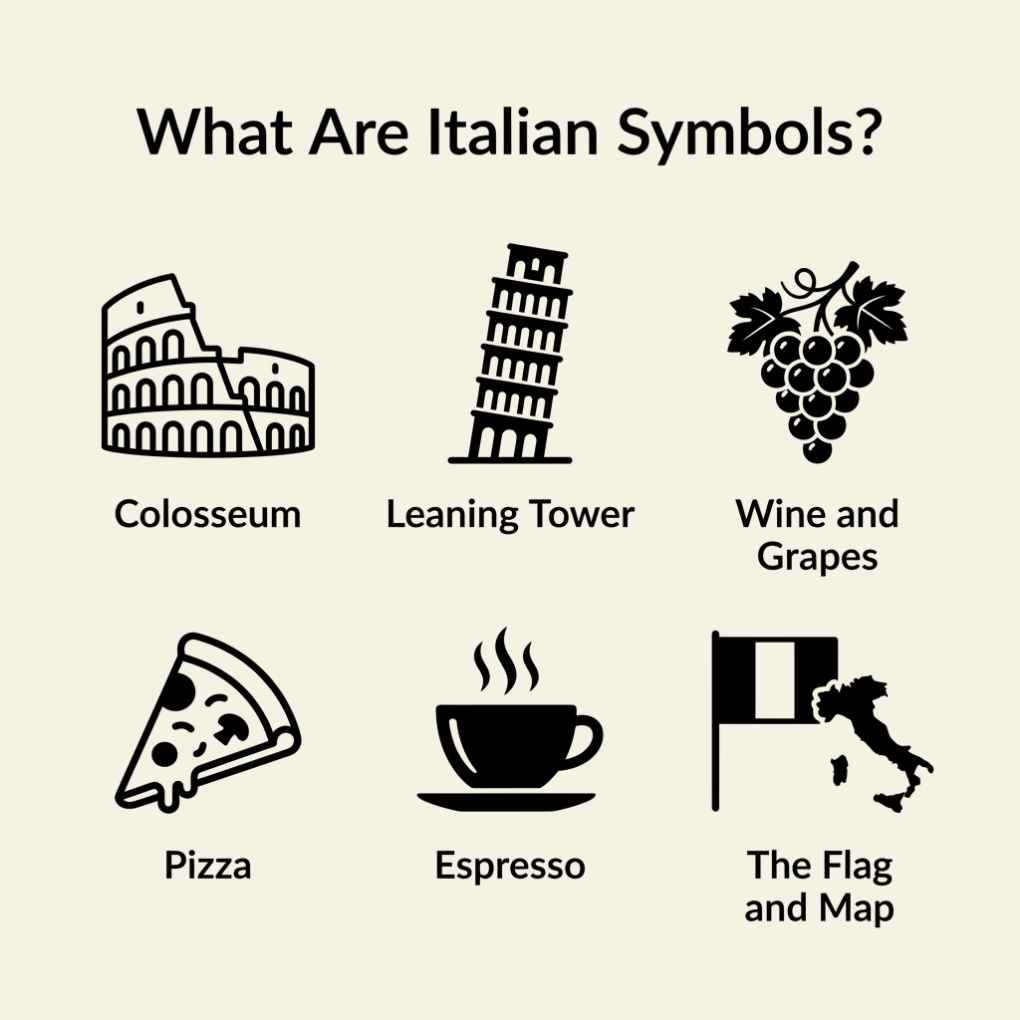
Italian symbols are visual representations, objects, designs, or gestures that carry deep cultural, historical, and spiritual significance within Italian society. They are not random creations. Each symbol earned its meaning through centuries of lived experience, emotional connection, and cultural repetition passed down from generation to generation.
These symbols originated from multiple sources: ancient Roman traditions, Christian faith and religious devotion, medieval regional pride, Renaissance artistic expression, folklore and superstition, and family heritage. What makes a symbol truly Italian is its connection to the nation’s collective memory and identity. It must resonate with Italians emotionally and reflect their values, history, or spiritual beliefs.
Italian symbols serve several important purposes. They protect the wearer or keeper from harm. They express pride in cultural heritage and family roots. They communicate identity without needing words. They connect modern Italians to their ancestors and to each other across generations. They inspire artistic expression and personal meaning-making.
The Most Famous Italian Symbols and Their Meanings
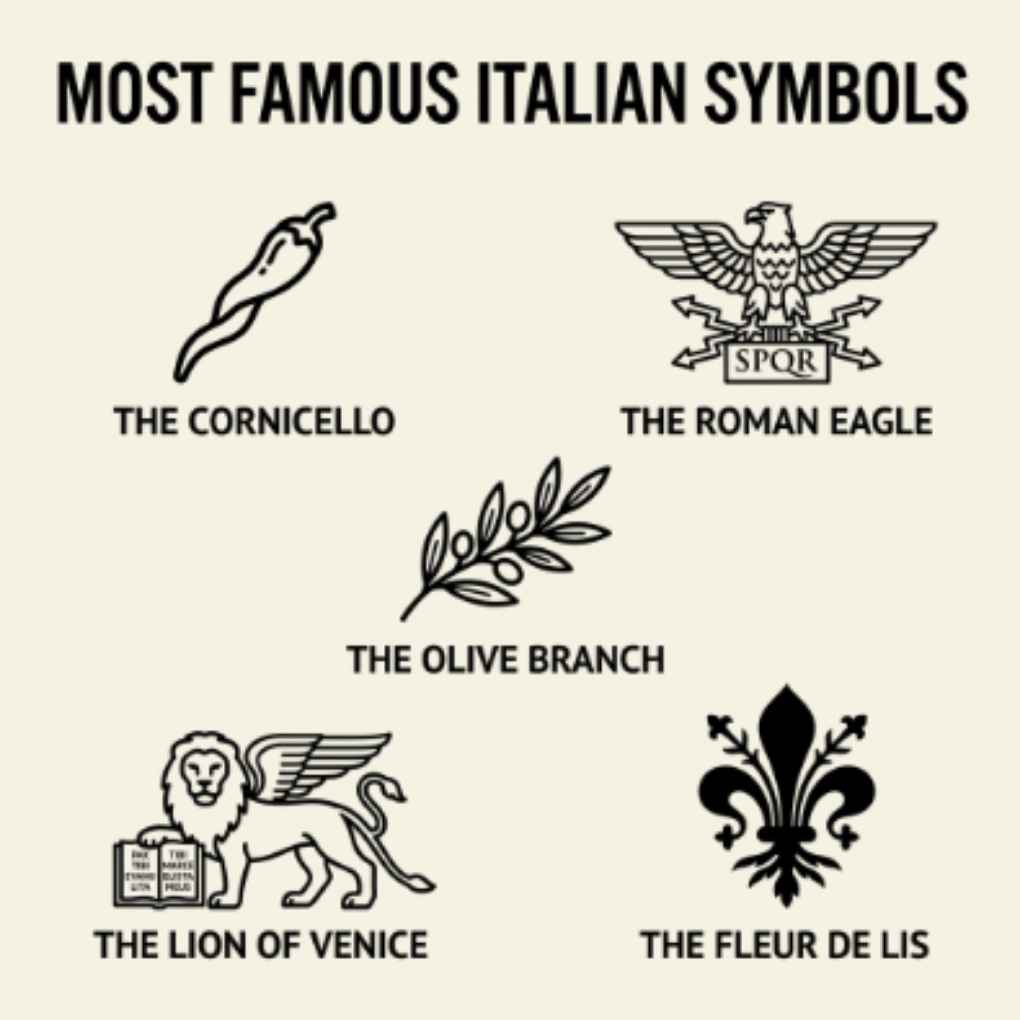
The Cornicello (Horn of Plenty)
The Cornicello, meaning “little horn” in Italian, stands as one of Italy’s most recognizable protective charms. This twisted horn-shaped amulet resembles either a chili pepper or an animal horn, and it carries centuries of cultural weight across Italian and Italian-American communities.
The Cornicello has roots stretching back thousands of years to pre-Roman Italy, where horns symbolized fertility, strength, and divine protection. Over time, it became primarily associated with warding off the “malocchio,” commonly known as the evil eye. Italian folklore teaches that envious or jealous glances can bring bad luck and negative energy into someone’s life. The Cornicello acts as a spiritual shield against this harm.
Traditionally, Cornicellos are crafted from gold, silver, or red coral, materials believed to amplify the charm’s protective power. In Neapolitan folklore, these amulets are typically gifted rather than purchased for oneself, as gifts are thought to hold greater spiritual strength. Many Italian families pass Cornicellos down from parent to child as guardian charms, embedding family protection into the practice itself.
Today, people wear Cornicellos as necklaces, bracelets, or keep them in pockets and cars. It represents fertility and virility, making it especially meaningful as a gift for newborns, expectant mothers, or newlyweds. The symbol has transcended its folklore roots to become a bold statement of pride in Italian heritage.
The Roman Eagle
The Roman eagle, known in Latin as the “Aquila,” represents military power, imperial authority, and divine favor. For over two thousand years, this majestic bird has symbolized Rome’s greatness and the strength of Italian civilization.
The eagle’s significance dates back to ancient Roman mythology, where it was associated with Jupiter, the king of the gods. Romans saw the eagle as a messenger from the divine realm, connecting earth with heaven. Its sharp vision, swift flight, and predatory nature made it the perfect emblem for an empire built on military prowess and strategic brilliance.
During the Roman Republic and Empire, each legion carried a wooden or metal pole topped with a golden eagle statue. This wasn’t merely decorative. The eagle standard represented the legion’s honor, dignity, and connection to the divine. Losing an eagle in battle was catastrophic, signifying the loss of honor for the entire legion. Retrieving a lost eagle brought hero status and was celebrated with great ceremony and pride.
The Roman eagle feeds on snakes, which ancient peoples associated with darkness and evil. Therefore, the eagle embodied the triumph of good over evil, righteousness over chaos. This spiritual meaning remains embedded in the symbol today.
The Olive Branch
The olive branch carries profound meaning in Italian culture and Mediterranean spirituality. It symbolizes peace, wisdom, abundance, and divine blessing. In Christian tradition, the olive branch represents hope and salvation, referencing the dove that brought an olive branch to Noah after the flood.
In Italy, olive trees have been cultivated for thousands of years, providing food, oil, medicine, and economic livelihood. The tree itself has become a symbol of the Italian landscape, resilience, and connection to the land. To give or wear an olive branch is to express desires for peace, healing, and prosperity.
The Lion of Venice
Venice, once a powerful maritime republic dominating Mediterranean trade, adopted the winged lion as its supreme symbol. This is not just any lion—it’s specifically the Lion of San Marco (Saint Mark), representing both spiritual faith and political power.
According to legend, Saint Mark was traveling from Aquileia to Rome when a storm forced him to shelter in the lagoon that would become Venice. An angel appeared to him in the form of a winged lion, speaking a blessing in Latin: “Pax tibi Marce, evangelista meus” (Peace to you, Mark, my Evangelist). This divine encounter linked Venice’s destiny to Saint Mark forever.
The winged lion combines multiple meanings. The wings represent spiritual elevation and divine blessing. The book under its paw symbolizes wisdom and the power of the Gospel. A sword sometimes appears, signifying justice and strength. The lion itself embodies courage, power, magnificence, nobility, and authority.
For more than a thousand years, Venetians carved these lions throughout their territory, using them as symbols of Venetian authority and protection. Unlike cities under papal or imperial control, Venice’s lion answered to God through Saint Mark and to no earthly ruler. This made the symbol a declaration of Venetian independence and fierce pride.
The Fleur de Lis
The Fleur de Lis, meaning “flower of the lily,” became strongly associated with Florence, one of Italy’s most artistically and culturally significant cities. The white lily has been used since medieval times to symbolize Florence’s power and identity.
In Italian religious art, the Fleur de Lis connects to the Virgin Mary, representing purity, grace, and divine feminine power. Florence’s adoption of this symbol linked the city to spiritual protection and cultural sophistication. Renaissance artists incorporated the Fleur de Lis into paintings, manuscripts, and architectural decorations, making it inseparable from Florence’s golden age of art and learning.
Italian Regional and Cultural Symbols
Symbols from Northern Italy
Northern Italian regions developed distinct symbolic traditions reflecting their geography and history. Milan embraced the Visconti serpent and the Sforza family symbols. The Ambrosian Cross represents Milan’s patron saint and appears in the city’s flag.
Turin, as a royal capital, displays the House of Savoy symbols. Lakes and Alpine mountains inspired regional symbols celebrating water, mountains, and natural beauty.
Symbols from Central Italy
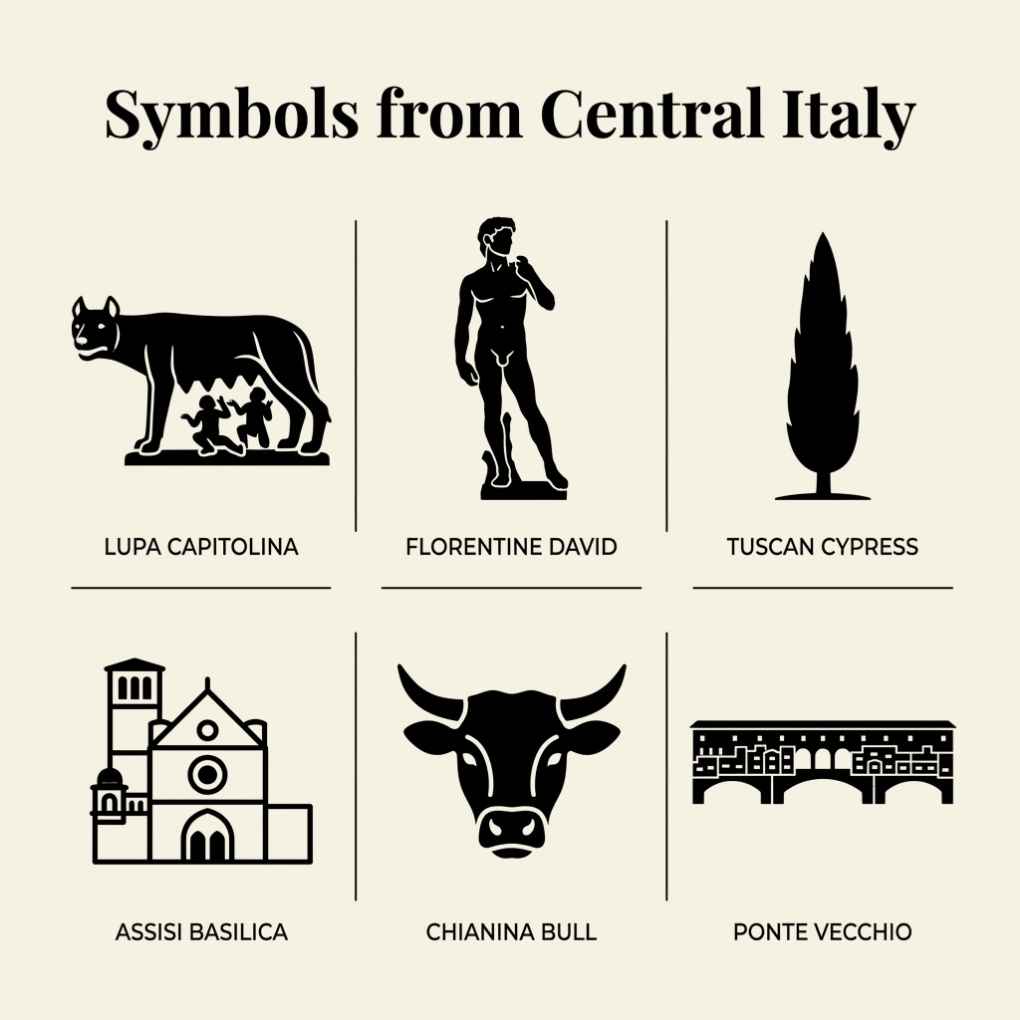
Central Italy, home to Florence, Siena, and Rome, carries symbols rooted in Renaissance achievement and ancient Roman glory. Beyond the Fleur de Lis, cities adopted heraldic animals and family crests.
Siena’s Palio horse race tradition produced its own symbolic representations of neighborhoods and district pride. These symbols reflect intellectual achievement, artistic mastery, and political independence during the medieval and Renaissance periods.
Symbols from Southern Italy and Sicily
Southern Italy and Sicily blended influences from Greek, Arab, Norman, and Spanish cultures. Sicily developed symbols reflecting this unique fusion. The Trinacria, featuring three legs radiating from a central point, represents Sicily’s triangular shape and ancient Greek heritage.
Southern symbols often incorporate religious imagery reflecting Catholic devotion and Orthodox traditions. Symbols also reflect the region’s agricultural heritage and Mediterranean identity.
You May Also Like This Symbol: 69+ Top Symbols Of America That Shaped American History And National Identity
Italian Symbols Across History
Ancient Roman Symbols
Roman civilization created an extensive symbolic vocabulary. The SPQR (Senatus Populusque Romanus) represented republican authority. The fasces, a bundle of rods with an axe, symbolized authority and strength.
The laurel wreath crowned victors and honored achievement. The cornucopia (horn of plenty) represented abundance and divine blessing. These symbols influenced Western civilization so profoundly that modern nations still use eagle emblems and laurel wreaths in their official seals and heraldry.
Medieval Italian State Symbols
During the medieval period, Italian city-states developed unique heraldic traditions. Each city proudly displayed symbols that expressed political power and protected against rivals. Castles, towers, and fortress symbols represented military strength.
Religious symbols became more prominent as the Catholic Church gained influence. Saints became symbols of protection, with each city adopting a patron saint and displaying that saint’s symbolic attributes.
Renaissance Symbols
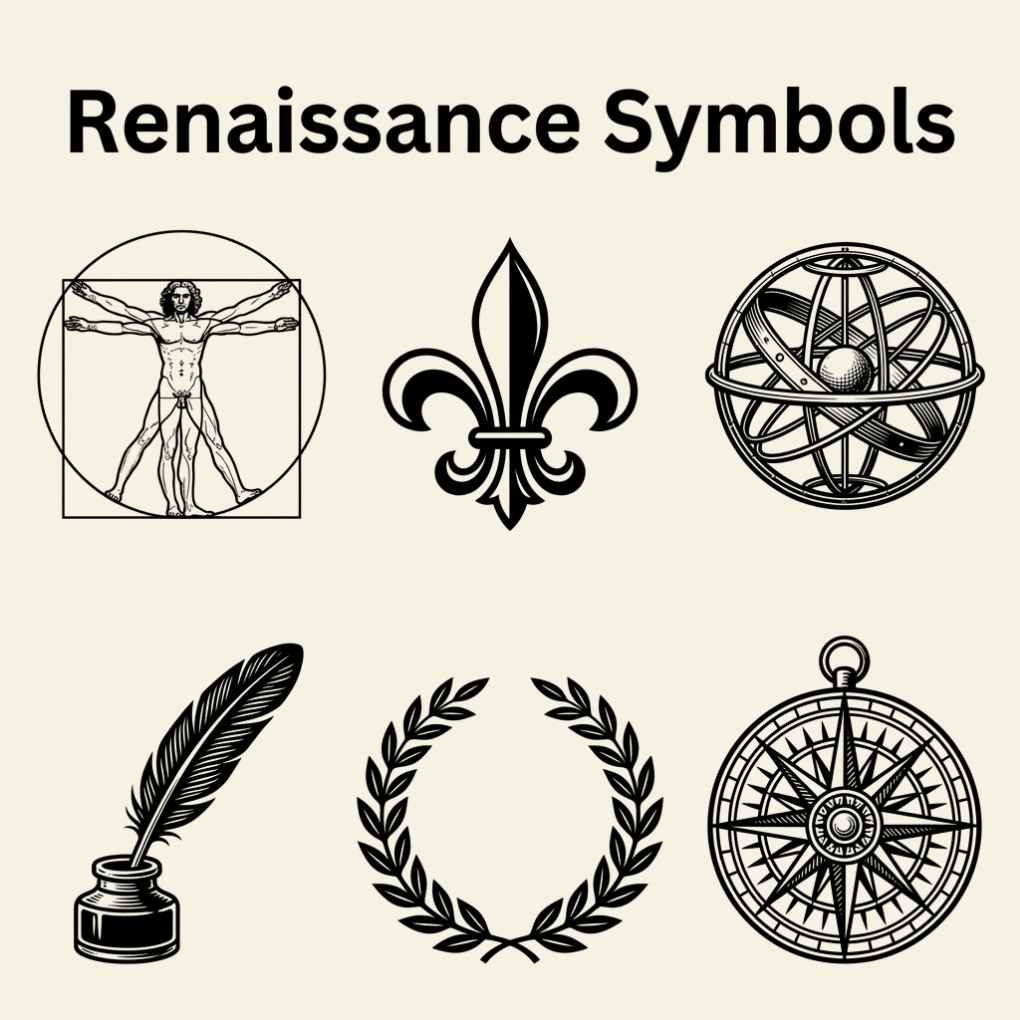
The Renaissance transformed Italian symbolism into intellectual and artistic expression. Artists like Leonardo da Vinci and Michelangelo filled their masterpieces with hidden symbolic meanings connected to philosophy, theology, and human nature.
Geometric patterns, celestial imagery, natural elements, and mythological references all carried deeper messages. Symbols became more sophisticated, layered with meaning, reflecting the period’s intellectual flourishing.
Modern Italian National Symbols
Modern Italy unified in 1861, and symbols of national identity emerged. The Italian tricolor flag features green (hope), white (faith), and red (charity), though another interpretation connects green to hills, white to snow-capped mountains, and red to blood spilled during unification.
The Italian coat of arms displays a star representing unity. The Italia Turrita, a woman personifying Italy holding a mural crown and wheat wreath, represents national identity and agricultural prosperity.
Italian Symbols in Modern Life
Italian Symbols in Tattoos
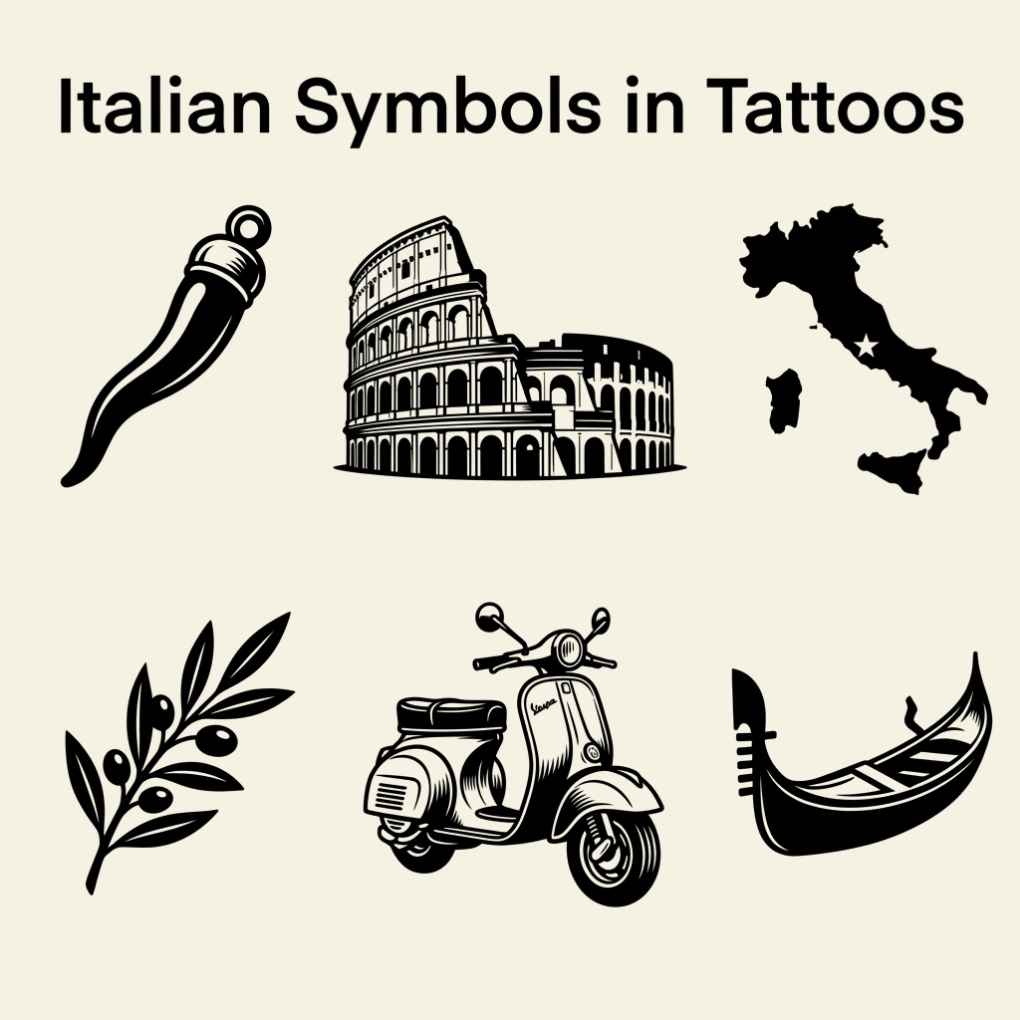
Italian tattoo culture celebrates heritage, family, and ancestral pride. Popular choices include the Cornicello for protection, the Italian flag for patriotism, family crests for genealogical connection, Roman eagles for strength, and olive branches for peace.
Many people tattoo Italian phrases like “amore” (love), “famiglia” (family), or “sempre” (always). Roman numerals marking important dates or the Colosseum representing Roman heritage also remain popular. Tattoos serve as permanent declarations of Italian identity and connection to ancestral roots.
Italian Symbols in Jewelry
Fine jewelry carries Italian symbols as expressions of personal identity and cultural pride. Cornicello pendants made from gold and red coral remain bestsellers in Italian jewelry markets. Italian cross necklaces combine spiritual faith with aesthetic elegance.
Rings often feature family crests or heraldic animals. Bracelets incorporate charms representing different symbolic meanings, with wearers building personalized collections expressing their values and heritage.
Italian Symbols in Fashion and Design
Fashion houses celebrate Italian symbolism in luxury designs. The Medusa head (Versace’s logo) references Greek mythology and Italian classical heritage. Eagle motifs appear in premium brand heraldry. Olive branch patterns decorate fabrics and accessories.
The Italian flag’s colors inspire countless fashion choices from accessories to entire collections. Designers intentionally incorporate symbolic meaning into designs, elevating fashion beyond aesthetics into cultural expression.
Italian Symbols in Home Decor
Italian homes traditionally display symbolic items for protection and beauty. Religious icons and saints’ images appear in kitchen and bedroom areas. Cornicello charms hang near doorways or from rearview mirrors.
Olive wood decorative pieces and carvings celebrate agricultural heritage. Wall art features Roman eagles, Renaissance florals, or regional heraldic symbols. Even kitchen items incorporate meaningful patterns and designs passed down through family generations.
The Deep Meaning Behind Italian Symbols
Cultural Significance
Italian symbols encapsulate the nation’s identity, values, and pride. They communicate respect for ancestors and heritage. They express continuity between past and present, reminding modern Italians that they carry forward a profound legacy. Symbols unite people across regions, generations, and even continents by providing shared meaning and connection.
Spiritual and Religious Meaning
Catholicism deeply influenced Italian symbolism. Saints become protective guardians through their symbolic representations. The cross, sacred geometry, and religious imagery carry spiritual weight in daily Italian life. Many traditional symbols blend pre-Christian pagan traditions with Christian theology, creating layered spiritual meaning that serves both spiritual protection and cultural identity.
Psychological and Emotional Meaning
Symbols trigger emotional responses and create psychological anchoring. Wearing a Cornicello provides comfort through the belief in its protective power. Displaying a family crest creates pride and reinforces family identity.
Recognizing a regional symbol creates belonging and community connection. Italian symbols serve therapeutic functions, grounding people in culture, history, and meaning during times of change or uncertainty.
Italian Symbols for Protection and Family
Symbols of Protection
Protection stands as a central theme in Italian symbolism. The Cornicello protects from envy and negativity. The Roman eagle shields through association with divine power and military might.
The Mano Cornuto (horned hand gesture) and Mano Fico (hand gesture with thumb) offer spiritual protection through gesture language. Religious medallions protect through faith. Even red items like red coral charms carry protective significance in Italian tradition.
Family and Heritage Symbols
Family symbols express the Italian value that “la famiglia è tutto” (family is everything). Family crests represent genealogical heritage and ancestral achievements. Names and dates tattooed in multiple handwritings symbolize eternal family bonds.
Symbols passed down through generations become precious heirlooms carrying family history. Recipes, gestures, and traditional objects operate as symbols of family continuity and love.
Positive and Negative Meanings of Italian Symbols
Most Italian symbols carry primarily positive meanings emphasizing protection, success, peace, and love. However, context matters. Some symbols historically represented political ideologies or military conquest.
The Fascist regime appropriated certain Roman symbols, creating negative associations that thoughtful Italians recognize and contextualize. Modern Italians emphasize the ancient positive meanings while rejecting any modern authoritarian interpretations. Understanding this nuance respects Italian sensitivity to symbol meaning and historical responsibility.
FAQs About Italian Symbols
What is the most famous Italian symbol?
The Cornicello and Roman eagle are arguably Italy’s most famous symbols globally, though the Lion of Venice holds deep importance in Italian regional identity and cultural pride.
What does the Italian horn symbolize?
The Italian horn, or Cornicello, primarily symbolizes protection from the evil eye and bad luck, while also representing fertility, prosperity, strength, and virility in Italian tradition.
Why are Roman symbols still important today?
Roman symbols represent enduring values of power, authority, wisdom, and excellence that influenced Western civilization for two millennia, making them timeless expressions of strength and leadership.
Are Italian symbols religious?
Many Italian symbols blend religious and cultural meaning, reflecting Italy’s Catholic heritage and the influence of Christian theology, though some symbols originated in pre-Christian Roman traditions.
What do olive branches mean in Italian culture?
Olive branches symbolize peace, wisdom, abundance, divine blessing, hope, and the connection between Italians and their Mediterranean landscape and agricultural traditions.
Conclusion
Italian symbols represent the soul of a civilization that shaped Western culture for thousands of years. From the protective Cornicello to the powerful Roman eagle, from Venice’s winged lion to Florence’s refined Fleur de Lis, these symbols carry profound meanings rooted in history, faith, and human emotion.
These are not mere decorations or trendy designs. They are connections to ancestors, declarations of identity, expressions of values, and sources of spiritual comfort. Whether worn as jewelry, displayed in homes, inked on skin, or celebrated in regional festivals, Italian symbols remind people of what matters most: family, protection, courage, peace, faith, and pride in heritage.
Understanding Italian symbols enriches your appreciation of Italian culture, art, architecture, and the Italian-American experience. It deepens your respect for traditions that have survived centuries of change and revolution. Whether you have Italian ancestry or simply admire Italian culture, engaging with these symbols creates meaningful connection to one of humanity’s greatest civilizations.

Mubeen is a passionate writer at Auramegazine who explores symbolism, hidden meanings, and powerful signs behind everyday symbols. He enjoys creating simple, engaging content that helps readers understand deeper meanings and cultural connections.