45+ Buddhist Symbols: Meanings, Protection and Peace 2026
Buddhist symbols have guided millions of people for over 2,500 years. From ancient temples in India to modern tattoo studios in New York, these sacred images carry deep messages about life, peace, and spiritual awakening. Whether you are curious, spiritual, or simply love meaningful art, understanding Buddhist symbols can open a whole new world of wisdom.
This guide covers 45+ traditional Buddhist symbols, their hidden meanings, uses in daily life, and what they represent across different cultures in 2026.
What Are Buddhist Symbols?
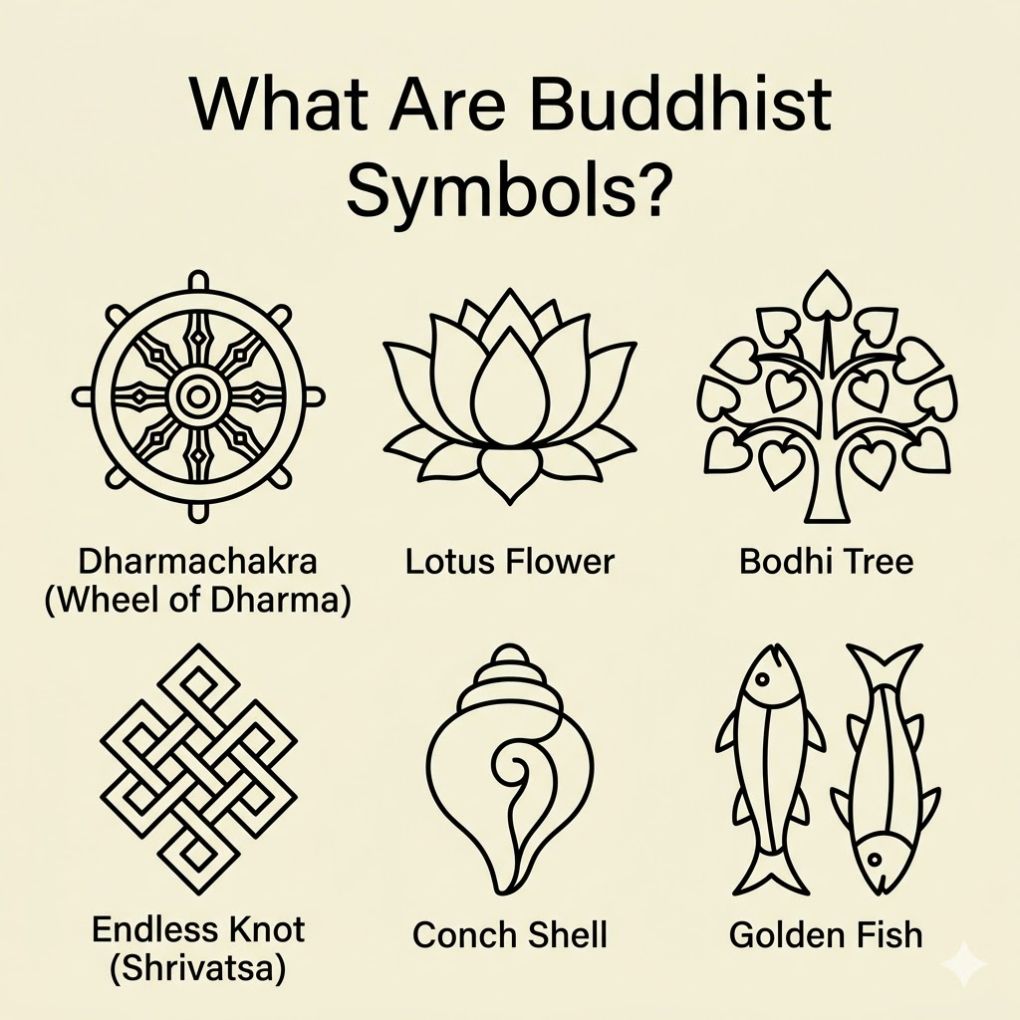
Buddhist symbols are visual representations of the core teachings of Buddhism. Each symbol points toward enlightenment, ethical living, compassion, or inner peace rather than worship of an external power. They serve as a visual language that helps explain complex ideas in simple, memorable forms. You will find them in temples, meditation spaces, jewelry, tattoos, and art all around the world.
These symbols did not appear overnight. They developed over centuries as Buddhism spread from India to Tibet, China, Japan, and beyond. Each culture added its own artistic touch while preserving the core spiritual meaning.
8 Symbols Of Buddhism And What They Mean
The eight auspicious symbols of Buddhism are called the Ashtamangala. These include the lotus, conch shell, endless knot, parasol, dharma wheel, golden fish, treasure vase, and victory banner. Each one reflects a key teaching such as purity, wisdom, protection, and enlightenment.
| Symbol | Core Meaning |
| Dharma Wheel | Teachings of Buddha, Noble Eightfold Path |
| Lotus Flower | Purity, spiritual growth |
| Conch Shell | Call to Dharma, awakening |
| Endless Knot | Interconnectedness of wisdom and compassion |
| Golden Fish | Freedom, fearlessness |
| Parasol | Protection from suffering |
| Treasure Vase | Abundance, inexhaustible dharma |
| Victory Banner | Triumph over ego and delusion |
The parasol represents protection of the practice of Dharma and protection from obstacles that may cause one to stray from the path of enlightenment. The pair of golden fish symbolizes fearlessness and freedom, while the conch shell represents a call to focus while the teachings of Dharma are present.
5 Symbols Of Buddhism
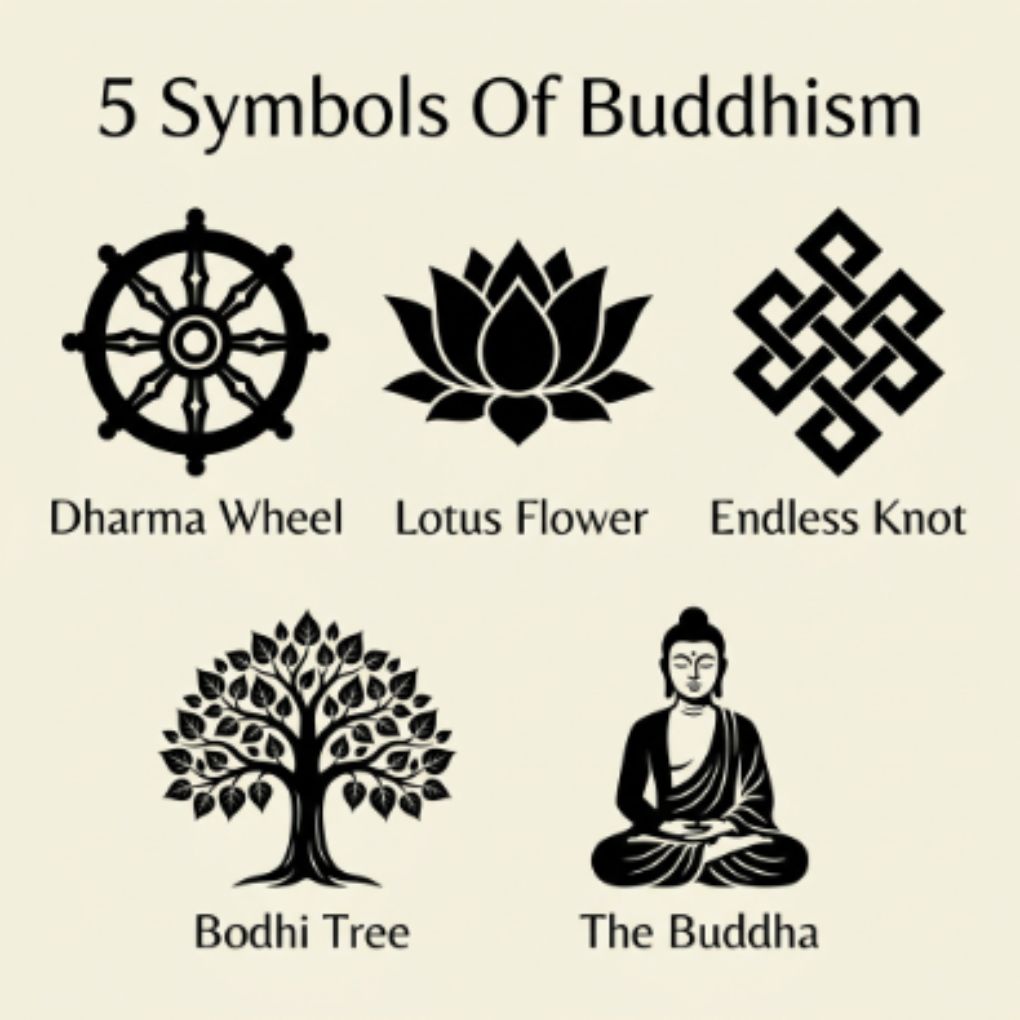
If you are new to Buddhist symbols, start with these five most recognized ones:
- The Dharma Wheel represents Buddha’s first teaching and the Noble Eightfold Path.
- The Lotus Flower stands for rising above suffering to reach spiritual purity.
- The Endless Knot shows how compassion and wisdom are forever intertwined.
- The Bodhi Tree marks the place where Buddha achieved enlightenment.
- The Buddha Image reminds practitioners of the path toward awakening.
Popular Buddhist Symbols And Their Uses In Daily Life
Buddhist symbols are not just for temples. Millions of people use them every day in very practical and personal ways.
Buddhist Symbol Of Life
The wheel of life, also called the Bhavachakra, maps the cycle of birth, death, and rebirth. It reminds people that life is a continuous journey shaped by karma and intention. Meditating on this symbol helps practitioners understand impermanence and make wiser choices each day.
Buddhist Symbol For Love
The heart symbol in Buddhism is closely tied to compassion, or Karuna. The lotus is also a strong symbol of love because it represents a heart that stays pure and open even in difficult conditions. Bodhisattvas, beings who delay their own enlightenment to guide others, are considered the highest expression of Buddhist love.
Buddhist Symbols For Peace
The lotus and meditation pose are common symbols of peace. They represent calmness and balance in life. These symbols encourage people to stay peaceful even during challenges and are often used in meditation spaces. The Enso circle from Zen Buddhism also represents peace through its image of wholeness and open space.
You May Also Like: Symbols for Hope | Meanings, History, and Powerful Inspirations
Buddhist Protection Symbols
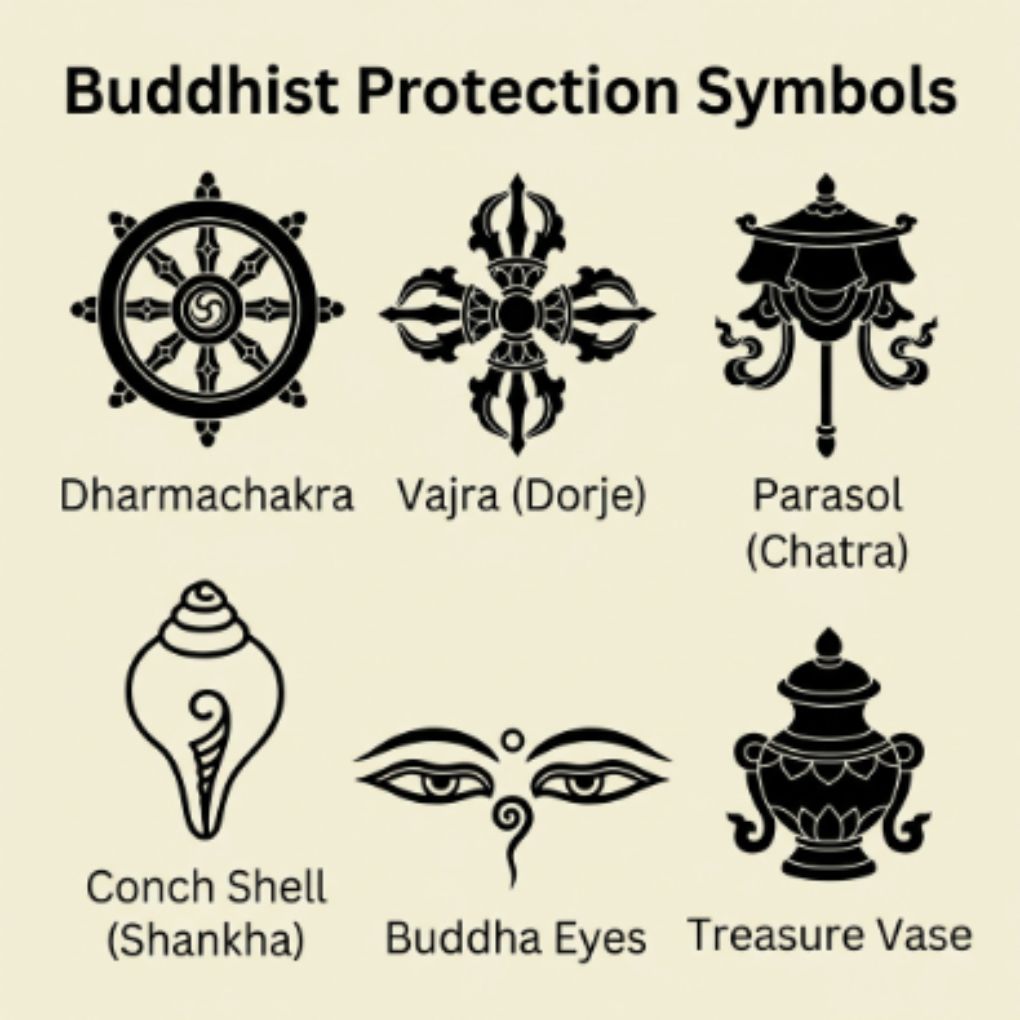
The parasol symbolizes protection from suffering and the shielding presence of Buddha’s teachings. The parasol’s dome shape represents wisdom, while its hanging skirt symbolizes compassionate methods. The Vajra, a ritual thunderbolt, is another powerful protection symbol used in ceremonies to ward off negative energies.
Buddhist Symbols And Meanings
Every Buddhist symbol carries layers of meaning. The conch shell calls practitioners to listen. The treasure vase reminds them that spiritual wealth never runs out. The lotus stands for purity rising above suffering, while the endless knot shows the connection between wisdom and compassion.
Zen Buddhist Symbols And Meanings
In Zen Buddhism, the Enso is a sacred symbol often referred to as the Circle of Enlightenment. It is a circle that is hand-drawn, representing both completeness and emptiness at the same time. Zen symbols focus on simplicity, mindfulness, and direct experience over complex ritual. Other key Zen symbols include the Daruma doll and the simple brushstroke Buddha.
Chinese Buddhist Symbols
During the Tang dynasty, from 618 to 907 CE, Buddhist symbolism became widespread, and symbols like the swastika and the Dharma wheel became well known in China.
In China, the swastika represents the number ten thousand, meaning infinity and auspiciousness. Chinese Buddhism also uses the lotus, dragons representing power and wisdom, and the laughing Buddha figure associated with happiness and abundance.
Tibetan Buddhist Symbols And Meanings
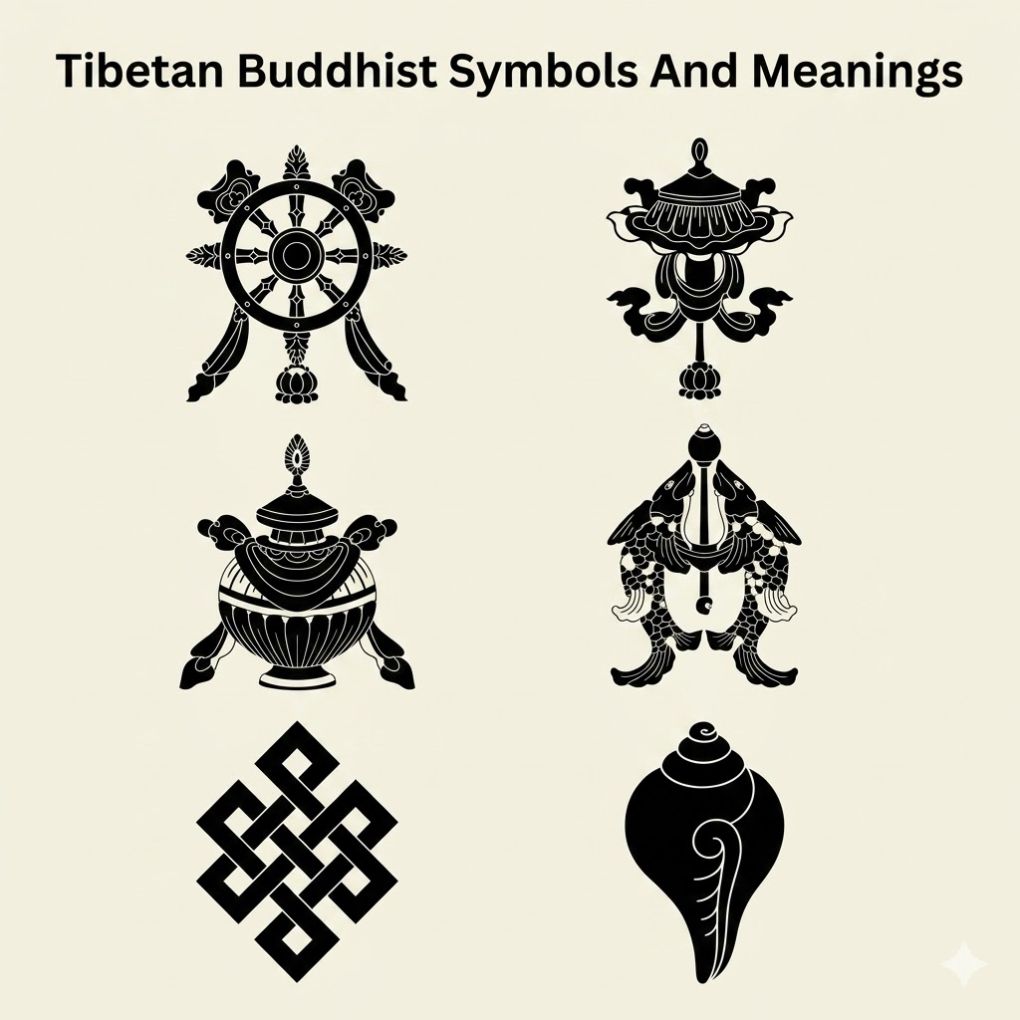
In Tibetan Buddhism, symbolism is central to meditation and prayer. Deities, which are manifestations of various aspects of the Buddha and the enlightened mind, are associated with rich symbolism.
Key Tibetan symbols include the prayer wheel, Vajra, Thangka paintings, and the Om Mani Padme Hum mantra. In Tibetan Buddhism, elaborately decorated parasols appear above important lamas during ceremonies, signifying their role as spiritual protectors and teachers.
Deep Symbolic Meaning of Buddhist Symbols
Spiritual Level
At the spiritual level, Buddhist symbols serve as doorways to awakening. The eight auspicious symbols together symbolize the spiritual path that leads to freedom from suffering and the permanent inner peace of enlightenment. They are not decorative objects but active tools that guide the mind toward liberation.
Psychological Level
From a psychological view, these symbols work like anchors. Seeing a lotus or a dharma wheel can instantly calm the mind and bring focus. The Dharma Wheel reminds you that understanding and growth come through practice and reflection. These visual cues train the brain to return to mindfulness automatically.
Cultural Level
Culturally, Buddhist symbols act as a shared language across borders. They unite communities in Japan, Sri Lanka, Thailand, Tibet, and the West under one common visual tradition. They carry centuries of artistic history and encode social values like harmony, respect, and compassion.
Types and Variations of Buddhist Symbols and Meanings
1. The Dharma Wheel (Dharmachakra)
The Dharma Wheel is often described as the main symbol for Buddhism, representing the teachings of the Buddha and the path to enlightenment. Most wheels have eight spokes, representing the Noble Eightfold Path, which guides ethical behaviour, mental discipline, and wisdom. The three swirls at the center represent the Three Jewels: Buddha, Dharma, and Sangha.
2. The Lotus Flower
The lotus grows in muddy water yet produces pristine, beautiful blooms that remain unstained, a perfect metaphor for enlightenment emerging from the mud of worldly existence. Different lotus colors carry different meanings. A white lotus means purity of mind, a red lotus represents compassion, and a blue lotus symbolizes wisdom and knowledge.
3. The Buddha Image
The image of the seated Buddha in meditation is one of the most universally recognized spiritual symbols on earth. It does not represent a god but a human being who achieved his highest potential. Different hand positions, called mudras, carry specific meanings such as protection, meditation, or the calling of the earth to witness.
4. The Endless Knot
The precious indestructible knot, or knot of eternity, symbolizes an uncommon quality of Buddha’s realizations, namely his realization of omniscient wisdom, and encourages us to apply great effort to attain enlightenment. Its interlocking lines have no beginning and no end, representing the infinite nature of reality.
5. The Bodhi Tree
The Buddha achieved awakening under the shelter of a sacred fig tree known as the bodhi tree. Since then, the bodhi tree has become a symbol of the Buddha’s enlightenment, and the heart-shaped leaf a symbol of the potential that lies within each of us to awaken.
6. The Stupa
The stupa is a dome-shaped monument that represents the mind of an enlightened being. Originally built to hold the remains of the Buddha or holy teachers, stupas today serve as focal points for prayer, meditation, and pilgrimage. Each architectural layer of the stupa corresponds to a different element and stage of spiritual development.
Buddhist Symbols and Meanings Across Cultures
Ancient India
Buddhism was born in ancient India, and its earliest symbols were simple, like a wheel, a deer, or a footprint. These represented the Buddha without showing his human form. The deer park at Sarnath, where Buddha gave his first sermon, became sacred ground and a symbol of compassion.
Tibetan Culture
Tibet developed one of the richest visual traditions in Buddhist history. Thangkas, prayer wheels, mandalas, and ritual objects like the Vajra and bell filled Tibetan spiritual practice. Visualizing deities and their symbols is an important aspect of Tibetan Buddhist meditation. They can help you reach the perfect meditative state.
Chinese Buddhism
China blended Buddhist symbols with its own artistic and philosophical traditions. There were elaborate symbols like Buddhist mandalas and complex images of Buddhas and Bodhisattva figures alongside uniquely Chinese motifs like the dragon, phoenix, and chrysanthemum.
Japanese Buddhism
Japan gave the world Zen, and with it came minimalist, powerful symbols. The Enso circle, the Daruma doll, and ink brush calligraphy became hallmarks of Japanese Buddhist art. The Daruma is seen as a symbol of the patronage of Zen Buddhist traditions. This sage is considered the founder of Zen Buddhism.
Modern Global Culture
Today, Buddhist symbols appear on yoga mats, meditation apps, clothing brands, and interior design around the world. They have traveled far from their original context but still carry meaning for millions of people seeking peace and purpose.
Buddhist Symbols in Art, Movies and Pop Culture
Buddhist symbols show up constantly in popular culture. Films like The Little Buddha, Kundun, and Spring Summer Fall Winter and Spring use lotus flowers, mandalas, and prayer wheels to communicate transformation. The lotus is especially popular in tattoo art, representing personal growth through hardship.
Mandalas became widely known through Carl Jung’s psychological work and now appear in adult coloring books as stress relief tools. Even major fashion brands have used Buddhist motifs in their collections, reflecting the global appeal of these ancient images.
Spiritual and Dream Meaning of Buddhist Symbols
Seeing Buddhist symbols in dreams is often considered meaningful. Dreaming of a lotus suggests you are going through a period of growth or healing. A dharma wheel in a dream may signal that you are finding your life’s direction.
The Bodhi Tree in a dream often points to a breakthrough in understanding or a desire for deeper wisdom. Many Buddhist practitioners believe that dream symbols can serve as guidance from the subconscious or as reflections of spiritual progress.
Positive vs Negative Meanings of Buddhist Symbols
Positive Meanings
- Lotus: Purity, hope, and resilience
- Dharma Wheel: Direction, wisdom, and ethical living
- Endless Knot: Unity, love, and eternal connection
- Golden Fish: Joy, abundance, and fearless living
- Bodhi Tree: Awakening, growth, and peace
Negative or Shadow Meanings
When used without understanding, Buddhist symbols can lose meaning or be misappropriated. Smiling Buddha figures are commonly linked with happiness and abundance but are sometimes confused with the historical Buddha, who taught simplicity, not material wealth.
The swastika, sacred in Buddhism for thousands of years, carries heavy negative associations in Western culture due to its misuse. Cultural appropriation of these symbols without respect for their origins can also be seen as harmful by practicing Buddhists.
Why Humans Are Drawn to Buddhist Symbols
Human beings are visual creatures. We are wired to find meaning in shapes, patterns, and images. Buddhist symbols speak directly to universal human needs: the desire for peace, the need for protection, the search for purpose, and the hope for something beyond ordinary life. Happiness in Buddhism is usually symbolized through inner peace and contentment rather than external symbols.
Smiling Buddha figures are widely associated with joy, while the lotus flower represents peace that arises through personal growth and understanding. In a fast and often overwhelming modern world, these ancient symbols offer a moment of stillness and a reminder that inner peace is always possible.
FAQs About Buddhist symbols
What is the most important Buddhist symbol?
The Dharma Wheel is widely considered the most important symbol in Buddhism, representing Buddha’s teachings and the Noble Eightfold Path.
What do Buddhist symbols represent in daily life?
They serve as reminders of core values like compassion, mindfulness, purity, and the path toward spiritual growth.
What is the Buddhist symbol for protection?
The parasol and the Vajra are the most recognized Buddhist symbols of protection, shielding practitioners from negative forces and spiritual obstacles.
Are Buddhist symbols used in tattoos?
Yes, symbols like the lotus, Om, and dharma wheel are very popular tattoo choices because they represent personal transformation, inner strength, and peace.
What are Tibetan Buddhist symbols?
Key Tibetan Buddhist symbols include the prayer wheel, Vajra, Thangka art, mandalas, and the Om Mani Padme Hum mantra, all central to Tibetan spiritual practice.
Conclusion
Buddhist symbols are far more than pretty designs. They are a living visual tradition carrying 2,500 years of wisdom, compassion, and insight. Whether you connect with the purity of the lotus, the protection of the parasol, or the clarity of the Enso circle, each symbol has something meaningful to offer.
As interest in mindfulness, meditation, and spiritual growth continues to grow in 2026, these timeless symbols remain as relevant and powerful as ever. Take time to learn them, respect their origins, and let them guide you toward greater peace.
Discover More Symbols:
- 75+ Powerful Voodoo Symbols: Hidden Meanings, Secrets and Spiritual Power Behind Every Sign for 2026
- One Piece Symbols | Hidden Meanings, Deep Secrets and the Powerful Messages Behind Them
- Chat Dating App Notification Symbols You Should Never Ignore

Mubeen is a passionate writer at Auramegazine who explores symbolism, hidden meanings, and powerful signs behind everyday symbols. He enjoys creating simple, engaging content that helps readers understand deeper meanings and cultural connections.