Symbols for Hope | Meanings, History, and Powerful Inspirations
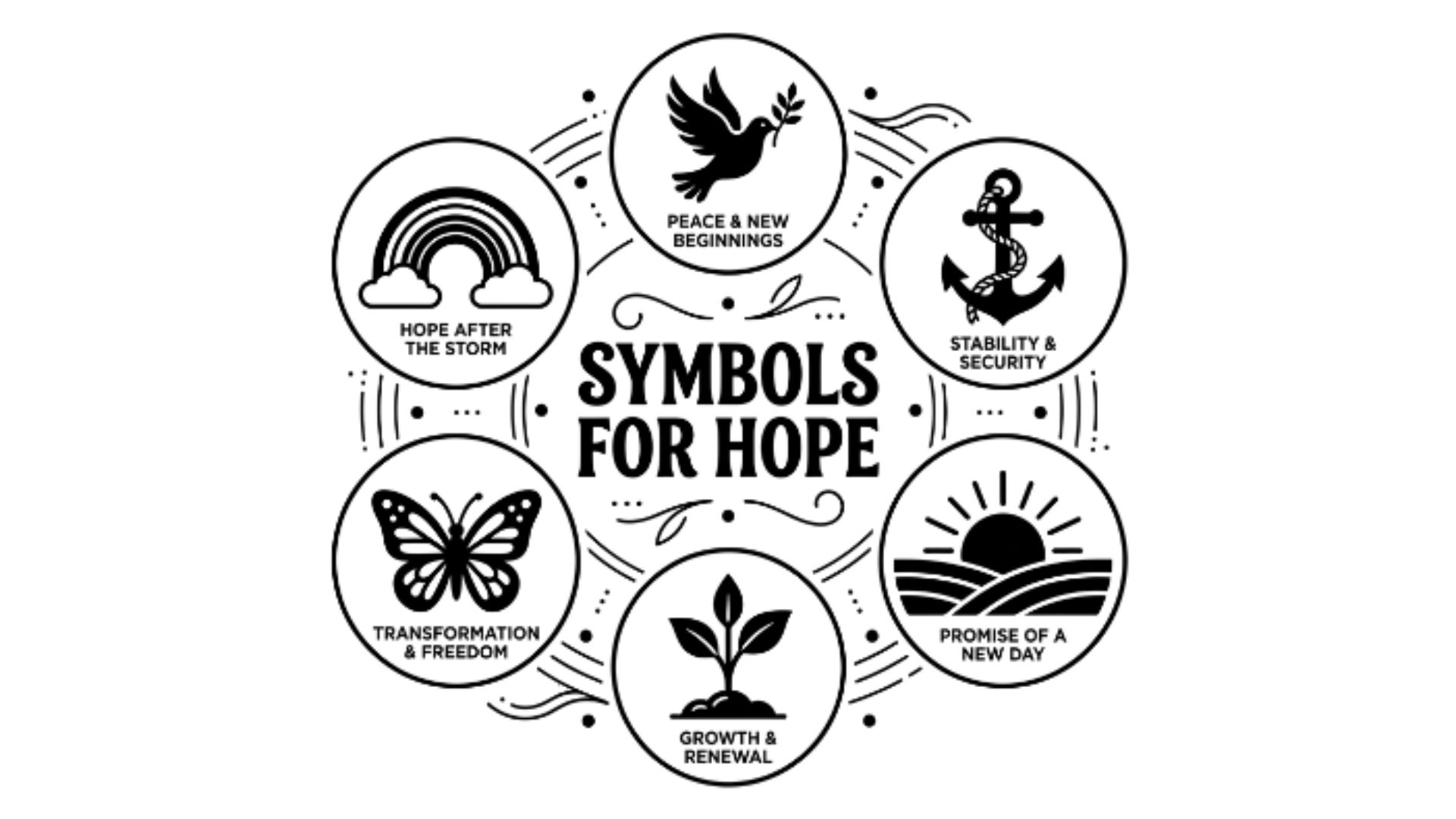
Symbols for hope are visual representations of optimism, renewal, and the belief that better days are ahead. Humans have used them for thousands of years, long before written language existed. From ancient cave carvings to modern tattoos, these symbols speak a universal language that words sometimes can’t capture.
Whether you’re going through a tough season or simply curious about what different cultures believe, hope symbols carry real emotional and spiritual weight. Let’s explore the most powerful ones and what they truly mean.
What Are Symbols for Hope?
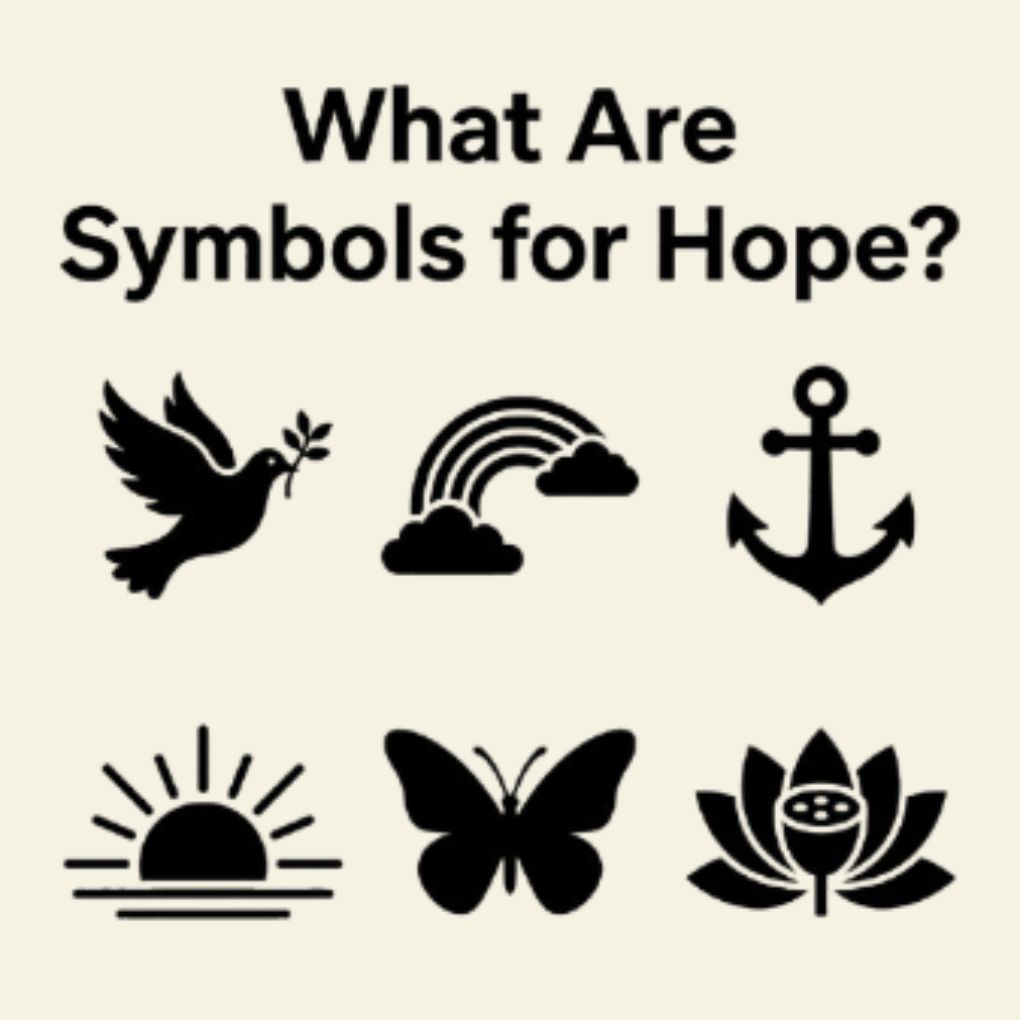
A symbol for hope is any image, object, or sign that people associate with renewal, survival, and a brighter future. These symbols exist in nature, religion, mythology, and everyday culture.
Before written language spread across the world, early humans relied on symbols to communicate. A rising sun meant a new day was possible. A green sprout meant life returned after winter. These weren’t just pretty images. They were emotional anchors in a world full of uncertainty.
Today, hope symbols still serve the same purpose. You’ll find them in hospitals, tattoos, memorial spaces, national flags, and social movements. They connect us to something larger than our current circumstances.
Deep Symbolic Meaning of Hope Symbols
Spiritual Meaning
On a spiritual level, hope symbols represent divine presence and the promise of transformation. Most major religions rely on visual signs to communicate that suffering is temporary and that something greater is at work.
In Christianity, the anchor comes directly from Hebrews 6:19, which calls hope “an anchor for the soul, firm and secure.” In Islam, light symbolizes Allah’s guidance through darkness. In Hinduism and Buddhism, the lotus rising through muddy water represents spiritual awakening despite worldly struggle.
These symbols don’t just decorate religious spaces. They actively remind believers that faith and hope are connected, that no hardship is permanent, and that renewal is always within reach.
Psychological Meaning
Psychologist C.R. Snyder developed Hope Theory, which explains that hope isn’t just an emotion. It’s a cognitive process. You need both a goal and a belief that you can reach it. Hope symbols visually reinforce both of those things.
When you see a familiar hopeful image, your brain activates emotional safety and forward-thinking. That’s why hospitals use calming imagery, why therapy spaces display nature art, and why memorial sites include candles and doves. These symbols aren’t decorative choices. They’re tools for emotional healing and mental resilience.
Cultural Meaning
Culturally, hope symbols become shared languages during times of crisis. After World War II, the dove spread across war-torn Europe as a universal plea for peace. During the COVID-19 pandemic, people placed rainbows in their windows as a silent message of solidarity and encouragement.
Every culture independently developed its own hope symbols, yet the emotional meaning is nearly identical across all of them. That universal overlap tells you something important: the need for hope is one of the most deeply human experiences that exists.
You May Also Like: 97+ Squid Game Symbols That Will Change How You See the Show
Types and Variations of Symbols for Hope
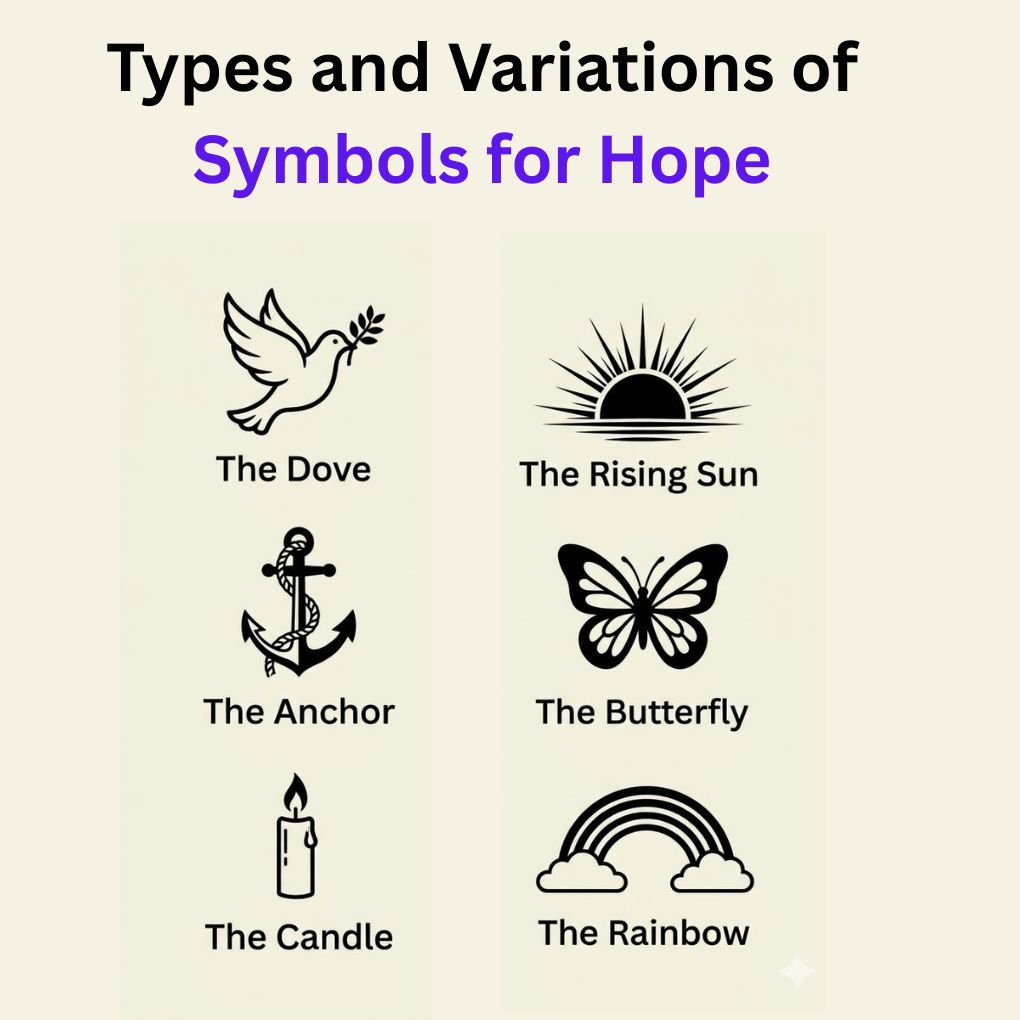
1. The Dove
The dove is arguably the most recognized symbol for hope and peace in the world. Its origins trace back to ancient Mesopotamia and the Biblical story of Noah, where a dove returned with an olive branch, signaling that floodwaters had receded and new life was possible.
In Greek and Roman mythology, the dove was associated with Aphrodite and Venus, goddesses of love and harmony. White doves appear in modern peace movements, wedding ceremonies, and memorial services around the world.
It’s worth noting the dove and olive branch together carry slightly different meanings. The dove represents peace and purity, while the olive branch specifically signals reconciliation and the end of conflict.
2. The Rising Sun
The rising sun has symbolized new beginnings and daily renewal across almost every ancient civilization. In Egyptian mythology, Ra the sun god died each night and was reborn every morning, representing eternal hope and cosmic renewal.
Japan’s Hinomaru flag features a red circle representing the rising sun, reflecting the nation’s identity as the “Land of the Rising Sun.” Native American dawn ceremonies also greet the sunrise as a sacred moment of spiritual hope and gratitude.
What makes the rising sun uniquely powerful as a hope symbol is the specificity of sunrise over midday sun. It’s about the beginning, not the peak. It’s about possibility, not arrival.
3. The Anchor
The anchor is a symbol of stability during emotional storms. Maritime cultures used it practically first: an anchor holds a ship in place when the sea becomes dangerous. That practical meaning quickly became a spiritual and emotional metaphor.
The anchor as a hope symbol comes directly from the Bible. Hebrews 6:19 describes hope as “an anchor for the soul.” Early Christians adopted it widely, especially during times of persecution when displaying a cross was dangerous. An anchor was subtler but carried the same message.
Today, anchor tattoos are among the most popular in America, often chosen by people who’ve survived difficult periods in their lives and want a permanent reminder of their inner strength.
4. The Butterfly
Few symbols capture personal transformation and rebirth quite like the butterfly. In Greek, the word psyche means both “soul” and “butterfly,” linking inner life directly to metamorphosis.
One of the most moving uses of butterfly symbolism comes from the Terezín concentration camp during the Holocaust. Children imprisoned there wrote poems about butterflies, using the image as a symbol of freedom and hope in unbearable circumstances. Those poems survived and became some of the most powerful hope documents in human history.
In modern mental health and recovery communities, the butterfly represents the journey from a painful, confined state into open, renewed life. It resonates deeply with people rebuilding after addiction, trauma, or loss.
5. The Candle
A single candle in darkness is one of the oldest and most emotionally immediate symbols of guidance and inner strength. Its use spans Christianity, Judaism, Hinduism, Buddhism, and nearly every major spiritual tradition.
The phrase “it’s better to light a candle than curse the darkness” is often attributed to various sources, but the meaning is universal. Active hope means doing something small in the face of overwhelming darkness rather than giving up.
Candlelight vigils remain a powerful modern expression of collective hope. Whether held for shooting victims, missing persons, or community grief, candles transform individual pain into shared light.
6. The Rainbow
The rainbow carries layered hope symbolism across religious, cultural, and modern contexts. Its Biblical meaning comes from the covenant of Noah, where God placed a rainbow in the sky as a promise that the earth would never again be destroyed by flood. That’s a direct symbol of divine hope after catastrophic loss.
Scientifically, rainbows only appear when sun and rain exist simultaneously. That combination, light breaking through the storm, is exactly why the rainbow works as a hope symbol in virtually every culture.
The LGBTQ+ rainbow flag, designed by Gilbert Baker in 1978, expanded that meaning to include hope for inclusion, dignity, and a future where everyone belongs. During COVID-19, communities worldwide placed rainbow drawings in their windows as a sign that hope was still alive.
| Symbol | Core Meaning | Where It Appears |
| Dove | Peace, new beginnings | Christianity, peace movements, weddings |
| Rising Sun | Renewal, fresh starts | Egypt, Japan, Native American traditions |
| Anchor | Stability, grounding | Maritime culture, Christian scripture, tattoos |
| Butterfly | Transformation, rebirth | Greek mythology, recovery communities |
| Candle | Guidance, inner light | All major religions, vigils, meditation |
| Rainbow | Promise, healing | Biblical covenant, LGBTQ+ movement, pandemic solidarity |
Symbols for Hope Across Cultures
Ancient Egypt
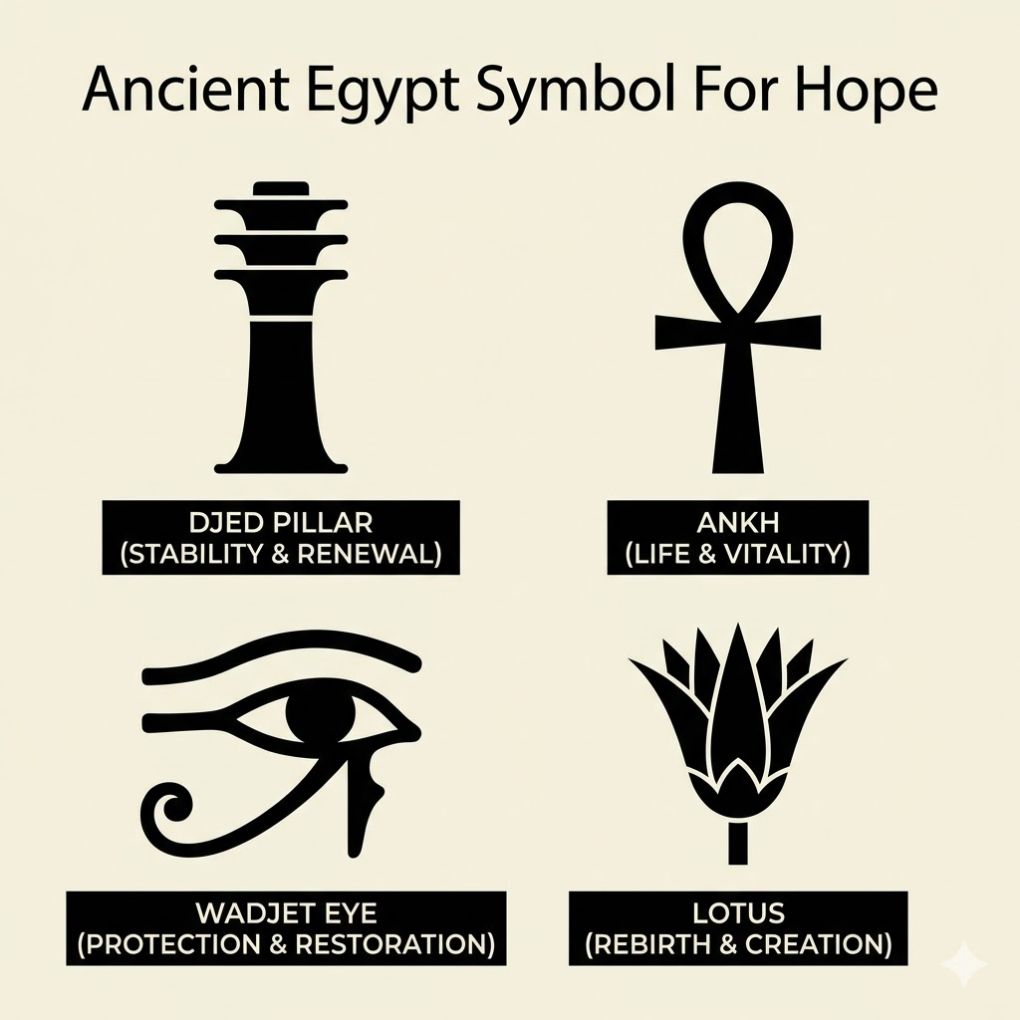
Ancient Egyptians built an entire civilization around hope and renewal. Ra, the sun god, represented the cycle of death and rebirth, dying each night and rising each morning without fail. The Ankh, shaped like a cross with a loop at the top, symbolized eternal life and the continuity of hope beyond death.
Egyptian tomb art wasn’t just decoration. It was a visual promise to the living that transition, not ending, was what lay ahead.
Greek Civilization
The most famous Greek hope story is Pandora’s Box, and most people get it slightly wrong. When Pandora opened the jar (it was actually a jar, not a box), all the world’s suffering escaped. But Elpis, the spirit of Hope, stayed inside. Hope didn’t flee with the darkness. It remained as humanity’s companion and constant companion through suffering.
The Greeks also gave us the Phoenix, a bird that burned to ash and rose again, representing the ultimate symbol of rebirth and resilience after total destruction.
Christianity
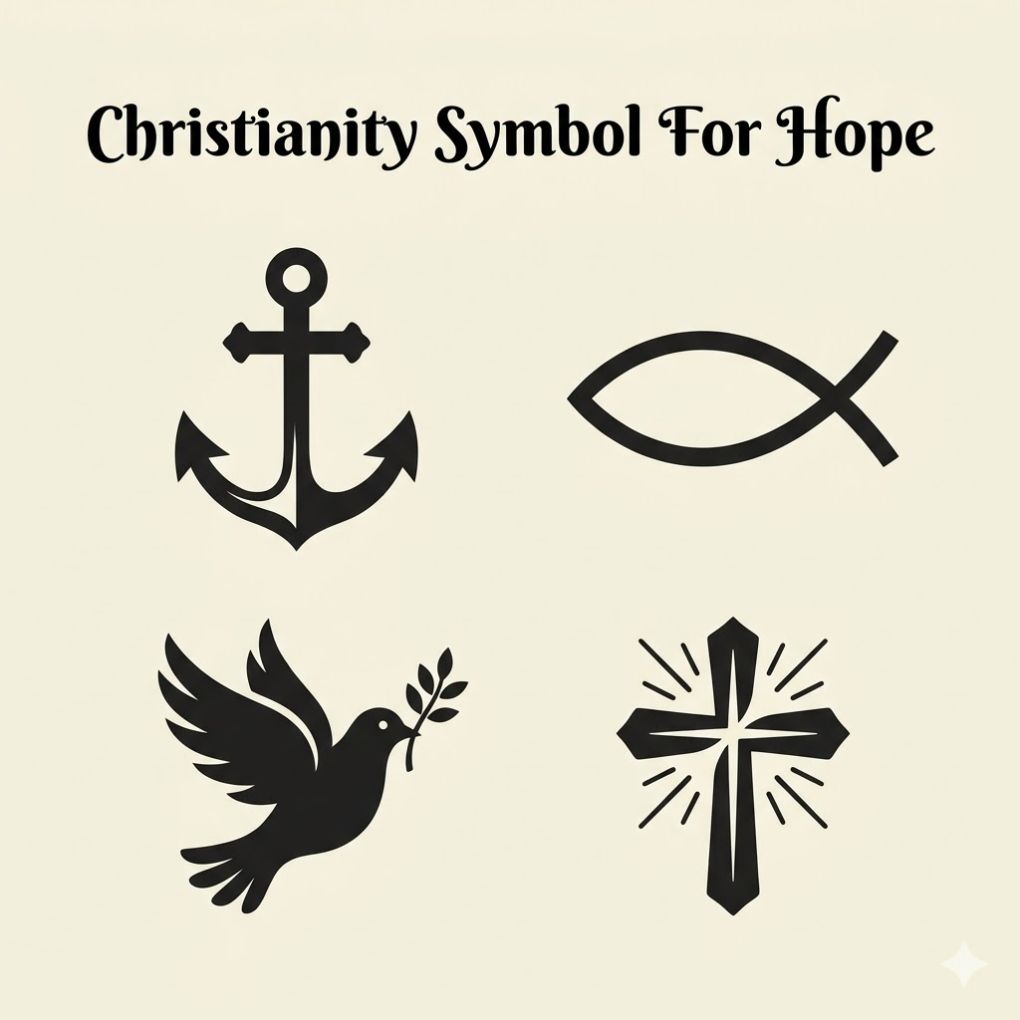
Christianity centers its entire faith on hope. The Resurrection of Jesus is the foundational Christian hope symbol, the belief that death is not the final word. The dove appears at Jesus’ baptism. The Star of Bethlehem guides people through darkness toward something better. The cross transforms an instrument of suffering into a symbol of redemption.
Easter remains the most hope-saturated celebration in Christianity, built entirely around the idea that light returns after the darkest night.
Native American Cultures
Native American traditions offer some of the most visually rich symbols of spiritual hope and renewal. The eagle represents elevated perspective, the ability to rise above circumstances and see with clarity. The medicine wheel symbolizes healing cycles and the belief that balance can always be restored.
The eight-pointed star, used by many Native tribes, represents the morning star and serves as a guide during darkness toward the promise of dawn.
Eastern Cultures
In Buddhism and Hinduism, the lotus flower is the most powerful hope symbol. It grows in muddy, murky water but blooms above the surface in perfect beauty. That journey mirrors the human spiritual experience of rising through suffering into clarity and peace.
Japan’s Kintsugi philosophy, the art of repairing broken pottery with gold, offers one of the most profound hope concepts in any culture. The cracks aren’t hidden. They’re highlighted. The philosophy says that what has been broken and repaired is more beautiful and valuable than what was never broken at all.
Symbols for Hope in Art, Movies, and Pop Culture
Hope symbols are everywhere in modern storytelling because they connect emotionally with audiences in ways that dialogue alone can’t.
In The Shawshank Redemption, birds and light streaming through prison windows become cinematic shorthand for the possibility of freedom. In The Hunger Games, Katniss’s Mockingjay pin transforms into a symbol of hope for an oppressed population, representing resistance and the belief that things can change.
In mental health culture, the semicolon has become one of the most meaningful modern hope symbols. Founded through Project Semicolon in 2013 by Amy Bleuel after losing her father to suicide, the movement uses the semicolon to represent a life that could have ended but continued. In grammar, a semicolon pauses a sentence rather than ending it. In mental health, it means: your story isn’t over. Millions of people wear semicolon tattoos as permanent reminders of survival and ongoing strength.
Shepard Fairey’s 2008 Obama “HOPE” poster showed how a single word paired with a strong visual could become a cultural symbol of optimism that transcended politics and became art.
Spiritual and Dream Meaning of Symbols for Hope
When hope symbols appear in dreams, many people experience them as messages from their subconscious during times of transition or healing.
Dreaming of a sunrise or bright light often signals emerging clarity after a period of confusion or grief. A butterfly in a dream frequently signals that personal transformation is already happening beneath the surface. A dove may represent forgiveness arriving, either toward someone else or toward yourself.
Carl Jung’s archetype theory helps explain why these symbols appear so consistently across different people’s dreams and visions. They’re not random. They tap into what Jung called the collective unconscious, shared symbolic meanings embedded in human psychology across cultures and centuries. In meditation practices, many teachers use hope symbols as visual anchors to help practitioners stay grounded in positive intention rather than fear.
Positive vs. Negative Meanings of Hope Symbols
Most hope symbols carry a meaningful duality. Understanding both sides actually makes them more honest and powerful.
- Dove: Peace and purity, but also vulnerability. A dove can be hurt.
- Sun: Life-giving energy, but also overwhelming heat if unchecked.
- Butterfly: Beautiful transformation, but also the fragility of change.
- Candle: Guiding light, but flames burn out. Hope requires tending.
- Rainbow: Promise after the storm, but only visible because of rain and struggle.
This duality is actually important. Hope isn’t naive optimism. It’s not pretending darkness doesn’t exist. Real hope acknowledges the storm and still believes in the rainbow. That’s what makes it powerful, not the absence of difficulty, but the choice to continue despite it.
Why Humans Are Attracted to Symbols for Hope
The human brain is wired to find patterns and assign meaning. That’s not a weakness. It’s how humans survived. When our ancestors saw a green shoot after winter, they didn’t just see a plant. They saw evidence that life was returning. That cognitive leap, from image to meaning, is deeply embedded in us.
Hope symbols actively counter the brain’s negativity bias, the well-documented psychological tendency to weight threats more heavily than positive information. When you see a hope symbol you personally connect with, it interrupts that negativity loop and redirects your focus toward possibility.
According to positive psychology research, hope is one of the strongest predictors of life outcomes. People with higher hope scores recover faster from illness, perform better academically, and report greater life satisfaction. Wearing or displaying hope symbols isn’t superstition. It’s a behavioral reminder system that keeps your focus pointed toward growth and recovery. People across every continent independently created nearly identical hope symbols. The lotus, the sunrise, the bird, the light. That overlap isn’t coincidence. It reflects a universal human truth: we all need the same reminders.
Conclusion
Symbols for hope are more than cultural decoration. They’re emotional tools that humans have carried through war, grief, illness, and transformation for thousands of years. From the dove of ancient Mesopotamia to the semicolon of modern mental health movements, these symbols speak to the same core human truth: darkness is real, and light is still possible.
The most powerful thing about hope symbols is that they don’t deny struggle. They acknowledge it, and then they point somewhere beyond it. That’s what makes them endure across every culture, every era, and every language.
Whatever symbol resonates with you most, carry it. Wear it, display it, or simply remember it on the hardest days. It’s a reminder that your story isn’t over and that renewal is always within reach.
Explore More Symbols:
- 45+ Legendary Leadership Symbols From History That Still Guide Leaders Today
- 105+ Bold Woman Symbols of Strength and Courage That Inspire Fearless Living
- 60+ Mysterious Filipino Symbols and Their Hidden Meanings You’ve Never Noticed

Mubeen is a passionate writer at Auramegazine who explores symbolism, hidden meanings, and powerful signs behind everyday symbols. He enjoys creating simple, engaging content that helps readers understand deeper meanings and cultural connections.