79+ Iconic War Symbols Used By Legendary Warriors And Empires
War symbols are among the oldest and most powerful forms of human communication ever created. Long before written language spread across civilizations, warriors painted symbols on their shields, carved marks into their weapons, and raised battle flags that enemies could recognize from a distance. These weren’t just decorations. They carried meaning, emotion, identity, and sometimes genuine fear.
From the Roman eagle standard that legions protected with their lives to the Viking Helm of Awe carved into wood before raids, iconic war symbols shaped how armies fought, how soldiers felt, and how empires presented their power to the world. Understanding these symbols means understanding something deeply human about courage, sacrifice, loyalty, and survival.
What Are War Symbols?
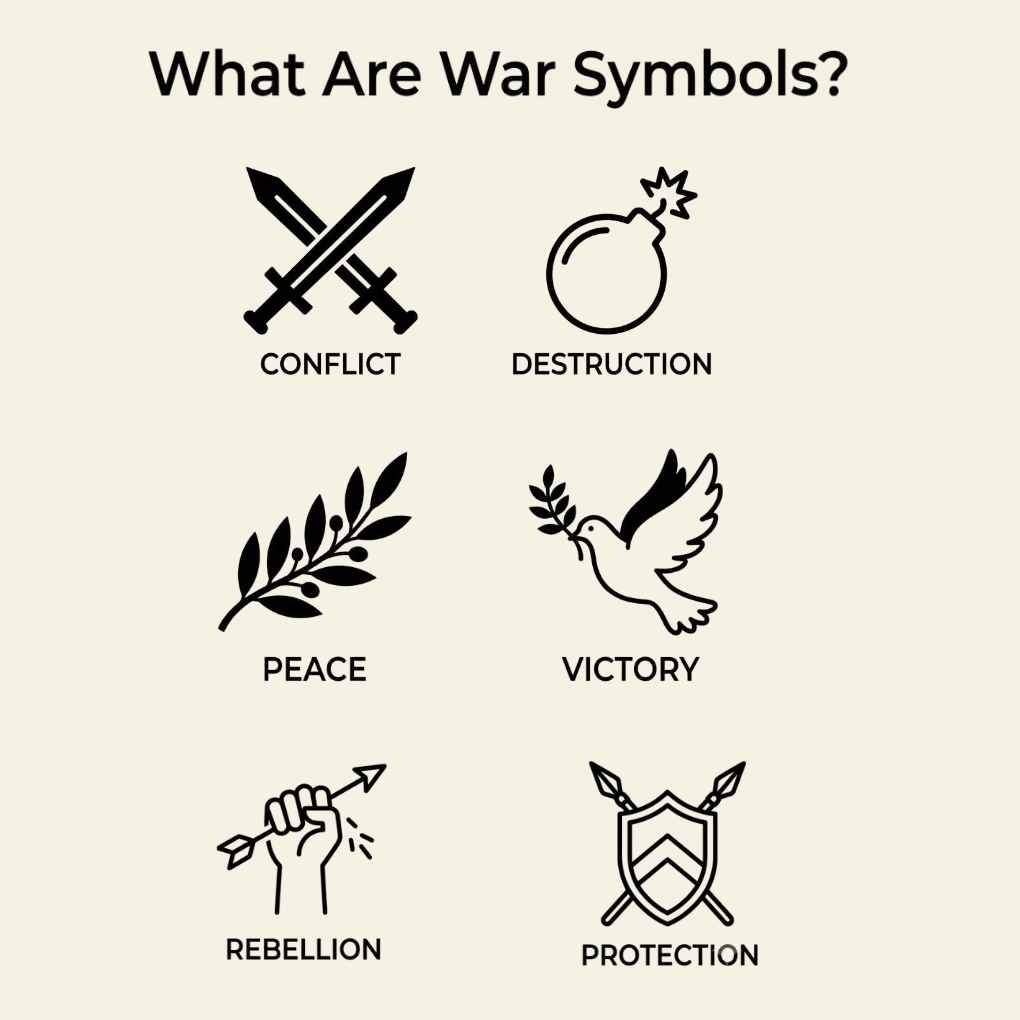
War symbols are visual marks, objects, colors, animals, or emblems connected to warfare, military power, victory, protection, or sacrifice. Every major civilization throughout history used them. They unified armies, intimidated enemies, honored the fallen, and preserved cultural identity long after battles ended.
Think about it this way. When thousands of soldiers from different regions, speaking different dialects, marched together under one banner, that symbol became their shared identity. It told them who they were fighting for and why it mattered. Ancient Roman legions carried eagle standards into every major campaign. Losing that standard in battle wasn’t just a military setback. It was considered a spiritual catastrophe that brought shame to the entire legion.
Military symbols also played a deeply psychological role. A warrior wearing a symbol associated with a powerful god or fearsome animal didn’t just look intimidating. He genuinely felt more fearless. That psychological edge mattered enormously on ancient battlefields where morale often determined outcomes more than numbers.
Symbols Of War And Their Deep Meanings
Symbols Of War
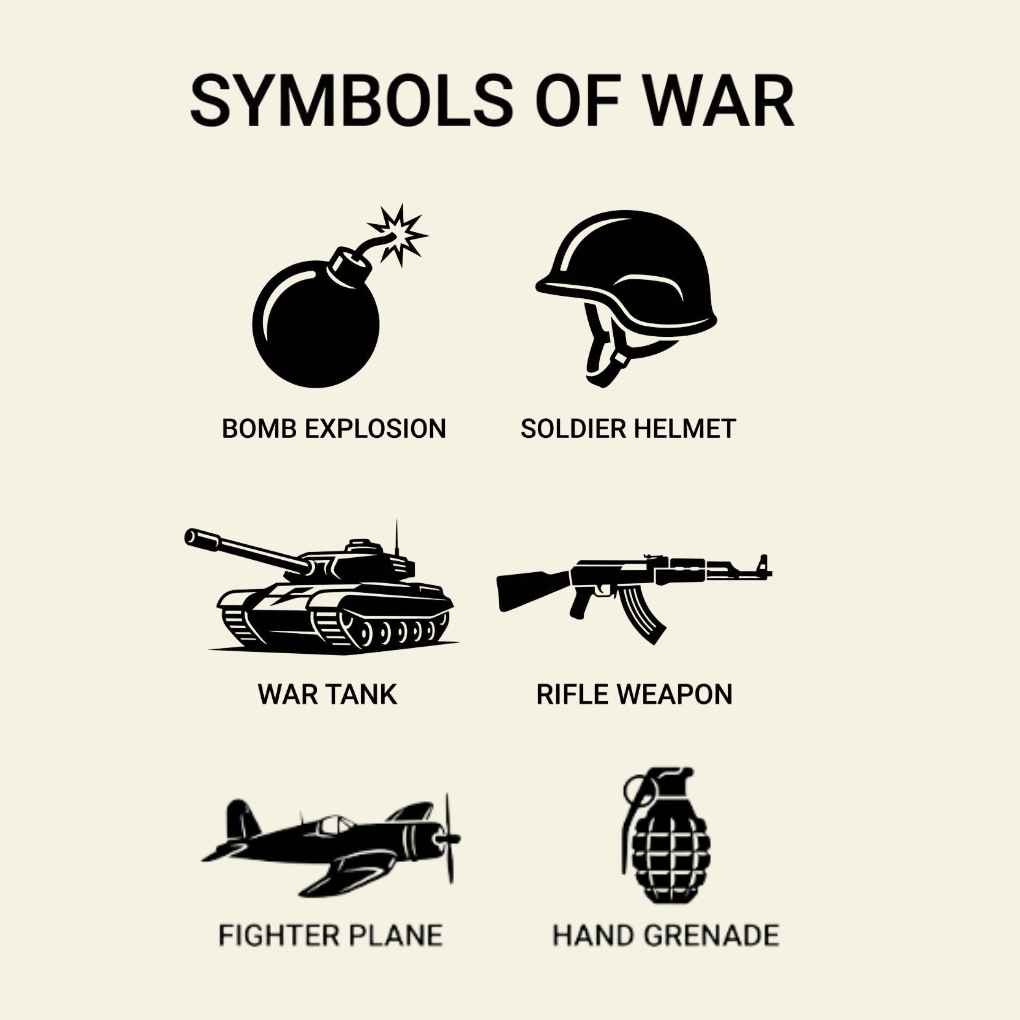
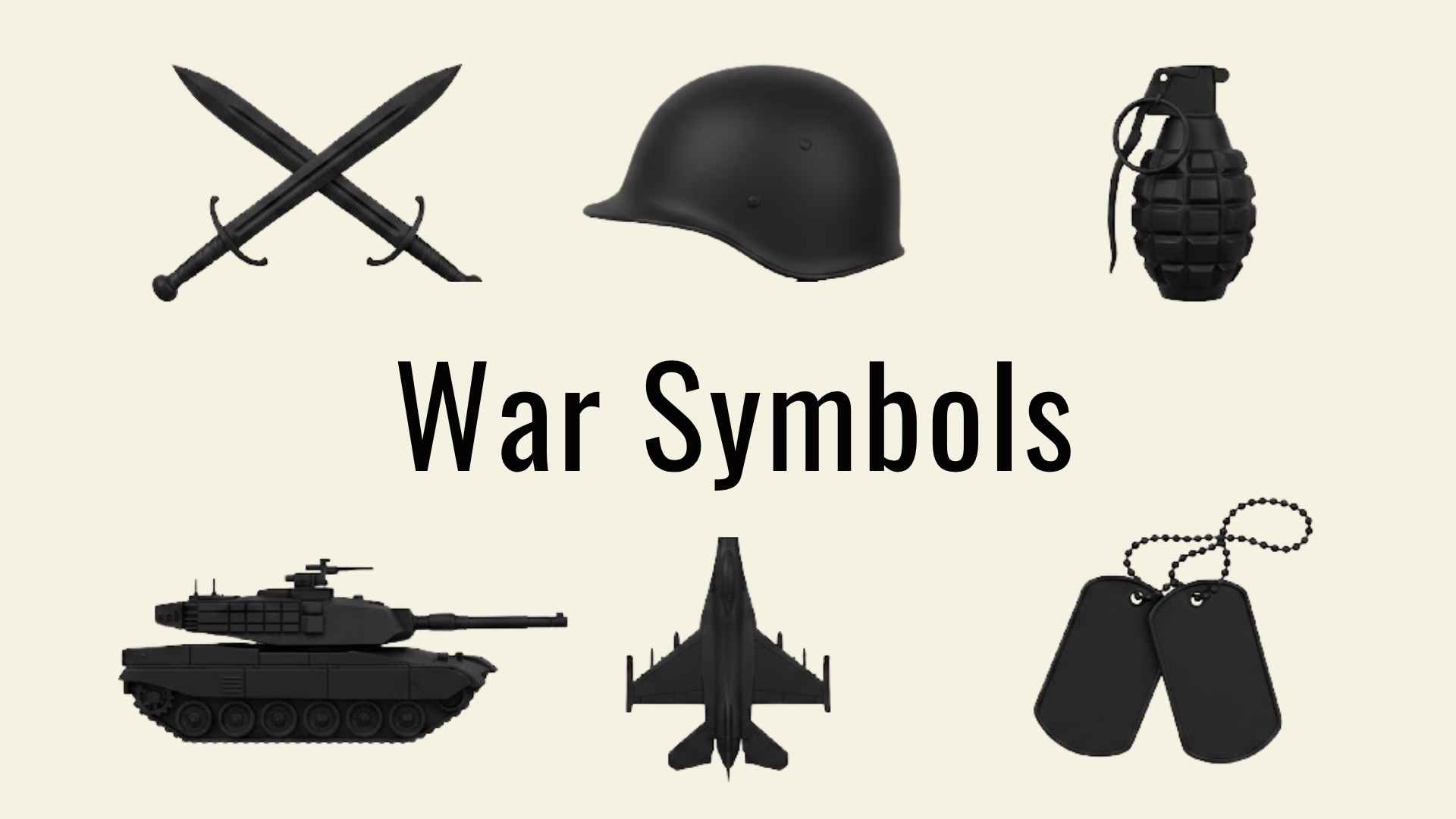
The most recognized symbols of war across history include weapons, predatory animals, fire, skulls, and protective objects like shields and helmets. These images appeared on flags, armor, temple walls, coins, and royal seals because they communicated strength instantly without needing words.
Crossed swords remain one of the clearest battle symbols still recognized globally today. The skull signals death and fearlessness simultaneously. Fire represents both destruction and purification depending on the culture using it.
War Symbolism
War symbolism goes much deeper than just representing conflict. It captures the full emotional spectrum of warfare including bravery, grief, national pride, spiritual protection, and the terrifying cost of violence. Ancient monuments across Egypt, Greece, and Mesopotamia used symbolic imagery to tell stories of wars fought centuries before written records existed.
You’ll notice that wartime imagery almost always combines power with sacrifice. A soldier depicted alongside an eagle isn’t just strong. He’s divinely protected, destined for victory, and worthy of honor whether he survives or falls.
Symbols That Mean War
Some symbols universally signal conflict and aggression across cultures. The battle axe, raven, broken spear, skull, and blood-red banner are among the clearest symbols that mean war throughout recorded history. Ravens appeared in both Norse and Celtic warrior traditions as messengers between the living and the dead on battlefields.
War Symbols Copy And Paste
For digital use in gaming, social media, or creative projects, here are popular war symbols copy and paste options: ⚔ ☠ 🛡 ✠ ♞ 🪖 🏹 💣. These Unicode symbols instantly create a bold warrior aesthetic in usernames, bios, and online profiles.
War Symbols Tattoos
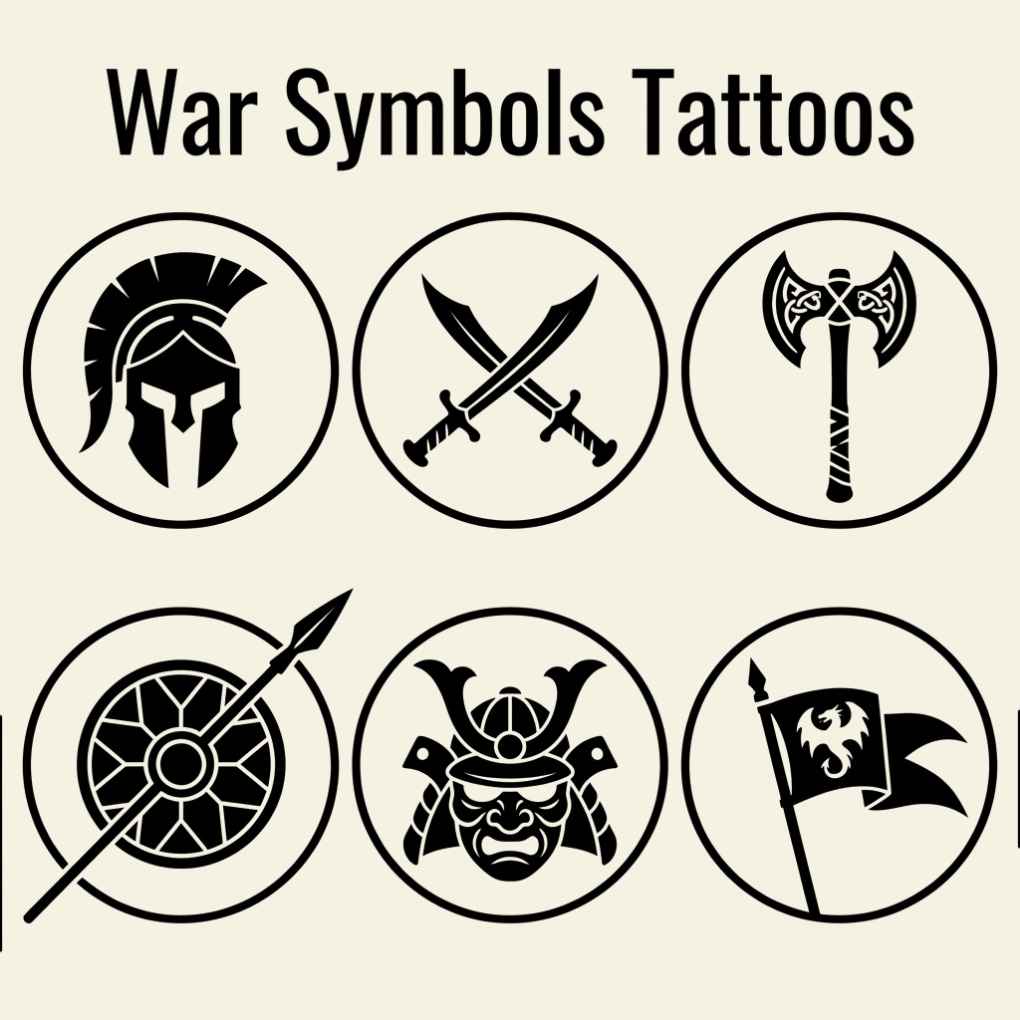
Warrior tattoos remain incredibly popular in the USA because they carry personal meaning that goes beyond decoration. Spartan helmets represent discipline and mental toughness. Viking runes suggest spiritual protection. Crossed swords honor military service or personal battles someone survived. Dog tag tattoos are especially meaningful among veterans because they represent both identity and loss.
The most requested war symbols tattoos in American tattoo studios include the Spartan lambda (Λ), the USMC Eagle Globe and Anchor, the Helm of Awe, and tribal battle designs inspired by Maori and Native American warrior traditions.
You May Also Like: 72+ Unique Symbols To Represent Yourself And Express Your True Identity
Symbols For War
Symbols for war span a remarkable range including eagles, dragons, wolves, lightning bolts, fire, and celestial objects like blood moons. Different cultures chose different animals based on which qualities they most admired. Romans chose the eagle for dominance and divine authority. Vikings chose the wolf and raven for cunning, loyalty, and connection to Odin.
Famous Ancient And Historical War Symbols
War Symbols Emoji
Modern war symbols emoji carry ancient meanings into digital communication. The ⚔ crossed swords emoji signals conflict or competition. The 🪖 military helmet represents service and sacrifice. The 🛡 shield emoji communicates protection and defense. Gaming communities use these constantly, often without realizing they’re continuing a symbolic tradition thousands of years old.
War Symbols WW2
World War 2 produced some of the most powerful and controversial military symbols in modern history. The Allied V for Victory hand sign became a global symbol of resistance. The Soviet Red Star represented communist military power. Britain’s bulldog and Churchill’s resolute posture became unofficial war symbols of national stubbornness.
On the Axis side, the Iron Cross carried German military tradition while the Rising Sun flag represented Japanese imperial expansion. Resistance symbols used by occupied populations across Europe showed how ordinary people used symbolic language to communicate defiance without words.
War Symbols And Meanings
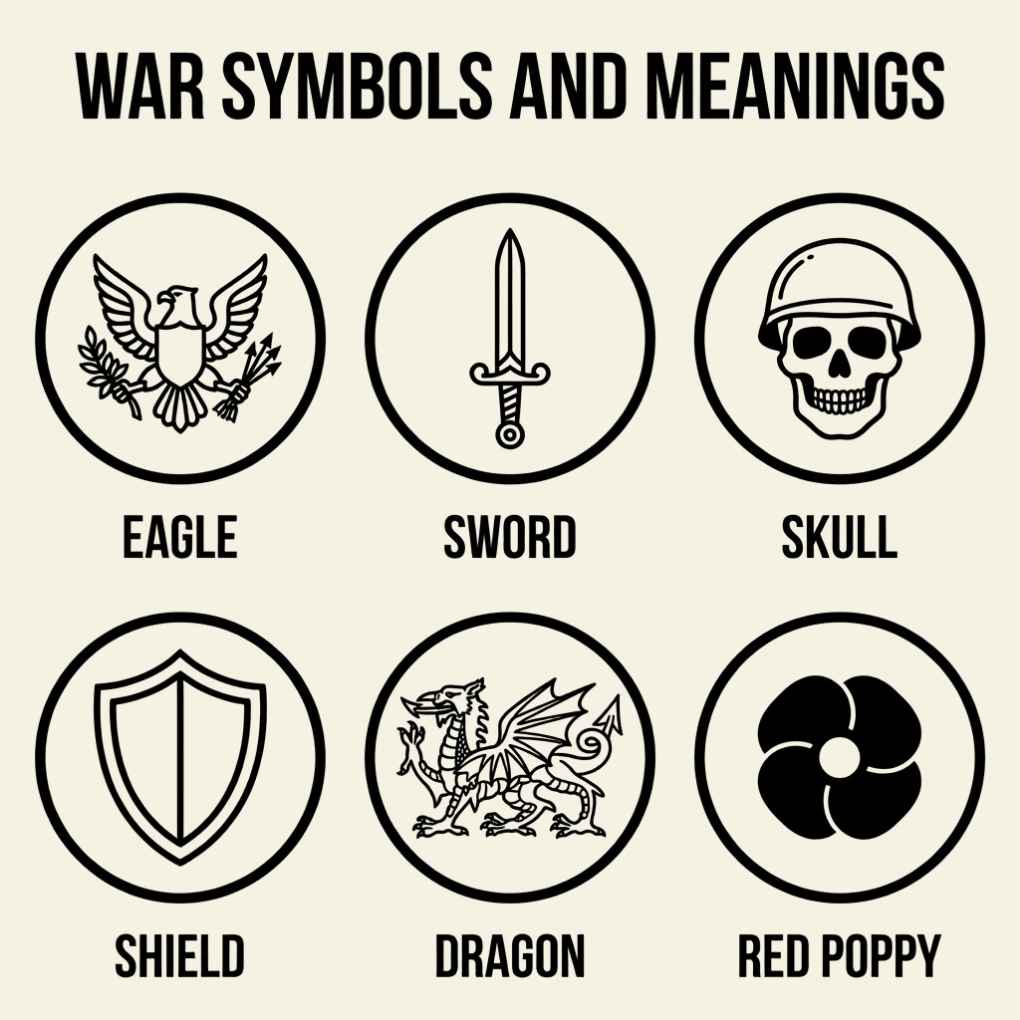
Here’s a quick reference for core war symbols and meanings:
| Symbol | Core Meaning | Cultural Origin |
| Eagle | Power, dominance, divine authority | Rome, USA, Aztec |
| Sword | Honor, justice, sacrifice | Global |
| Skull | Death, fearlessness, danger | Global |
| Shield | Protection, resilience, duty | Greece, Medieval Europe |
| Dragon | Unstoppable force, chaos, wisdom | China, Wales, Vikings |
| Red Poppy | Remembrance, sacrifice | WWI battlefields |
| Raven | Death, wisdom, war prophecy | Norse, Celtic |
Ancient War Symbols
Ancient war symbols connected military power directly to divine authority. Egyptian pharaohs marched under the vulture goddess Nekhbet and the cobra goddess Wadjet. The Assyrian Empire used winged bulls called Lamassu as guardian symbols at city gates. These weren’t just decorative. They told every visitor that this civilization had supernatural protection backing its military power.
The Roman eagle standard, called the Aquila, deserves special attention. Each Roman legion carried exactly one Aquila. If that standard fell into enemy hands, the legion faced potential disbandment. Roman general Marcus Licinius Crassus lost his legion’s standard at the Battle of Carrhae in 53 BC, and recovering those standards became a national obsession for decades.
War Symbols Greek
Greek war symbols were tied directly to their gods. Ares carried the spear and was associated with brutal, chaotic warfare. Athena carried the aegis shield and represented strategic, disciplined warfare. This distinction mattered culturally because Greeks valued intelligent warfare over mindless aggression.
The Spartan lambda (Λ) painted on shields is one of history’s most iconic battle symbols. Every Spartan hoplite carried this mark into combat, creating a unified wall of identity during the famous phalanx formation.
Symbols Of War In Mythology
Mythological war symbols appear across nearly every ancient culture. Thor’s Mjolnir represented both destructive power and protective strength in Norse mythology. The Aztec god Huitzilopochtli was represented by hummingbird feathers and eagle imagery, connecting solar power directly to warfare. Celtic warriors used the Carnyx, a tall bronze war horn shaped like a screaming animal, as both a practical instrument and a terrifying symbol of approaching battle.
You May Also Like: 55+ Powerful God Symbols and Their Spiritual Significance
What Symbolizes War?
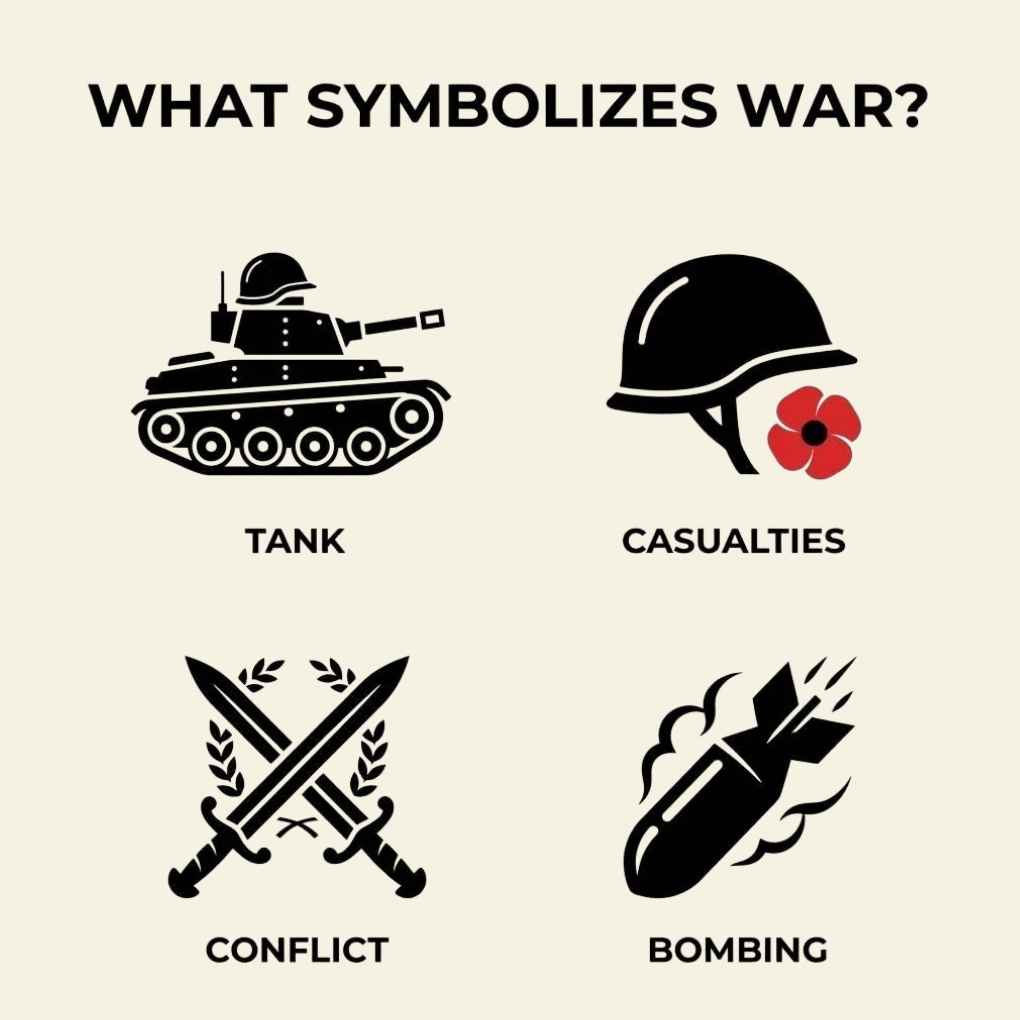
Fire, blood-red colors, broken earth, storm clouds, ravens, wolves, and weapons all symbolize war across human cultures. But interestingly, many of these symbols carry dual meanings. Fire destroys and purifies. Wolves terrify and protect their pack. This duality reflects how humans have always understood war itself as both terrible and sometimes necessary.
Deep Symbolic Meaning of War Symbols
Spiritual Meaning
Ancient warriors believed sacred warrior symbols weren’t just decorative. They were functional spiritual tools. The Viking Helm of Awe (Ægishjálmr) was drawn on foreheads with warrior fingers to induce fear in enemies and protect the wearer’s mind during combat. Norse soldiers genuinely believed this symbol connected them to Odin’s power.
Native American warrior symbols worked similarly. Eagle feathers weren’t just earned honors. They were believed to carry the eagle’s spirit directly into battle with the warrior wearing them.
Psychological Meaning
Modern psychology confirms what ancient warriors already understood intuitively. Symbols of courage and sacrifice trigger genuine emotional responses by activating identity and group belonging in the human brain. Research on military cohesion consistently shows that shared symbols significantly increase unit morale and performance under stress.
The most effective military emblems throughout history combined fearsome imagery with group identity. A soldier who sees his unit’s symbol under fire doesn’t just remember who he’s fighting for. He feels it physically.
Cultural Meaning
Cultural identity and war symbolism are deeply intertwined. The red poppy means remembrance in the USA and UK, yet the same flower carries completely different associations in other parts of the world. The Iron Cross represents German military heritage but carries uncomfortable associations in certain historical contexts.
National identity symbols tied to warfare often become contested over time as societies reexamine their histories. This tension between pride and accountability is itself part of what makes historical military emblems so culturally significant.
Powerful Types of War Symbols and Their Meanings
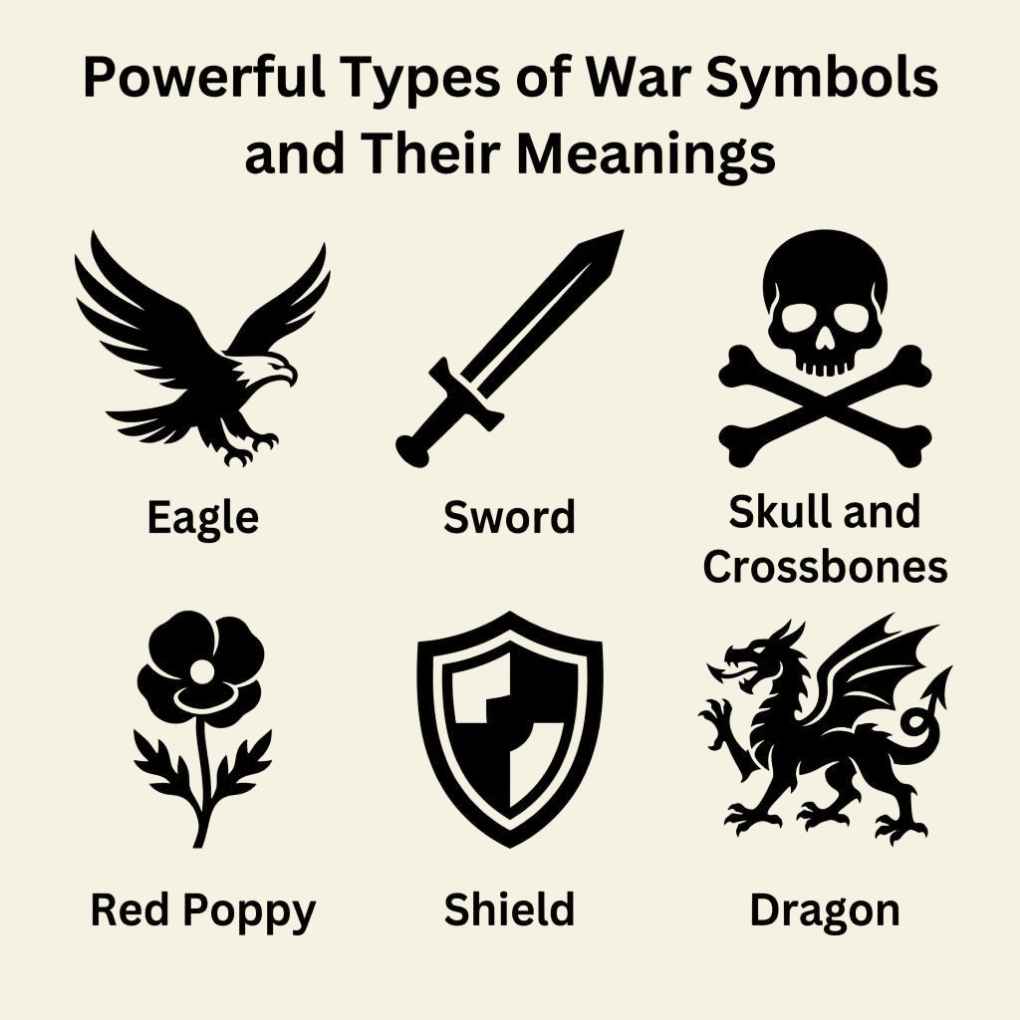
Eagle Symbol
Visual Description: A large bird with spread wings, often clutching arrows, a sword, or lightning bolts in its talons.
Meaning: Power, dominance, freedom, divine authority, and military victory. The eagle’s ability to soar above all other creatures made it the ultimate symbol of empire-level strength.
Where It Appears: Ancient Rome’s Aquila standards, the US Presidential Seal, Aztec eagle warrior orders, Nazi Germany’s Reichsadler, and countless modern military insignias worldwide.
Sword Symbol
Visual Description: An upright or crossed blade, sometimes wrapped in laurel leaves, flames, or religious imagery.
Meaning: Honor, justice, sacrifice, and the weight of warrior responsibility. The sword represents both the power to protect and the burden of using violence righteously.
Where It Appears: Medieval European knights, Japanese samurai crests, religious art across Christianity and Islam, and virtually every modern military insignia on earth.
Skull and Crossbones
Visual Description: A human skull positioned above two crossed bones, often in white against black backgrounds.
Meaning: Death, fearlessness, danger, and ruthless power. During warfare, this symbol was designed specifically to terrify enemies before combat began.
Where It Appears: Pirate flags, Prussian Hussar military units, WWII SS division patches, and modern military special operations patches where fearlessness is the core message.
Red Poppy Symbol
Visual Description: A small, vivid red flower with delicate paper-thin petals and a dark center.
Meaning: Remembrance, sacrifice, and honoring the fallen. After WWI, poppies grew across devastated battlefields in Belgium and France, becoming the most recognized symbol of soldier sacrifice in the Western world.
Where It Appears: Veterans Day ceremonies across the USA, UK Remembrance Day, military memorial lapel pins, and war cemeteries worldwide.
Shield Symbol
Visual Description: A protective armor plate, often decorated with animals, family crests, crosses, or battle colors.
Meaning: Defense, resilience, duty, and the warrior’s oath to protect others. Shields represent the choice to stand between danger and the people you love.
Where It Appears: Ancient Greek hoplites, medieval knights’ heraldic coats of arms, modern police badges, and military unit insignias globally.
Dragon Symbol
Visual Description: A fire-breathing serpentine creature shown in flight, coiled around weapons, or rising over a shield.
Meaning: Unstoppable force, chaos, wisdom, and invincibility. In Eastern traditions, dragons represent divine imperial power. In Western traditions, they represent the most dangerous possible enemy, making them perfect symbols for fearless warriors.
Where It Appears: Chinese imperial war banners, the Welsh national flag, Viking longship prow carvings, and medieval European battle standards.
War Symbols Across Cultures
Ancient Roman Culture
Rome built one of history’s most sophisticated systems of military symbols. The Aquila eagle standard represented the soul of each legion. SPQR (Senatus Populusque Romanus) appeared on every standard, connecting every soldier directly to the authority of the Roman Senate and people. Roman military imagery focused on discipline, conquest, and divine destiny, making every symbol feel like a statement of inevitability.
Viking Culture
Vikings used spiritual warrior symbols with genuine religious conviction. The Helm of Awe provided mental protection. The Valknut connected fallen warriors to Odin and the afterlife.
The Vegvísir compass symbol guided warriors through storms both literal and metaphorical. These symbols were carved onto weapons, painted on shields, and worn as carved pendants throughout raids and battles across Europe.
Japanese Samurai Culture
The samurai clan symbol system, called mon, was one of history’s most sophisticated battlefield identification systems. Each clan’s mon appeared on flags, armor, and clothing so soldiers could instantly recognize allies during chaotic combat. Beyond practical identification, cherry blossoms became the samurai’s philosophical war symbol, representing the beauty and absolute brevity of a warrior’s life.
Native American Cultures
Native American warrior symbols varied significantly between tribes, so it’s important to acknowledge that diversity rather than generalize. However, eagle feathers were widely earned through acts of battlefield courage across many Plains tribes. Bear claw symbols represented strength and resilience. Wolf imagery connected warriors to pack loyalty and hunting intelligence. War paint wasn’t decoration. It was spiritual preparation.
Medieval European Culture
Medieval heraldic coats of arms turned battlefield identification into an art form. Lions appeared on shields to communicate raw courage, most famously on the English royal coat of arms. Crosses blended religious devotion with military identity during the Crusades.
Ravens symbolized both death and wisdom in northern European heraldry. The entire medieval coat of arms system was essentially a visual language that told opponents exactly who they were facing before the first sword swung.
War Symbols in Art, Movies and Pop Culture
In Movies
Filmmakers understand that battle flag symbolism communicates identity and conflict within seconds of appearing on screen. The mockingjay pin in The Hunger Games became a perfect modern resistance symbol because it combined fragility with defiance.
The White Tree of Gondor in Lord of the Rings carried an entire civilization’s hope on a single standard. Star Wars uses military insignia so effectively that viewers instantly identify Imperial vs. Rebel affiliation just from small badge details on costumes.
In Paintings
Historical painters used symbolic meaning of weapons and environmental imagery to convey the emotional weight of war without depicting graphic violence. Broken swords signal defeat and mourning. Dark storm clouds represent divine judgment or inevitable doom.
Goya’s war paintings used symbolic darkness and chaos rather than literal battlefield detail to communicate the horror of the Napoleonic Wars more effectively than any photograph could.
In Books
Fantasy literature relies heavily on warrior culture symbols for world-building efficiency. George R.R. Martin’s house sigils in A Song of Ice and Fire instantly communicate personality, power, and values.
Tolkien’s Eye of Sauron is arguably modern literature’s most effective symbol of conflict. These fictional symbols work because they’re built on the same psychological foundations as real historical war symbols.
In Tattoos
American tattoo culture treats war symbol tattoos as deeply personal statements. Veterans use the USMC Eagle Globe and Anchor to honor service. Civilians choose Spartan helmets to represent personal discipline.
Memorial tattoos incorporating dog tags, poppies, or unit insignias honor specific people lost in combat. Symbols of sacrifice in tattoo form become permanent reminders of what matters most to the person wearing them.
In Fashion
Military-inspired fashion has influenced American clothing for decades. Camouflage patterns moved from Vietnam-era surplus stores to high fashion runways by the 1990s. Combat boots became youth rebellion symbols in punk and grunge culture.
Epaulettes and military-cut jackets signal authority and toughness in both streetwear and luxury fashion. Warrior identity sells because people genuinely want to project strength, resilience, and independence.
Spiritual and Dream Meaning of War Symbols
Seeing Swords in Dreams
Dreaming about swords typically represents difficult decisions requiring clarity and courage. Jungian psychology interprets swords as symbols of the rational mind cutting through confusion or emotional fog. If you’re facing a tough personal choice, seeing a sword in a dream might reflect your subconscious processing the need to take decisive action.
Seeing Flags or Banners
Flags in dreams often reflect questions about identity, loyalty, and what causes are truly worth fighting for in your waking life. Seeing a torn or fallen banner may signal doubt about a commitment. A rising banner often represents renewed purpose or the beginning of a significant personal challenge you feel ready to face.
Seeing Battles or Armor
Armor appearing in dreams suggests emotional self-protection or a fear of being emotionally vulnerable. Seeing yourself in battle, especially winning, often signals an internal transformation happening in real life. Many therapists note that clients facing major life changes frequently dream in battle symbols because the mind naturally frames personal growth as a kind of inner warfare.
Positive vs Negative Meaning of War Symbols
Positive Meanings
The most powerful symbols of courage and sacrifice carry genuinely uplifting meanings when understood in proper context. A red poppy honors the fallen with dignity. An eagle represents the human aspiration toward freedom and excellence.
A shield represents the choice to protect others at personal cost. Symbols of unity used by armies throughout history remind us that humans are capable of extraordinary collective courage when they share a meaningful identity.
Negative Meanings
The same symbols that inspire one group can terrify or oppress another. Symbols of destruction like the skull, the battle axe, or certain WWII military emblems carry traumatic historical weight that can’t be separated from their visual impact.
War symbols remind us that power and dominance can serve protection or enable atrocity depending entirely on who wields them and why.
Why Humans Are Attracted to War Symbols
Humans are drawn to warrior spirit symbols because they connect directly to survival instincts that evolution built into us over thousands of years. Communities that developed strong shared symbols survived longer because those symbols created trust, cooperation, and coordinated action under pressure.
Today, that attraction expresses itself through tattoos, movie characters, sports team logos, gaming avatars, and fashion choices. When someone wears a Spartan helmet tattoo or uses crossed swords in their username, they’re tapping into something genuinely ancient. They’re borrowing the fearlessness and strength those symbols were originally designed to communicate.
Psychologists also note that people experiencing personal battles, including illness, grief, loss, or major life transitions, frequently gravitate toward spiritual warrior symbols because they reframe personal struggle as something worth fighting through rather than just enduring.
FAQs
What is the most powerful war symbol in history?
The Roman eagle standard (Aquila) is widely considered one of the most powerful because entire legions would die rather than allow it to fall into enemy hands.
What do crossed swords symbolize?
Crossed swords represent conflict, military power, honor, and the meeting of equal opposing forces. They appear on military insignias and memorials worldwide.
Which war symbols are considered offensive today?
Several WWII Axis symbols including the swastika and certain SS insignia are legally banned in multiple countries due to their association with genocide and oppression.
What does the eagle represent in military history?
The eagle represents power, divine authority, dominance, and freedom. It’s been used by Rome, the USA, Nazi Germany, and the Aztec Empire among others.
What war symbols did the Vikings use for protection?
Vikings primarily used the Helm of Awe (Ægishjálmr), the Valknut, and the Vegvísir compass symbol for spiritual protection during battle.
Conclusion
War symbols are far more than marks of military power. They’re emotional records of everything humans have ever valued, feared, sacrificed, and hoped for. From the Roman eagle that embodied an empire’s destiny to the simple red poppy honoring a generation lost in muddy fields, these symbols outlive every battle they were born from.
They carry courage and sacrifice, national pride and terrible warning, spiritual protection and honest acknowledgment of mortality. Their power comes from exactly that duality. A sword can defend the innocent or destroy them. A flag can unite a nation or divide the world.
What makes iconic war symbols so enduring is that they speak directly to something in us that words sometimes can’t reach. Long after the empires crumble and the warriors are forgotten, the symbols remain, still telling their stories to anyone willing to look closely enough.

Mubeen is a passionate writer at Auramegazine who explores symbolism, hidden meanings, and powerful signs behind everyday symbols. He enjoys creating simple, engaging content that helps readers understand deeper meanings and cultural connections.