97+ Squid Game Symbols That Will Change How You See the Show
Squid Game symbols are one of the most carefully designed visual systems in modern television history. Every shape, color, number, and object in the show carries a deliberate meaning that goes far deeper than most viewers realize on first watch. Creator Hwang Dong-hyuk didn’t just build a thriller — he built a symbolic language that speaks to inequality, power, identity, and what it means to be human.
If you’ve watched the show and felt like something was happening beneath the surface, you were right. This guide breaks down 97+ symbols hidden throughout the series, and by the end, you’ll never look at a circle, triangle, or square the same way again.
What Are Squid Game Symbols?
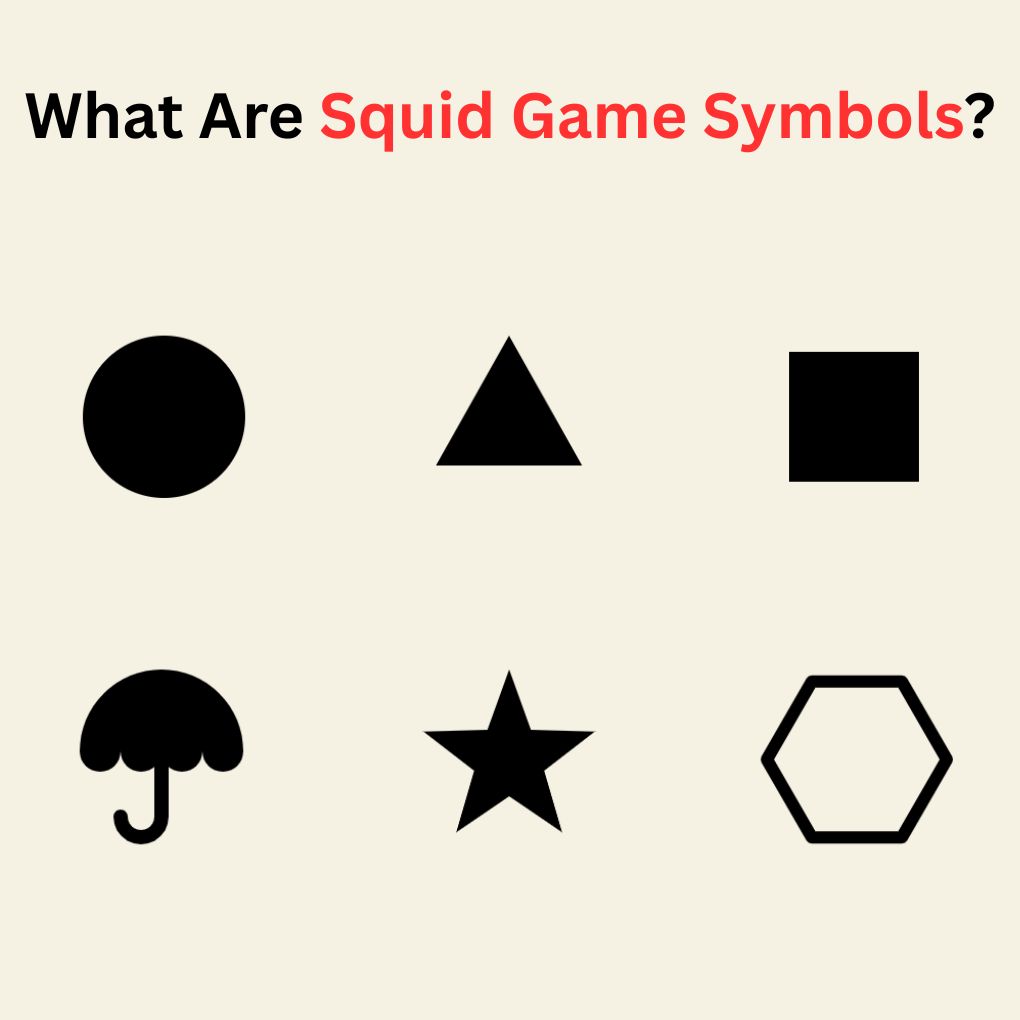
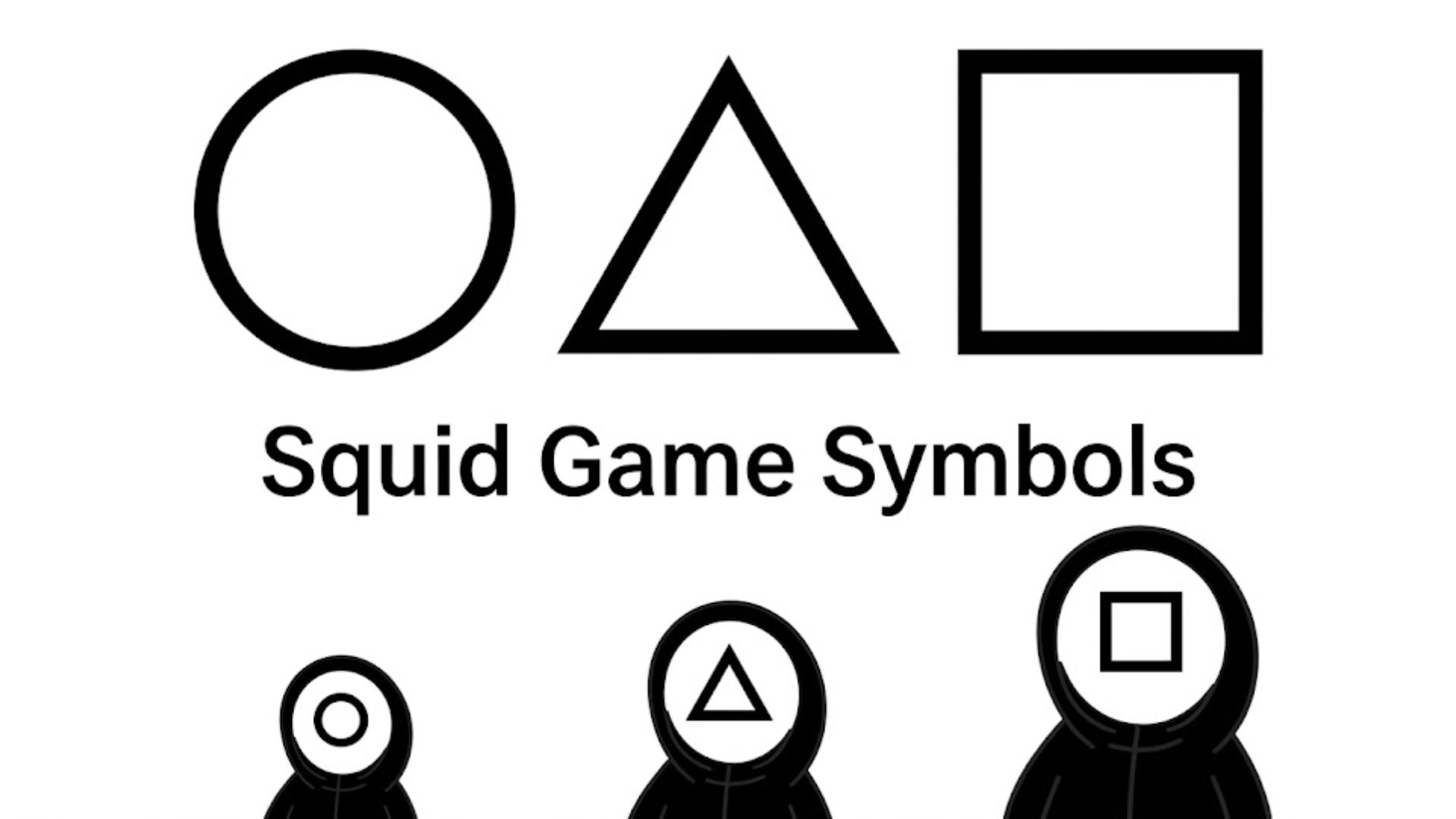
Squid Game symbols are the visual and conceptual signs embedded throughout the Netflix series to communicate ideas that go beyond dialogue. They include geometric shapes, colors, numbers, objects, costumes, and set designs that each carry layers of meaning. The most recognized are the three core shapes: the circle, triangle, and square. These appear on the masks worn by guards and are the foundation of the show’s entire visual language.
What makes this symbolic system so powerful is how accessible it feels. You don’t need a film degree to sense that something meaningful is happening when 456 players in identical green tracksuits face off against masked guards in pink. The symbolism works on your subconscious before your brain even processes it consciously.
The show uses visual semiotics — the study of signs and symbols in communication — more deliberately than almost any other mainstream series. According to Netflix, Squid Game became the platform’s most-watched show ever, reaching 111 million viewers in its first 28 days. That kind of universal appeal doesn’t happen by accident. It’s fueled, in part, by symbolic storytelling that resonates across cultures.
Deep Symbolic Meaning
Spiritual Level
At its deepest level, the three shapes in Squid Game connect to sacred geometry, a concept found in spiritual traditions across the world. The circle represents eternity and the continuous cycle of life and death. In many Eastern spiritual traditions, the circle is associated with the soul, wholeness, and the infinite. It has no beginning and no end — which is exactly how poverty and desperation are portrayed in the show. The cycle keeps repeating.
The triangle carries divine energy in numerous spiritual systems. In Christianity, it represents the Holy Trinity. In ancient Egyptian belief, the triangle shape of the pyramids was meant to channel power toward the heavens. In Squid Game, the triangle guards are the enforcers — the ones who act, strike, and move. They embody directed force and spiritual conflict.
The square grounds everything in the physical world. It represents structure, the earth, and the material plane. Square guards are managers — they don’t get their hands dirty, but they design and maintain the system. This mirrors a spiritual idea found in many traditions: that the most dangerous power isn’t the one that fights you directly, but the one that builds the cage you live in.
Psychological Level
The psychological symbolism in Squid Game is precise and intentional. One of the show’s most disturbing moves is replacing players’ names with numbers. Player 456, Player 001, Player 067. This isn’t just a logistical choice — it’s a textbook dehumanization technique. When you strip someone of their name, you strip them of their identity. It becomes easier to treat them as disposable, which is exactly what the game requires.
Psychologist Philip Zimbardo’s famous Stanford Prison Experiment showed how quickly people adopt roles when given costumes and authority. The guards in Squid Game follow the same principle. The masks remove individual identity and replace it with a shape — a rank. You stop being a person and start being a triangle or a square. Obedience becomes automatic when identity disappears.
Color psychology is working on you throughout every episode. The guards’ pink uniforms trigger associations with control and unsettling authority (pink being an unexpected choice that creates cognitive dissonance). The players’ green tracksuits subconsciously signal vulnerability and nature — living things that can be cut down. These aren’t random wardrobe choices. They’re psychological triggers built into every frame.
You May Also Like: 45+ Mexican Symbols and Their Powerful Hidden Meanings
Cultural Level
Squid Game is, at its core, South Korean social commentary wrapped in a survival thriller. The show reflects the very real pressures of Korean society — extreme competition for jobs, crippling personal debt, and a winner-take-all economic culture. The symbols of hierarchy in the show mirror the rigid social structures that many Koreans experience daily.
The games themselves are symbolic. They’re all traditional Korean children’s games: Red Light Green Light, marbles, tug of war. Using childhood games as deadly survival challenges is a powerful cultural symbol. It suggests that the innocent world children believe in is always shadowed by the brutal adult world waiting for them.
This cultural symbolism travels globally because class inequality and economic desperation are not uniquely Korean experiences. That’s why audiences from the United States to Brazil to Nigeria all saw something familiar in the show’s world.
Types and Variations of Squid Game Symbols
Circle

The circle is assigned to the lowest-ranking guards — the workers who follow orders without question. In geometry, a circle has no sharp edges, no direction, no hierarchy within itself. That’s the point. Circle guards represent the faceless labor force: people who execute instructions and ask nothing in return.
In broader symbolism, the circle means unity and community. But in Squid Game’s system, that meaning is twisted. Unity here means conformity and erasure. The real-world parallel is clear: the working class, kept uniform, kept obedient, kept replaceable.
Triangle
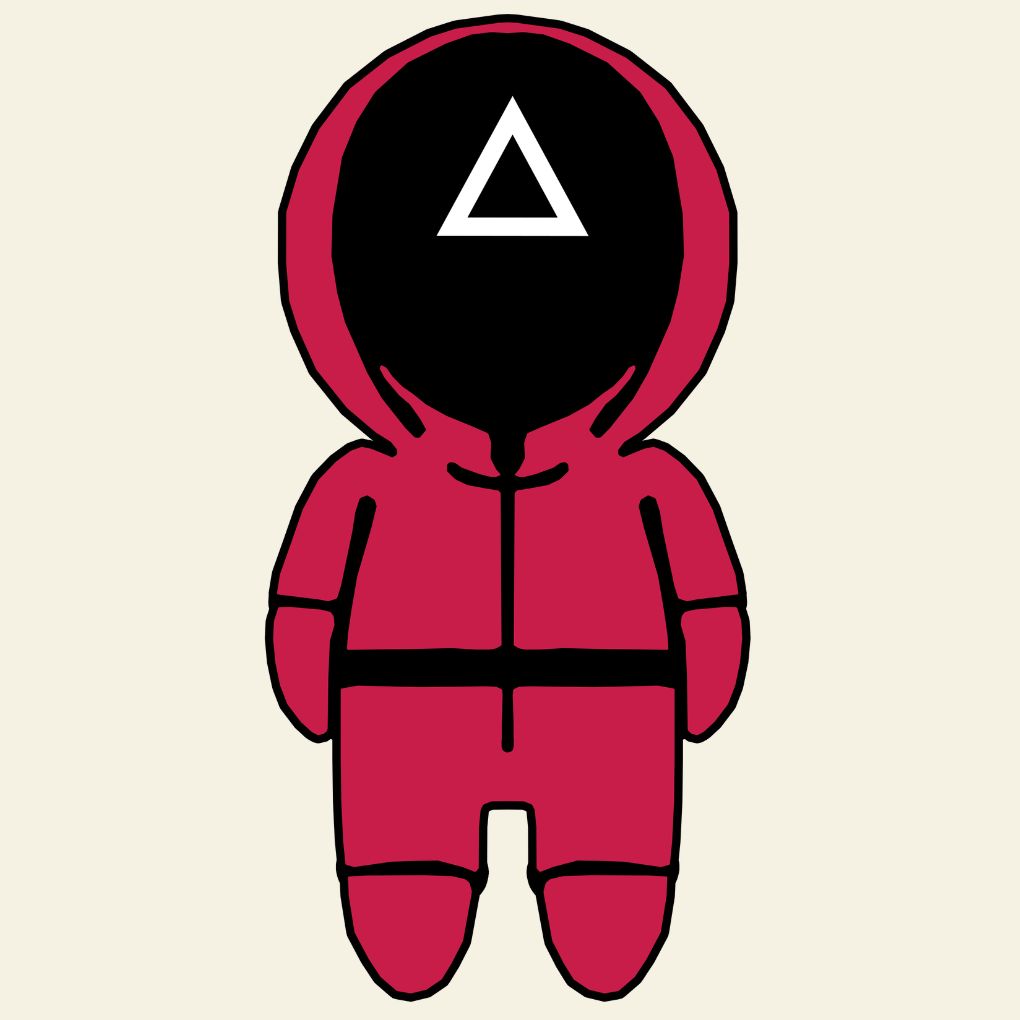
Triangle guards are the soldiers — the ones who physically enforce the rules with weapons. The triangle is one of the most energetically charged geometric symbols across cultures. It points upward, suggesting ambition, movement, and aggression. Its three points represent the tension between opposing forces that results in action.
In social hierarchy symbolism, triangles often represent the military or enforcement arm of any power structure. They don’t make policy. They carry it out with force. In Squid Game, they’re the visible face of violence, while the real power stays hidden above them.
Square
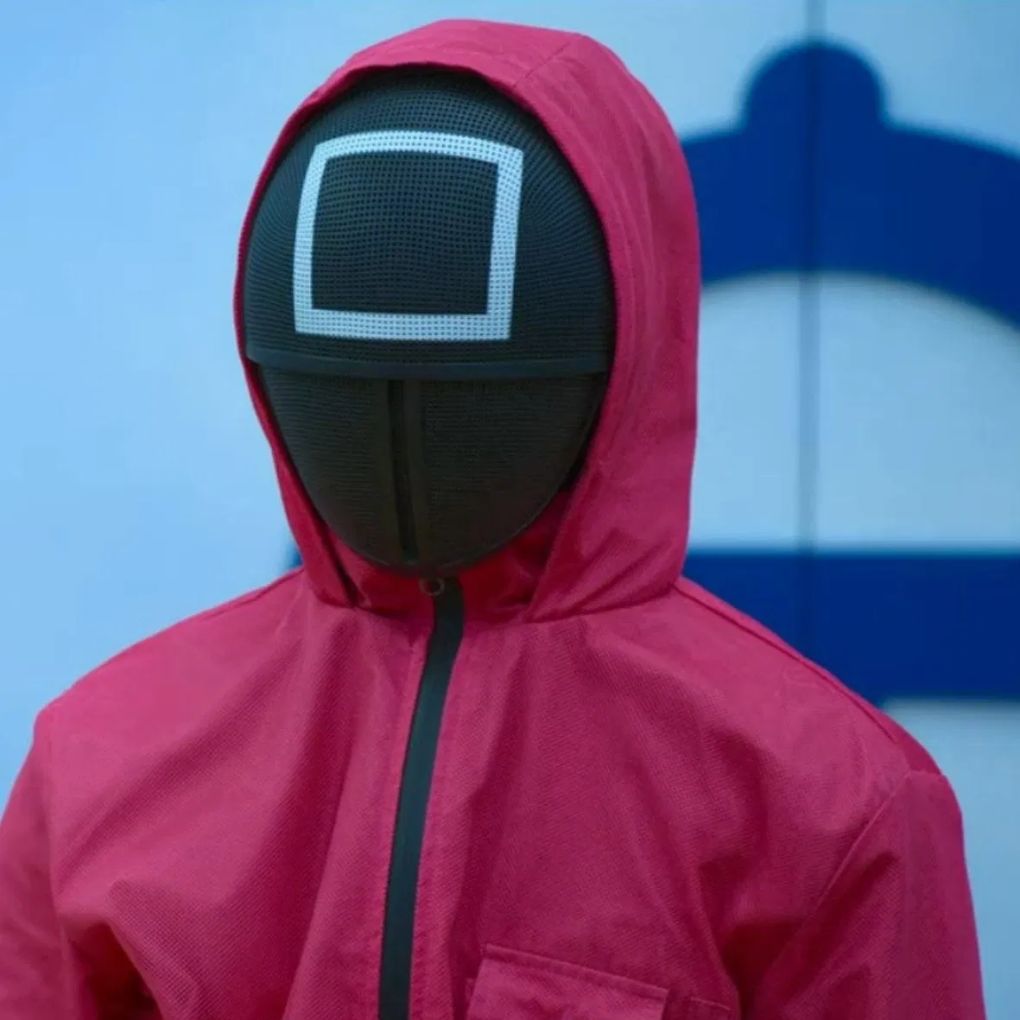
The square belongs to managers and decision-makers — the highest rank among the guards. The square is rigid, stable, and defined by straight lines and right angles. It represents institutional authority, rules, and the systems that sustain power over time.
Think about the most powerful institutions in real life: government buildings, courtrooms, corporate headquarters. They’re all built in squares and rectangles. This isn’t coincidence. The square shape communicates permanence, control, and unyielding structure. In the show, square guards design the experience that everyone else lives or dies within.
You May Also Like: 77+ German Symbols That Still Influence Modern Life in 2026
Combined Symbol System
Together, the circle, triangle, and square create a complete power hierarchy — a visual organizational chart worn on the faces of every guard. This system is elegant in its simplicity and brutal in its implications. Every person in the organization knows their rank instantly. There’s no ambiguity, no negotiation.
| Symbol | Guard Rank | Real-World Parallel | Core Meaning |
| Circle | Worker | Labor force | Obedience, conformity |
| Triangle | Soldier | Military/enforcement | Force, action |
| Square | Manager | Corporations/government | Authority, structure |
| No symbol | Front Man | Shadow elite | Absolute control |
The Front Man sits above all three shapes. He wears a completely black mask with no geometric symbol at all — which is itself the most powerful symbol in the show. No shape means no category, no limitation, no rank. He exists outside the system while controlling it entirely.
Squid Game Symbols Across Cultures
Korean Culture
The show draws heavily from Korean folk traditions and collective memory. The children’s games aren’t just nostalgic choices — they represent a generation that grew up playing innocent games in the streets and now faces crushing debt, unemployment, and social pressure as adults. The dalgona candy challenge references a real street snack from Korean childhood, making the life-or-death stakes feel personally cruel to Korean viewers.
Ancient Greek Influence
The structure of the games mirrors ancient Greek amphitheaters, where citizens gathered to watch performances that often dealt with fate, tragedy, and the gods’ indifference to human suffering. The VIPs watching players die from luxury boxes are a direct echo of ancient Roman gladiatorial culture — wealth consuming suffering as entertainment.
Eastern Philosophy
Buddhist ideas of impermanence and suffering (dukkha) run quietly through the entire show. Every player who dies illustrates the Buddhist truth that attachment — to money, to life, to winning — leads to suffering. The number 456 is also significant: in some Eastern numerological systems, certain number combinations carry associations with destiny and cycles of karma.
Modern Global Culture
By 2021, Squid Game symbols had crossed into mainstream global culture with extraordinary speed. The green tracksuit and pink guard uniform became the most popular Halloween costumes that year worldwide. The shapes appeared in street art from Los Angeles to London. TikTok challenges recreated the games. The symbolism resonated because it captured a universal anxiety about economic survival that crossed every cultural boundary.
Digital Age Symbolism
The show’s symbolism immediately entered the digital world. A cryptocurrency called the SQUID token was launched and collapsed in a rug-pull scam — a real-world echo of the show’s themes about desperation and exploitation. Online communities on Reddit and YouTube spent months decoding hidden symbols and visual cues that casual viewers missed entirely. The show became more than entertainment; it became a shared symbolic text for the internet age.
Squid Game Symbols in Art, Movies and Pop Culture
Squid Game’s visual storytelling inspired artists globally almost immediately after its release. Muralists incorporated the shapes into street art. Graphic designers used the color palette and mask imagery to comment on labor rights and inequality. The symbols became cultural icons that communicated complex ideas in a single glance.
Comparisons to other dystopian fiction revealed how uniquely symbolic Squid Game is. The Hunger Games uses similar themes, but Squid Game’s geometric symbol system adds a layer of institutional semiotics that feels more corporate and therefore more familiar. Battle Royale (2000) covered similar survival ground, but without the deliberate class hierarchy embedded in visual symbols.
High-fashion brands noticed too. Balenciaga and several streetwear labels drew from the show’s aesthetic, which itself says something meaningful: symbols of inequality became luxury commodities, which is almost too on-the-nose for a show about capitalism.
Spiritual and Dream Meaning of Squid Game Symbols
If you’ve dreamed about Squid Game shapes, you’re not alone — and there’s actually meaning worth exploring. Dreaming of a circle often signals feeling trapped in repetitive cycles in your waking life, or a search for wholeness and completion. It can also represent a community or relationship you feel bound to.
A triangle appearing in dreams frequently signals ambition, tension, or an upcoming conflict that requires decisive action. Some dream analysts connect upward-pointing triangles to spiritual growth, while downward-pointing triangles suggest a grounding or stabilizing force is needed.
Dreaming of a square often reflects feelings of restriction, rigid thinking, or a sense that external systems are controlling your choices. The color green in dreams connects to growth, envy, and raw survival instinct — all themes that mirror the players’ experience perfectly.
Positive vs Negative Meaning
Positive Meaning
The symbols carry genuinely hopeful meanings when viewed through a different lens. The circle represents community and unity — and the friendships formed between players like Gi-hun, Sae-byeok, and Ali are the emotional heart of the show. The triangle represents the courage to act and rise above circumstances. The square represents the ethical use of structure to create fairness and safety.
The green tracksuits, for all their bleakness, create a moment of radical equality. A wealthy businessman and a homeless man wear the same clothes, eat the same food, and start with the same chance. That’s a symbolic argument for human equality buried inside a horror show.
Negative Meaning
On the darker side, the circle symbolizes the inescapable cycle of poverty that traps the players before the game even begins. The triangle represents blind violent obedience to authority — doing harm without asking why. The square represents every oppressive institution that prioritizes rules over human lives.
The VIPs are the show’s darkest symbol. Faceless, wealthy, and foreign, they represent a global elite class that views human desperation as entertainment. The game card invitation — with its clean geometric symbols — becomes a symbol of how exploitation is always packaged as opportunity.
Why Humans Are Attracted to These Symbols
Humans are pattern-seeking creatures by nature. Our brains evolved to find meaning in shapes, and geometric symbols are processed faster than words by the visual cortex. This is why a circle, triangle, or square communicates something before you’ve even consciously thought about it.
Simple shapes appear independently in nearly every ancient civilization — in Egyptian hieroglyphics, Native American art, Hindu mandalas, and Greek architecture. They’re archetypal symbols embedded in what psychologist Carl Jung called the collective unconscious: a shared psychological inheritance that all humans carry.
Squid Game taps directly into this. When you see the masked guards, your brain instantly processes the visual hierarchy through primal pattern recognition. You know, without being told, who has power and who doesn’t. That’s symbolic communication operating at its most efficient.
The mystery factor also matters. The show doesn’t over-explain its symbols. It trusts the audience to feel them. That gap between what’s shown and what’s explained is exactly what sends millions of people down Reddit rabbit holes at 2am, building theories and finding new meaning. Symbols that leave room for interpretation create communities around them.
FAQs
What do the three shapes in Squid Game represent?
Circle = workers (lowest rank), Triangle = soldiers (mid rank), Square = managers (highest rank). Together they form a complete power and control hierarchy.
What is the deeper meaning of Squid Game?
It’s a sharp critique of capitalism, class inequality, and how economic desperation strips people of their dignity and identity.
What does the number 456 mean in Squid Game?
It’s the total number of players. In some Eastern numerological systems, the combination carries associations with fate and karmic cycles.
What does Young-hee (the doll) symbolize?
She represents blind judgment, the randomness of survival, and childhood innocence repurposed as a weapon of control and fear.
What does the green tracksuit symbolize?
It strips away social class and individual identity, forcing radical equality on players — which is itself a form of cruel symbolism within the game’s design.
Conclusion
Squid Game works as deeply as it does because it speaks two languages simultaneously: the surface language of thriller and survival, and the deeper language of symbol, archetype, and cultural truth. The circle, triangle, and square aren’t just shapes on masks — they’re a compressed map of how power is organized, how identity is erased, and how systems sustain themselves through obedience.
Once you understand the show’s symbolic language, you see it everywhere: in workplaces, in economic systems, in the gap between those who design rules and those who live by them. That’s the real reason Squid Game hit 111 million viewers so fast. It wasn’t just entertaining — it was telling the truth in shapes. Go back and rewatch it. You’ll see a completely different show.
Explore More Symbols:
- 85+ Life Symbols and Their Deep Meanings Explained
- 7+ Symbols of Virgo That Reveal Its True Personality And Hidden Power
- 93+ Powerful Holy Thursday Symbols That Reveal the True Meaning of the Last Supper

Mubeen is a passionate writer at Auramegazine who explores symbolism, hidden meanings, and powerful signs behind everyday symbols. He enjoys creating simple, engaging content that helps readers understand deeper meanings and cultural connections.