77+ German Symbols That Still Influence Modern Life in 2026
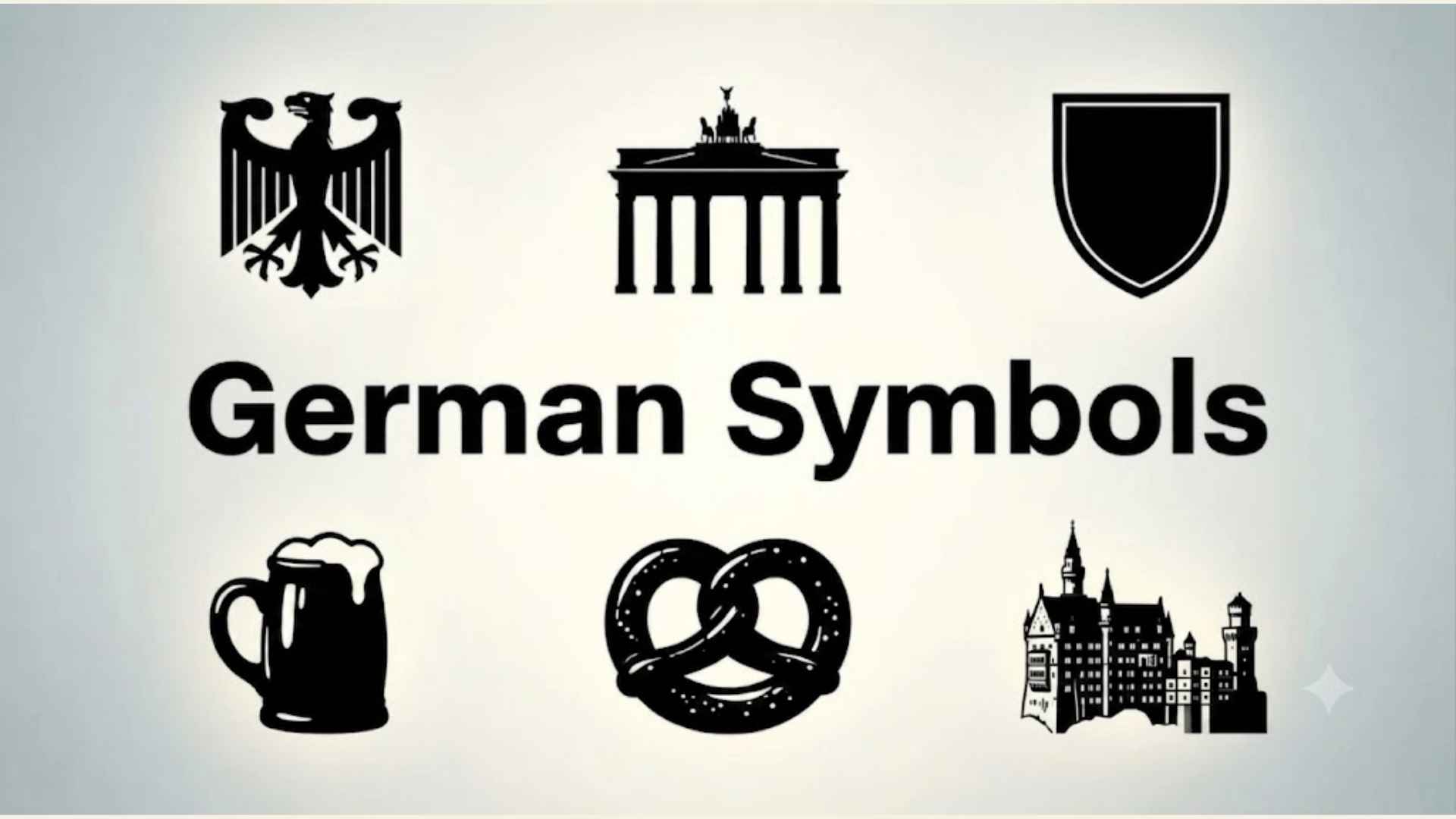
German symbols are visual records of one of the world’s most complex and influential civilizations. From ancient runic carvings on warrior shields to the modern Federal Eagle printed on every German passport, these symbols carry centuries of meaning that still shapes politics, art, culture, and personal identity today.
If you’ve ever wondered what the German eagle really stands for, why some WWII symbols are illegal in Europe, or what those angular runic letters mean in tattoo culture, you’re in the right place. This guide covers 77+ German symbols with real historical context, cultural depth, and honest explanations that most articles skip entirely.
What are German Symbols?
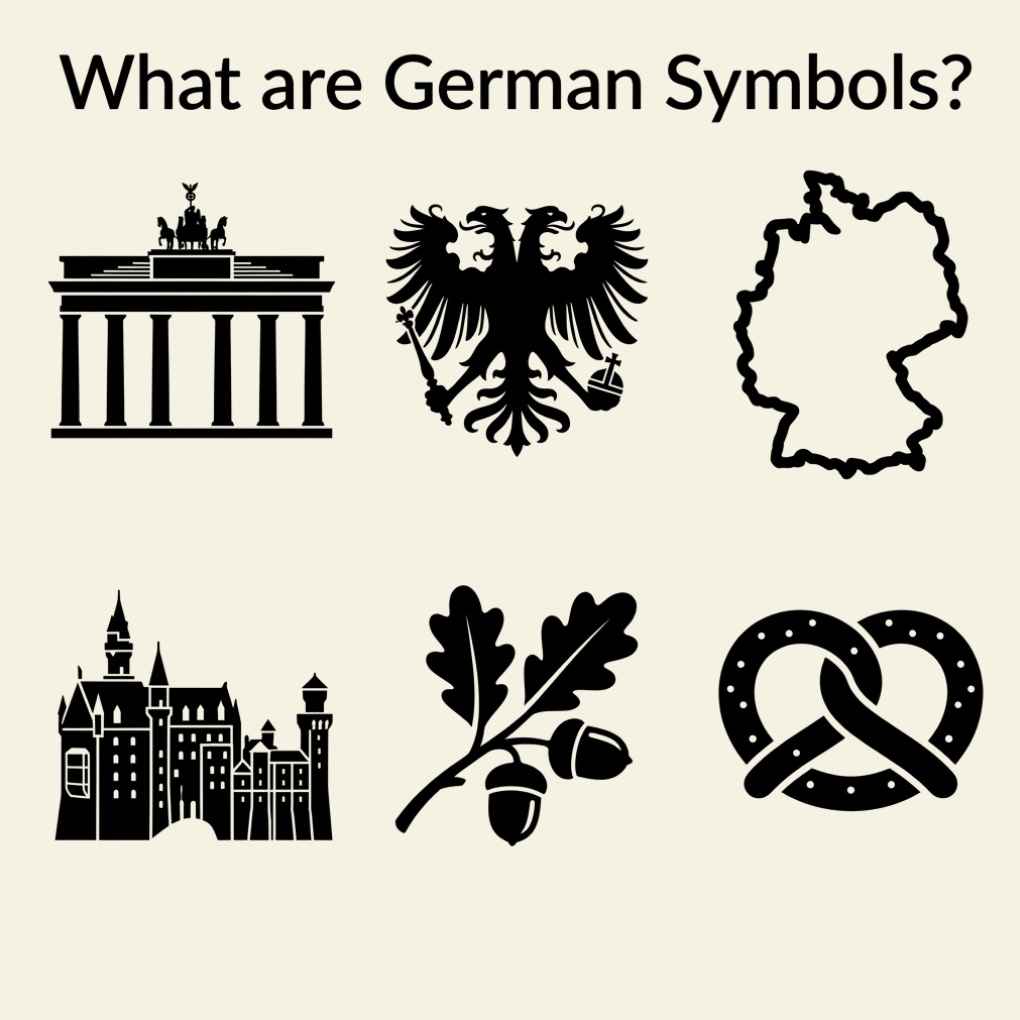
German symbols are visual emblems, marks, and icons tied to Germany’s history, culture, and national identity. They include everything from official government seals to ancient tribal carvings, medieval heraldry, and modern democratic flags.
Here’s something most people don’t know: Germany wasn’t always one country. Before German Unification in 1871, the region was a patchwork of kingdoms, duchies, and city-states, each carrying its own coat of arms and regional symbols. That layered history is exactly why German symbolism is so rich. You’re not looking at one culture. You’re looking at dozens of regional identities compressed into a single national story.
Today, German national symbols balance tradition with democratic values. The modern Federal Eagle, for example, was deliberately redesigned after World War II to look softer and more approachable than its imperial predecessor. Every design choice was intentional.
Ancient German Symbols And Their Hidden Stories
Long before Germany existed as a country, its people were leaving symbolic marks on the world. Ancient German symbols weren’t decorations. They were communication, protection, and identity all rolled into one.
Ancient German Symbols
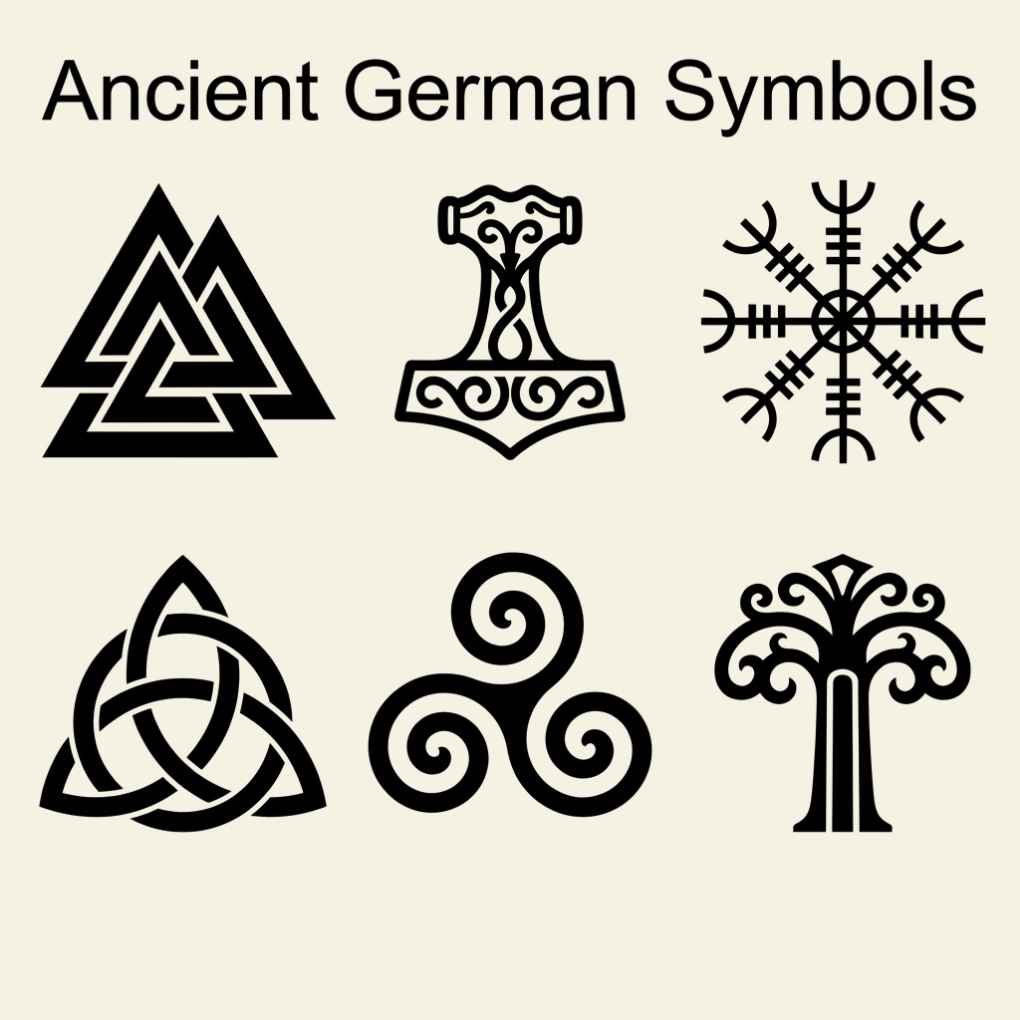
The oldest Germanic symbols were carved into weapons, burial stones, and jewelry as far back as the 2nd century BCE. Archaeologists have found protective sun wheel carvings, spiral patterns, and angular marks in Germanic burial sites across modern-day Germany, Denmark, and the Netherlands.
These weren’t random doodles. Germanic communities believed symbols held real power. A mark carved into a sword could protect its wielder. A pattern etched into a burial stone could guide the dead. This is where the deep spiritual layer of ancient German symbols begins.
Germanic Tribe Symbols
Different tribes used distinct symbols to identify themselves in battle and ceremony. The Franks, Saxons, Lombards, and Goths each had unique emblems representing their clan’s loyalty and warrior culture.
A common thread across Germanic tribe symbols was the idea of strength through unity. A single warrior was vulnerable. A clan with a shared symbol was a force. This is why symbols of loyalty and bravery appear so consistently across Germanic tribal artifacts. They weren’t just decorative. They were social glue.
Germanic Symbols
The most famous system of Germanic symbols is the Elder Futhark, a runic alphabet of 24 characters used across Germanic and Norse cultures from roughly the 2nd to 8th centuries CE. Each rune had a name, a sound value, and a deeper symbolic meaning. These weren’t just letters. They were believed to be gifts from Odin himself, according to Norse-Germanic mythology.
The overlap between Norse and Germanic symbolism is significant. Many American tattoo enthusiasts who think they’re getting “Viking runes” are actually using symbols shared across a broader Germanic cultural world.
German Symbols And Meanings In Modern Culture
German Symbols And Meanings
German symbols didn’t stay locked in the past. Many show up in modern design, fashion, and everyday life in ways most people never notice. The eagle still signals authority and leadership. The oak leaf appears on German military rank insignia. The cornflower (Kornblume) was Kaiser Wilhelm II’s favorite flower and remains a symbol of remembrance and loyalty in German culture.
Understanding German symbol meanings helps you read cultural signals that others miss entirely. When a German government document carries a specific eagle design, that visual choice is communicating sovereignty, democracy, and post-war legitimacy all at once.
German Symbolism
German symbolism runs deeper than most national traditions because it connects to a rich philosophical history. Writers like Goethe and Schiller used symbolic imagery throughout their literary work. The oak tree, for example, wasn’t just a tree in German Romantic literature. It represented endurance, rootedness, and the German national spirit.
This is why German cultural symbols carry unusual emotional weight. They’re not just logos or flags. They’re philosophical statements shaped by centuries of thought.
Symbols Of Germany
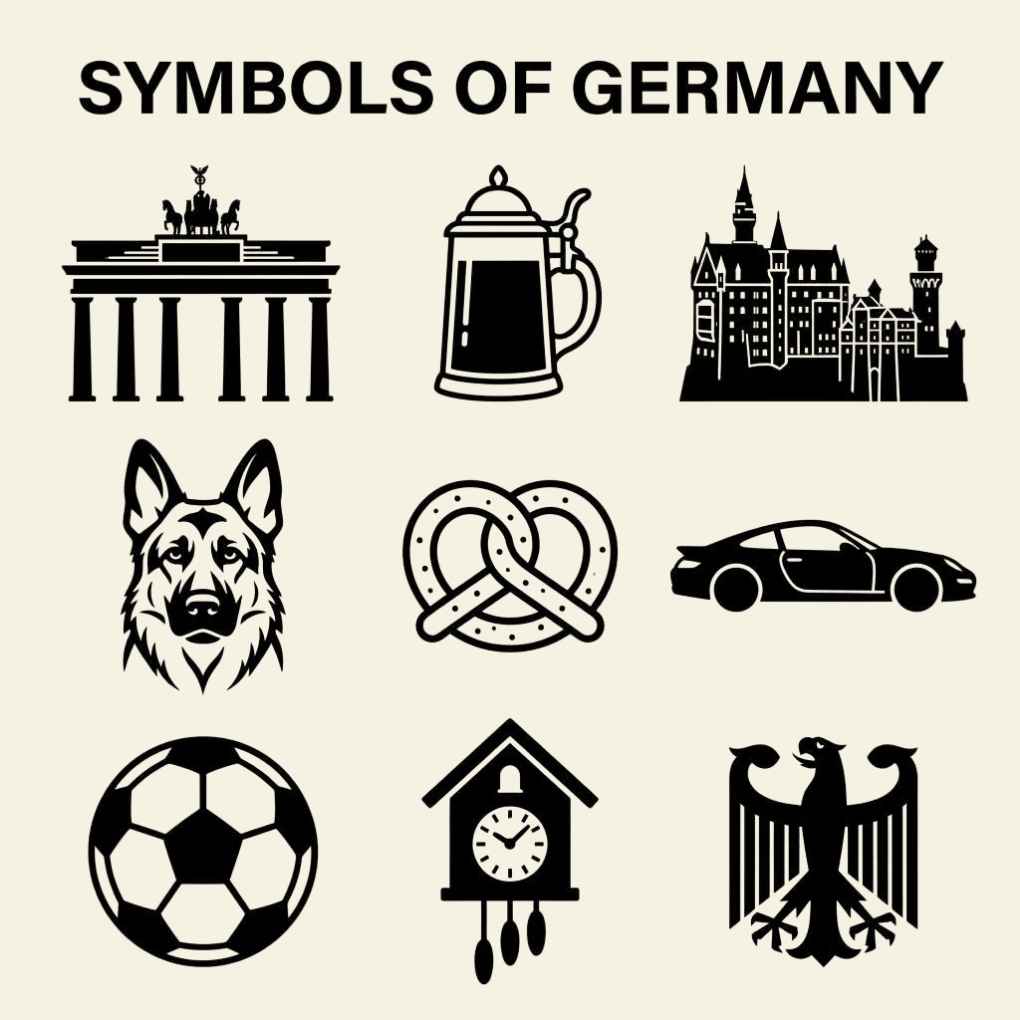
Germany’s official and widely recognized national symbols include:
- The Federal Eagle (Bundesadler) — primary national emblem
- The Black-Red-Gold Flag — representing freedom, unity, and democracy
- The Oak Tree — Germany’s national tree, symbolizing strength and endurance
- The Cornflower (Kornblume) — national flower with deep historical meaning
- The German Anthem — the third verse of the Lied der Deutschen
Each of these symbols was either preserved or deliberately redesigned after World War II to reflect a democratic, forward-looking national identity.
What Is The Symbol Of Germany?
The primary symbol of Germany is the Bundesadler, or Federal Eagle. But here’s a distinction that most articles completely miss: the modern Bundesadler is NOT the same as the Reichsadler used during the Nazi era.
| Feature | Bundesadler (Modern) | Reichsadler (Nazi Era) |
| Direction | Faces left | Faces right |
| Style | Minimalist, rounded | Angular, aggressive |
| Context | Democracy, government | Authoritarian regime |
| Legal status | Fully legal | Regulated under German law |
The modern eagle was redesigned in 1950 by artist Tobias Schwab with softer feathers and a leftward gaze specifically to distance it from its predecessor. That design decision carries enormous historical weight.
German Symbols Text
Fraktur, also called Gothic or Blackletter script, is one of the most recognizable forms of German text symbolism. Used in German printing from the 16th century through the 1940s, Fraktur was so associated with German identity that the Nazi regime initially promoted it before bizarrely banning it in 1941, claiming it was a “Jewish script.” Today, Fraktur appears on everything from beer labels to streetwear because of its bold, unmistakably Germanic visual identity.
German Symbols Letters
Runic letters are among the most searched German symbol letters online, especially among tattoo enthusiasts and people exploring Germanic heritage. The Elder Futhark runes predate the Latin alphabet in Germanic regions and were used for both writing and ritual purposes.
German Symbols To Copy
Popular German symbols used in creative digital content include:
- ᚠ Fehu (wealth, abundance)
- ᚢ Uruz (strength, vitality)
- ✠ Iron Cross (historical military honor)
- ᛉ Algiz (protection)
Always research a symbol’s full context before using it publicly. Some runic symbols were misappropriated by the SS during World War II and carry sensitive associations today.
German Symbols Tattoos
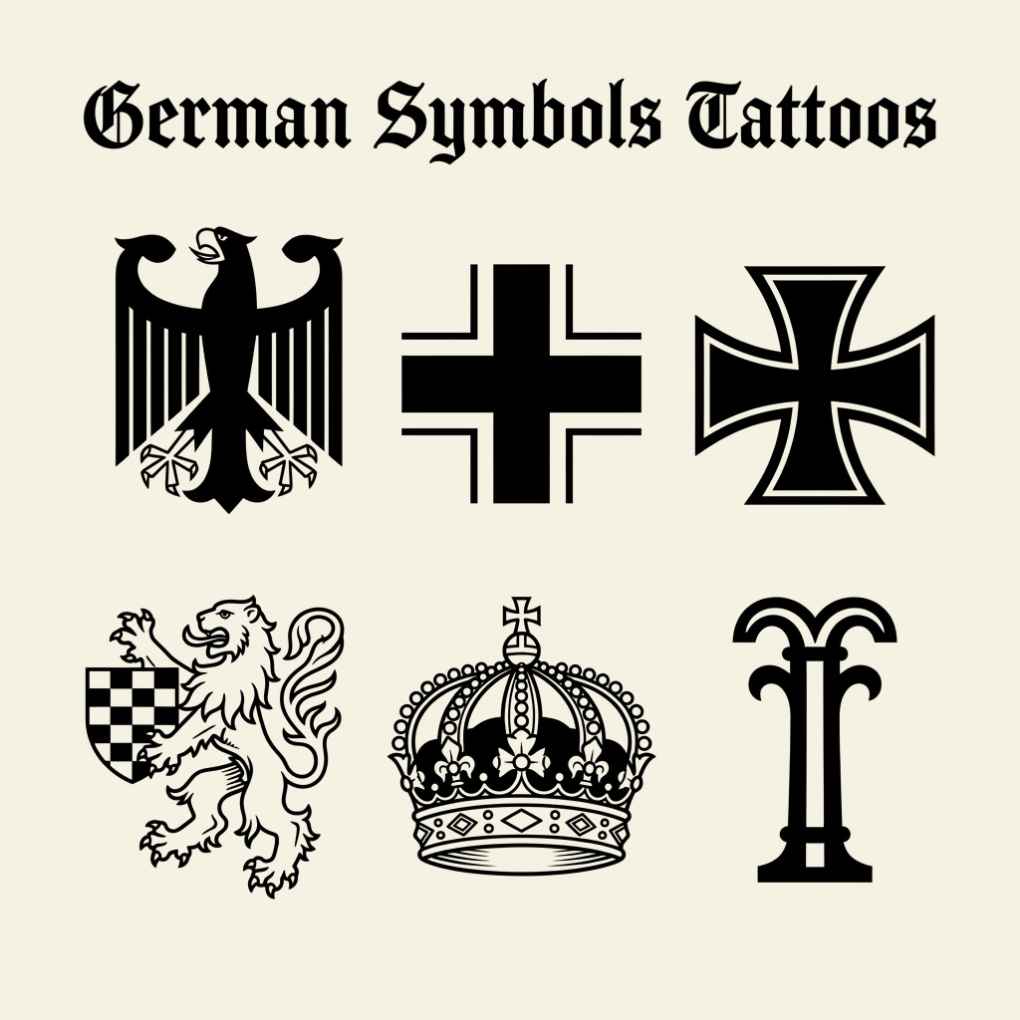
German symbols tattoos are hugely popular in the United States, especially among the 45+ million Americans with German ancestry. The most requested designs include Elder Futhark runes, the Federal Eagle, oak leaves, and family heraldic crests.
Before getting a German-inspired tattoo, it’s worth understanding exactly what the symbol means historically. A tattoo artist familiar with Germanic heritage can help you choose a design that honors its roots rather than misrepresenting them.
Iconic, Ancient And Historical German Symbols
Iconic German Symbols
The most globally recognized iconic German symbols include the Federal Eagle, the Iron Cross, the Black-Red-Gold flag, and the Brandenburg Gate as a modern architectural symbol of reunification. Each carries a distinct historical chapter of the German story.
Traditional German Symbols
Traditional German symbols often come from regional folk culture. Bavaria’s blue-and-white diamond pattern (Rauten), oak wreaths, and Germanic knot designs all reflect centuries of local identity. During Oktoberfest, you’ll see these traditional symbols everywhere, from dirndl fabric patterns to decorative steins.
Famous German Symbols
One of the most emotionally charged famous German cultural symbols is the Goethe Oak. This ancient oak tree stood at Buchenwald, where Goethe reportedly sat and wrote. When the Nazis built a concentration camp at Buchenwald, they preserved the tree inside the camp grounds. American forces burned it down in 1944 bombing raids. The story of that tree captures Germany’s entire tragic 20th century in a single image.
Ancient German Symbols Tattoos
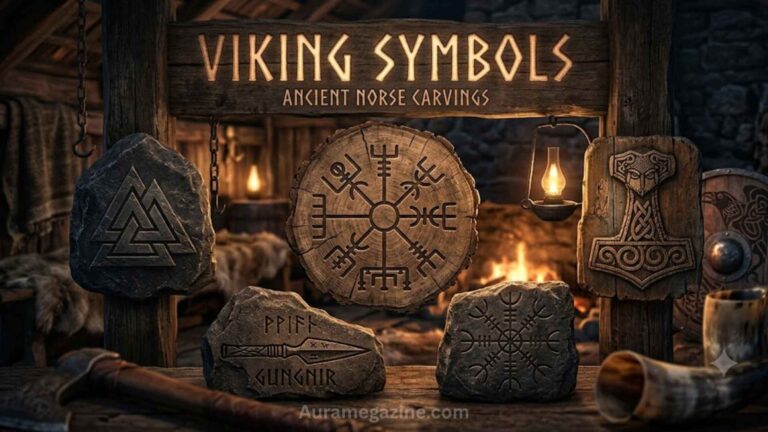
Ancient Germanic protective symbols are especially popular in tattoo culture. Designs inspired by the Helm of Awe (Ægishjálmur), protective runes like Algiz, and Germanic compass designs represent spiritual protection and inner strength. These ancient German symbols connect wearers to a pre-Christian Germanic spiritual tradition that predates modern national borders.
You May Also Like: 45+ Mexican Symbols and Their Powerful Hidden Meanings
Old German Symbols
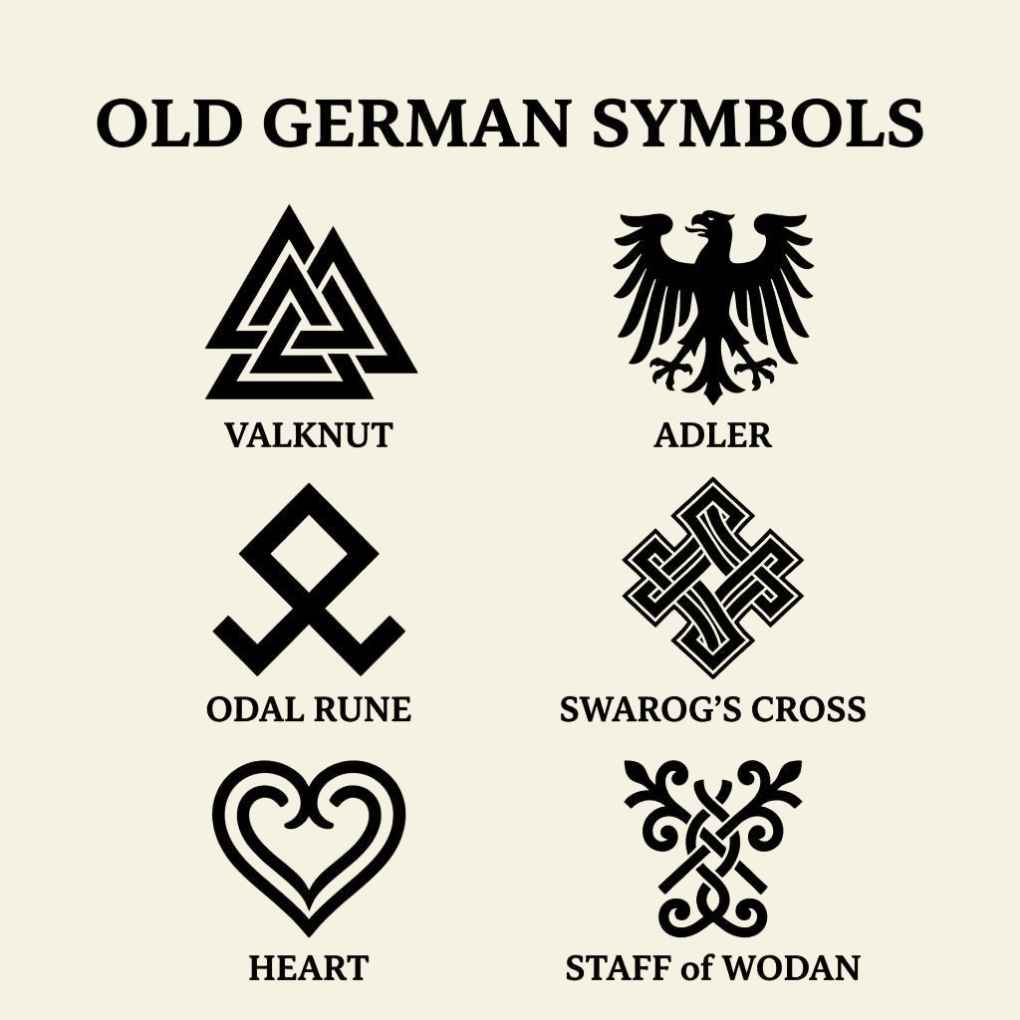
Before 1871, Germany’s symbolic landscape was shaped by powerful regional states and ancient traditions. Key symbols and meanings include:
- Prussian Black Eagle (Adler): Power, authority, and Prussian identity
- Bavarian Coat of Arms: Regional pride and sovereignty of Bavaria
- Hanseatic League White Castle on Red: Trade power and independence of northern German cities
- Valknut: Ancient warrior symbol linked with Odin (Wodan), death, and the afterlife
- Adler (Eagle): Strength, leadership, and divine rule in Germanic tradition
- Odal Rune: Heritage, ancestral land, and family legacy
- Swarog’s Cross: Solar symbol of protection, balance, and cosmic order
- Heart Symbol: Love, loyalty, unity, and human connection
- Staff of Wodan: Wisdom, guidance, magic, and connection to Odin in mythology
These old German and Germanic symbols still influence modern cultural designs, historical studies, tattoos, and artistic interpretations. Many regional emblems from this era also continue to appear in the official flags and seals of Germany’s 16 modern federal states (Bundesländer).
Meaningful German Symbols
The most personally meaningful German heritage symbols tend to be the quieter ones. The Linden tree (Linde) has symbolized love, community, and village life in German culture for over a thousand years. The cornflower represents loyalty and remembrance. Family crests connect individuals to lineage and ancestry across generations.
German Symbols In War, Politics and Family
WW1 German Symbols
The Iron Cross as a wartime symbol has roots going back to 1813, when King Frederick William III of Prussia first awarded it during the Napoleonic Wars. By World War I, it had become the defining symbol of German military courage. You’ll find it on WWI helmets, aircraft, and medals. It represented genuine bravery to the soldiers who earned it.
WW2 German Symbols
WW2 German symbols are among the most legally regulated symbols in the world. The Reichsadler, SS runes (specifically the ᛋᛋ double Sig rune), and swastika are banned from public display in Germany and several EU countries under §86a of the German Criminal Code (StGB). Violations can result in fines or imprisonment. Understanding this legal context matters, especially if you’re traveling to Germany or creating content featuring historical imagery.
WWII German Symbols
The Nazi regime used visual symbolism as a deliberate propaganda tool. Joseph Goebbels understood that bold, repeated visual symbols could reshape public consciousness. After Germany’s defeat, the Allied denazification process specifically targeted symbolic imagery, destroying or banning most Nazi emblems to prevent their continued use as rallying points.
East German Symbols
East German symbols from the DDR (1949-1990) are now studied as Cold War cultural artifacts. The iconic hammer and compass emblem on the DDR flag represented workers, intellectuals, and farmers united under socialist ideology. East Germany’s Volkspolizei and military insignia carried their own distinct visual language, separate from both Nazi-era and West German symbolism.
German Symbols For Family
German family symbols are experiencing a revival, particularly among German-Americans reconnecting with their heritage. Family crests featuring oak leaves, heraldic eagles, shields, and family mottos are increasingly popular for home displays, jewelry, and formal documents. These symbols of lineage and ancestry connect individuals to a specific place and family story that goes back centuries.
Popular German Symbols
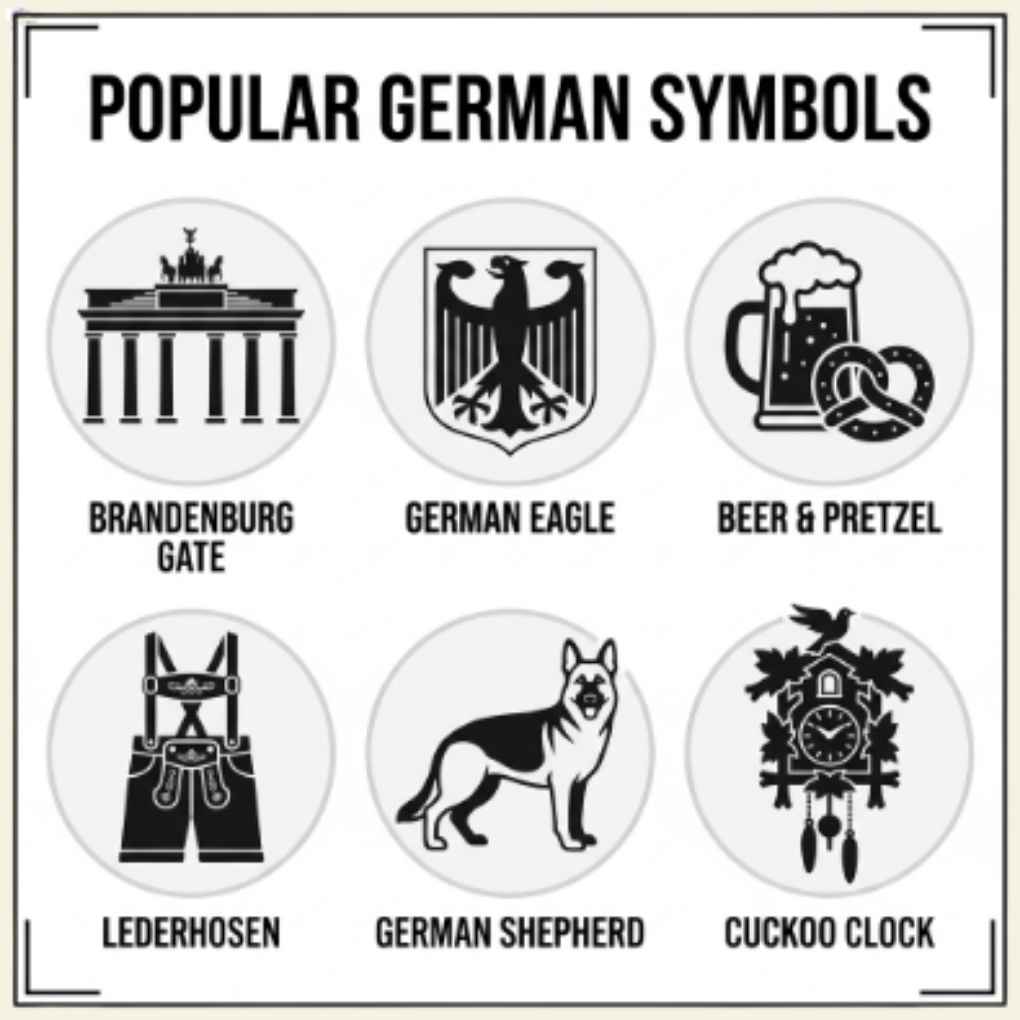
The most widely recognized popular German symbols today are the Federal Eagle, the black-red-gold flag colors, the Iron Cross (in historical context), and the oak leaf pattern on military insignia. These appear consistently in education, media, tourism, and official government communications.
Deep Symbolic Meaning of German Symbols
Spiritual Meaning
In early Germanic culture, symbols weren’t decorative. They were functional spiritual tools. Runes were believed to be discovered rather than invented, according to the Eddic poem Hávamál, which describes Odin hanging from the World Tree for nine days to receive runic wisdom. This framework gave German spiritual symbols a sacred authority that shaped how communities understood protection, fate, and communication with spiritual forces.
Psychological Meaning
Psychologically, German symbols tap into universal human needs. The eagle represents clarity and authority. Structured geometric runic patterns satisfy the brain’s preference for order and meaning.
Research in visual psychology confirms that humans are drawn to symmetrical, structured symbols because they trigger a sense of stability and predictability, qualities that feel especially valuable during uncertain times.
Cultural Meaning
Culturally, German symbolism tells the story of a civilization that has rebuilt its identity at least four major times: after the fall of the Holy Roman Empire, after the Franco-Prussian War and unification, after World War II’s total defeat, and after the Cold War’s reunification. Each rebuilt identity carried deliberate symbolic choices. That pattern of transformation through symbols is deeply human and universally relatable.
Types / Variations of German Symbols
1. Federal Eagle (Bundesadler)
The Bundesadler is Germany’s primary national emblem. Redesigned in 1950 by Tobias Schwab, it appears on all official government documents, the German passport, and official seals. Its leftward gaze and softer form were deliberate departures from both the imperial and Nazi-era eagles.
2. Black-Red-Gold Flag
The German flag has a powerful democratic history. The black-red-gold colors first appeared during the 1848 Frankfurt Parliament, carried by revolutionaries demanding a unified, democratic Germany. The colors were suppressed under the Nazi regime. They were restored in 1949 for West Germany as a direct statement of democratic values. Black represents determination, red represents courage, and gold represents generosity.
3. Iron Cross (Eisernes Kreuz)
Created in 1813 and used across multiple German military eras, the Iron Cross remains legally used today by the German Bundeswehr in a simplified form called the Balkenkreuz. It appears on German military aircraft and vehicles as a straightforward unit identifier without the controversial baggage of the Nazi-era version.
4. Germanic Runes
The Elder Futhark contains 24 runes, each with a name and meaning:
- Fehu (ᚠ) — wealth and abundance
- Uruz (ᚢ) — physical strength
- Tiwaz (ᛏ) — justice and honor
- Algiz (ᛉ) — protection
- Sowilo (ᛋ) — victory and success
Note that two Sowilo runes side by side (ᛋᛋ) were used as the SS insignia during World War II and are legally regulated in Germany today.
5. Holy Roman Empire Eagle
The double-headed eagle of the Holy Roman Empire represented dual authority: the Pope’s spiritual power and the Emperor’s political power governing simultaneously. Used from roughly 800 CE through 1806, this symbol still appears in Austrian heraldry and across Central European coat-of-arms traditions.
German Symbols Across Cultures
Ancient Germanic Tribes
Germanic tribal symbols were deeply personal and protective, carved into weapons and stones to express identity and invoke spiritual power.
Roman Influence
Roman expansion into Germanic regions introduced structured heraldic systems that Germanic nobles gradually adopted and adapted into their own visual traditions.
Medieval Europe
During the Holy Roman Empire, German heraldry became central to noble identity across Central Europe. Coats of arms represented honor, lineage, and political alliances across hundreds of German city-states.
Modern Europe
Post-World War II, German symbols shifted dramatically toward democratic and peaceful imagery. The redesigned eagle and restored black-red-gold flag were both deliberate visual statements about the new Germany’s values.
Global Influence
Germany’s Bauhaus design movement (1919-1933) reshaped global visual culture with its principle that form follows function. You can see its influence in everything from Apple’s product design to IKEA’s minimalist aesthetic. Even German corporate symbols carry this philosophical DNA. BMW’s roundel, often described as a spinning propeller, actually derived from the Bavarian state colors of blue and white.
German Symbols in Art, Movies & Pop Culture
German symbols appear throughout global entertainment in ways audiences often don’t consciously notice. Netflix’s Dark series uses Germanic mythological symbolism and runic imagery as core visual motifs throughout its storyline. Rammstein, one of Germany’s most internationally recognized bands, deliberately engages with Germanic imagery and symbolism in their performances and artwork.
In fashion, Fraktur typography appears regularly on streetwear brands. Bavarian diamond patterns show up in luxury fashion collections. German precision engineering culture has made the word “German-made” itself a global quality symbol.
For tattoo culture in the United States, Germanic rune tattoos consistently rank among the top 10 most requested heritage-based designs, particularly in states with large German-American populations like Wisconsin, Minnesota, and Pennsylvania.
Spiritual & Dream Meaning of German Symbols
When these symbols appear in dreams or meditation, many people find them carrying personal meaning worth exploring. An eagle in dreams typically represents clarity, ambition, and the ability to rise above current challenges. Runes appearing in dreams are often interpreted as signals to seek hidden knowledge or trust subconscious guidance.
Cross-shaped symbols frequently represent moral crossroads or major life transitions. National symbols appearing in dreams often reflect an identity search or a desire to reconnect with ancestral roots and heritage.
Positive vs Negative Meaning
Positive Meanings
German symbols carry genuinely powerful positive associations: unity, resilience, cultural pride, democratic freedom, protection, and strength. The Federal Eagle represents legitimate national sovereignty.
The black-red-gold flag represents the hard-won victory of democratic values over authoritarianism. The oak tree represents endurance through hardship. These are meaningful, constructive symbols with real historical weight.
Negative Interpretations
Some German historical symbols carry painful associations that require honest acknowledgment. Several WW2 German symbols are legally banned in Germany and EU countries precisely because of their role in one of history’s most destructive ideological projects.
Context is everything. The same eagle symbol can represent democratic sovereignty in one era and authoritarian tyranny in another. Understanding the difference isn’t just historically important. It’s ethically necessary.
Why Humans Are Attracted to German Symbols
There are a few reasons German symbols have such lasting appeal worldwide. First, the brain naturally seeks structured, symmetrical patterns, and Germanic designs consistently deliver both. Second, these symbols represent a story of survival and reinvention that resonates deeply with human experience. Germany has rebuilt its national identity multiple times from almost complete collapse. That’s a story of resilience that connects across cultures.
For the 45+ million German-Americans in the United States, these symbols offer a tangible connection to ancestry and cultural heritage that can otherwise feel distant. In a chaotic, fast-moving world, symbols that carry centuries of meaning feel grounding in a way that newer imagery simply can’t replicate.
Conclusion
German symbols are not just historical artifacts. They’re living proof that visual identity evolves alongside human civilization. From ancient runes carved by Germanic warriors to the deliberately redesigned post-war eagle representing modern democracy, every symbol tells a story of transformation.
Understanding these symbols gives you more than historical knowledge. It gives you insight into how cultures use imagery to survive, remember, and rebuild after catastrophe. Whether you’re exploring German heritage symbols for personal ancestry research, considering a Germanic tattoo design, or simply curious about the visual language behind one of the world’s most culturally influential nations, the story these symbols tell is worth knowing.
The most powerful takeaway? A symbol’s meaning is never fixed. It changes with history, context, and intent. The more you understand that, the better you’ll read the visual world around you.

Mubeen is a passionate writer at Auramegazine who explores symbolism, hidden meanings, and powerful signs behind everyday symbols. He enjoys creating simple, engaging content that helps readers understand deeper meanings and cultural connections.