Significance of Signs Symbols Artifacts: Why They Still Matter Today
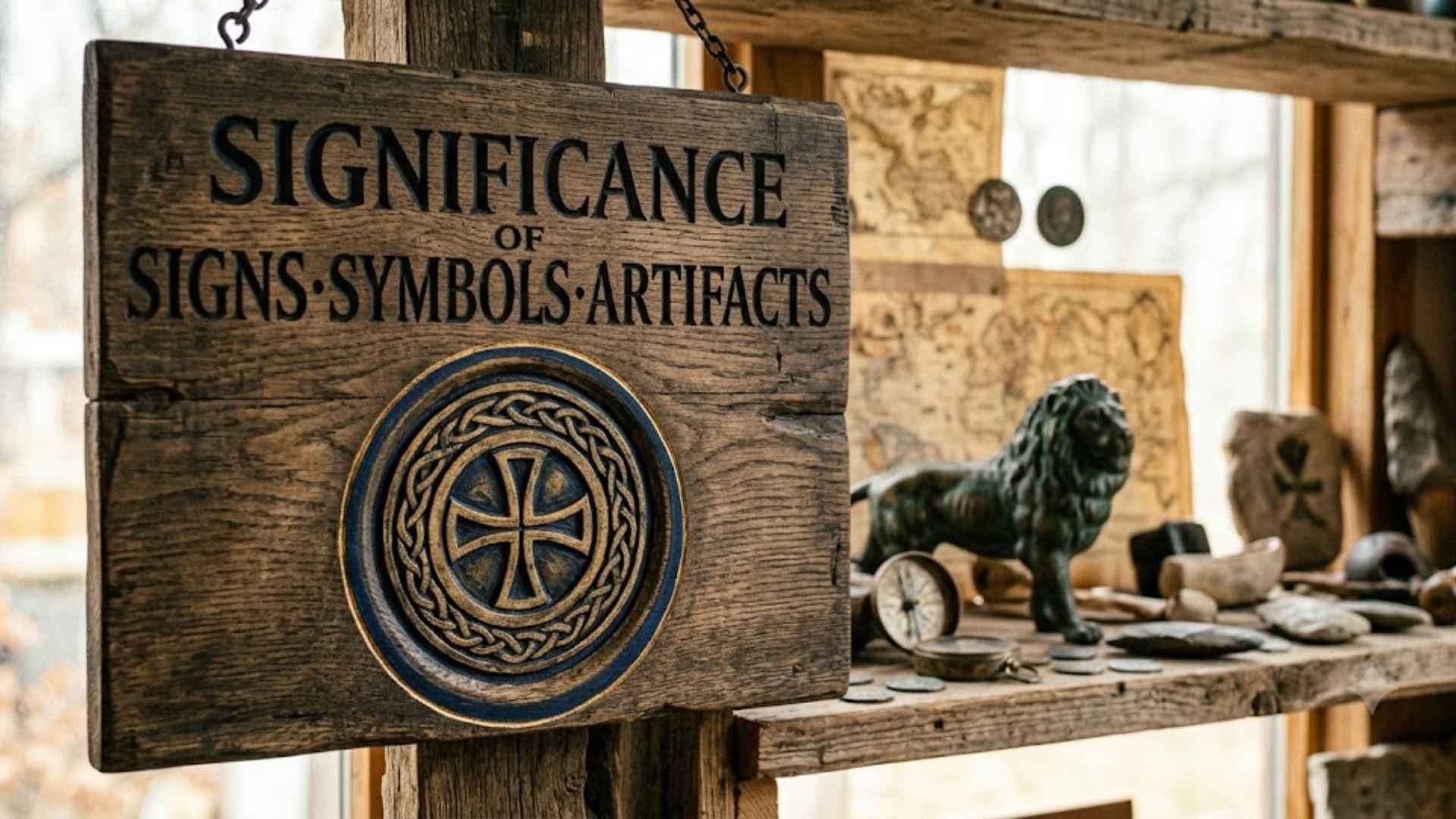
The significance of signs symbols artifacts is rooted in one simple truth: they are the foundation of human communication, culture, and history. Long before written language existed, people used signs, symbols, and objects to share meaning, preserve knowledge, and build communities. And today, thousands of years later, these same elements still shape how we navigate the world, understand our past, and connect with each other.
Whether you’re reading a stop sign, recognizing a country’s flag, or admiring a 3,000-year-old pot in a museum, you’re experiencing this significance firsthand. Let’s break it all down.
Understanding Signs, Symbols, and Artifacts
Before diving into why these things matter so much, it helps to understand what each one actually is. These three elements are often grouped together because they all carry meaning beyond their physical form, but they each play a distinct role in human civilization.
| Element | Definition | Example |
| Sign | A cue that points directly to something | Stop sign, restroom icon |
| Symbol | A representation with deeper cultural meaning | American flag, cross |
| Artifact | A human-made object that carries historical value | Ancient pottery, coins |
What Are Signs?
A sign is any visual or sensory cue that communicates a direct, often immediate message. Signs are designed to be understood quickly and universally. Think about traffic signs, warning labels on medication bottles, or the universal “no entry” symbol. Their whole purpose is instant, clear communication.
In the United States alone, the Manual on Uniform Traffic Control Devices (MUTCD) standardizes over 500 road sign designs to keep millions of drivers safe every day. That’s the power of a well-designed sign. It doesn’t need words to work.
What Are Symbols?
Symbols go deeper. They carry emotional, cultural, or spiritual meaning that goes far beyond what’s literally in front of you. The dove, for example, doesn’t just represent a bird. It represents peace. The heart symbol doesn’t represent an anatomical organ. It represents love.
What makes symbols so powerful is that their meaning is shared and collectively understood within a culture or community. That shared understanding is what builds cultural identity and keeps traditions alive across generations.
What Are Artifacts?
An artifact is a human-made object, usually from the past, that provides physical evidence of how people lived, worked, and believed. Ancient tools, pottery artifacts, ceremonial objects, family heirlooms, and archaeological discoveries all fall into this category.
Unlike signs and symbols, artifacts are tangible. You can hold them, study them, and draw direct conclusions about the civilization that created them. The Smithsonian Institution, for example, holds over 155 million artifacts, making it the world’s largest museum and research complex.
The Historical Significance of Signs Symbols Artifacts
The history of signs, symbols, and artifacts stretches back tens of thousands of years. Long before alphabets, before writing systems, before formal languages, humans were already communicating through visual symbols and physical objects. These weren’t primitive attempts at communication. They were sophisticated systems that kept communities alive and connected.
Archaeological evidence shows that symbolic thinking emerged very early in human evolution. A piece of ochre engraved with a geometric pattern found at Blombos Cave in South Africa is considered one of the oldest known symbols, estimated to be over 73,000 years old. That single object tells us something remarkable: humans have been meaning-makers for a very, very long time.
Early Human Communication Through Signs
Before spoken language became complex and before writing systems developed, visual communication was everything. Early humans relied on signs and visual symbols to survive, warn each other of danger, mark territory, and pass down cultural knowledge.
This wasn’t random. Researchers in anthropology and archaeology have found consistent patterns in ancient communication systems across continents, suggesting that symbolic thinking was a universal feature of early human cognition.
Cave Markings as Signs
Cave paintings found at sites like Lascaux in France (approximately 17,000 years old) and Chauvet Cave (over 30,000 years old) are among the most stunning examples of ancient visual communication. These cave markings include hunting scenes, animal figures, handprints, and abstract geometric signs.
Scientists believe these weren’t just decorations. They likely served as directional signs, territorial markers, and ritual symbols. Some researchers argue they were early maps, guiding hunters toward animal migration routes.
Development of Symbolic Communication
Over time, these simple cave markings evolved into more complex symbolic communication systems. Pictographs gave way to ideograms, and eventually to full writing systems like Sumerian cuneiform (around 3,500 BCE) and Egyptian hieroglyphics.
This evolution is one of the most important developments in human history. It shows how the significance of signs and symbolic thinking didn’t disappear but grew more sophisticated, eventually giving us the alphabets and written languages we use today.
Artifacts as Historical Evidence
One of the most powerful roles artifacts play is as historical evidence. When written records are incomplete, destroyed, or never existed in the first place, physical objects fill the gap. Artifacts speak directly from the past in ways that no secondhand account can replicate.
How Artifacts Tell Stories
Consider the Rosetta Stone, discovered in Egypt in 1799. This single artifact, inscribed with the same text in three scripts, unlocked the entire mystery of Egyptian hieroglyphics and opened a doorway to one of history’s greatest civilizations. Without that one object, an entire language system might have remained unreadable forever.
Closer to home, Native American arrowheads, colonial-era household tools, and plantation-era objects unearthed at archaeological sites across the US provide direct, unfiltered evidence of how people lived, what they valued, and how society was organized. That’s historical knowledge you simply can’t get from a textbook.
Cultural Significance of Signs Symbols Artifacts
Culture is built on shared meaning, and signs, symbols, and artifacts are the vehicles through which that meaning is passed down. Every cultural tradition, every collective memory, every act of heritage conservation relies on these three elements.
Symbols as Cultural Identity
Symbols are among the strongest expressions of cultural identity. The American bald eagle represents freedom and strength. The Statue of Liberty’s torch represents enlightenment and welcome. Sports team logos trigger fierce loyalty and community pride.
These aren’t just pretty images. They’re powerful anchors for belonging. Research in social psychology shows that shared symbols strengthen group cohesion and reinforce collective memory within communities.
Artifacts as Cultural Heritage
Physical artifacts are irreplaceable carriers of cultural heritage. They connect living communities to their ancestors in a way that no description can. That’s why debates around the repatriation of cultural artifacts are so emotionally charged. A stolen or displaced artifact isn’t just a missing object. It’s a severed connection to identity and history.
Institutions like the Smithsonian’s National Museum of Natural History and the National Museum of the American Indian play a crucial role in protecting, studying, and sharing these objects with the public.
You May Also Like: Symbols for Hope | Meanings, History, and Powerful Inspirations
Signs in Social Organization
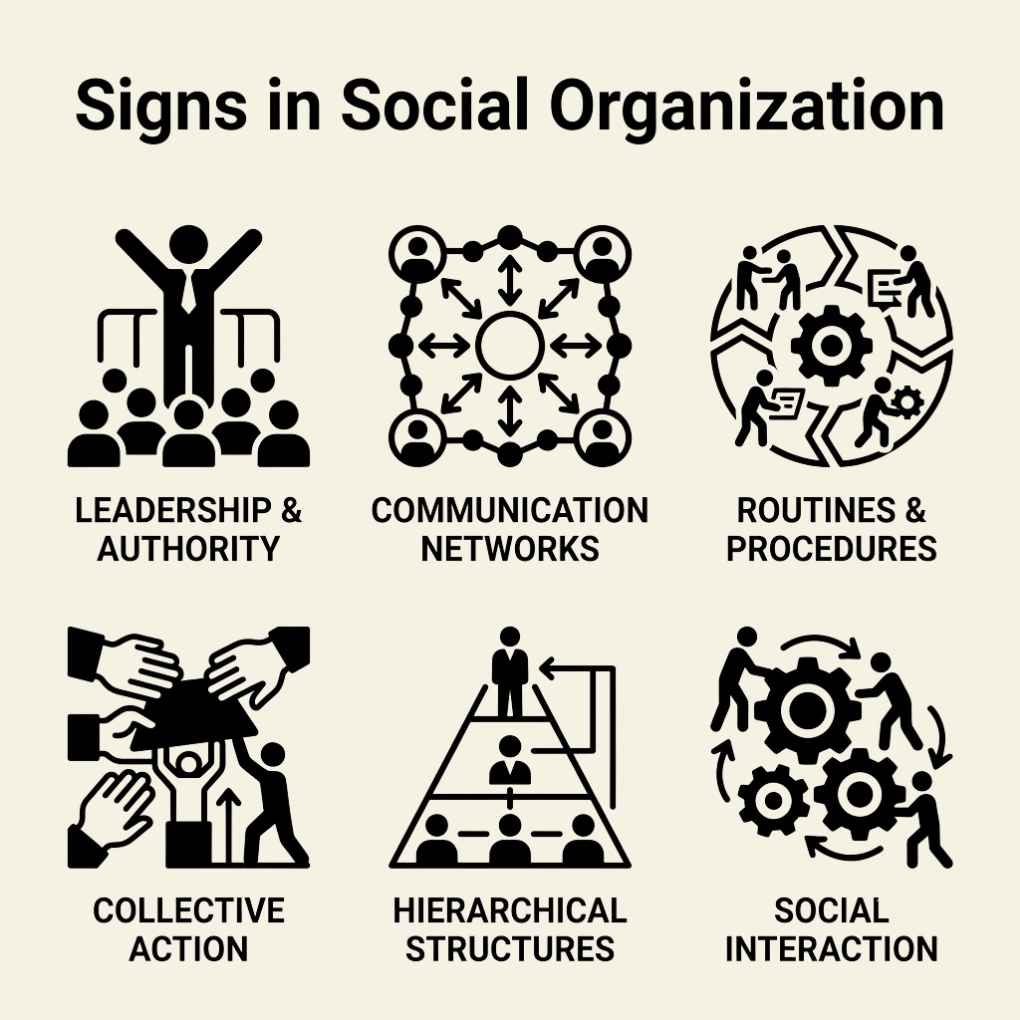
Beyond culture and history, signs play a practical role in organizing society. Traffic signs keep roads safe. OSHA safety signs protect workers in factories and construction sites. Emergency exit signs save lives during fires. Without these standardized visual systems, modern social organization would collapse.
The reach of instructional signs and public information signs extends into every corner of daily life. From hospital corridors to airport terminals to school hallways, signs create order, reduce confusion, and keep people moving safely through complex environments.
Educational Importance of Signs Symbols Artifacts
The educational value of signs, symbols, and artifacts is enormous, and it reaches every level of learning from kindergarten classrooms to university research labs. When students engage with these elements directly, they develop visual literacy, historical empathy, and cultural awareness that stick far longer than anything read from a page.
Teaching Through Symbols
Teachers use symbols constantly to make abstract ideas concrete. Mathematical symbols like π and Σ allow complex ideas to be expressed efficiently. Map symbols help students visualize geography. Scientific symbols standardize global communication in chemistry, biology, and physics.
For young learners especially, visual symbols support literacy development and help children with different learning styles grasp concepts more intuitively. That’s not a small thing. It’s a foundational building block of education.
Artifacts in Museums
Museum artifacts transform history from something you read about into something you experience. When a student stands in front of a 2,000-year-old Roman sword at a history exhibit, history becomes real in a way no textbook page can replicate.
Programs like the Smithsonian’s museum education initiatives bring artifacts directly into curriculum design, helping students develop historical understanding and cultural awareness through hands-on engagement with real objects from the past.
Signs in Learning Environments
Classroom signs, visual schedules, and instructional symbols support diverse learners including students with learning differences and non-English speakers. Visual literacy is increasingly recognized as a core 21st-century skill, and it starts with understanding the signs and symbols that surround us every single day.
Practical Applications of Signs Symbols Artifacts
The practical, real-world applications of these three elements touch every part of daily life in America. From the roads you drive on to the apps you open every morning, signs, symbols, and artifacts are doing constant, quiet work all around you.
Transportation and Navigation
The US road sign system, governed by the MUTCD, covers over 4 million miles of roads. Every symbol, color, and shape is chosen deliberately to maximize driver comprehension in split seconds. Navigation signs, directional signs, and warning signs together form a visual communication network that saves thousands of lives every year.
Communication in Public Spaces
Restroom icons, wheelchair accessibility symbols, emergency signs, and public information signs allow diverse, multilingual communities to navigate shared spaces safely and efficiently. In a country as diverse as the United States, these universal visual symbols are essential tools of social inclusion.
Technology and Digital Communication
Today’s digital world runs on symbols. App icons, emoji symbols, social media logos, and interface icons are the visual language of the internet. Linguists now study emoji as a formal communication system, and digital artifacts like screenshots, memes, and NFTs are increasingly recognized as the cultural artifacts of the modern age.
Impact of Signs Symbols Artifacts on Society
Improving Safety
Standardized warning signs and hazard symbols reduce workplace injuries, prevent accidents, and save lives. GHS hazard symbols on chemical containers are legally required under OSHA regulations in the US and provide critical safety information to workers who may not share a common language. That’s symbolic communication working at its most essential level.
Preserving History
Artifacts and historical monuments serve as collective memory systems for society. Institutions like the National Archives and the Library of Congress are dedicated to preserving the physical records and objects that define American history for future generations. Without this commitment to historical preservation, entire chapters of human experience would simply disappear.
Strengthening Communication
In a country with over 350 languages spoken, symbolic communication bridges gaps that words often can’t. Universal symbols reduce misunderstanding and create common ground across cultural, linguistic, and educational differences. That capacity to connect people across barriers is one of the most underappreciated powers of signs and symbols.
Signs Symbols Artifacts in Religion and Spirituality
Religious Symbols
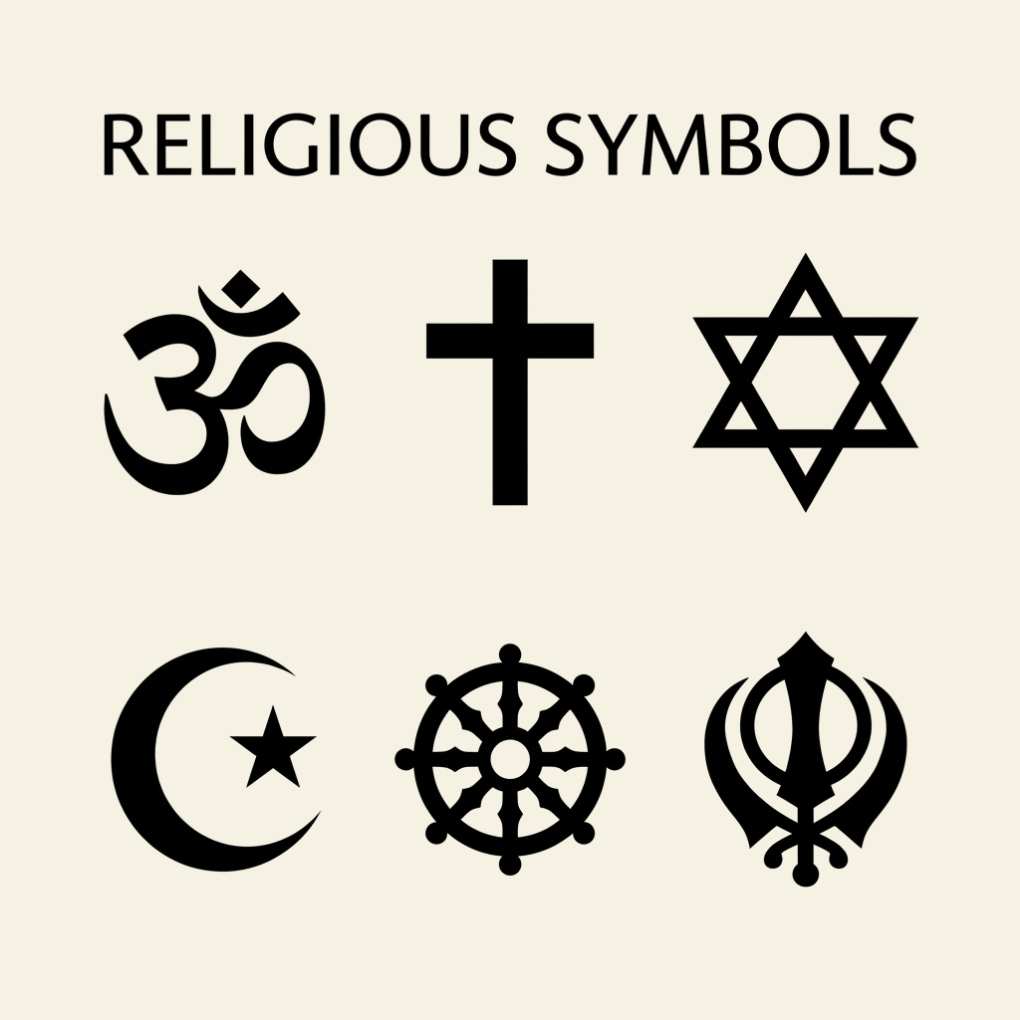
Religious symbols are among the most powerful and widely recognized visual symbols in the world. The cross, the Star of David, the crescent moon and star, and the Om symbol each represent entire systems of belief shared by billions of people. For many Americans, these sacred symbols are daily reminders of faith, community, and purpose.
Sacred Artifacts
Sacred artifacts like the Torah, communion chalice, prayer beads, and ceremonial Native American objects carry spiritual significance that transcends their physical form. These objects aren’t just old things. They’re living connections between believers and their faith traditions, holding centuries of meaning in a single touchable object.
Signs in Sacred Spaces
Churches, mosques, temples, and synagogues all use directional and ritual signs to guide worshippers and reinforce spiritual meaning. These signs create a structured environment where symbolic meaning and sacred practice come together in a way that words alone could never fully accomplish.
Economic Importance of Signs Symbols Artifacts
Branding and Marketing
Brand symbols are among the most valuable assets any company owns. Nike’s swoosh and McDonald’s golden arches are instantly recognizable to billions of people worldwide and represent brand equity worth tens of billions of dollars. Logo symbolism isn’t just design. It’s one of the most powerful economic forces in modern business.
Tourism and Heritage Sites
Heritage sites like Mount Rushmore, Colonial Williamsburg, and the Smithsonian complex attract millions of visitors annually and generate billions of dollars in economic activity. Artifacts and historical symbols are literally driving economic growth and job creation across the country.
Manufacturing and Safety
In manufacturing, standardized safety signs protect workers, reduce liability, and ensure legal compliance. The GHS globally harmonized system of chemical symbols has created a universal language for hazardous materials that protects workers across industries and international borders alike.
You May Also Like this Symbol: 95+ Best Healing Symbols From Around the World
Psychological Significance of Signs Symbols Artifacts
Symbols and Memory
Symbols act as powerful memory anchors. A national flag can trigger immediate feelings of patriotism. A brand logo triggers instant brand recall. This phenomenon, sometimes called symbol-evoked memory, is well-documented in psychology and is a core principle behind effective advertising, education, and cultural identity building.
Artifacts and Emotional Value
People attach deep emotional meaning to physical objects. A grandparent’s watch, a military medal, a childhood toy — these artifacts hold identity and memory in ways that go far beyond their material value. Psychologists recognize this as a key part of how humans form and maintain their sense of self across a lifetime.
Signs and Behavior
Signs don’t just inform us. They actively shape our behavior. A “wet floor” sign triggers immediate caution. A green recycling logo nudges eco-friendly behavior. Research in behavioral science confirms that well-designed signs can change behavior at scale, making them powerful tools for public health, workplace safety, and social policy.
Signs Symbols Artifacts in Modern Media
Film and Television
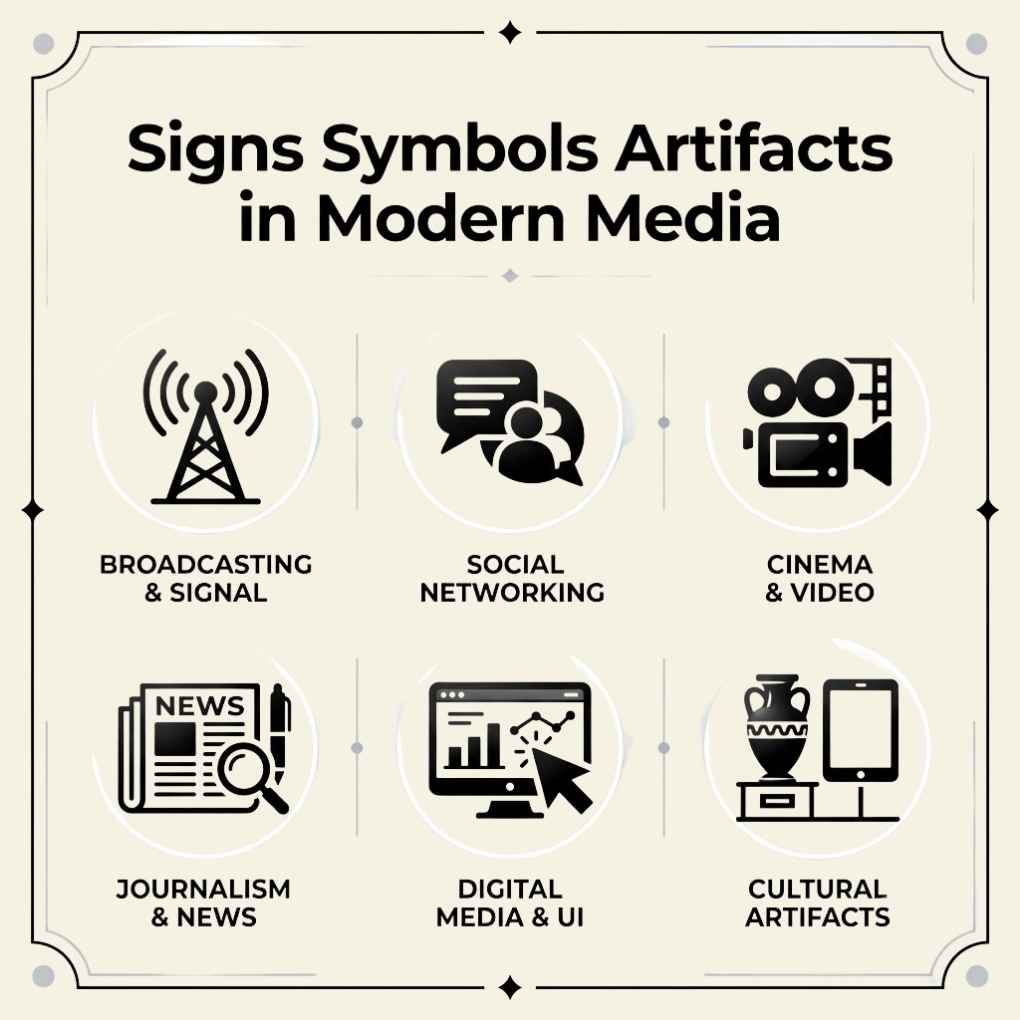
Filmmakers use symbols and artifacts as storytelling tools to build themes and foreshadow events. The recurring motifs in Marvel films, the symbolic artifacts in the Indiana Jones franchise, and the heavy symbolism in prestige dramas like “Breaking Bad” show how deeply embedded symbolic thinking is in popular storytelling and visual culture.
Advertising and Social Media
Social media has created an entirely new visual communication ecosystem. Emoji symbols, hashtag icons, brand colors, and viral visual memes now carry cultural weight that rivals traditional symbols. Brands spend billions designing symbols that trigger emotional responses in milliseconds.
Gaming and Virtual Worlds
Video games have developed rich symbolic languages and in-game artifacts. The triforce in Zelda, crafting symbols in Minecraft, and virtual trophies in competitive gaming carry real meaning for hundreds of millions of players worldwide. These digital artifacts are as culturally significant to their communities as any physical relic from the ancient world.
Interesting Facts About Signs Symbols Artifacts
- The oldest known symbol is over 73,000 years old, found at Blombos Cave in South Africa
- The US has over 4 million miles of roads governed by standardized sign systems
- The Smithsonian Institution holds over 155 million artifacts across its 19 museums
- Emoji are now formally studied by linguists as a structured communication system
- The cross is recognized by approximately 2.3 billion Christians worldwide
- Egyptian hieroglyphics remained undeciphered for over 1,400 years until the Rosetta Stone was found
Challenges in Preserving Signs Symbols Artifacts
Damage Over Time
Physical artifacts face constant threats from weather, pollution, humidity, and simple age. Conservation science institutions like the Getty Conservation Institute work to develop new preservation techniques to slow deterioration and protect irreplaceable objects from being lost forever.
Loss of Meaning
Symbols can lose their original meaning over generations or be misappropriated entirely. The swastika, originally a peaceful symbol in Hindu and Buddhist traditions for thousands of years, is now almost universally associated with Nazi Germany in Western contexts. This shows why historical context and documentation are so critical to cultural preservation.
Misinterpretation
Without proper documentation and education, signs and symbols can be misread across cultures and time periods. Archaeological misinterpretations have led to significant historical errors in the past. Accurate scholarship, cross-cultural education, and responsible museum practice are essential safeguards against this kind of distortion.
Benefits of Studying Signs Symbols Artifacts
Cultural Awareness
Studying other cultures’ symbols and artifacts builds empathy and reduces misunderstanding in a diverse society like the US. Understanding that the same gesture or symbol can mean completely different things in different cultures is a crucial skill in today’s interconnected, globalized world.
Historical Understanding
Direct engagement with artifacts gives us unmediated access to history that no secondary source can fully replicate. Standing in front of a genuine historical relic creates a connection to the past that transforms abstract knowledge into lived, felt understanding.
Problem-Solving Skills
Decoding symbols and interpreting artifacts sharpens analytical thinking and pattern recognition, skills that transfer directly into STEM, design, law, medicine, and countless other fields. Archaeology and semiotics aren’t just academic exercises. They build real, transferable cognitive capabilities that serve people throughout their careers.
Inspiration for Creativity
Artists, architects, fashion designers, and writers have always drawn on historical symbols and artifacts for creative inspiration. Ancient Egyptian motifs appear in modern jewelry. Greek architectural symbols show up in courthouses and libraries across America. The creative well fed by human symbolic history runs very deep and shows no signs of running dry.
Frequently Asked Questions
What is the significance of signs symbols artifacts in human civilization?
Signs, symbols, and artifacts are the foundation of human communication, cultural identity, and historical preservation across civilizations.
How do artifacts help us understand history?
Artifacts provide direct physical evidence of how ancient people lived, worked, believed, and organized their societies.
Why are symbols important in cultural identity?
Symbols represent shared values and beliefs that unite communities, strengthen cultural pride, and preserve traditions across generations.
What role do signs play in public safety?
Standardized signs communicate critical warnings and directions instantly, helping prevent accidents and keeping communities safe daily.
How are signs symbols and artifacts used in education?
They make abstract concepts tangible, bring history to life, and develop students’ visual literacy and critical thinking skills.
Conclusion
The significance of signs symbols artifacts isn’t just academic. It’s practical, personal, and universal. These elements shape how you navigate a city, how you understand your culture, how you connect with history, and how you make sense of the world around you. They’ve been doing this work for over 70,000 years, and they’re not stopping anytime soon.
The next time you pause at a stop sign, feel moved by a national symbol, or stand in front of an ancient artifact in a museum, remember: you’re participating in one of the oldest and most deeply human practices there is. Pay attention. There’s always more meaning waiting to be found.

Mubeen is a passionate writer at Auramegazine who explores symbolism, hidden meanings, and powerful signs behind everyday symbols. He enjoys creating simple, engaging content that helps readers understand deeper meanings and cultural connections.