45+ Legendary Leadership Symbols From History That Still Guide Leaders Today
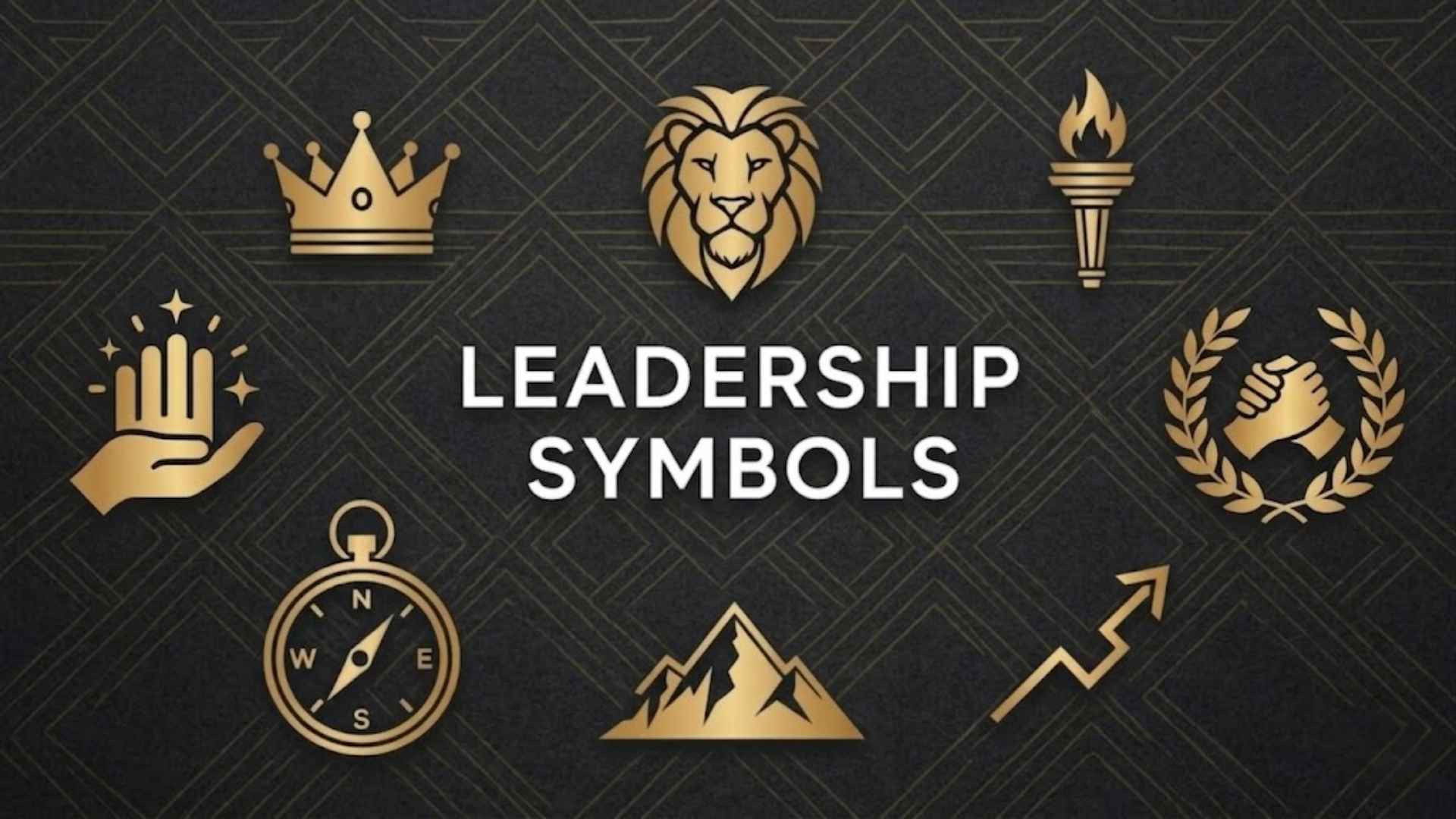
Leadership symbols are visual representations of authority, guidance, and power that humans have used for thousands of years to identify and legitimize leaders. From the golden crowns of Egyptian pharaohs to the eagle on the American seal, these symbols carry weight that words alone cannot match. They speak directly to something primal inside us.
Think about it. When you see a lion, you don’t need a caption to understand strength. When you spot a crown, authority registers instantly. That’s exactly why symbols of leadership have survived every civilization, revolution, and cultural shift throughout human history.
What Are Leadership Symbols?
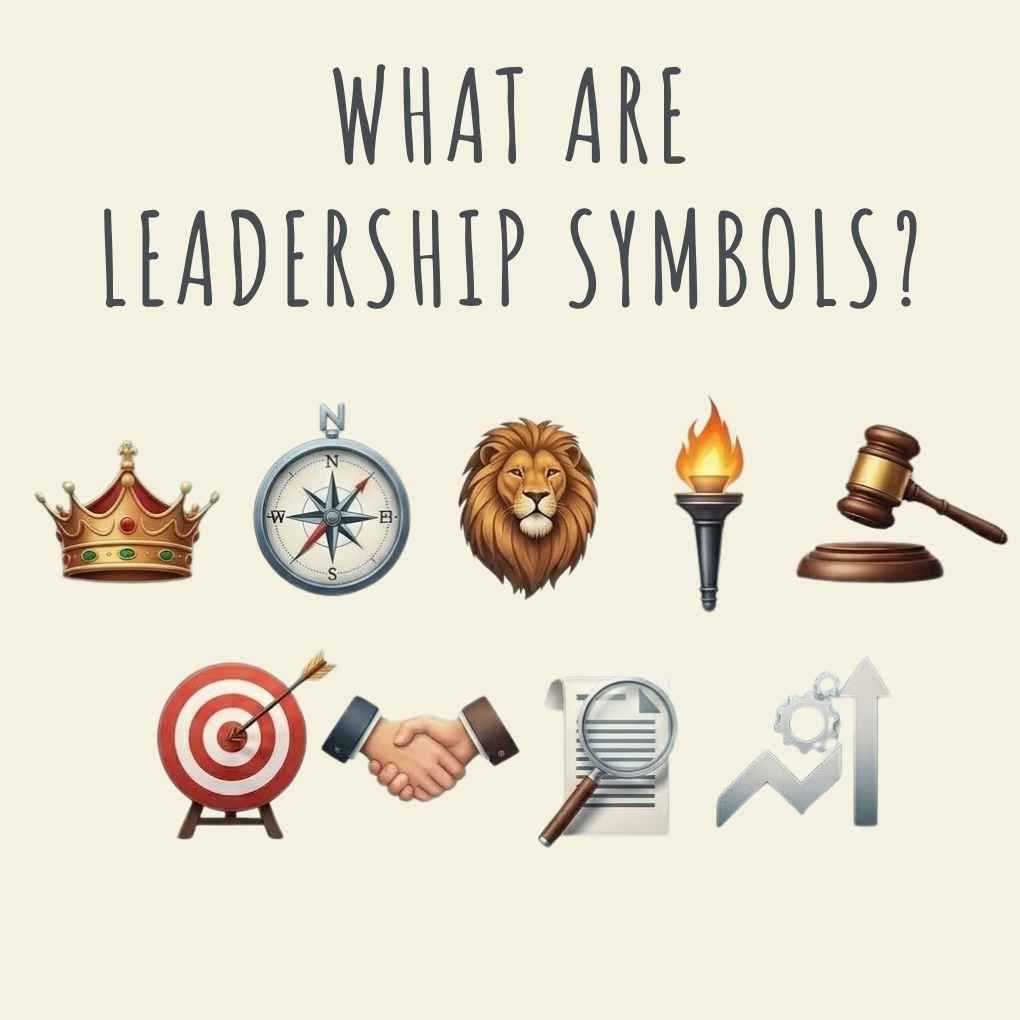
Leadership symbols are objects, images, animals, or marks that visually communicate authority, responsibility, and influence. They tell people who leads, who protects, and who decides without requiring a single spoken word.
These symbols work because humans are wired to respond to visual cues faster than language. Ancient societies understood this perfectly. A king didn’t just claim power through words. He wore it, carried it, and displayed it through symbols of authority that everyone recognized. The crown wasn’t decoration. It was a declaration.
Today, the game hasn’t changed much. Corporate logos, military badges, presidential seals, and even the way a CEO dresses function as modern leadership authority symbols. The medium evolved but the purpose didn’t.
Leadership Symbols And Meanings Across Cultures And History
Symbols Of Leadership With Meaning
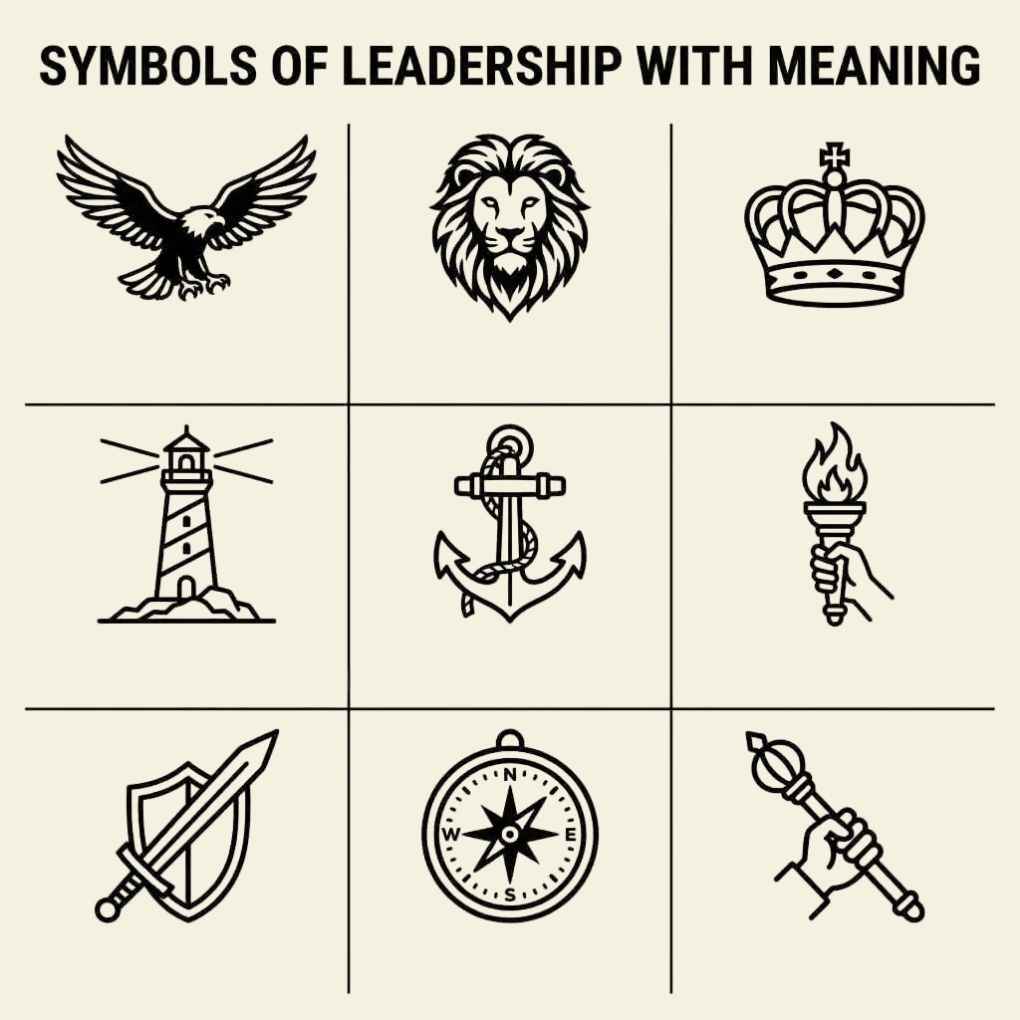
Every great civilization created its own visual language for power. Here’s a quick breakdown of the most recognized leadership symbols and meanings:
| Symbol | Meaning | Culture |
| Crown | Sovereignty and legitimacy | Global |
| Eagle | Vision and dominance | Rome, USA |
| Dragon | Cosmic wisdom and imperial authority | China |
| Lion | Courage and natural strength | Africa, Europe |
| Laurel Wreath | Earned merit and intellectual victory | Ancient Greece |
| Crook and Flail | Divine kingship and cosmic order | Ancient Egypt |
| Scepter | Command and moral authority | Medieval Europe |
Symbols Of Leadership In Education
Education has its own powerful set of leadership symbols. The torch represents enlightenment spreading from teacher to student. The owl signals wisdom and careful thinking. An open book suggests accessibility of knowledge to all people.
Universities across America use these symbols deliberately in their crests and logos. Harvard’s shield carries three open books. Yale’s motto appears inside a bold insignia. These aren’t random choices. They’re calculated uses of symbolic communication to project academic authority and inspire trust.
Symbols Of Leadership
Symbols of leadership range from the grand to the subtle. A raised fist represents collective resistance and strength. A handshake signals cooperative leadership. A compass points toward visionary thinking. Each carries layered meaning that builds emotional connection with followers instantly.
Visual And Creative Leadership Symbol Designs
Symbol Of Leadership Images
Visually, the strongest leadership symbols share common traits. They’re bold, simple, and immediately recognizable. Think of the American bald eagle or the British lion. Neither needs a label. Good leadership visual symbols communicate authority before your brain fully processes the image.
Pictures Of Leadership Symbols
Pictures of leadership symbols appear everywhere in American culture. Sports team logos use lions, eagles, and bears. Political campaigns rely on stars and flags. Corporate brands build entire identities around single powerful icons because visuals trigger emotional responses that text simply cannot replicate.
Leadership Symbols Images
Strong leadership symbols images share three qualities: clarity, boldness, and emotional resonance. Designers who build leadership brands understand that color, shape, and animal imagery all trigger specific psychological responses. Red communicates urgency and power. Gold signals wealth and authority. These aren’t accidents.
Leadership Symbols Black And White
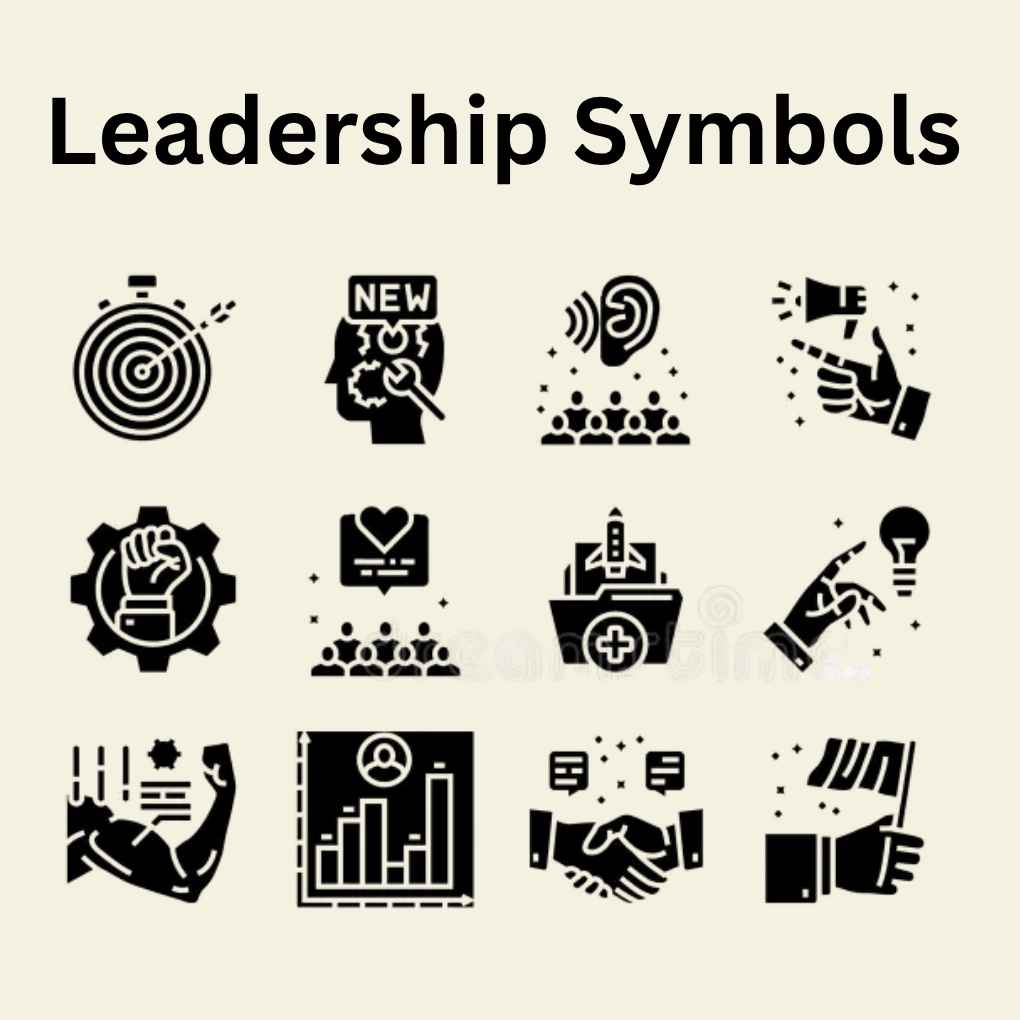
Black and white leadership symbols carry their own distinct power. Stripped of color, the symbol must communicate through shape alone. This demands strong, clean design. Many official government seals, legal documents, and military badges use black and white intentionally to project timeless, unquestionable authority.
Leadership Symbols Clip Art
Leadership symbols clip art is widely used by educators, designers, and content creators. Simple crown icons, torch graphics, and eagle illustrations help illustrate leadership concepts in presentations and worksheets quickly. These visuals give abstract ideas a concrete, recognizable form.
Leadership Symbol Designs In Art And Personal Expression
Leadership Symbol Drawing
Artists have drawn leadership symbols for centuries to capture power visually. Renaissance painters positioned rulers above crowds, bathed in golden light. Modern illustrators use sharp lines and bold shapes to convey dominance. A well-drawn lion communicates more about strength than paragraphs of description ever could.
Leadership Symbol Tattoo
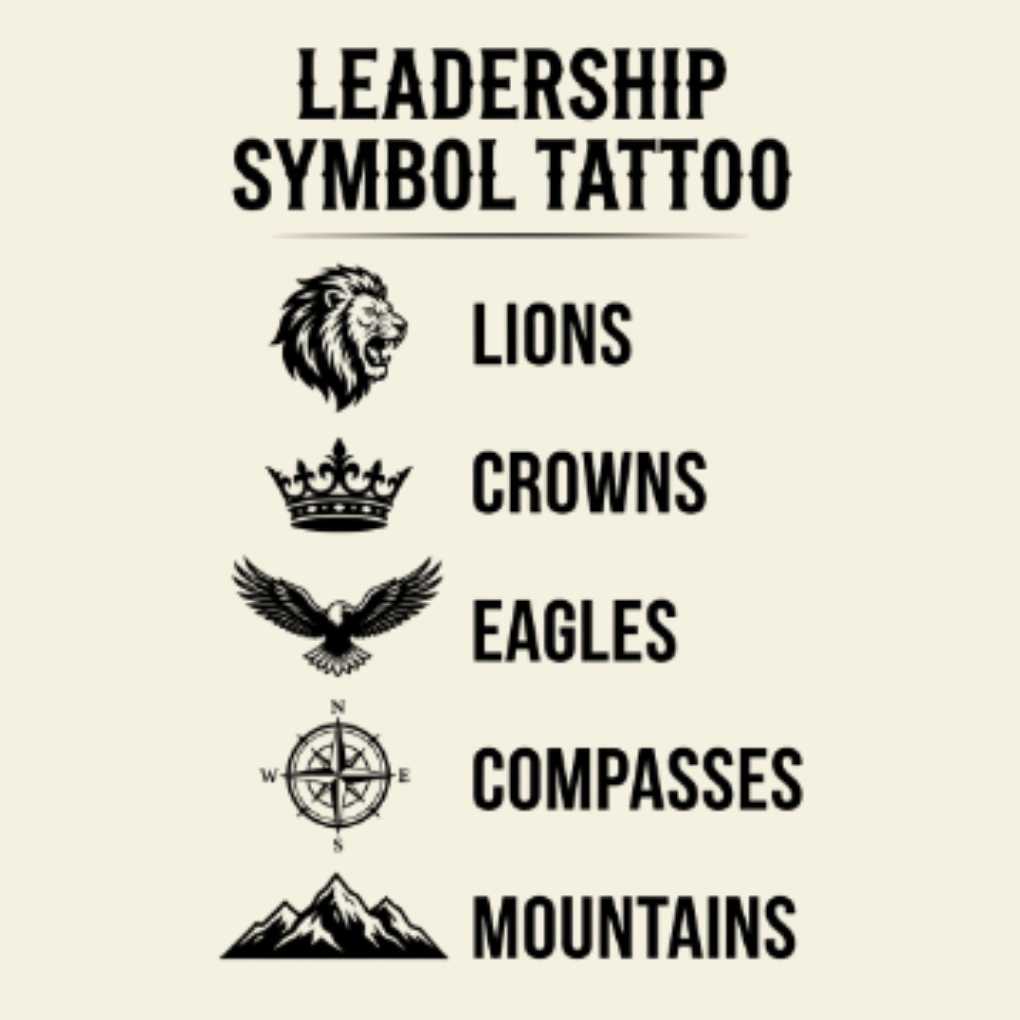
Leadership symbol tattoos are increasingly popular choices for people who identify with values like courage, responsibility, and vision. Common designs include:
- Lions representing personal courage
- Crowns symbolizing self-mastery
- Eagles expressing ambition and freedom
- Compasses pointing toward purpose
- Mountains reflecting resilience through challenges
Logo Leadership Symbols
The best leadership logo ideas borrow from history’s most powerful symbols. Nike’s swoosh suggests speed and decisive movement. The GOP elephant projects strength. Apple’s bitten apple hints at knowledge and bold thinking. Smart brands understand that leadership identity symbols do the heavy lifting before a single word is read.
You May Also Like: 23+ Hidden Symbols of Rebirth You See Every Day but Never Notice
Historical And Cultural Leadership Symbols
Ancient Symbols Of Leadership
Ancient symbols of leadership reveal how early humans understood power. Egyptian pharaohs combined the double crown to represent unified authority over Upper and Lower Egypt. Roman emperors wore laurel wreaths to signal military victory earned through personal merit. These weren’t just fashion choices. They were strategic communications designed to legitimize rule.
Ancient Leadership Symbols
Ancient leadership symbols included sacred animals, divine objects, and celestial imagery. The sun disc represented divine protection in Egypt. The thunderbolt connected Zeus-like power to Greek rulers. The jade seal in China signified imperial authority blessed by heaven itself. Across every ancient culture, leadership demanded visible proof through powerful symbolism.
Coat Of Arms Leadership Symbols
Heraldry leadership symbols gave medieval families a visual identity that communicated lineage, values, and power simultaneously. Common elements included:
- Lions for courage and nobility
- Eagles for imperial strength
- Crosses for religious authority
- Stars for divine guidance
- Shields for protection and defense
Objects And Things That Represent Leadership
Objects That Represent Leadership
Objects that represent leadership appear across human history in remarkably consistent patterns. The throne elevates the ruler physically above followers. The scepter extends the leader’s reach symbolically. The crown marks the head, traditionally considered the seat of wisdom and divine connection.
Objects That Represent Leadership Styles
Different objects that represent leadership styles reveal distinct approaches to power:
- Compass = Visionary leadership, always pointing forward
- Bridge = Collaborative leadership, connecting divided groups
- Shield = Protective leadership, defending those who follow
- Torch = Inspirational leadership, lighting the way for others
- Scale = Fair leadership, weighing decisions carefully
Items That Represent Leadership
Items that represent leadership show up in surprising places. A judge’s gavel commands order in a courtroom. A coach’s whistle signals authority on a sports field. A doctor’s white coat projects expertise and responsibility. Even everyday objects carry symbolic power when paired with a leadership role.
Things That Symbolize Leadership
Things that symbolize leadership connect instantly to universal human experiences. Mountains represent the climb toward achievement. Rivers symbolize adaptability and persistence. Fire suggests transformation and inspiration. Nature provides an endless vocabulary for leadership symbolism that crosses cultural boundaries effortlessly.
Things That Represent Leadership
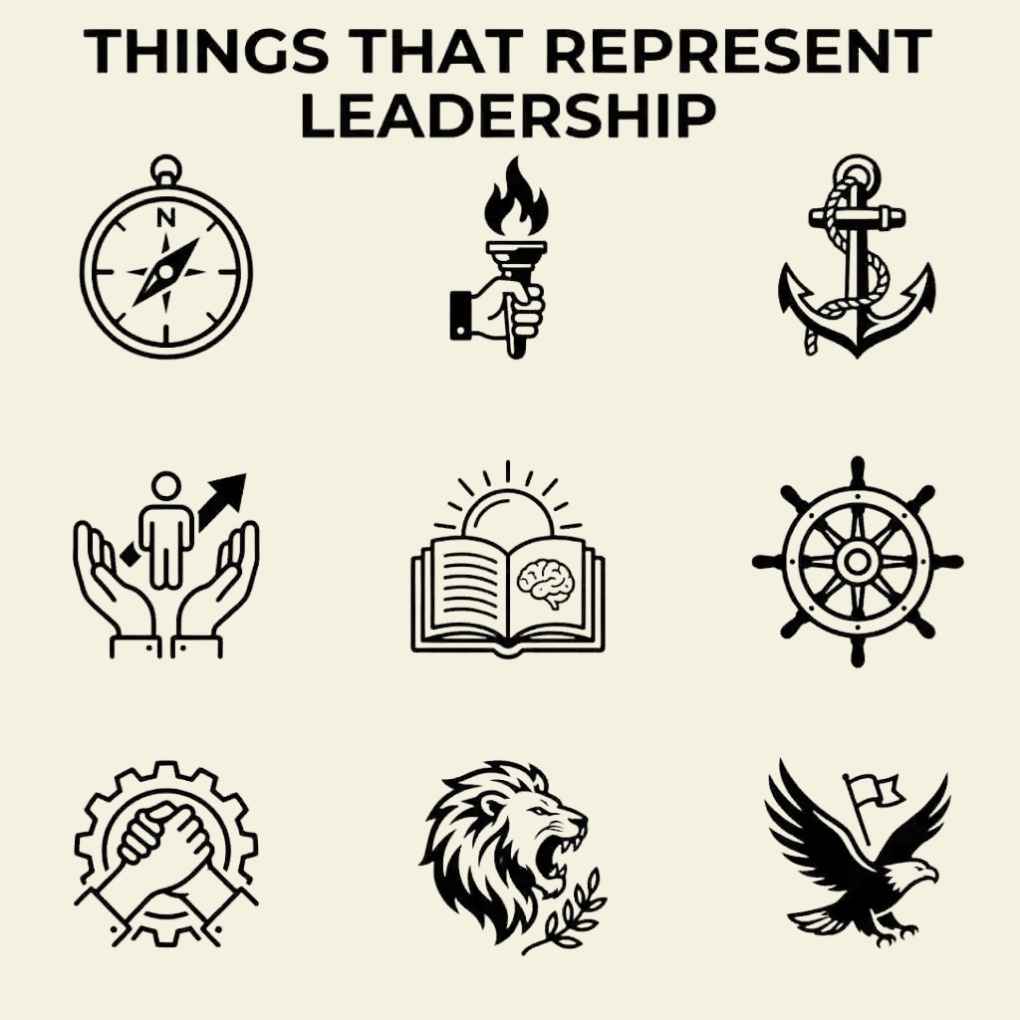
Things that represent leadership often appear in American homes, schools, and workplaces without people realizing it. The flag hanging in a classroom. The trophy on a shelf. The framed diploma on a wall. Each quietly communicates authority, achievement, and responsibility without demanding attention.
Leadership Symbols In Power, Strength, And Control
Leader Symbols
Leader symbols communicate authority through two channels simultaneously: rational recognition and emotional response. Seeing a military general’s stars triggers both intellectual acknowledgment of rank and an instinctive emotional response of respect. That dual impact is what makes symbols used by leaders so enduringly effective.
Symbol Of A Leader
The symbol of a leader varies by context but shares consistent qualities across cultures. It must be immediately recognizable. It must trigger emotional respect. It must be difficult to imitate casually. These three qualities explain why crowns, eagles, and lions appear repeatedly across completely unconnected civilizations throughout history.
Symbol Of Leader
Strong symbol of leader designs communicate multiple values simultaneously. The American eagle carries vision, freedom, strength, and national unity inside a single image. That’s extraordinarily efficient communication. One symbol does what pages of text struggle to accomplish.
Symbol For Leadership
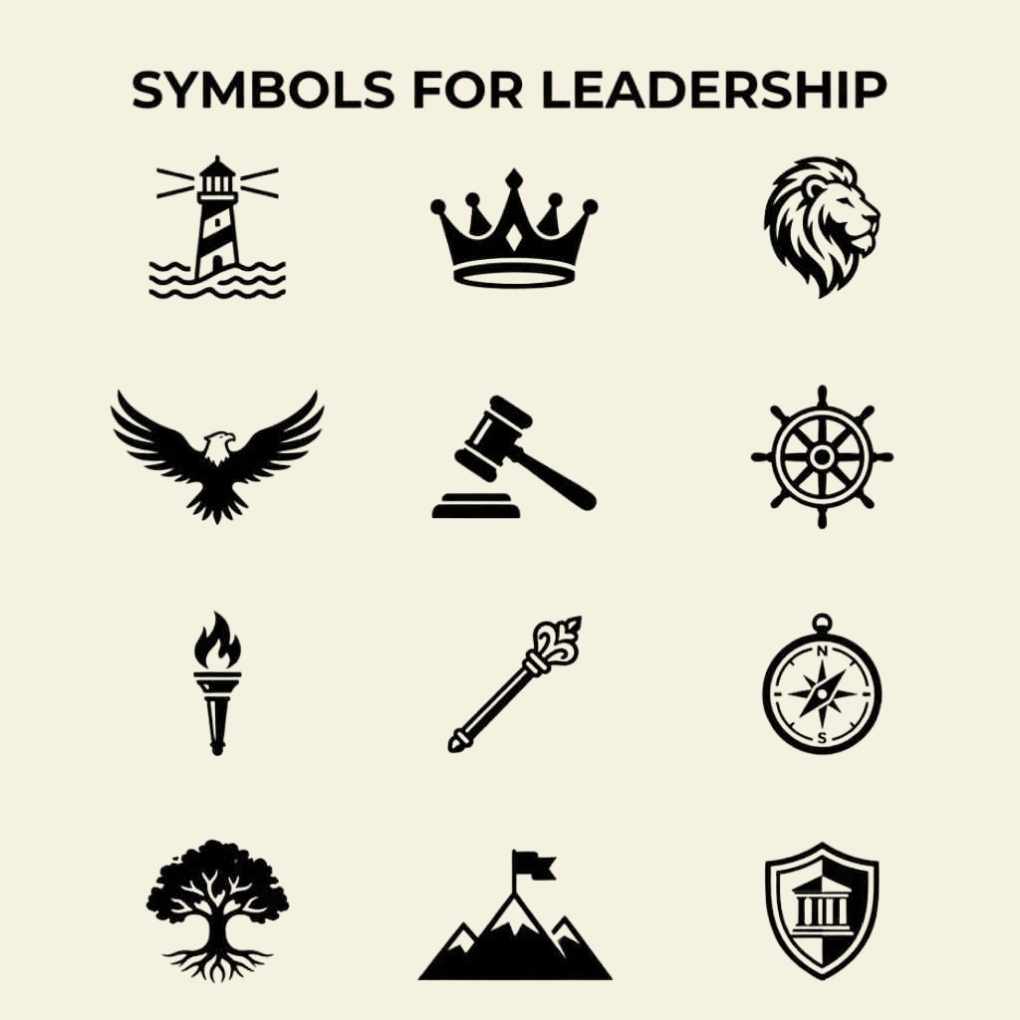
A great symbol for leadership works across cultures, scales, and contexts. It looks powerful on a building and on a business card. It communicates clearly in color and in black and white. It ages well without becoming outdated because it connects to permanent human values rather than temporary trends.
Symbols For Leadership
The most enduring symbols for leadership share roots in natural strength, divine authority, or earned achievement. Lions weren’t chosen randomly. Eagles weren’t accidental. Ancient people observed nature carefully and selected animals whose qualities mirrored their highest leadership ideals.
Symbols That Represent Leadership
Symbols that represent leadership work because they compress complex ideas into single, recognizable images. Authority, wisdom, courage, responsibility, and vision are abstract concepts. A crown makes them concrete. An eagle makes them visible. A mountain makes them physically felt. That compression is the real power of leadership symbolism.
Leadership Symbolism
Leadership symbolism operates on three levels simultaneously. Intellectually, symbols identify hierarchy and structure. Emotionally, they trigger trust, respect, or fear. Spiritually, many cultures believed symbols connected earthly leaders to divine authority. All three levels working together create symbols that genuinely shape human behavior across generations.
Symbolism For Leadership
Symbolism for leadership has never disappeared from human culture because the need it serves hasn’t disappeared. People still need to identify leaders quickly. Organizations still need to project authority and inspire trust. Symbols accomplish both faster and more powerfully than any alternative communication method available.
Specialized Leadership Symbol Categories
Symbols That Represent Control
Symbols that represent control typically emphasize structure, boundaries, and command. The gavel controls discourse. The uniform controls identity. The throne controls space. Each uses physical positioning or visual dominance to communicate who directs the behavior of others in any given environment.
Strength Leadership Symbols
Strength leadership symbols draw heavily from the natural world because nature provides undeniable proof of power. Consider these widely recognized examples:
- Lion: Raw courage, fearless confrontation of challenges
- Bull: Unstoppable force and determined persistence
- Mountain: Immovable stability under enormous pressure
- Oak Tree: Deep roots combined with upward growth
- Bear: Protective strength, especially fierce when defending others
Military Leadership Symbols
Military leadership symbols combine authority with honor in uniquely powerful ways. Stars indicate rank. Eagles appear on official seals. Crossed swords suggest combat-tested authority. These symbols of authority communicate hierarchy instantly in environments where confusion about command costs lives.
Servant Leadership Symbols
Servant leadership symbols deliberately invert traditional power imagery. Instead of crowns and thrones, servant leadership uses:
- Open hands representing giving and support
- Bridges symbolizing connection between divided groups
- Water suggesting flexibility and nourishment
- Trees offering shade and shelter to those nearby
Leadership Symbols Animals
Leadership symbols animals appear across virtually every culture because animals demonstrate qualities humans aspire to lead with. Here’s how different animals map to leadership qualities:
| Animal | Leadership Quality | Cultural Example |
| Lion | Courage and authority | British Royal Family |
| Eagle | Vision and freedom | United States |
| Dragon | Wisdom and cosmic power | Imperial China |
| Wolf | Strategic teamwork | Native American tribes |
| Bull | Unstoppable determination | Wall Street |
| Bear | Protective strength | Russia |
Deep Symbolic Meaning of Leadership Symbols
Spiritual Meaning
Spiritually, leadership symbols represent divine selection and moral accountability. Egyptian pharaohs were considered living gods, and their symbols reflected that cosmic responsibility. The halo in Christian art marked divinely sanctioned authority. Even today, spiritual leadership symbols appear in religious institutions, suggesting that the leader serves something larger than personal ambition.
Psychological Meaning
Psychologically, leadership symbols reduce anxiety during uncertain times. The human brain desperately seeks order during chaos. Seeing a clear symbol of authority triggers an instinctive calming response because it signals that someone capable is managing the situation. This explains why emotional symbolism in leadership remains powerful even in modern secular contexts.
Cultural Meaning
Culturally, leadership symbols define social structure and maintain hierarchy across generations. They communicate who belongs where in the social order without requiring constant verbal explanation. Remove the symbols and authority becomes invisible, contested, and fragile. This is why cultural leadership symbols appear in every society humanity has ever organized.
Types and Variations of Leadership Symbols
Crown
The crown is arguably the most universally recognized royal symbol of leadership on earth. Its circular shape suggests continuity and completeness. The elevated position on the head connects authority to wisdom and divine selection. Crown symbolism carries weight across cultures that never shared contact, suggesting it taps into something fundamentally human about how people understand legitimate power.
Lion
The lion earns its place as the king of leadership symbols animals through observable reality. Lions lead prides. They protect territory. They confront threats directly without hesitation. The lion leadership meaning transfers naturally to human contexts because the animal demonstrates rather than claims its authority, which is exactly what effective leaders must do.
Eagle
The eagle symbol meaning combines vision, dominance, and freedom into a single powerful image. Eagles see what others miss from their elevated perspective. They act decisively when the moment demands it. For the United States specifically, the bald eagle captures the national leadership identity perfectly because it suggests both fierce independence and extraordinary vision.
Throne
Throne symbolism uses physical elevation to communicate hierarchy without words. Sitting above others creates literal and psychological distance between ruler and subject. The throne’s permanence suggests stability. Its size and decoration project wealth and power. Every element serves the single purpose of making authority immediately, undeniably visible.
Staff or Scepter
The staff and scepter meaning connects leadership to guidance and moral direction. A shepherd’s staff leads the flock. A prophet’s staff channels divine authority. A king’s scepter extends his physical reach symbolically across his entire kingdom. Each variation communicates that the leader doesn’t just hold power but actively directs it with intentional purpose.
Flag
Flags transform abstract collective identity into something you can see, touch, and follow into battle. Leadership and influence crystallize around flags during moments of crisis because they answer the most urgent human question: who do we rally behind? The flag says clearly, “Here. Follow this. We belong to something worth fighting for.”
Leadership Symbols Across Cultures
Ancient Egypt
Leadership in ancient Egypt operated through an extraordinarily sophisticated system of divine kingship symbols. The double crown unified Upper and Lower Egypt visually. The crook and flail represented the pharaoh’s dual role as shepherd and provider. The cobra on the royal headdress warned enemies of deadly consequences. Everything communicated cosmic authority maintained by divine right.
Ancient Greece
Leadership in Ancient Greece introduced a genuinely revolutionary concept: earned symbolism. The laurel wreath wasn’t inherited. It was awarded for demonstrated excellence in athletic competition, military victory, or intellectual achievement. This shift from royal authority to merit-based recognition planted seeds that grew into modern democratic thinking about who deserves to lead.
China
Dragon symbol leadership in imperial China communicated wisdom, cosmic balance, and heaven-sanctioned authority simultaneously. The emperor was the Son of Heaven, and the dragon connected his earthly power to cosmic order. Chinese leadership symbolism always emphasized harmony between the ruler and the natural and spiritual world rather than raw domination.
Medieval Europe
Heraldry transformed family identity into a visual language of authority and legacy during the medieval period. Every element of a coat of arms carried deliberate meaning. Colors, animals, and geometric patterns combined to communicate lineage, allegiance, and values at a glance. This sophisticated system of leadership identity symbols helped organize enormously complex social hierarchies across feudal Europe.
Modern Society
Modern leadership symbols have democratized and diversified significantly. Corporate logos function as authority symbols. Professional uniforms project expertise. Social media verification badges signal credibility. Leadership icons today appear on phone screens as often as castle walls but serve the identical ancient purpose of making authority instantly recognizable.
Leadership Symbols in Art, Movies and Pop Culture
Hollywood understands leadership symbolism instinctively. The dark cape signals dangerous authority. The white hat marks the trustworthy sheriff. The iron throne in Game of Thrones became the most discussed leadership symbol in television history because it captured the corrosive weight of power perfectly. Even superhero capes connect to ancient royal traditions of draped fabric marking elevated status.
In fine art, visual authority symbols appear through composition rather than literal objects. Painters position leaders higher in the frame. They bathe authority figures in warmer, brighter light. They make leaders larger relative to surrounding figures. These techniques create leadership representation that registers emotionally before the viewer consciously analyzes the image.
Spiritual and Dream Meaning of Leadership Symbols
Seeing leadership symbols in dreams often signals something significant happening in your inner life. A crown appearing in a dream may suggest readiness for greater responsibility. A lion can indicate emerging personal courage. A broken scepter might reflect anxiety about losing control or authority. Spiritual leadership symbols in dreams function as the unconscious mind’s way of processing questions about power, responsibility, and identity.
Many spiritual traditions believe these visions carry genuine guidance. They invite the dreamer to examine their relationship with authority, both external and internal, and consider whether they’re stepping into or avoiding the leadership role they’re meant to fill.
Positive vs Negative Meaning of Leadership Symbols
Positive Meaning
Symbols of leadership at their best communicate:
- Protection of those who are vulnerable
- Wisdom applied to difficult decisions
- Stability during uncertain and chaotic times
- Inspiration that motivates others toward meaningful goals
- Unity that binds diverse groups around shared identity
Negative Meaning
The same symbols carry dark potential when leaders abandon integrity:
- Control becomes oppression when wielded without consent
- Authority curdles into tyranny without accountability
- Dominance strips dignity from those without power
- Legacy transforms into ego when personal ambition replaces genuine service
The crown doesn’t change. What changes is the character of the person wearing it. This truth explains why positive and negative leadership symbolism always coexist inside every powerful symbol.
Why Humans Are Drawn to Leadership Symbols
Humans are drawn to leadership symbols because uncertainty is genuinely painful. The brain spends enormous energy scanning for threats and seeking reassurance that someone capable is managing the situation. Leadership symbols provide that reassurance instantly. They compress complex questions about authority and competence into simple recognizable signals.
There’s also a deeper dimension. People don’t just follow symbols. They project themselves onto them. The person who gets a lion tattoo isn’t just admiring the animal. They’re claiming the lion’s qualities as part of their own identity. Leadership and influence symbols become mirrors in which followers see both who their leaders are and who they themselves aspire to become.
Conclusion
Leadership symbols carry thousands of years of human experience compressed into single images. They communicate authority, courage, wisdom, and responsibility faster than any speech or written word. From the pharaoh’s double crown to the startup founder’s logo, these symbols still shape who we trust, who we follow, and who we believe deserves to lead.
Understanding leadership symbolism doesn’t just help you recognize power in the world around you. It helps you recognize and develop the leader already inside you.

Mubeen is a passionate writer at Auramegazine who explores symbolism, hidden meanings, and powerful signs behind everyday symbols. He enjoys creating simple, engaging content that helps readers understand deeper meanings and cultural connections.