75+ Mental Health Symbols & Their True Meanings Explained
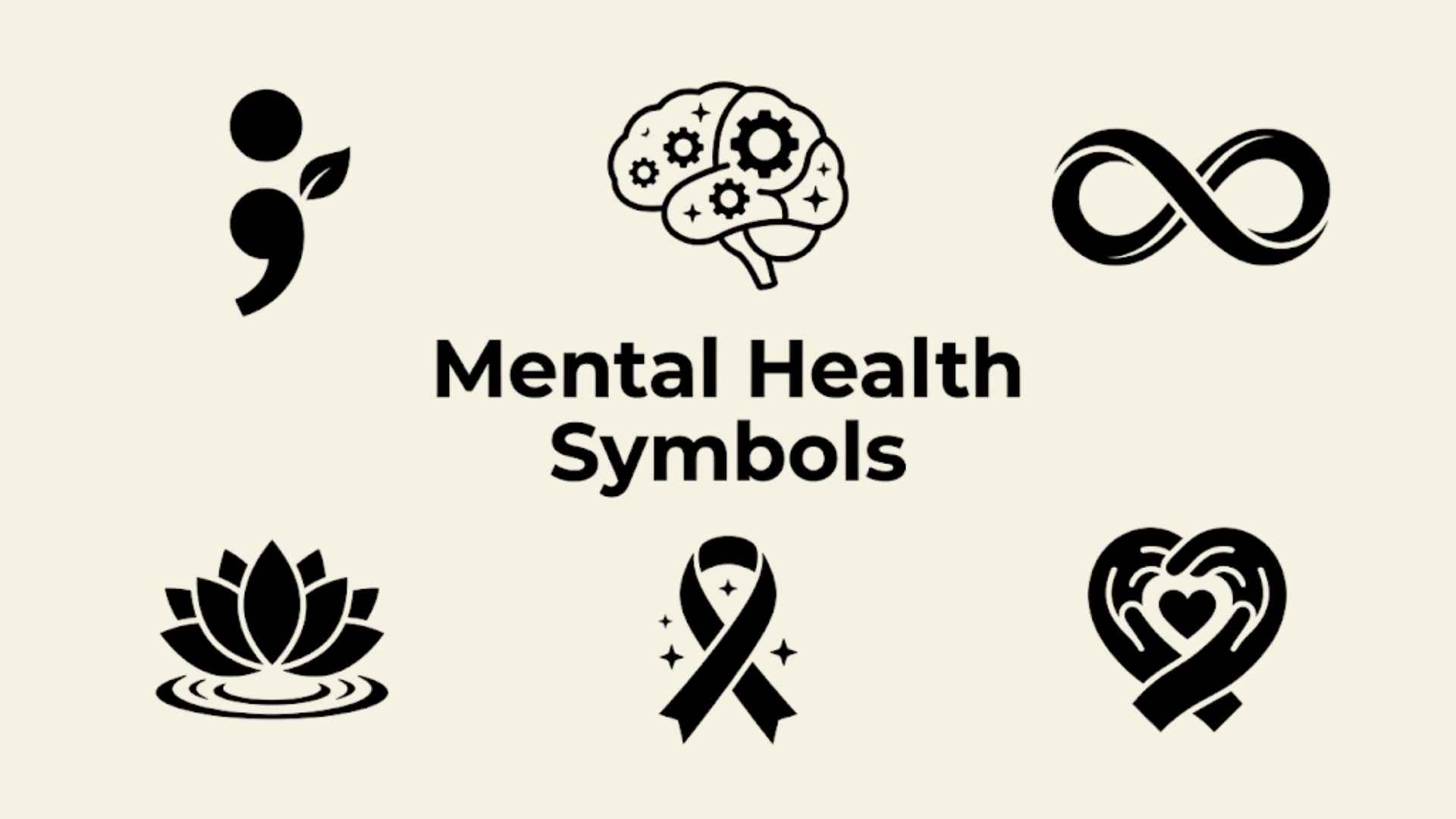
Mental health symbols are visual tools that help people express emotions, represent healing journeys, and spread awareness about psychological well-being. You’ve probably seen a semicolon tattoo on someone’s wrist, a green ribbon on a social media post, or a lotus flower in a therapy office without fully understanding what it meant. These aren’t random images. Each one carries a story, a movement, or a deeply personal message about surviving and healing.
According to the National Alliance on Mental Illness (NAMI), approximately 1 in 5 American adults experiences a mental illness each year. That’s over 50 million people who often struggle to put their pain into words. Symbols fill that gap. They communicate what sentences sometimes can’t.
This guide breaks down every major mental health symbol, its real meaning, cultural roots, and why it matters to so many people across the US and beyond.
What Are Mental Health Symbols?
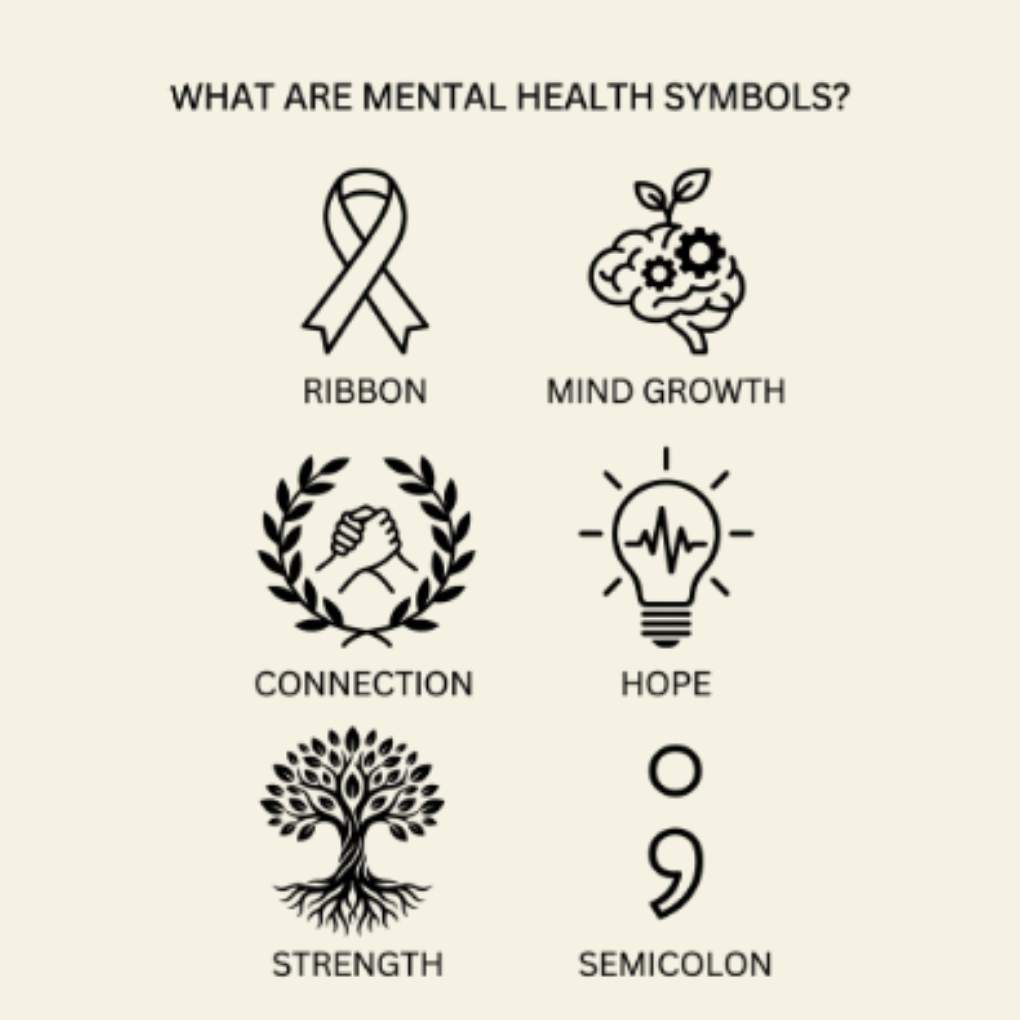
Mental health symbols are images, icons, or visual signs that represent emotional experiences, psychological struggles, healing, and awareness. They’ve existed in human culture for thousands of years, long before mental health had a clinical name.
Ancient civilizations carved symbols into stone to represent life, suffering, and renewal. Indigenous communities used circular imagery to express balance between mind, body, and spirit. Over time, modern mental health movements adopted and created new symbols to start conversations, reduce stigma, and give people a way to identify with their own experiences.
Today, these symbols appear in tattoos, awareness campaigns, therapy offices, fashion, and social media. The turning point for modern mental health symbolism came in 2013, when Amy Bleuel founded Project Semicolon, a movement that used a single punctuation mark to represent suicide prevention and the choice to keep living. That moment showed the world how powerful a small symbol could be.
Mental Health Symbols And Meanings
Understanding mental health symbol meanings starts with recognizing that no symbol means just one thing. Meaning depends on personal experience, cultural background, and context. A butterfly might represent transformation for one person and recovery from self-harm for another.
Mental Health Symbols Tattoos
Mental health tattoos are one of the most personal ways people connect with these symbols. Unlike a ribbon pinned to a shirt, a tattoo is permanent. It says, “This is part of my story, and I’m not hiding it.”
Popular choices include the semicolon (survival), butterfly (transformation), lotus (rising above struggles), and anchor (emotional stability). People place them on wrists, forearms, ankles, and behind ears, often in spots they can see when they need a reminder.
Before getting one, think about what the symbol means to you specifically, not just what it means online. The best mental health tattoo is the one that reflects your own healing journey.
Symbols Of Mental Health Recovery
Recovery symbols focus on moving forward, not just surviving. The phoenix is probably the strongest recovery symbol because it literally rises from ashes. Other powerful recovery symbols include the rising sun (a new beginning), broken chains (freedom from emotional burdens), and kintsugi-inspired designs (the Japanese art of repairing broken pottery with gold, representing beauty found through healing).
These symbols don’t pretend the struggle never happened. They honor it while pointing toward something better.
Mental Health Symbols Copy Paste
For quick sharing on social media or in messages, here are commonly used mental health symbols copy paste options:
; ♡ ☀ ♾ 🦋 💚 🌻 🕊️ 🌈
Each carries meaning. The semicolon represents continuation. The green heart signals mental health support. The butterfly signals transformation. These tiny symbols can send powerful messages without saying a word.
Mental Health Tattoos
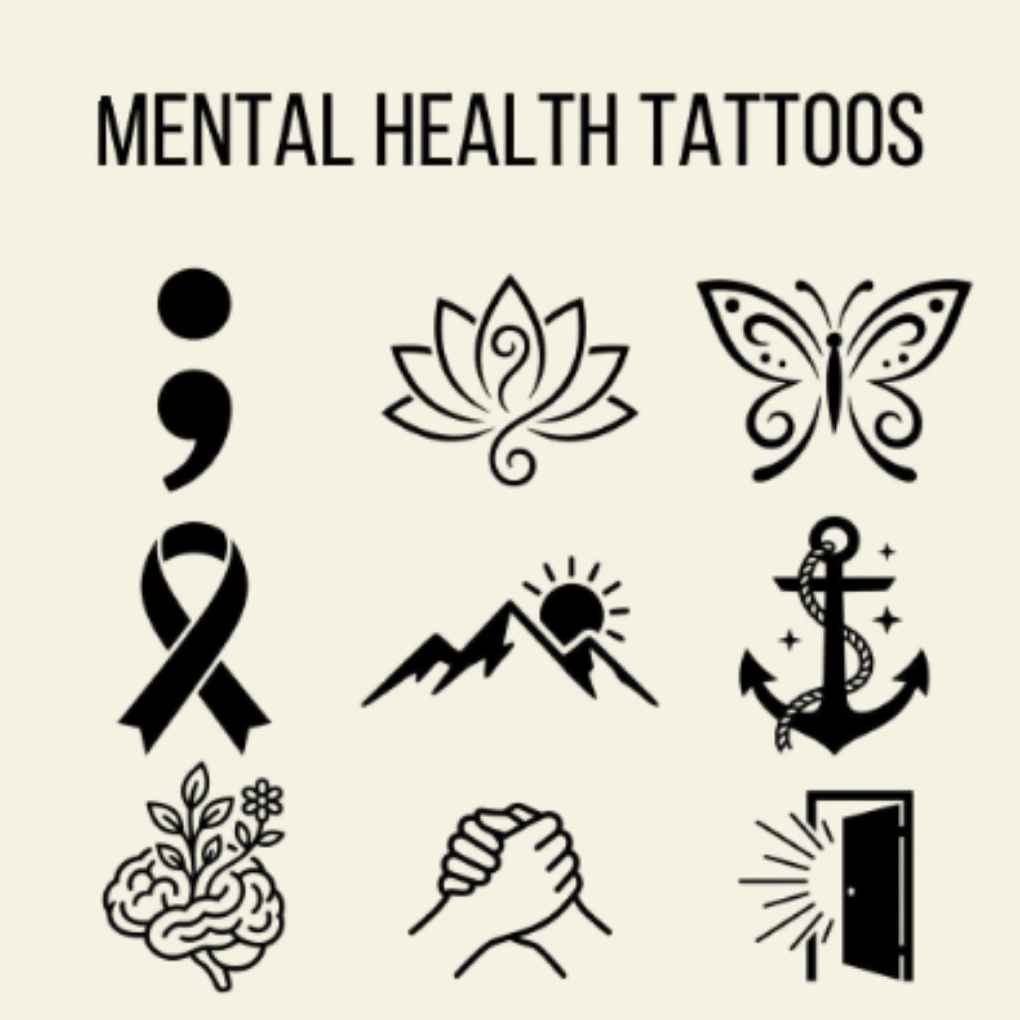
Beyond individual designs, mental health tattoo culture has built real community. When someone sees a semicolon on a stranger’s wrist, there’s an instant, silent recognition. Both people know something real about each other without any conversation.
Tattoo artists across the US now specialize in mental health inspired designs, combining symbols creatively. A semicolon inside a butterfly wing, a lotus growing from an anchor, a phoenix made of watercolor flames. The creativity reflects how personal and layered emotional healing really is.
Mental Health Symbol Emoji
Emojis have become a modern emotional healing symbol language. The 💚 green heart is widely used for mental health awareness. The 🦋 butterfly signals transformation and recovery. The 🌻 sunflower represents optimism and resilience. The ☀️ sun stands for hope and a fresh start.
These small icons let people express support and solidarity in texts, comments, and posts without needing a lengthy explanation. For many younger Americans, emoji are a genuine part of emotional communication.
Mental Health Symbol Drawing
Mental health symbol drawing is used actively in art therapy sessions, school counseling programs, and awareness campaigns. Drawing a symbol yourself, even a simple semicolon or a growing tree, can be therapeutic. It gives form to feelings that don’t have words.
Art therapists often ask clients to draw symbols representing where they are emotionally. Over time, the drawings shift, and that shift becomes visible proof of progress.
Popular Symbols For Mental Health Awareness
Semicolon Symbol Meaning Mental Health
The semicolon mental health meaning is rooted in a literary concept. A semicolon is used when an author could have ended a sentence but chose not to. Amy Bleuel applied this to life itself. The person is the author. The life is the sentence. The semicolon means: I could have stopped here, but I didn’t.
Project Semicolon grew into a global movement specifically focused on suicide prevention and hope for those living with depression and mental illness. The semicolon is now one of the most widely recognized mental health awareness symbols in the United States.
Symbol For Mental Illness
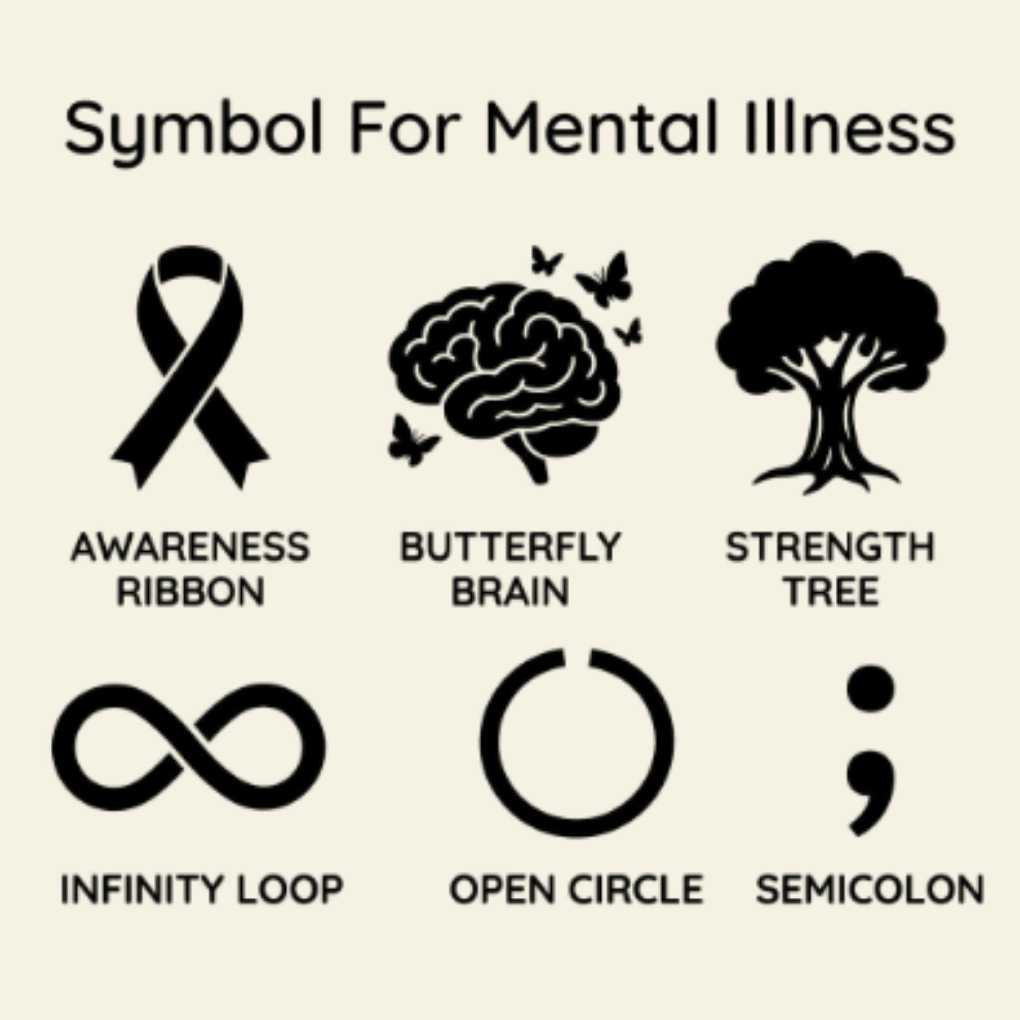
Symbols specifically representing mental illness focus on acknowledging invisible pain. A broken circle represents an incomplete or disrupted state of mind. Storm clouds reflect the weight and unpredictability of mental illness. A fractured heart captures emotional pain that doesn’t show on the outside.
These symbols are important because they validate struggles that others can’t see. They say: “This is real. This deserves care.”
Symbols For Mental Health Awareness
The green ribbon is the primary symbol for mental health awareness in the United States, championed by organizations like NAMI and Mental Health America. Green represents growth, renewal, and balance, qualities that align with the goals of mental wellness advocacy.
Mental Health Awareness Month in May and World Mental Health Day on October 10th both use consistent symbolic imagery to encourage open conversations and reduce stigma. Wearing a green ribbon during these periods is a simple but meaningful act of solidarity.
Mental Health Symbolism
Mental health symbolism works because the human brain is wired for pattern recognition and meaning-making. Psychologist Carl Jung identified universal archetypes, recurring symbols that appear across cultures because they reflect shared human experiences. The hero’s journey, the cycle of death and rebirth, the search for light in darkness. These are all psychological frameworks that mental health symbols tap into.
In clinical settings, symbolism plays a real role. Art therapy, sand tray therapy, and EMDR (Eye Movement Desensitization and Reprocessing) all use visual and symbolic tools to help clients process trauma and emotional pain.
Mental Symbols
Lesser-known mental symbols include the triskelion (a three-armed spiral representing forward movement and progress), the yin-yang (emotional balance between opposing forces), and the open mind icon used in modern mental wellness branding. These symbols appear in therapy apps, mindfulness platforms, and wellness clinics across the country.
You May Also Like: 87+ Best Hand Symbols and Their Hidden Meanings Explained in 2026
Symbols Of Mental Health
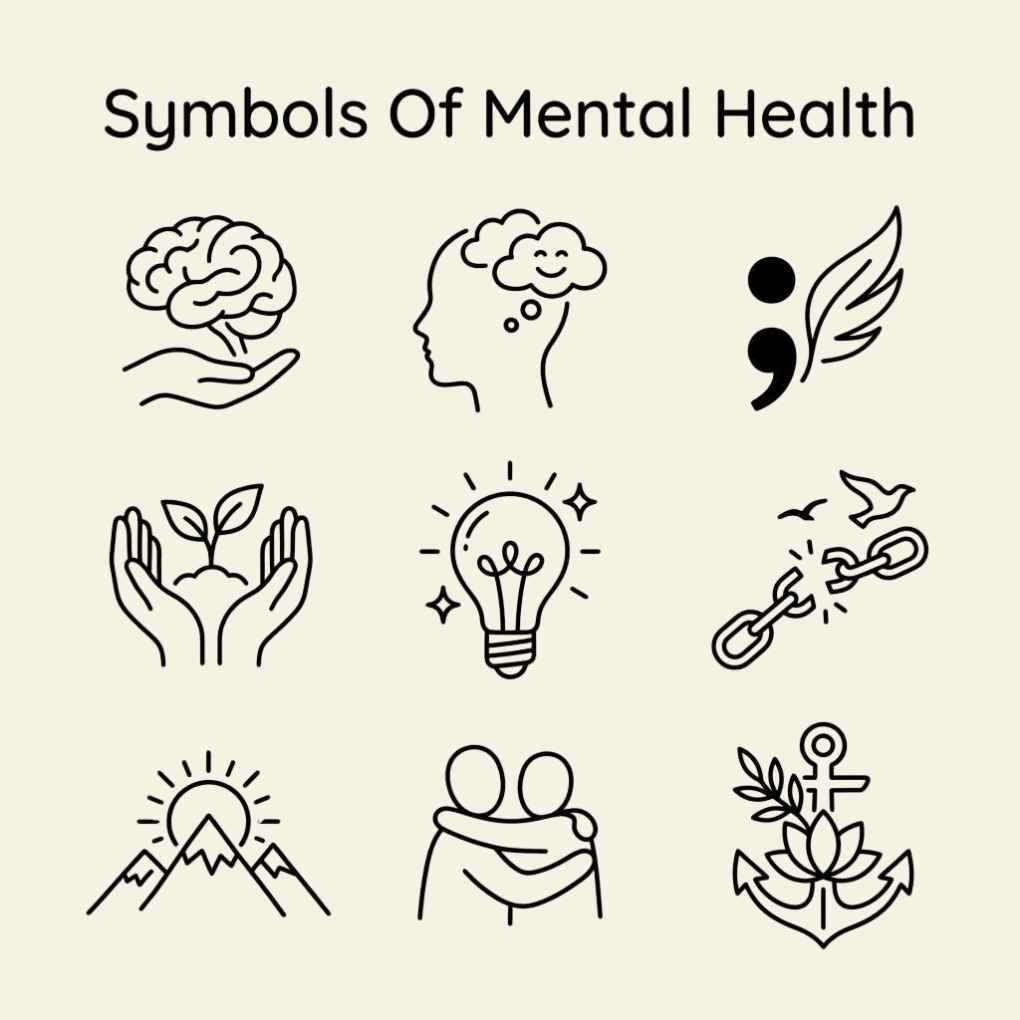
Here’s a quick reference for the most recognized symbols of mental health:
| Symbol | Core Meaning |
| Semicolon | Continuation, suicide prevention |
| Green Ribbon | Mental health awareness |
| Butterfly | Transformation, recovery |
| Lotus Flower | Rising above adversity |
| Anchor | Stability, grounding |
| Phoenix | Rebirth after trauma |
| Infinity | Ongoing healing journey |
| Sunflower | Hope, positivity |
Symbols For Mental Illness
Different conditions have developed their own associated imagery. Anxiety symbols include waves, spirals, and tangled lines that visually represent racing thoughts. Depression symbols include rain clouds, fading candles, and bare winter trees. PTSD is often represented through shattered glass. Bipolar disorder uses split imagery like a sun and moon combined. OCD appears through locked circles and repetitive patterns.
These condition-specific symbols help people feel seen in experiences that are often misunderstood by those around them.
Symbols Of Suffering
Symbols of suffering aren’t negative. They’re honest. Withered flowers, broken wings, and heavy chains have appeared in human art for centuries because acknowledging pain visually is part of processing it. Suppressing struggle doesn’t heal it. Representing it, even symbolically, gives people permission to acknowledge what they’re carrying.
Symbols Mental Health
Mental health awareness ribbon colors carry specific meanings worth knowing:
- Green: General mental health awareness
- Yellow: Suicide prevention
- Teal: Anxiety disorders
- Orange: ADHD awareness
- Purple: Eating disorder awareness
- Black and White: Bipolar disorder awareness
Symbols For Mental Health
The best symbols for mental health are the ones that resonate personally. Organizations use ribbons and icons for campaigns. Therapists use visual metaphors in clinical work. Individuals use tattoos, jewelry, and artwork for personal expression. There’s no single right symbol. The right one is whichever reflects your experience and gives you strength.
Mental Health Tattoo And Illustration Meanings
Genogram Mental Health Symbols
A genogram is a visual map of family relationships used by therapists and counselors to identify emotional patterns, trauma history, and relational dynamics across generations. It uses a specific set of symbols:
- Square: Male family member
- Circle: Female family member
- Horizontal line: Relationship/marriage
- Double horizontal line: Close/enmeshed bond
- Jagged line: Conflicted relationship
- Dotted line: Distant relationship
- X through symbol: Deceased member
Genogram symbols are clinical tools that help therapists see how trauma and emotional patterns pass through families. They’re not decorative, but they’re deeply meaningful in the context of psychological recovery.
Men’s Mental Health Symbols
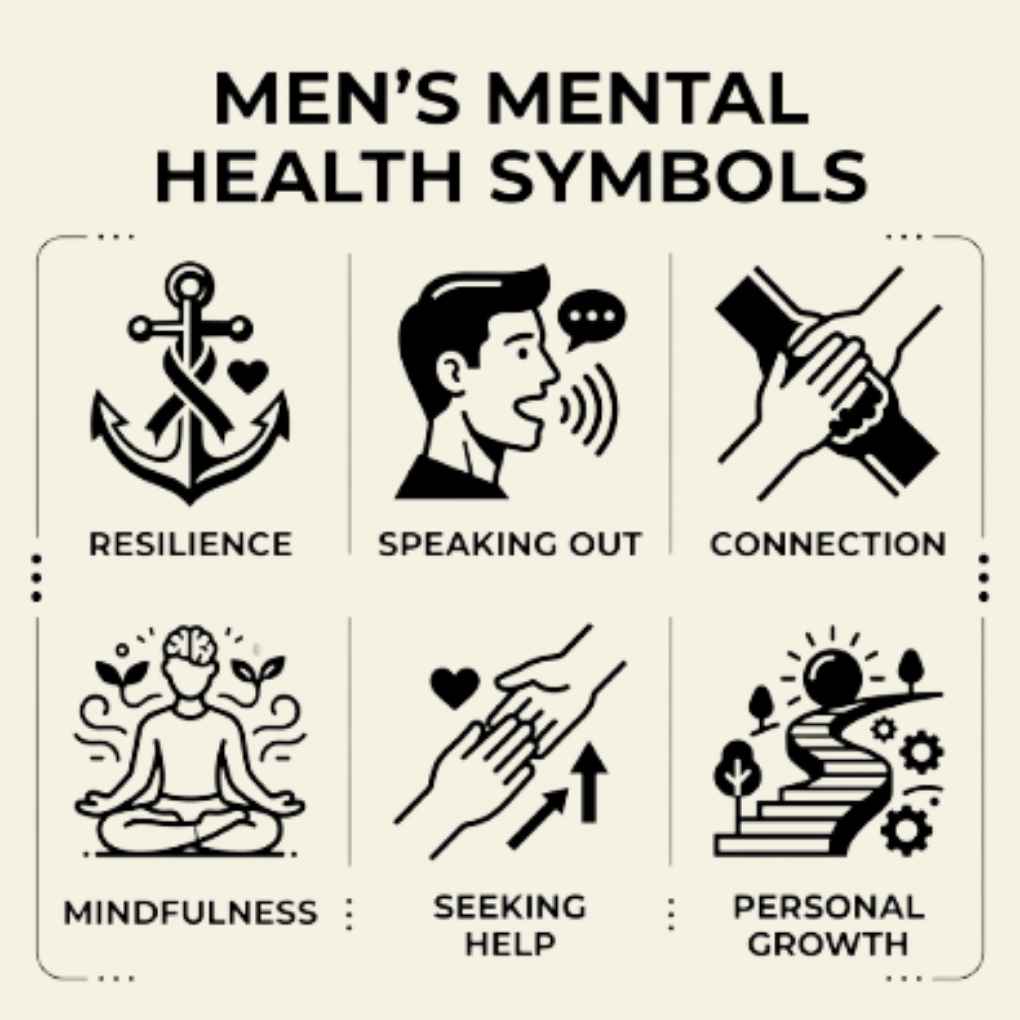
Men’s mental health carries unique challenges in American culture. Stigma around vulnerability means men are less likely to seek help. According to the CDC, men account for nearly 80% of suicide deaths in the United States. Symbols that resonate with men tend to focus on strength and resilience: lions, wolves, anchors, mountains, and broken chains.
These emotional resilience symbols reframe seeking help as strength, not weakness. Campaigns like “Man Therapy” and “Movember” have used strong visual symbolism to reach men who might otherwise dismiss mental health conversations.
Tattoos Mental Health Symbols And Meanings
| Symbol Tattoo | Common Placement | Meaning |
| Semicolon | Wrist, behind ear | Survival, continuing life |
| Phoenix | Back, shoulder | Rebirth after trauma |
| Butterfly | Collarbone, ankle | Transformation, recovery |
| Anchor | Forearm, wrist | Stability during hard times |
| Lotus | Ankle, ribcage | Rising above struggles |
| Infinity | Wrist, finger | Endless healing journey |
Depression Mental Health Symbols
Depression awareness symbols include the gray ribbon, rain clouds, fading candles, and bare winter trees. These images resonate with people living with depression because they capture the heaviness, the emptiness, and the sense of waiting for things to change.
Representing depression visually helps people communicate something that feels impossible to explain out loud. It reduces isolation by saying: “You’re not the only one who feels this way.”
Positive Mental Health Symbols
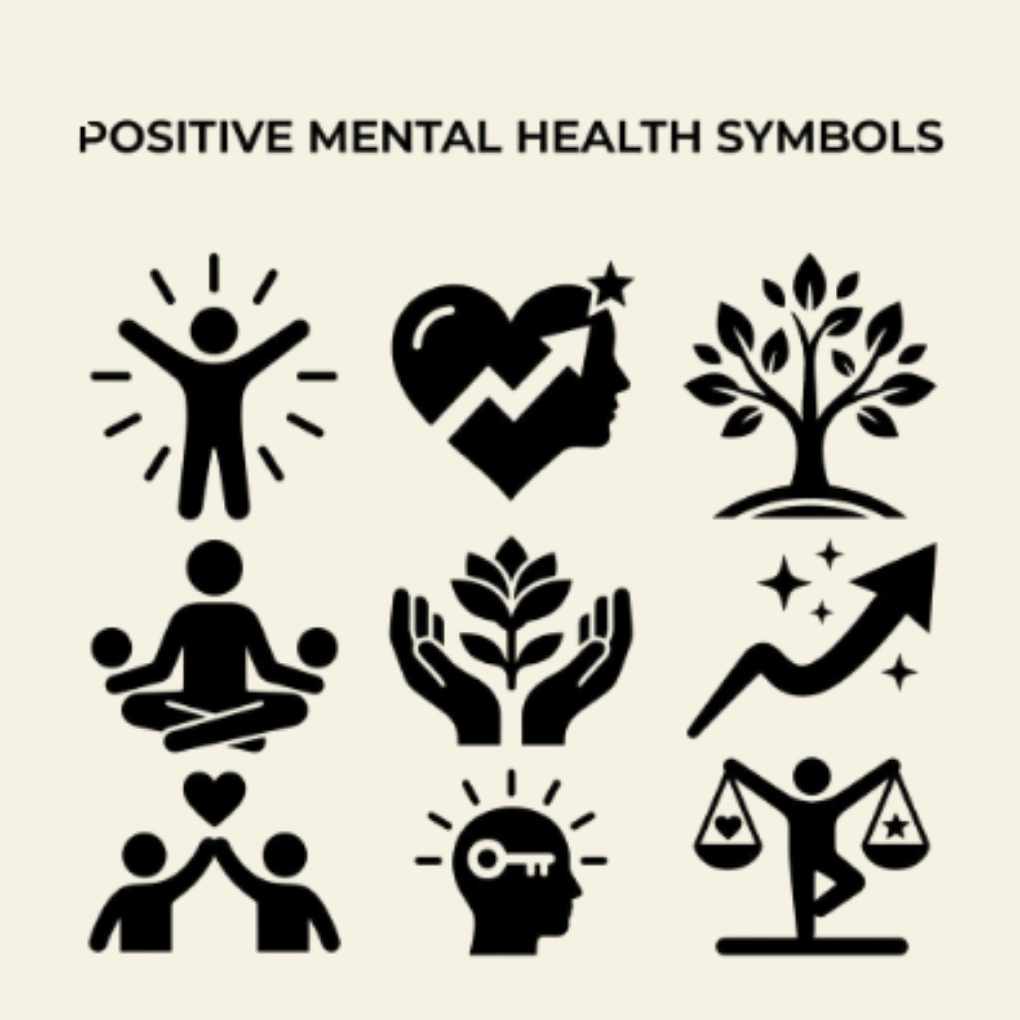
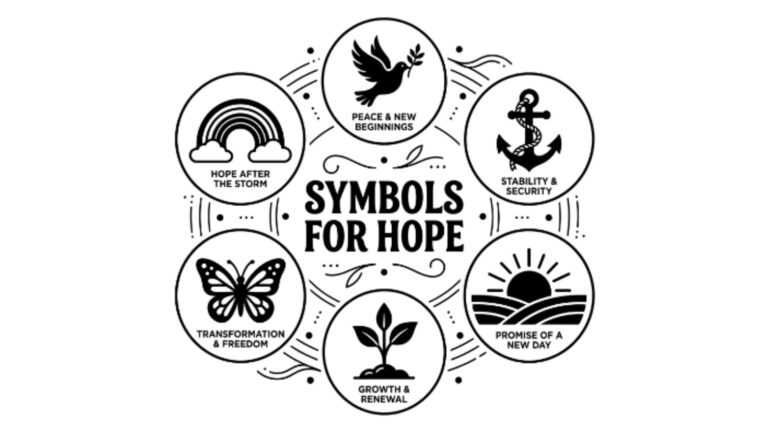
Positive mental health symbols include sunshine, rainbows, growing seedlings, open hands, and trees with deep roots. These focus on hope, emotional balance, and forward movement. They’re not about ignoring pain but about reminding yourself that growth is still happening, even when it’s slow.
Anxiety Mental Health Symbols
Anxiety symbols often visualize the internal experience of the condition: crashing waves for feeling overwhelmed, tangled threads for racing thoughts, and spirals for the loop of anxious thinking. Grounding symbols used in anxiety therapy include the anchor and the tree with visible roots, both representing connection to the present moment.
Childhood Mental Health Symbols
According to the CDC, 1 in 6 US children between ages 2 and 8 has a diagnosed mental, behavioral, or developmental disorder. Age-appropriate symbols for children include smiling suns, rainbows, open hearts, and friendly trees. These designs appear in school counseling materials, children’s books, and therapy offices. Simple, bright imagery helps children name their emotions safely without feeling overwhelmed.
Deep Symbolic Meaning
Spiritual Level
On a spiritual level, mental health symbols represent transformation of the soul. The lotus growing through mud reflects spiritual purity emerging from suffering. The phoenix connects to ideas of spiritual rebirth found in cultures worldwide. The infinity symbol echoes the spiritual belief that healing is eternal, not finite.
Psychological Level
Psychologically, symbols make invisible experiences visible. Carl Jung’s work on archetypes showed that certain images carry universal emotional weight. When someone with depression sees a storm symbol, something clicks internally. The symbol says what their mind has been trying to communicate. That recognition is genuinely therapeutic.
Cultural Level
Across American subcultures, healing symbols vary but share common themes. Indigenous medicine wheels represent emotional, physical, mental, and spiritual balance. Eastern mandalas center the mind during stress. Western green ribbons build collective awareness. Different forms, same fundamental need: to make meaning out of suffering.
Types and Variations of Mental Health Symbols
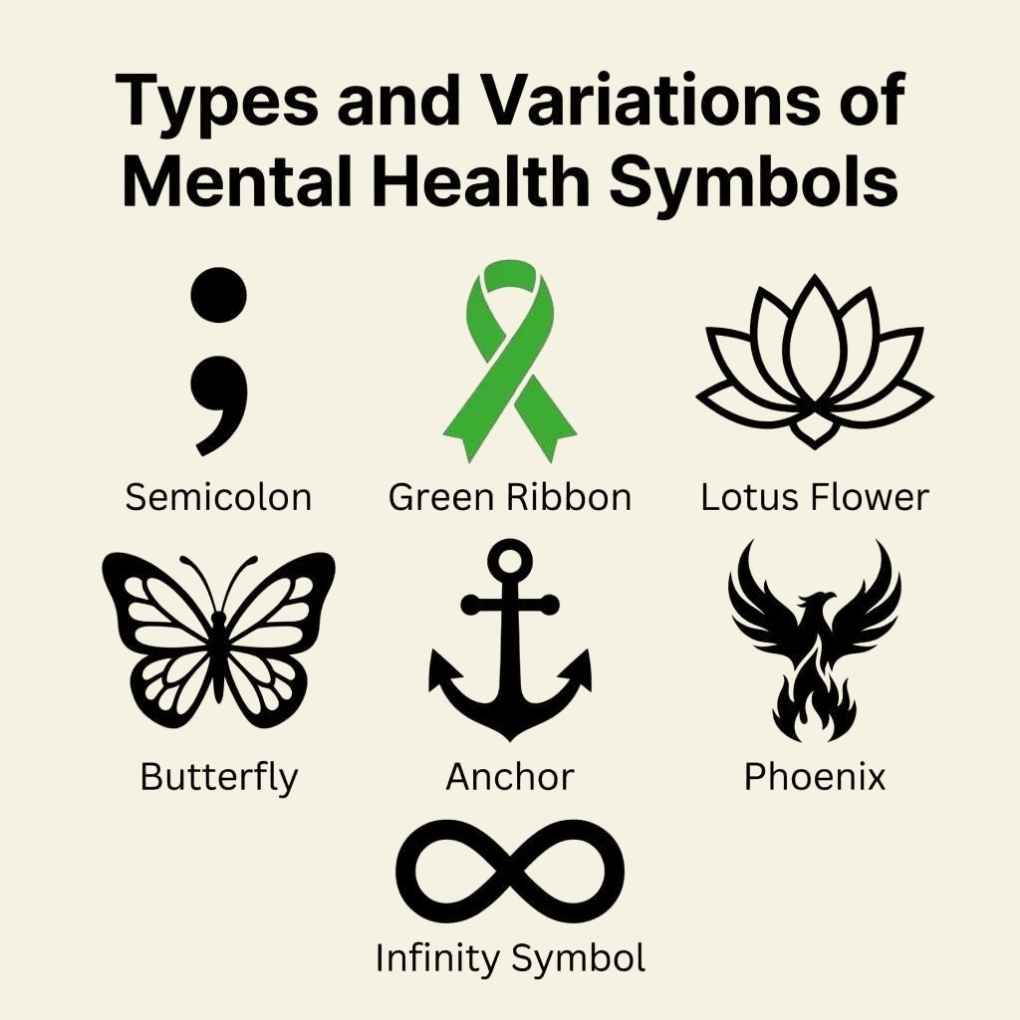
1. Semicolon
Suicide prevention, continuation of life. Founded by Amy Bleuel in 2013.
2. Green Ribbon
Mental health awareness and advocacy. Green represents renewal and growth.
3. Lotus Flower
Spiritual and emotional transformation. Grows through muddy water to bloom beautifully.
4. Butterfly
Personal transformation and recovery, particularly connected to self-harm recovery communities.
5. Anchor
Emotional stability and grounding during mental health storms.
6. Phoenix
Trauma recovery and rebirth. Rising from complete destruction into something new.
7. Infinity Symbol
Used widely in neurodivergent and bipolar disorder communities to represent the continuous, non-linear nature of healing.
Mental Health Symbols Across Cultures
Ancient Egypt
The ankh represented eternal life and balance. The Eye of Horus symbolized protection and healing of the mind.
Eastern Traditions
The lotus in Buddhism represents enlightenment rising from suffering. The Om symbol is used in mindfulness practices for emotional balance and inner peace.
Greek Mythology
Psyche, the goddess of the soul, gives us the root word for psychology. The Caduceus represents healing and medicine.
Indigenous Cultures
The medicine wheel represents harmony between mental, physical, emotional, and spiritual health. Talking circles create symbolic safe spaces for emotional expression.
Modern Western Culture
The semicolon and green ribbon dominate, supported by digital campaigns, awareness months, and mainstream media coverage.
Mental Health Symbols in Art, Movies and Pop Culture
Movies: Films use visual metaphors to represent psychological states. Butterflies appear in “Black Swan” to signal transformation and obsession. “A Beautiful Mind” uses visual distortion to represent schizophrenia.
Paintings: Edvard Munch’s “The Scream” remains one of the most iconic images of psychological anguish in art history. Artists have always used color, form, and symbol to externalize internal states.
Books: Sylvia Plath’s “The Bell Jar” uses the bell jar itself as a depression symbol, representing suffocation and isolation. Weather, seasons, and animals are frequently used as emotional metaphors in literary fiction.
Tattoos: Tattoo culture has turned mental health awareness tattoos into a living art movement. The community aspect is real. Seeing a stranger’s semicolon creates an unspoken bond.
Fashion: Green ribbon pins, semicolon jewelry, and awareness merchandise have entered mainstream American fashion, helping normalize conversations about emotional wellness.
Spiritual and Dream Meaning of Mental Health Symbols
When these symbols appear in dreams, they often carry messages from the subconscious. A butterfly in a dream can signal that personal transformation is underway. A lotus suggests healing is beginning. An anchor appearing in a dream might reflect a need for emotional stability in waking life.
From a Jungian perspective, these are archetypal images the subconscious uses to process emotional experiences. Paying attention to them can offer real insight into unresolved feelings and hidden emotional needs.
Positive vs Negative Meaning
Every powerful mental health symbol holds both darkness and light. The semicolon acknowledges that someone considered ending their story. The phoenix only rises after burning. The lotus only blooms because of the mud.
This duality isn’t a flaw. It’s what makes these symbols true. They don’t offer toxic positivity. They say: “The hard part happened, and you’re still here.” That honest combination of pain and hope is exactly why these symbols resonate so deeply.
Why Humans Are Attracted to These Symbols
Humans are naturally drawn to symbolic representation of feelings because the brain is wired for pattern recognition and meaning-making. A single image can communicate an entire emotional experience faster than a paragraph of text.
Symbols also create community. When you wear a green ribbon or a semicolon tattoo, you’re saying something to everyone who recognizes it. That shared language builds connection and reduces the isolation that so often accompanies mental illness.
On a personal level, choosing a symbol becomes part of your identity and your healing narrative. It reinforces the story you’re telling yourself: that you’re strong, that you’re healing, that your struggle has meaning. That kind of personal empowerment is genuinely therapeutic.
Conclusion
Mental health symbols are far more than decorative images. They’re a language developed by millions of people who needed a way to express what words couldn’t capture. Every semicolon, every green ribbon, every lotus flower represents someone’s real experience of pain, survival, and healing.
Whether you’re drawn to these symbols for personal reasons, creative expression, or simply wanting to better understand the people around you, knowing their meanings deepens your connection to one of the most important conversations of our time. Your healing journey deserves a symbol that speaks to exactly where you are and where you’re headed.

Mubeen is a passionate writer at Auramegazine who explores symbolism, hidden meanings, and powerful signs behind everyday symbols. He enjoys creating simple, engaging content that helps readers understand deeper meanings and cultural connections.