87+ Popular Sanskrit Symbols That Can Transform Your Life in 2026
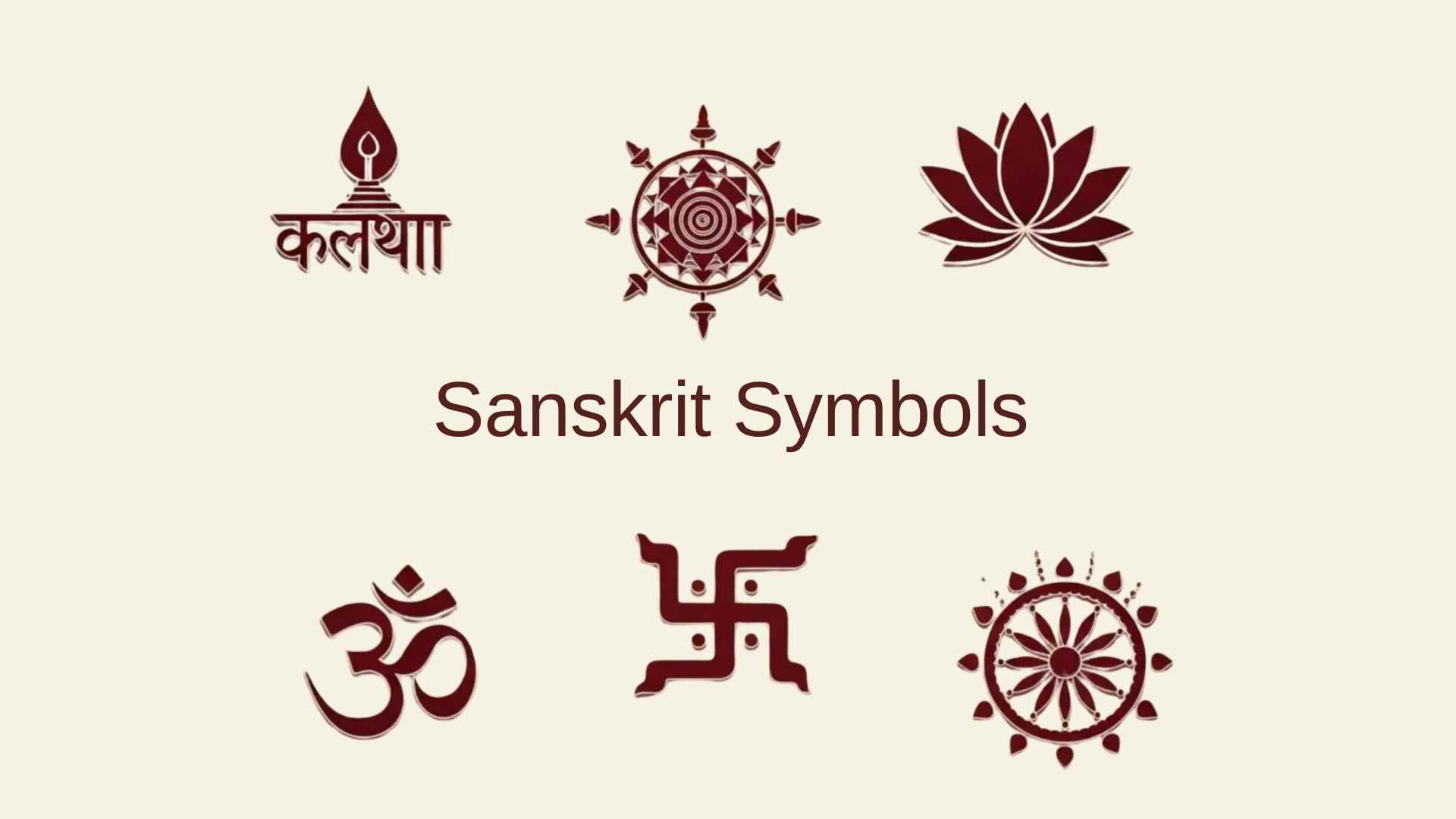
Sanskrit symbols are among the most powerful sacred signs ever created by human civilization, carrying spiritual wisdom that has survived over 5,000 years. Whether you’ve seen the Om symbol on a yoga mat, spotted a lotus tattoo at the gym, or felt drawn to a mandala on someone’s wall, you’ve already experienced the quiet pull of these ancient signs. They’re not just decorative. They carry meaning, energy, and a connection to something much bigger than everyday life.
In 2026, millions of Americans are turning to Sanskrit symbols for tattoos, meditation, home decor, and personal transformation. This guide covers 87+ of the most meaningful Sanskrit symbols, their origins, spiritual depth, and how you can use them intentionally in your own life.
What Are Sanskrit Symbols?
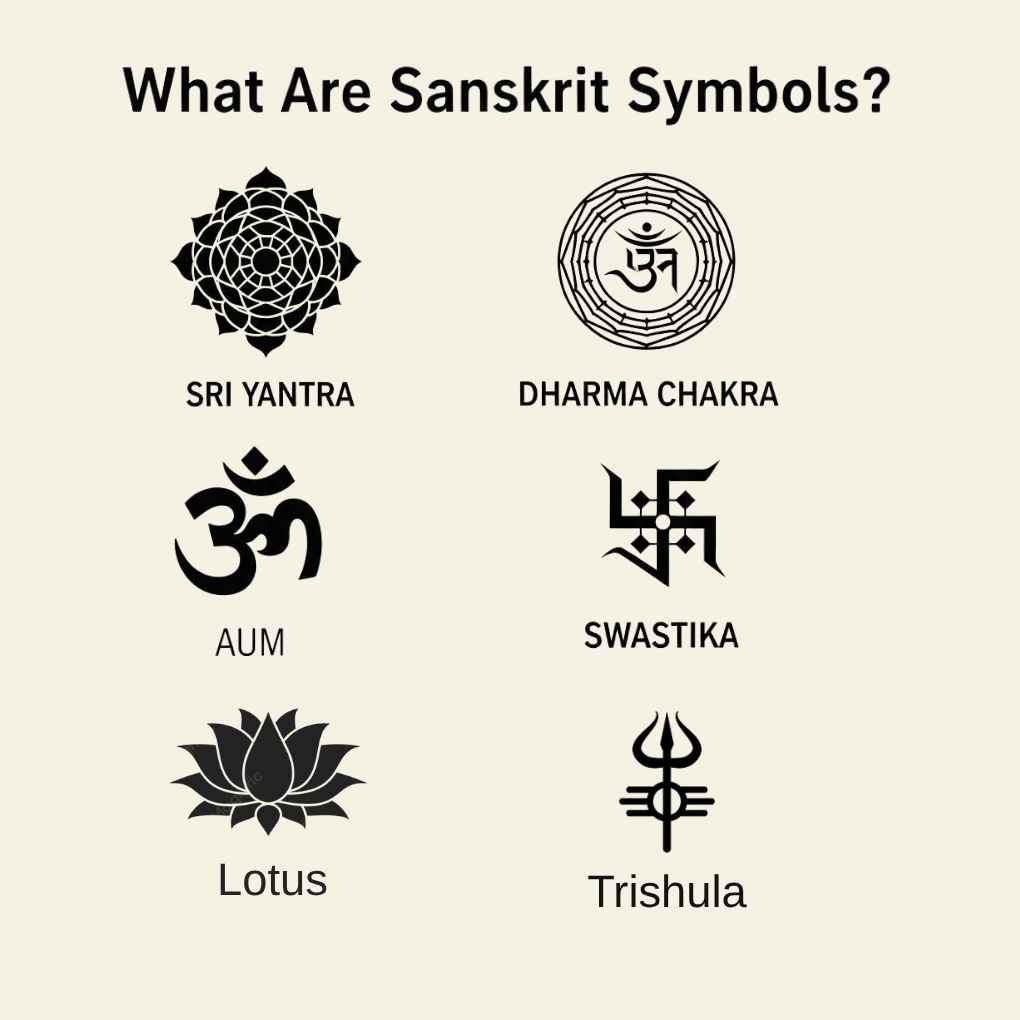
Sanskrit symbols are visual and written signs derived from the Sanskrit language that carry deep spiritual, philosophical, and cultural meanings. Unlike regular letters or logos, these symbols function as sacred tools used in meditation, rituals, healing, and personal transformation. Each symbol holds what ancient traditions call a specific vibrational frequency, a kind of energy that influences the mind and spirit when seen, chanted, or meditated upon.
Sanskrit itself is considered a divine language in Hindu tradition. The word “Sanskrit” means “refined” or “perfected.” Its script, known as Devanagari, is one of the most precise writing systems ever developed. Every symbol in Sanskrit has an intentional structure where the shape, sound, and meaning all work together.
These symbols aren’t limited to Hinduism. They also play a central role in Buddhism and Jainism. Over centuries, they traveled across Asia and eventually reached the Western world through yoga culture, spiritual movements, and global art. Today, millions of Americans use Sanskrit symbols as tools for mindfulness, self-expression, and spiritual growth without always knowing the deep roots behind them.
Ancient Sanskrit Symbols And Their Spiritual Meanings
Ancient Sanskrit symbols weren’t decorative. They were considered living tools for connecting human consciousness with divine energy. Carved into temple walls, written in manuscripts, and used during Vedic rituals, these symbols served as bridges between the physical world and the spiritual one.
When you study these symbols, you quickly realize they’re not random designs. Each one was developed through centuries of spiritual practice and philosophical thought. They represent universal truths that still apply today, things like balance, transformation, breath, and awareness.
Sanskrit Symbols And Meanings
Every Sanskrit symbol carries a layered meaning that works on multiple levels. On the surface, you see a beautiful design. Underneath, there’s a philosophical concept. And deeper still, there’s a vibrational quality that practitioners believe can shift your mental and emotional state.
Here’s a quick reference for some of the most recognized symbols and their core meanings:
| Symbol | Sanskrit Name | Core Meaning | Used In |
| Om | Aum | Universal sound, creation | Hinduism, Buddhism, Yoga |
| Lotus | Padma | Purity, spiritual growth | All Indian traditions |
| Shanti | Shanti | Peace, tranquility | Meditation, prayer |
| Dharma Wheel | Dharmachakra | Righteous path, cosmic law | Buddhism |
| Bindu | Bindu | Sacred point, origin of creation | Tantra, meditation |
These symbols are widely used as Sanskrit meditation symbols, spiritual tattoos, and sacred home decor across the USA.
Buddhist Sanskrit Symbols And Meanings
Buddhism adopted many Sanskrit symbols and gave them new layers of meaning connected to enlightenment, compassion, and the path toward liberation. The Dharma Chakra, or Wheel of Dharma, is one of the most recognized Buddhist Sanskrit symbols. Its eight spokes represent the Eightfold Path taught by the Buddha.
Another powerful set is the Ashtamangala, the eight auspicious symbols of Buddhism. These include the lotus, the endless knot, the parasol, the golden fish, the treasure vase, the victory banner, the dharma wheel, and the conch shell. Together, they represent the complete path to enlightenment and are commonly seen in Tibetan temple art and prayer wheels.
Buddhist communities across the USA, especially Tibetan Buddhist centers in cities like Boulder and San Francisco, use these symbols in daily practice. They’re printed on prayer flags, painted on monastery walls, and incorporated into meditation tools.
Ancient Sanskrit Symbols
Some of the oldest Sanskrit symbols trace back to the Indus Valley Civilization, dating more than 4,000 years. The Swastika, before its tragic misappropriation in the 20th century, was one of these ancient symbols. In its original Vedic context, it represented good fortune, prosperity, and the eternal cycle of life. It appears in Hindu temples and Jain manuscripts as a symbol of auspiciousness and divine blessing.
The Sri Yantra is another deeply ancient symbol. It consists of nine interlocking triangles surrounding a central point called the Bindu. It represents the cosmos, the human body, and the union of masculine and feminine divine energies. Many consider it the most complex and powerful piece of Sanskrit sacred geometry ever designed.
The Trishula, or trident, symbolizes the three aspects of existence: creation, preservation, and destruction. It’s associated with the Hindu god Shiva and represents the mastery of past, present, and future.
Sanskrit Symbol For Life
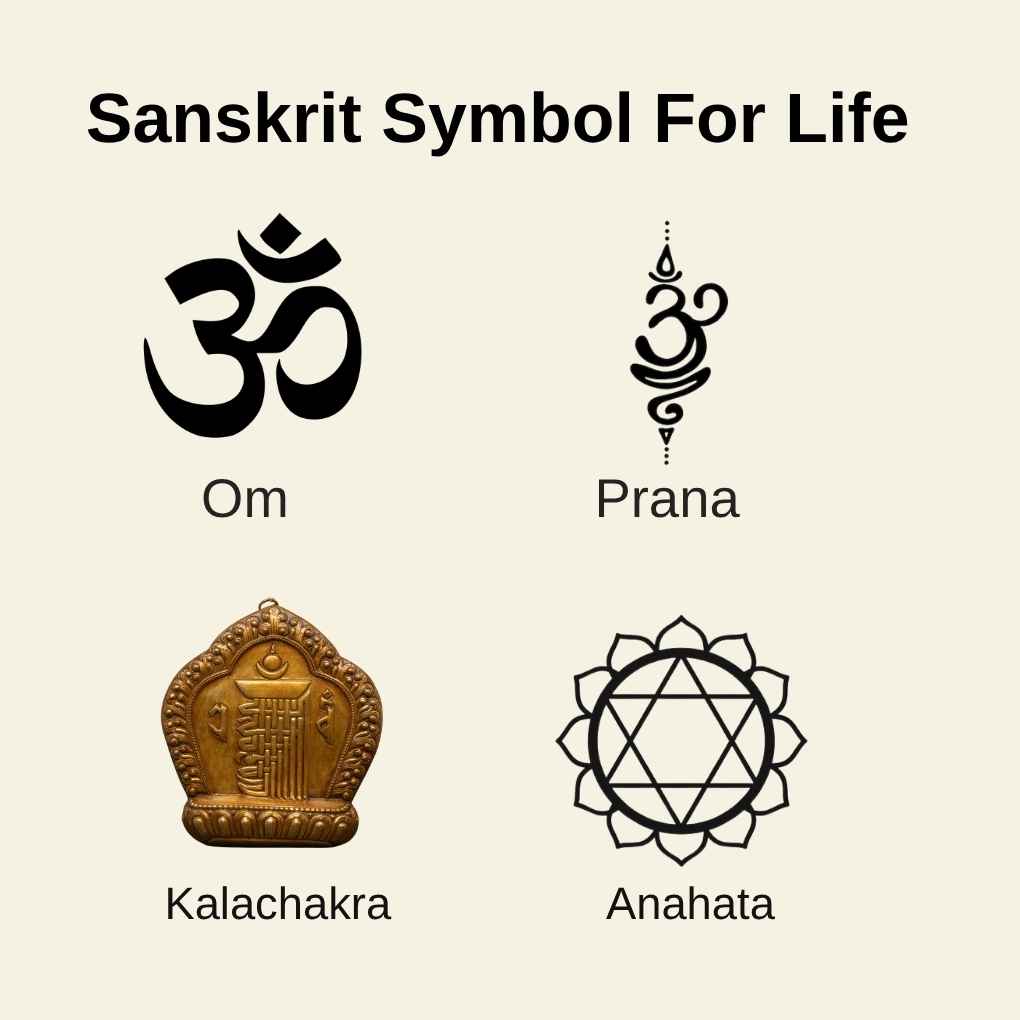
In Sanskrit, the concept of life is deeply connected to Prana, which means life force or vital energy. The symbol associated with Prana represents the breath that sustains all living beings. It’s not just about physical life but the animating energy that flows through everything in the universe.
This symbol appears frequently in Ayurvedic traditions and is used in pranayama (breathwork) practices. In American wellness culture, you’ll find it on everything from yoga studio walls to wellness app icons. People use it as a reminder that life itself is sacred and that conscious breathing is one of the most powerful tools we have.
Sanskrit Symbols For Breathe
The Sanskrit concept of “breathe” connects directly to Prana and the practice of Pranayama, the ancient science of breath control. The symbol associated with breathing represents mindful awareness, the act of slowing down, paying attention, and reconnecting with the present moment.
After the COVID-19 pandemic, “breathe” became one of the most tattooed Sanskrit words in the USA. People used it as a reminder to stay calm, stay grounded, and take life one breath at a time. Its meaning goes far beyond the physical act of inhaling and exhaling. It’s a Sanskrit mindfulness symbol that captures the essence of being present.
Popular Sanskrit Symbols In Tattoos And Modern Design
Sanskrit tattoos have exploded in popularity across the USA over the past two decades. According to tattoo industry data, spiritually themed tattoos consistently rank among the top ten most requested designs, and Sanskrit symbols are a major part of that trend.
Sanskrit Symbols Tattoos
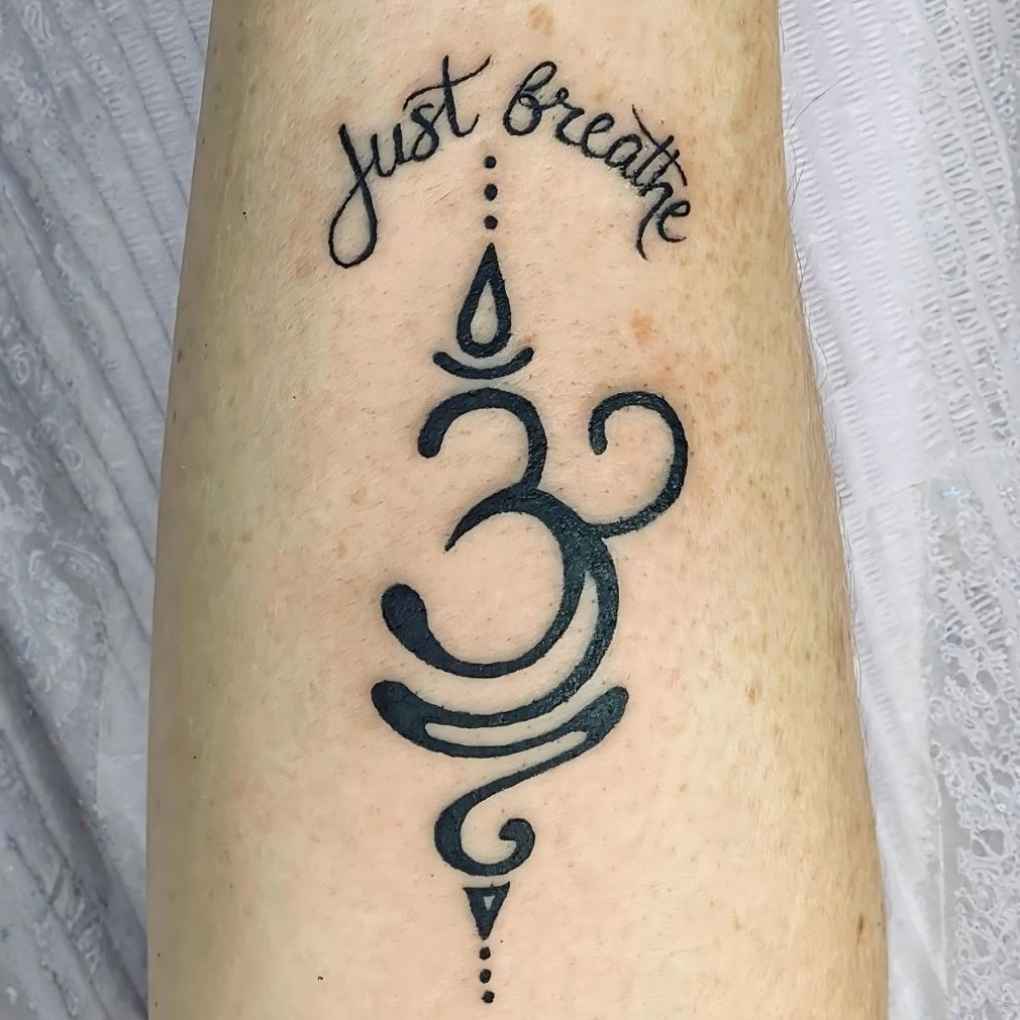
The most popular Sanskrit symbols for tattoos among Americans include Om, Lotus, Shanti (peace), Vira (courage), and Shakti (divine energy). People choose these designs for deeply personal reasons. Some want a daily reminder of their values. Others are honoring a spiritual journey or a difficult chapter they’ve overcome.
Placement matters too. The spine is popular for longer Sanskrit mantras because it aligns with the chakra system. The wrist is common for single symbols like Om or Lotus. The forearm works well for short Sanskrit phrases.
One important thing to know before getting a Sanskrit tattoo is accuracy. Mistranslations in Sanskrit tattoos are surprisingly common. Always verify your chosen symbol or phrase with a credible Sanskrit scholar or verified source before committing it to skin permanently.
Sanskrit Symbols And Meanings Tattoos
Choosing a tattoo symbol means choosing something you’ll carry for life, so the meaning really matters. Someone drawn to Sanskrit symbols for strength might choose “Bala” or connect with the Trishula. Someone seeking inner calm might choose the Shanti symbol or the Om.
It’s also worth approaching these symbols with cultural respect. Sanskrit symbols come from living traditions that millions of people around the world hold sacred. Using them thoughtfully, and understanding what you’re choosing, honors both the symbol and its origins.
Spiritual Sanskrit Symbols
Spiritual Sanskrit symbols used in active practice include the Sri Yantra for abundance and cosmic alignment, the Ajna symbol for the third eye and intuition, and the Gayatri symbol connected to the most sacred Vedic mantra. These are not just decorative. Practitioners use them as focal points during meditation to deepen awareness and access higher states of consciousness.
Sanskrit Symbols Text
Sanskrit symbols have found a strong place in digital design, social media aesthetics, and modern branding. Sanskrit calligraphy art is popular on Instagram and Pinterest, especially in wellness communities. Brands in the yoga, meditation, and holistic health space regularly use Devanagari script in their visual identity to communicate depth, authenticity, and spiritual grounding.
You May Also Like: 75+ Mental Health Symbols & Their True Meanings Explained
Symbols Of Sanskrit
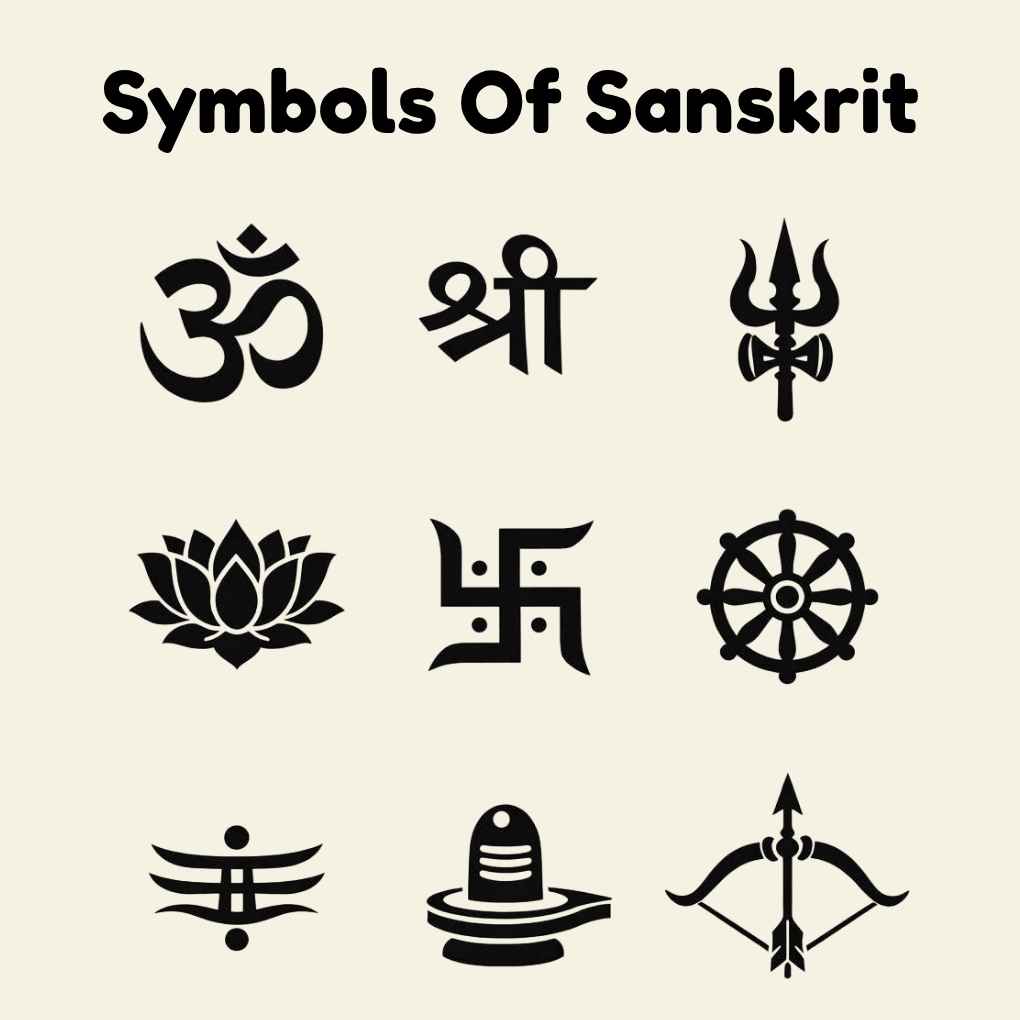
The Sanskrit alphabet itself is symbolic. Each of the 50 letters in Devanagari is considered a Bija mantra, or seed sound. These single-syllable sounds like “Hreem,” “Shreem,” and “Kleem” are believed to carry concentrated spiritual energy. Meditating on a Bija mantra or its written form is considered one of the fastest paths to mental clarity and spiritual awakening in Tantric traditions.
Sanskrit Symbols Meaning
Every symbol in Sanskrit carries meaning across three dimensions: spiritual, psychological, and cultural. Spiritually, they represent divine qualities. Psychologically, their shapes influence emotional states. Culturally, they carry identity and continuity across generations.
Sanskrit Symbol For Balance
The Sanskrit concept of balance is expressed through “Sama,” meaning equality and evenness. For American readers, it’s somewhat similar to the concept behind Yin-Yang, but rooted in Vedic philosophy. The Sanskrit symbol for balance is widely used in yoga therapy, counseling spaces, and home interiors as a visual reminder to stay centered.
Breathe Sanskrit Symbol
The Breathe symbol deserves its own focus in design contexts because it’s become a cultural touchstone in American wellness. You’ll find it on phone cases, wall art, coffee mugs, and yes, countless tattoos. Its simplicity makes it accessible. Its meaning makes it enduring.
Deep Symbolic Meaning
Sanskrit symbols work on three distinct levels. Spiritually, they are considered gateways to higher consciousness. Ancient practitioners believed that focusing on a symbol could align your personal energy with universal energy, creating a state of deep peace and clarity.
Psychologically, these symbols tap into the brain’s natural response to patterns and symmetry. Research in environmental psychology shows that geometric and symmetrical patterns reduce cortisol levels and promote a sense of calm. Sanskrit symbols, many of which are built on sacred geometry, naturally trigger this response.
Culturally, they act as threads connecting generations. In many Indian American families, the Om symbol is displayed in homes as both a spiritual anchor and a cultural identity marker. These symbols carry memory, belonging, and continuity.
Types / Variations of Sanskrit Symbols
Om Symbol
The Om symbol meaning goes deeper than most people realize. Its three curves represent the waking state, the dreaming state, and the deep sleep state. The semicircle represents Maya, or illusion, and the dot above represents the state of pure consciousness beyond all illusion. Chanting Om is said to synchronize the mind and body with the vibration of the universe.
Lotus Symbol
The lotus symbol meaning resonates strongly with modern American audiences because it represents resilience. The lotus grows in muddy water but blooms into something perfectly clean and beautiful. It’s a symbol for anyone who has come through hardship and emerged stronger.
Swastika Symbol
The original Hindu Swastika is a symbol of good fortune and divine blessing with over 6,000 years of history. Its misuse by the Nazi regime in the 20th century created a painful and lasting association that has largely overshadowed its original meaning in Western cultures. Understanding this history matters because it shows how symbols can be transformed by human action, for better or worse.
Chakra Symbols
The seven chakra symbols each carry a Sanskrit name and represent specific energy centers in the human body. From Muladhara (root/stability) to Sahasrara (crown/spiritual connection), these symbols are central to yoga therapy and energy healing practices across the USA.
Mandala
The word Mandala comes from the Sanskrit root meaning “circle.” These intricate geometric designs represent the universe, wholeness, and the interconnected nature of all life. Swiss psychologist Carl Jung famously studied mandalas and concluded they represent the human psyche’s drive toward wholeness, which helps explain their massive appeal in Western art therapy.
Sanskrit Symbols Across Cultures
From ancient India, Sanskrit symbols traveled to Tibet, Southeast Asia, Japan, and eventually the Western world. In Thailand and Bali, they appear in temple architecture blended with local artistic traditions. In Japan, a form of Sanskrit script called Siddham is used in Buddhist rituals.
In the USA, they arrived primarily through the yoga movement of the 20th century and have since become mainstream in wellness culture.
Sanskrit Symbols in Art, Movies & Pop Culture
Sanskrit symbols appear in blockbuster films like Doctor Strange, where mandala imagery is used to represent mystical power. Fashion brands like Spiritual Gangster have built entire aesthetics around Sanskrit-inspired design.
Social media has accelerated this spread, with Pinterest boards and Instagram accounts dedicated entirely to Sanskrit calligraphy and symbol art reaching millions of followers.
Spiritual & Dream Meaning of Sanskrit Symbols
Seeing Sanskrit symbols in dreams often signals that your subconscious is seeking something: peace, transformation, or clarity. Dreaming of Om suggests a need for realignment.
A lotus in a dream often represents personal growth emerging from a difficult period. Jungian psychology would describe these as archetypes, universal symbols that speak to the deeper layers of human consciousness.
Positive vs Negative Meaning
Most Sanskrit symbols carry positive meanings centered on peace, protection, and enlightenment. However, context and intent matter. The Swastika story is the clearest example of how a deeply positive symbol can be weaponized and distorted. This is a reminder to research any symbol before using it, especially permanently in a tattoo.
Why Humans Are Attracted to This Symbol
Humans are hardwired to respond to patterns, shapes, and symbols. Sanskrit symbols combine visual harmony with ancient meaning, which creates a powerful emotional pull. They also speak to something universal: the search for peace, purpose, and connection. In a fast-moving, often overwhelming modern world, these timeless symbols offer a moment of stillness and a sense of something larger than ourselves.
Conclusion
Sanskrit symbols are far more than beautiful designs. They’re living expressions of some of humanity’s deepest wisdom. From the Om symbol echoing the sound of the universe to the lotus rising from muddy water, each symbol carries a story worth knowing.
Whether you’re drawn to them for spiritual growth, a meaningful tattoo, or simply the beauty of ancient design, taking the time to understand what they truly mean will make your connection to them far richer. Choose your symbol with intention and let it remind you every day of the truth you already carry within.

Mubeen is a passionate writer at Auramegazine who explores symbolism, hidden meanings, and powerful signs behind everyday symbols. He enjoys creating simple, engaging content that helps readers understand deeper meanings and cultural connections.