45+ Mexican Symbols and Their Powerful Hidden Meanings
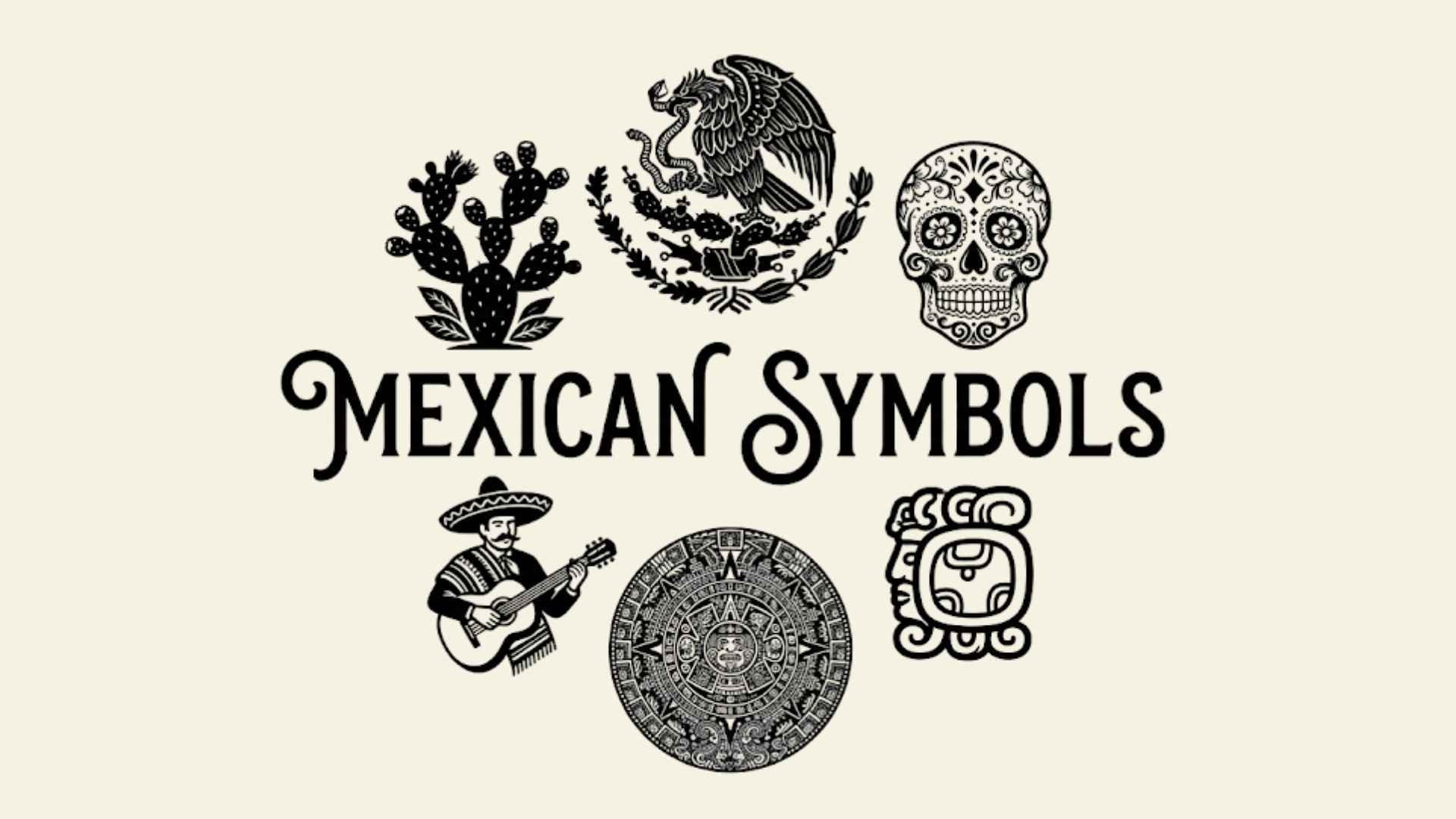
Mexican symbols are powerful visual expressions of one of the world’s richest and most layered cultures. From ancient Aztec carvings to the vibrant sugar skulls you see every November, these symbols tell stories that span thousands of years. Whether you’re Mexican-American reconnecting with your roots, a history buff, or just curious, understanding these symbols opens a whole new window into Mexican identity, spirituality, and heritage.
Let’s dive deep into the most iconic, sacred, and meaningful Mexican symbols and what they truly represent.
What Are Mexican Symbols?
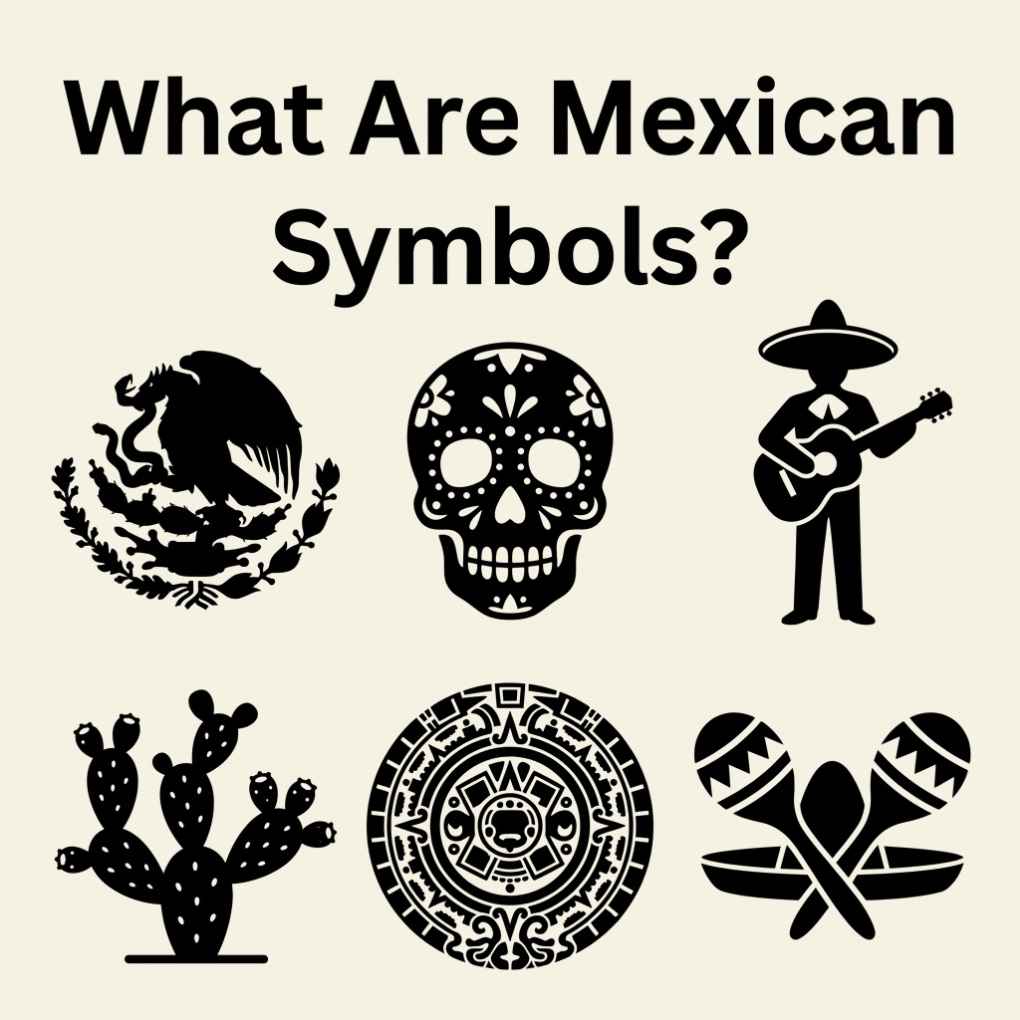
Mexican symbols are visual images, icons, animals, and objects that carry deep cultural, spiritual, or historical meaning within Mexican tradition. They come from multiple civilizations, including the Aztec, Mayan, Olmec, and Zapotec cultures, and were later shaped by Spanish colonialism and Catholic influence.
These symbols aren’t just decorations. They were used in temples, codices, ceremonies, and everyday life to communicate beliefs about the cosmos, the gods, life, death, and identity. Today, they continue to represent Mexican cultural identity on a global scale.
Over 38 million Americans identify as Mexican or Mexican-American, according to the U.S. Census Bureau. For many of them, these symbols are a daily reminder of ancestral wisdom and cultural pride.
Most Famous Mexican Symbols And Their Meanings
Some Mexican symbols have crossed borders and become globally recognized. Here are the most iconic ones and what they really mean.
Mexican Flag Meaning
The Mexican flag is one of the most powerful national symbols of Mexico. Its three vertical stripes carry deep meaning: green represents hope and independence, white stands for unity and purity, and red honors the blood of national heroes.
At the center sits the coat of arms, which features an eagle perched on a cactus devouring a serpent. This image comes directly from Aztec mythology and connects modern Mexico to its pre-Columbian roots.
The flag was officially adopted in 1968, though its symbols date back centuries. It’s a daily reminder that modern Mexico stands on the foundation of ancient civilizations.
Eagle And Snake Symbol
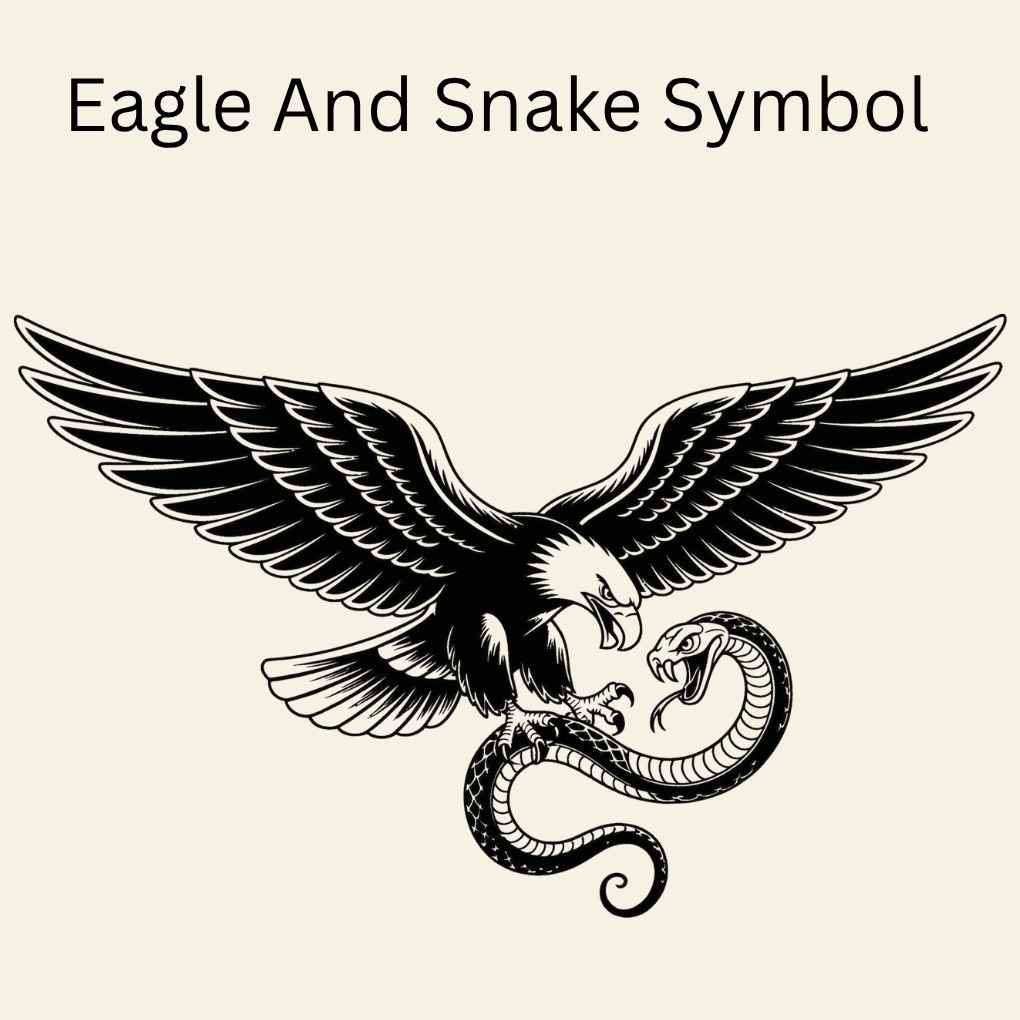
The eagle and snake is one of the most important ancient Mexican symbols you’ll ever encounter. According to Aztec legend, the god Huitzilopochtli told the Aztec people to build their city where they found an eagle eating a serpent on a cactus. They found it on an island in Lake Texcoco, and that’s where they built Tenochtitlan, now Mexico City.
The eagle represents the sun, strength, and divine power. The snake symbolizes the earth, wisdom, and the underworld. Together, they capture the cosmic balance at the heart of Aztec cosmology.
Today this symbol appears on the Mexican flag and national seal, making it one of the most recognized Mexican national symbols worldwide.
Quetzalcoatl (Feathered Serpent)
Quetzalcoatl is arguably the most spiritually significant figure in Mexican mythology. This feathered serpent deity was worshipped by both the Aztecs and the Mayans and represented wind, creation, rain, and divine knowledge.
The name comes from Nahuatl: “quetzal” means precious feather bird, and “coatl” means serpent. Aztec priests believed Quetzalcoatl brought civilization, agriculture, and the arts to humanity.
You’ll find his image carved into the Pyramid of Quetzalcoatl at Teotihuacan and across dozens of ancient temples. In modern Mexican art and tattoos, the feathered serpent remains one of the most powerful Aztec Mexican symbols people use to honor their indigenous heritage.
Aztec Sun Stone Symbol
Often mistakenly called the “Aztec Calendar,” the Aztec Sun Stone is actually a cosmic monument. Carved around 1427 CE, it weighs nearly 25 tons and was dedicated to Tonatiuh, the Aztec sun god.
The stone maps the five “suns” or cosmic eras in Aztec belief, each ending in destruction before a new world begins. It reflects their understanding of cosmic order, time cycles, and humanity’s place in the universe.
This symbol is deeply tied to Mexican ancestral spirituality and continues to appear in everything from tattoos to murals across the US and Mexico.
Sugar Skull Meaning
The sugar skull (calavera) is one of the most recognized symbols of Mexican culture worldwide. It’s directly tied to Día de los Muertos, the Day of the Dead celebration held on November 1st and 2nd.
Contrary to what many Americans assume, sugar skulls don’t celebrate death. They celebrate life and remembrance. Each skull is decorated with bright colors, flowers, and patterns to honor a specific person who has passed.
The tradition comes from pre-Columbian indigenous Mexican culture, blended with Catholic All Saints’ Day practices after Spanish colonization. Today, sugar skull imagery appears in tattoos, fashion, and pop culture, partly popularized by Disney’s Coco (2017).
Marigold Flower (Cempasúchil)
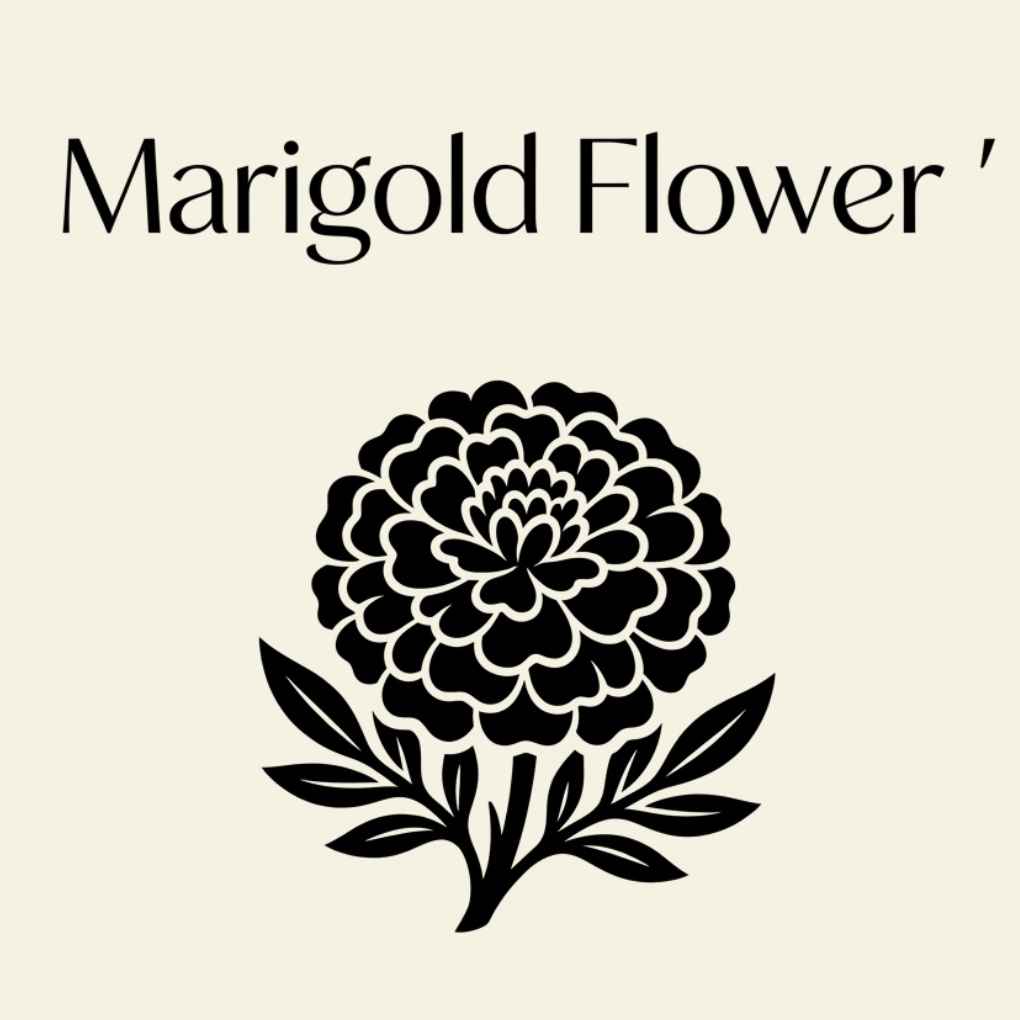
The marigold, known in Mexico as cempasúchil, is the sacred flower of the Day of the Dead. Indigenous Mexicans believed its strong scent and bright orange color could guide the spirits of the dead back to the world of the living.
Derived from the Nahuatl word meaning “twenty flowers,” the cempasúchil has been used in Mexican ceremonial rituals for centuries. Families create elaborate paths of marigold petals from the cemetery to their front door to welcome their ancestors home.
It’s a beautiful example of how Mexican folk symbols blend the spiritual and the natural world into something deeply human.
Jaguar Symbol
The jaguar was the most sacred animal in both Aztec and Mayan cultures. It represented night, the underworld, and warrior strength. Aztec warriors known as “Jaguar Warriors” were among the most elite fighters in the empire and wore jaguar skins in battle.
In Mayan cosmology, the jaguar was associated with the ruler of the underworld and was seen as a protector of the royal bloodline. Sacred temples featured jaguar carvings and thrones.
Today, the jaguar remains a powerful Mexican warrior symbol used in tattoos, art, and sports team logos across Mexico and the US.
Mariachi Symbolism
Mariachi is more than music. It’s a living cultural symbol representing Mexican pride, celebration, and community values. UNESCO officially recognized mariachi as an Intangible Cultural Heritage in 2011.
Originally from the state of Jalisco, mariachi bands traditionally perform at birthdays, weddings, funerals, and national celebrations. The charro suit, the wide-brimmed sombrero, and the trumpet blasts are instantly recognizable symbols of Mexican identity.
Sombrero Symbol
The sombrero has practical roots in Mexican agricultural life. Its wide brim protected farmers and laborers from the harsh sun. It became a symbol of rural Mexican identity and resilience over centuries.
While it’s been oversimplified in American pop culture, the sombrero remains a meaningful part of traditional Mexican dress, especially during festivals and regional celebrations.
Virgin Of Guadalupe Symbol
The Virgin of Guadalupe is the most spiritually powerful religious symbol in all of Mexico. According to Catholic tradition, she appeared to an indigenous man named Juan Diego on Tepeyac Hill in 1531, speaking to him in Nahuatl.
She represents the perfect blend of indigenous Mexican culture and Catholic faith, making her a symbol of religious syncretism born from the colonial era. Her image hangs in millions of homes, churches, and cars across both Mexico and the United States.
For Mexican-American communities, she’s a symbol of protection, maternal love, and national identity.
Monarch Butterfly Meaning
Every year, millions of monarch butterflies migrate to the mountains of Michoacán, Mexico, arriving around Day of the Dead. Indigenous communities believe they carry the souls of ancestors returning for the annual visit.
The monarch butterfly has also become a powerful symbol of migration and Mexican-American identity in the US, representing the journey between two worlds. It’s featured in murals, tattoos, and activist art across American cities with large Mexican communities.
National Symbols Of Mexico
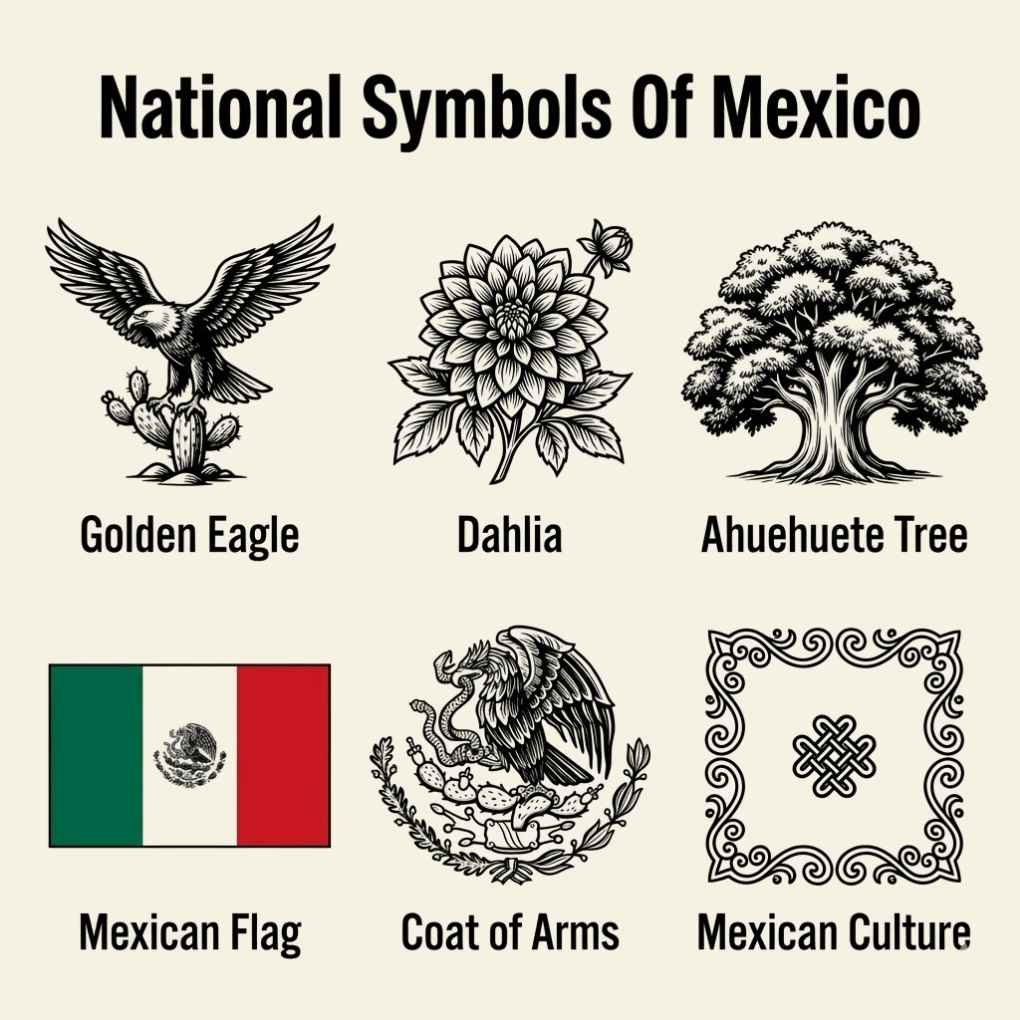
Mexico has several officially recognized national symbols that represent the country’s identity on an institutional level.
| Symbol | Meaning |
| Golden Eagle | National bird, strength, sovereignty |
| Dahlia | National flower, beauty, diversity |
| Ahuehuete Tree | National tree, ancient endurance |
| Mexican Flag | Unity, hope, sacrifice |
| Coat of Arms | Aztec founding myth, national identity |
These Mexican national symbols appear on government documents, currency, and official state events. They connect modern governance to deep historical and indigenous roots.
Traditional Mexican Symbols And Meanings
Ancient Mexican Symbols
Pre-Columbian Mexican symbols covered everything from warfare to agriculture to the afterlife. Common motifs included serpents, suns, corn, eagles, and rain gods. Corn especially held sacred meaning as the source of human life in Aztec and Mayan creation stories.
You May Also Like: 95+ Best Healing Symbols From Around the World
Indigenous Mexican Symbols
Groups like the Zapotec, Mixtec, and Olmec developed their own rich symbol systems before the Aztecs rose to power. The Olmec, often called the “mother culture” of Mesoamerica, introduced the iconic colossal heads and early forms of the feathered serpent symbol.
Aztec Mexican Symbols
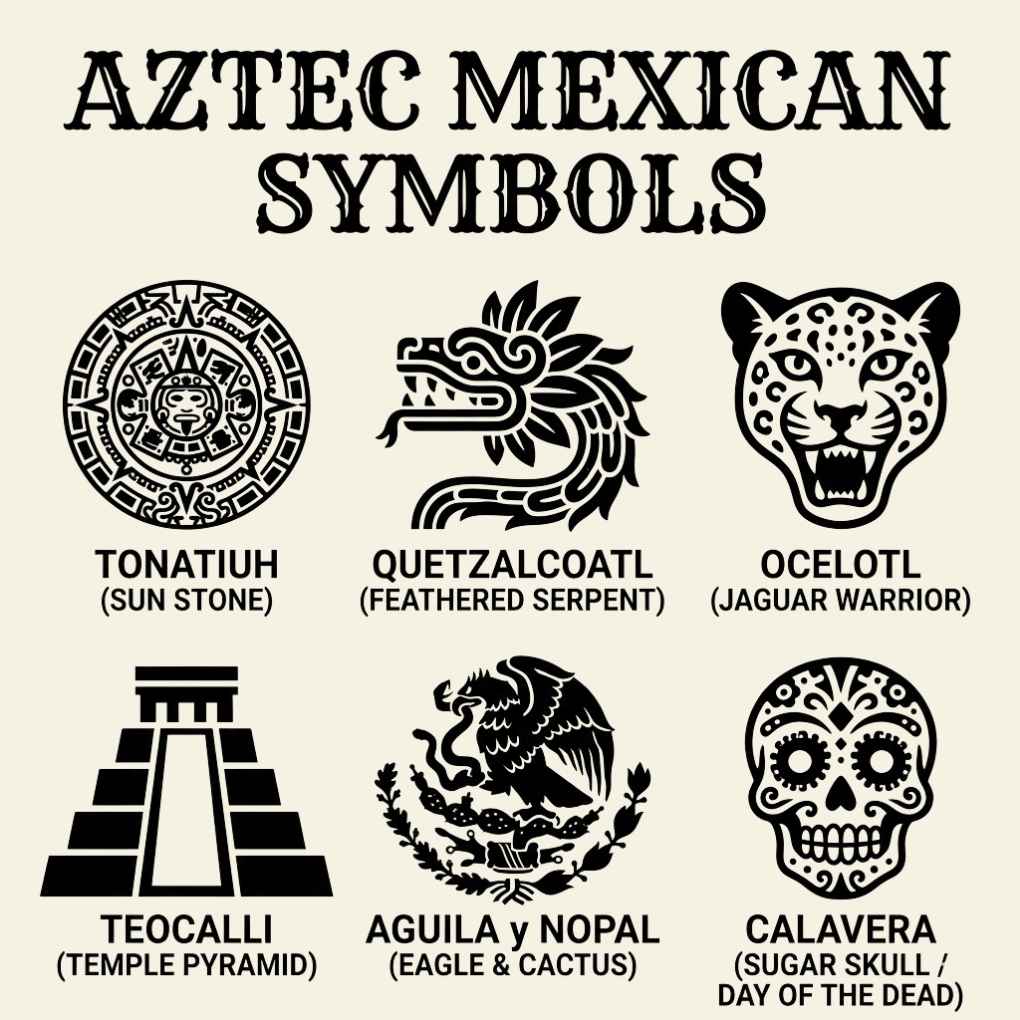
Key Aztec symbols include Tlaloc (rain and fertility), Mictlantecuhtli (god of death), and the obsidian knife used in sacred rituals. These symbols encoded the Aztec worldview in stone, pottery, and manuscripts called codices.
Mayan Mexican Symbols
The Mayan writing system is one of the most sophisticated in history. Mayan glyphs functioned as both language and spiritual symbol simultaneously. The corn god, the serpent, and the Mayan cross all carried deep cosmological meaning tied to agricultural cycles and divine order.
Mexican Symbols Of Love, Protection And Strength
Mexican Symbols Of Love
The corazón (heart) appears throughout Mexican folk art, from pottery to embroidery. Xochiquetzal, the Aztec goddess of love, beauty, and fertility, was one of the most beloved deities in the Aztec pantheon. Her symbols included flowers, butterflies, and vibrant textiles.
Mexican Symbols Of Protection
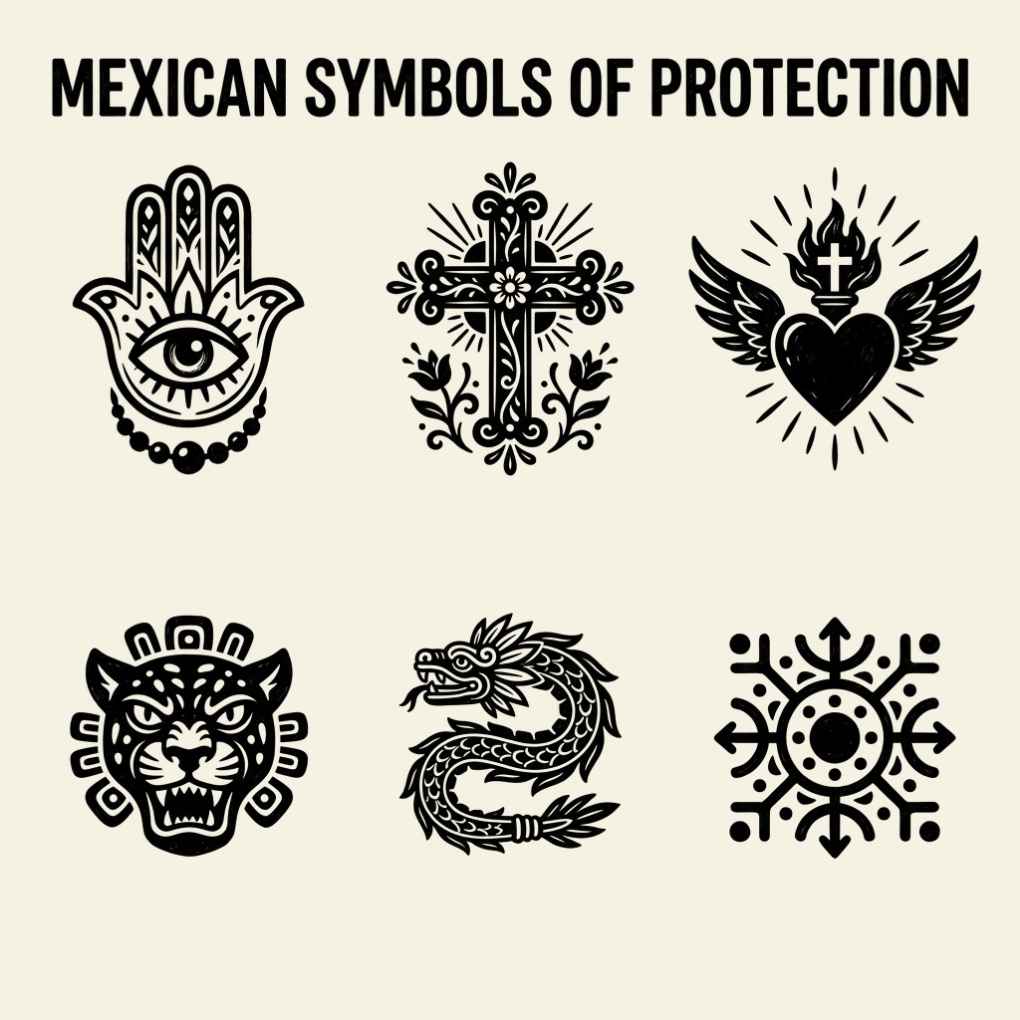
The Ojo de Dios (Eye of God) is a woven yarn cross used by the Huichol people to protect children from harm. The Virgin of Guadalupe is perhaps the most widely used Mexican protection symbol today, appearing on tattoos, jewelry, and household altars across North America.
Mexican Symbols Of Strength
The eagle, the jaguar, and the Aztec warrior are the three most prominent Mexican symbols of strength. These figures represented courage, discipline, and divine power in pre-Columbian culture and continue to inspire Mexican and Mexican-American identity today.
Mexican Symbols Across History
Aztec Civilization
Aztec symbols were deeply embedded in daily life, religion, and governance. Temples were covered in carvings of gods, sacred animals, and celestial bodies. Every symbol served a religious or political purpose.
Mayan Civilization
The Mayans developed one of the world’s first complete writing systems using symbolic glyphs. Their calendar system, astronomical knowledge, and architectural symbols reflect extraordinary intellectual achievement.
Spanish Colonial Era
Spanish colonization dramatically changed Mexican symbolism. Indigenous symbols were suppressed, destroyed, or absorbed into Catholic imagery. The Virgin of Guadalupe is the most powerful example of this religious and cultural fusion.
Modern Mexico
After independence in 1810, Mexico reclaimed its indigenous symbols as expressions of national pride. Artists like Diego Rivera and Frida Kahlo played a huge role in reviving pre-Columbian imagery in public art. Today, these symbols thrive on social media, in tattoo culture, and in Mexican-American activist movements.
Deep Symbolic Meaning of Mexican Symbols
Mexican symbols carry meaning that goes far beyond decoration. They connect people to ancient beliefs, sacred traditions, and collective memory passed down through generations.
Spiritual Meaning
These symbols served as direct communication with the divine. The feathered serpent, the sun stone, and the marigold were all used in sacred rituals to honor gods, guide souls, and maintain cosmic balance.
Psychological Meaning
For Mexican and Mexican-American communities, these symbols provide a strong sense of belonging and cultural identity. They offer comfort, pride, and a visual language for expressing grief, love, and strength.
Cultural Meaning
Culturally, Mexican symbols preserve indigenous heritage that colonization tried to erase. They represent resilience, and today they appear in art, tattoos, and celebrations as proud statements of Mexican cultural identity.
Types / Variations of Mexican Symbols
Mexican symbols appear in many forms, from national emblems and sacred animals to flowers and ceremonial art. Each symbol carries a unique cultural, historical, or spiritual meaning that reflects the beliefs and traditions of Mexico. The table below highlights some of the most recognized Mexican symbols and what they represent.
| Mexican Symbol | Meaning |
| Eagle and Snake on Cactus | Represents the founding of Mexico, victory, strength, and the triumph of order over chaos. |
| Quetzalcoatl (Feathered Serpent) | Symbolizes wisdom, creation, knowledge, learning, and divine power in Aztec and Mayan traditions. |
| Aztec Sun Stone | Represents time, cosmic order, the universe, and the cyclical nature of life. |
| Marigold Flower (Cempasúchil) | Symbolizes remembrance, guidance for ancestral spirits, and the connection between life and death. |
| Sugar Skulls | Represent honoring ancestors, celebrating life, and accepting death as a natural part of existence. |
Mexican Symbols In Art, Tattoos And Popular Culture
Mexican symbols dominate tattoo culture in the US. Sugar skulls, the Virgin of Guadalupe, and Aztec sun stones are consistently among the most requested designs. Frida Kahlo’s image itself has become a global Mexican art symbol representing resilience, identity, and female strength.
In Hollywood, films like Coco and Black Panther (which drew on indigenous symbolism broadly) brought renewed interest in Mexican mythology and Day of the Dead symbols to mainstream American audiences.
Positive vs Negative Meaning
Positive Meanings
Most Mexican symbols carry uplifting messages. The eagle represents courage and national pride. The marigold symbolizes love and remembrance. The Virgin of Guadalupe offers protection and hope. Sugar skulls celebrate life rather than fear death.
Negative Meanings
Some symbols have darker roots. The obsidian knife was used in human sacrifice. The death god Mictlantecuhtli represented fear and the underworld. Spanish colonization also weaponized certain symbols to suppress indigenous identity and culture.
Why Mexican Symbols Are Still Popular Today
Mexican symbols stay relevant because they answer a deeply human need: the need to belong and to remember. For millions of Mexican-Americans, these symbols bridge the gap between two cultures and two countries.
Social media has accelerated their reach. Aztec tattoos, sugar skull makeup tutorials, and marigold altars go viral every November. Younger generations are actively seeking out authentic Mexican heritage symbols to reconnect with their roots in a meaningful way.
These symbols also carry universal themes. Love, death, strength, protection, and transformation speak to everyone regardless of background.
FAQs About Mexican Symbols
What are the most famous Mexican symbols?
The eagle and snake, sugar skull, Virgin of Guadalupe, marigold flower, and Aztec Sun Stone are Mexico’s most recognized symbols.
What does the Mexican eagle symbol mean?
The eagle represents strength, the sun, and divine power, rooted in the Aztec legend of Tenochtitlan’s founding.
What is the meaning of Quetzalcoatl?
Quetzalcoatl, the feathered serpent, symbolizes wind, creation, divine knowledge, and the connection between earth and sky.
Why are sugar skulls important in Mexico?
Sugar skulls honor deceased loved ones during Día de los Muertos, celebrating life and remembrance rather than fearing death.
What are the national symbols of Mexico?
Mexico’s national symbols include the golden eagle, dahlia flower, ahuehuete tree, the Mexican flag, and its coat of arms.
Conclusion
Mexican symbols are not relics of the past. They’re living expressions of a culture that has survived conquest, colonization, and centuries of change. From the Aztec Sun Stone to the monarch butterfly, each symbol carries layers of meaning that connect ancient wisdom to modern identity.
Whether you’re drawn to Mexican symbols for their spiritual depth, their artistic beauty, or their historical significance, one thing is clear: they tell one of humanity’s most remarkable stories. Which Mexican symbol resonates most with you?

Mubeen is a passionate writer at Auramegazine who explores symbolism, hidden meanings, and powerful signs behind everyday symbols. He enjoys creating simple, engaging content that helps readers understand deeper meanings and cultural connections.